
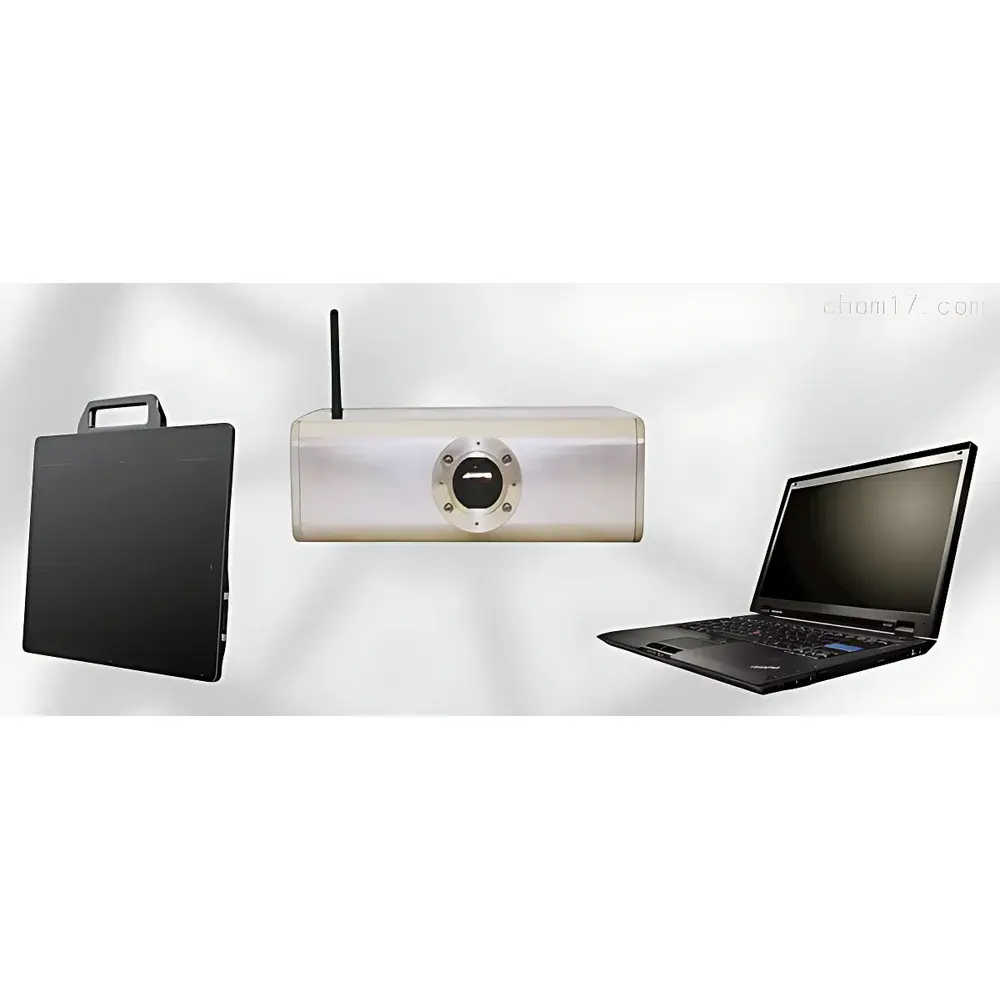
Aolong AL-DR-120 High-Frequency Portable X-ray Digital Radiography (DR) System
| Brand | Aolong |
|---|---|
| Origin | Liaoning, China |
| Manufacturer Type | OEM Manufacturer |
| Origin Category | Domestic (China) |
| Model | AL-DR-120 |
| Detector Type | Flat-Panel Detector |
| Power Supply | Integrated Rechargeable Battery (6-hour continuous operation) |
| Connectivity | Fully Wireless Remote Control |
| Form Factor | Compact, Lightweight Portable Design |
| Imaging Mode | Real-Time Digital Radiography |
Overview
The Aolong AL-DR-120 is a high-frequency, battery-powered portable X-ray digital radiography (DR) system engineered for field-deployable non-destructive testing (NDT) in industrial, infrastructure, and maintenance environments. It operates on high-frequency inverter technology to deliver stable, precisely regulated X-ray output—enabling consistent photon flux and minimized voltage ripple across the exposure cycle. Unlike conventional low-frequency or capacitor-discharge units, the AL-DR-120 achieves superior beam quality and dose efficiency, directly supporting compliance with ISO 5579:2019 (Radiographic testing — General principles for industrial radiography) and ASTM E2737-22 (Standard Guide for Digital Radiographic Testing). The system integrates a high-resolution amorphous silicon (a-Si) flat-panel detector with active matrix readout, enabling real-time image acquisition without film processing delays. Designed for rapid deployment in constrained or remote locations—including pipeline corridors, wind turbine towers, shipyards, and aerospace hangars—the AL-DR-120 eliminates tethering cables and external power dependencies while maintaining metrological traceability per EN 462-1 and EN 462-2.
Key Features
- High-frequency X-ray generator (≥100 kHz switching frequency) ensuring stable kV/mA output and reduced exposure time by up to 40% compared to legacy 50/60 Hz systems
- Integrated lithium-ion battery pack rated for ≥6 hours of continuous operation under typical NDT duty cycles (including standby, exposure, and image transfer)
- Wireless remote control interface (2.4 GHz ISM band, 100 m line-of-sight range) with encrypted command transmission compliant with IEC 62471 safety requirements
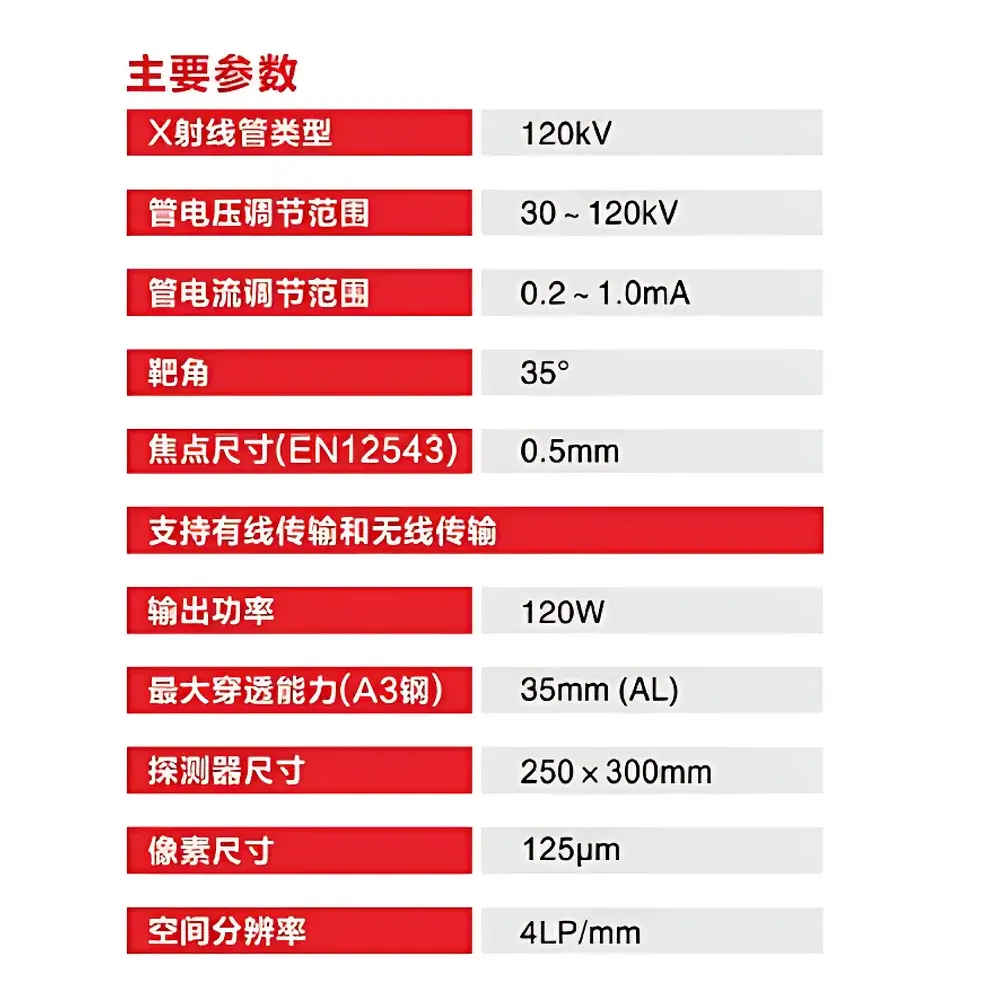
- Compact monoblock design: total system mass <28 kg; detector module dimensions ≤300 × 300 mm active area; source-to-detector distance (SDD) adjustable from 400–1200 mm
- Real-time image preview with dynamic range >16-bit (65,536 gray levels), contrast resolution optimized for detection of sub-0.5 mm volumetric defects in steel up to 45 mm thickness (Fe-equivalent)
- No consumables required: eliminates need for industrial film, developer/fixer chemicals, darkroom facilities, or archival storage infrastructure
Sample Compatibility & Compliance
The AL-DR-120 supports radiographic inspection of metallic and composite components conforming to ASME BPVC Section V, Article 2 (Radiographic Examination), and EN 1435 (Welded joints in steel—Radiographic testing of class B and C welds). Its energy range (40–120 kV adjustable in 1 kV increments) enables optimized imaging of aluminum alloys (1–25 mm), stainless steel (2–45 mm), and carbon steel (3–50 mm). Detector sensitivity meets DIN EN ISO 17636-2:2022 Class B (high sensitivity) requirements for weld inspection. All firmware and hardware configurations are documented per ISO 9001:2015 and support audit-ready calibration records, including daily warm-up verification, detector uniformity checks, and exposure reproducibility logs (±2% kV/mA stability over 100 exposures).
Software & Data Management
The system ships with Aolong DRView v3.2—a DICOM 3.0-compliant acquisition and analysis platform validated for Windows 10/11 (64-bit). It includes quantitative tools such as ROI-based density measurement, linear attenuation coefficient mapping, contrast-to-noise ratio (CNR) calculation, and automated defect annotation using rule-based threshold segmentation. Image metadata embeds EXIF-compatible tags: exposure parameters (kV, mA, s), detector ID, calibration timestamp, operator ID, and GPS coordinates (optional external module). Data export supports encrypted .dcm, .tiff (16-bit), and .pdf report formats with embedded digital signatures meeting FDA 21 CFR Part 11 requirements for electronic records and signatures. Internal SSD (512 GB) ensures local storage of ≥50,000 full-resolution images with automatic rotation and backup synchronization via Wi-Fi to network-attached storage (NAS) or cloud repositories.
Applications
- Field weld inspection of pipelines, pressure vessels, and structural steel joints per API RP 2X and AWS D1.1
- In-service corrosion mapping of offshore platform legs and subsea risers using dual-energy subtraction techniques
- Composite laminate integrity assessment in wind turbine blades and aircraft fuselage panels
- Castings and forgings evaluation in heavy machinery manufacturing (e.g., hydraulic manifolds, turbine housings)
- Rapid QA screening of additive-manufactured parts for internal porosity, lack-of-fusion, and layer misalignment
- Emergency NDT response during infrastructure failure investigations (bridge cables, rail axles, crane hooks)
FAQ
What regulatory standards does the AL-DR-120 comply with for radiation safety and image quality?
The system conforms to IEC 61331-1 (Protective devices against diagnostic medical X-radiation), IEC 62495 (Radiation protection—Requirements for X-ray equipment used in security and industrial applications), and national regulatory frameworks including China’s GBZ 130-2020.
Is the flat-panel detector calibrated traceable to national metrology institutes?
Yes—each detector undergoes factory calibration against NIST-traceable reference phantoms (e.g., CNR-10, IQI-10), with calibration certificates issued per ISO/IEC 17025:2017 accredited procedures.
Can the AL-DR-120 integrate with existing enterprise NDT management software (e.g., GE Sensit, Olympus NDT Hub)?
It supports HL7 and ASTM WK52892-compliant APIs for bidirectional data exchange, including inspection scheduling, report ingestion, and asset-level defect tracking.
What is the recommended maintenance interval for the X-ray tube and detector?
X-ray tube service life is rated at ≥10,000 exposures (at 100 kV/2 mA); detector performance verification is required quarterly per EN 14784-2, with annual full recalibration recommended.
Does the system support dose optimization protocols for ALARA compliance?
Yes—integrated dose monitoring provides real-time µGy/mAs display, automatic exposure control (AEC) mode, and post-processing noise reduction algorithms that maintain diagnostic confidence at reduced dose levels.
Related Products



