
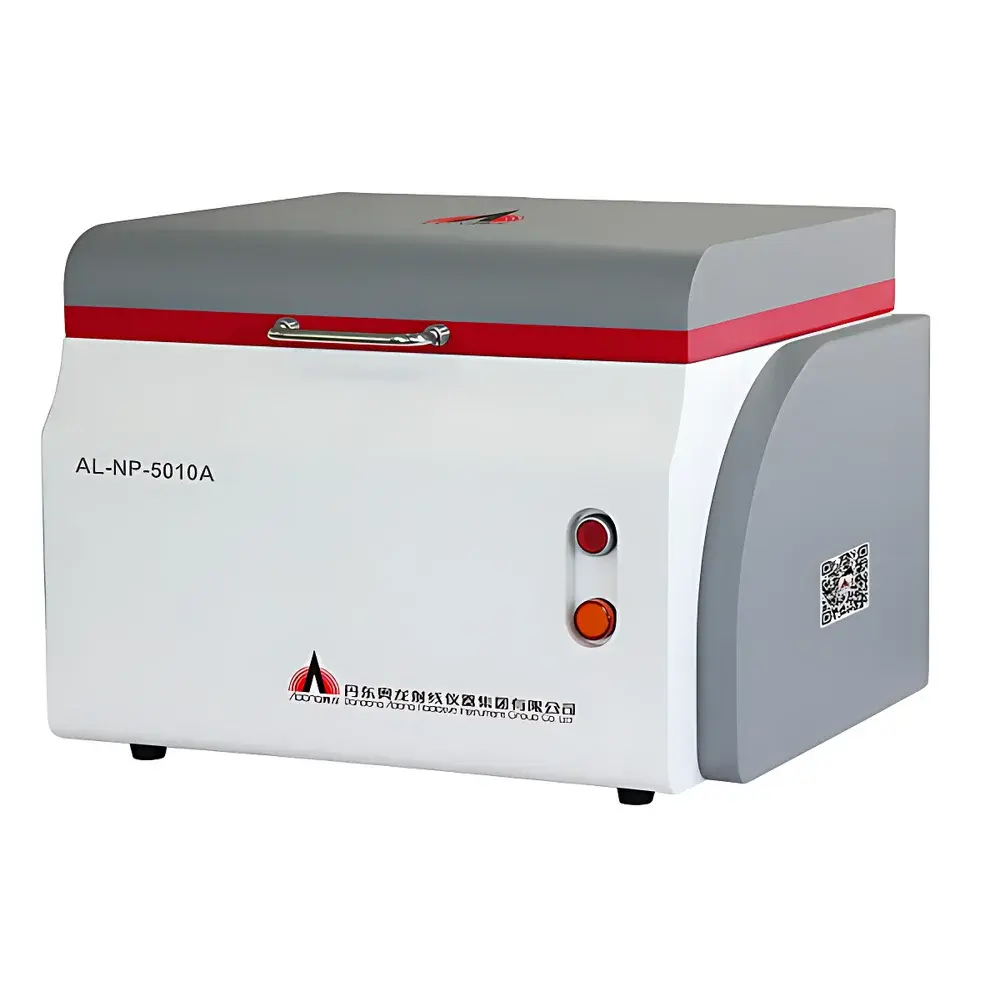
Aolong XRF-EDX Energy Dispersive X-Ray Fluorescence Spectrometer
| Brand | Aolong |
|---|---|
| Origin | Liaoning, China |
| Manufacturer Type | OEM Manufacturer |
| Regional Classification | Domestic (China) |
| Model | XRF |
| Configuration | Benchtop or Floor-standing |
| Instrument Type | Conventional ED-XRF |
| Application Scope | General-purpose |
| Elemental Range | Na (Z=11) to U (Z=92) |
| Detection Limit | ≤2 ppm |
| Energy Resolution | <145 eV (FWHM at Mn Kα) |
| Repeatability | 0.1% RSD |
Overview
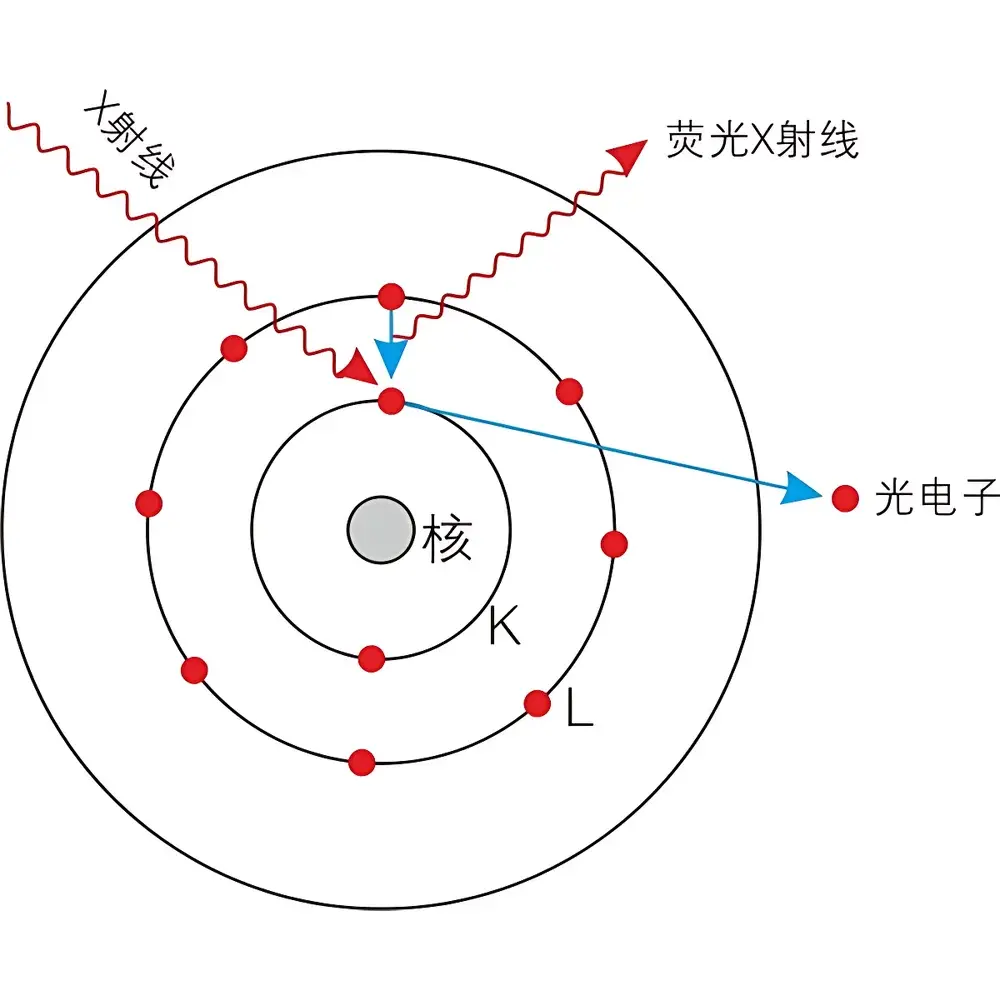
The Aolong XRF-EDX Energy Dispersive X-Ray Fluorescence Spectrometer is an engineered analytical platform designed for non-destructive, multi-element compositional analysis of solid, powder, and liquid samples. Based on the fundamental principle of energy-dispersive X-ray fluorescence (ED-XRF), the instrument excites sample atoms using a low-power side-window X-ray tube, inducing emission of characteristic X-ray photons. These photons are collected by a high-resolution silicon drift detector (SDD) or Si(PIN) semiconductor detector, cooled via Peltier refrigeration, and resolved into a full energy spectrum across 2048 channels. Each element produces unique spectral peaks—defined by its atomic number—and peak intensity correlates linearly with elemental concentration under controlled matrix conditions. This physics-based quantification enables rapid qualitative identification and quantitative determination without chemical digestion or calibration standards in many routine applications. The system operates at up to 50 kV and 1.0 mA, delivering stable excitation while maintaining compliance with international radiation safety protocols.
Key Features
- High-performance SDD or Si(PIN) detector with energy resolution <145 eV (FWHM at Mn Kα), enabling precise peak separation for adjacent elements (e.g., S–Cl, Ti–V, Ni–Cu)
- Low-power, side-window X-ray tube (50 W nominal, 50 kV/1.0 mA max) with integrated lead shielding, 0.025 mm Be window, and >15,000-hour rated lifetime
- Automated 6-position filter changer for optimized excitation conditions—enhancing sensitivity for trace elements and suppressing spectral interference from major constituents
- Dual-layer lead-lined enclosure with interlocked sample chamber lid, real-time X-ray shutter control, and audible/visual radiation warning system
- Integrated thermal management: automatic power throttling during idle periods, active X-ray tube temperature monitoring, and regulated detector cooling
- Stable high-voltage generator with ≤0.01% voltage/current regulation, <0.25% ripple (peak-to-peak), and 0.01%/°C temperature coefficient
Sample Compatibility & Compliance
The XRF-EDX accommodates flat, irregular, or powdered specimens up to 100 mm in diameter and 40 mm in height. No vacuum or helium purge is required for elements from sodium (Na) through uranium (U); atmospheric operation ensures minimal sample preparation. The system meets IEC 61000-6-3 (EMC), IEC 61000-6-4 (emissions), and conforms to national radiation safety standards GBZ 126–2011 and JJG 1062–2010. For regulated industries, measurement workflows support audit-ready documentation per GLP and ISO/IEC 17025 requirements. RoHS-compliant testing for Cd, Pb, Cr(VI), Hg, and Br achieves certified detection limits of ≤2 ppm in polymer and metal matrices—validated against IEC 62321-5:2013 and ASTM F2853-10.
Software & Data Management
The embedded Windows-based workstation features a validated, intuitive interface with one-click acquisition and automated parameter selection. Quantitative analysis employs fundamental parameter (FP) algorithms with optional empirical calibration curves. All spectra, processing parameters, and report metadata are timestamped and stored in encrypted SQLite databases. Software functions include: batch reporting with customizable templates (PDF/CSV/XLSX), historical data traceability with user login logs, spectral deconvolution using Gaussian-Lorentzian fitting, matrix correction for absorption/enhancement effects, and real-time instrument health monitoring. The system supports 21 CFR Part 11–compliant electronic signatures when deployed in regulated QA/QC environments.
Applications
The XRF-EDX delivers reliable performance across diverse industrial and research domains. In electronics manufacturing, it verifies RoHS compliance of PCBs, solder alloys, and plastic housings. In metallurgy, it quantifies alloying elements (e.g., Al, Mg, Ti, Ni) in castings and scrap sorting. Cement and mining labs use it for raw mix proportioning and clinker phase analysis. Environmental laboratories apply it to soil screening for heavy metals (As, Cd, Pb, Hg) and airborne particulate filters. Polymer and coating manufacturers monitor catalyst residues (e.g., Co, Zn) and pigment composition (Ti, Fe, Cr). Additionally, it supports geological prospecting (REE mapping), recycling stream characterization, and forensic material attribution—without sample destruction or hazardous reagents.
FAQ
What elements can the XRF-EDX detect?
It detects elements from sodium (Na, Z=11) to uranium (U, Z=92) in air-path configuration; light elements (Be–F) require vacuum or He flush options not included in this base model.
Is sample preparation required?
Minimal preparation is needed: solids are analyzed as-is; powders are pressed into pellets; liquids are placed in X-ray transparent cups with polypropylene film windows.
How is measurement repeatability ensured?
Repeatability of 0.1% RSD is achieved through stabilized X-ray tube output, temperature-controlled detector operation, and internal reference checks using built-in calibration standards.
Does the system comply with regulatory reporting requirements?
Yes—the software supports audit trails, electronic signatures, and report generation aligned with ISO/IEC 17025, RoHS Directive 2011/65/EU, and EPA Method 6200 for field-deployable screening.
Can the instrument be integrated into a laboratory information management system (LIMS)?
Raw spectral data (ASCII .txt) and quantitative results (CSV) are exportable; API-level integration is available via optional OPC UA or RESTful interface modules.





