
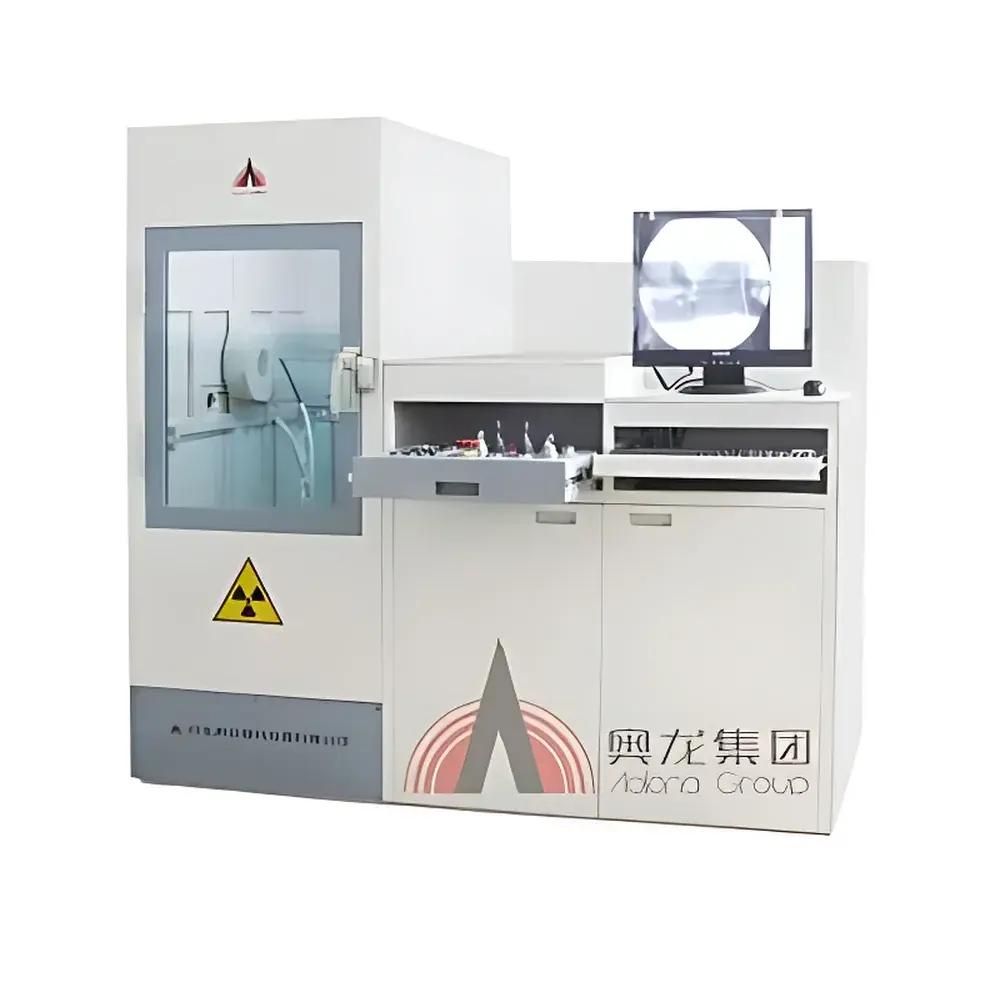
Aolong XYG-120 Digital Radiographic Imaging System for Small Castings
| Brand | Aolong |
|---|---|
| Origin | Liaoning, China |
| Manufacturer Type | Direct Manufacturer |
| Country of Origin | China |
| Model | XYG-120 |
| Price | Upon Request |
| Tube Voltage | 40–160 kV |
| Tube Current | 0–2 mA |
| Focal Spot Size | 30 µm – 1.2 mm |
| Spatial Resolution | 18–32 LP/cm |
| Manipulator | Motorized X-Y-Z translation with ±360° continuous rotation around Z-axis |
| Overall Dimensions | 2090 × 1100 × 1700 mm |
| Image Processing | Real-time zoom, digital magnifier, dynamic video recording/playback, noise-reduced static/dynamic frame storage, pseudo-color mapping, emboss enhancement, horizontal/vertical mirroring, region-of-interest (ROI) grayscale adjustment, window-level/width control, integrated relational database |
Overview
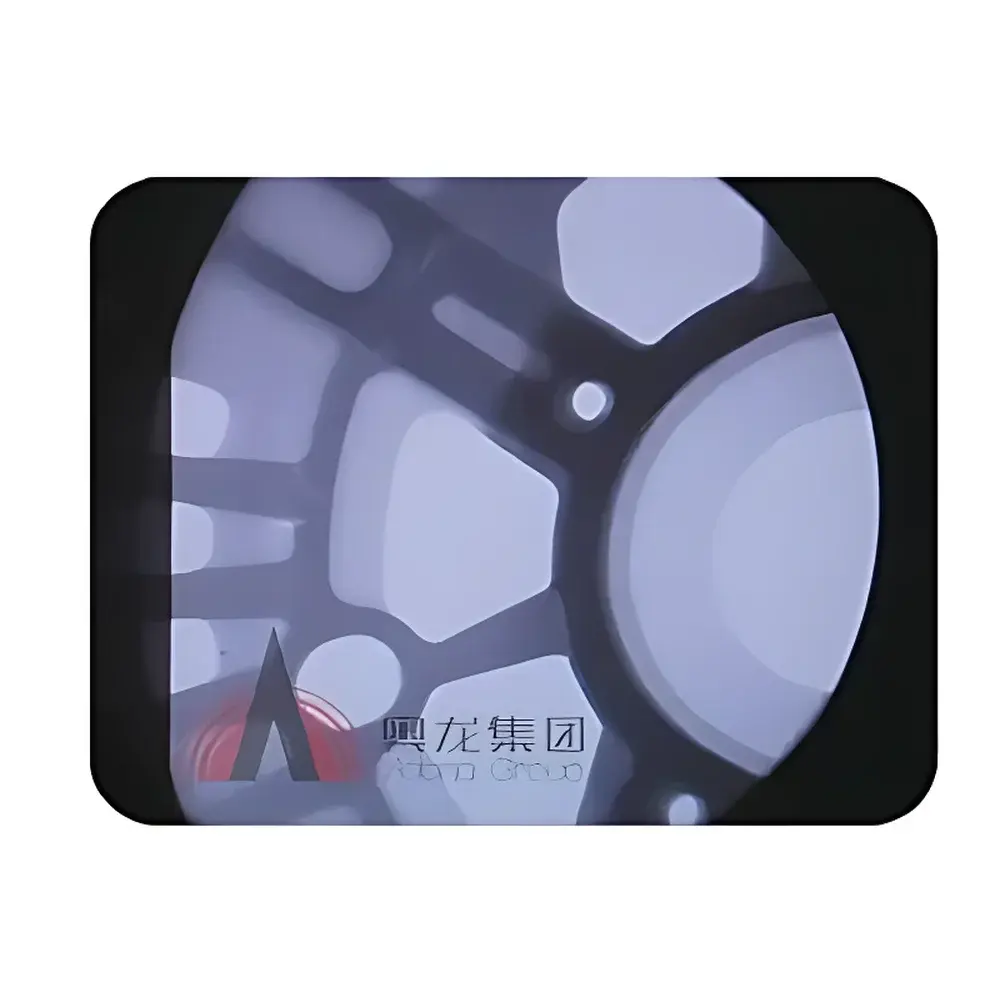
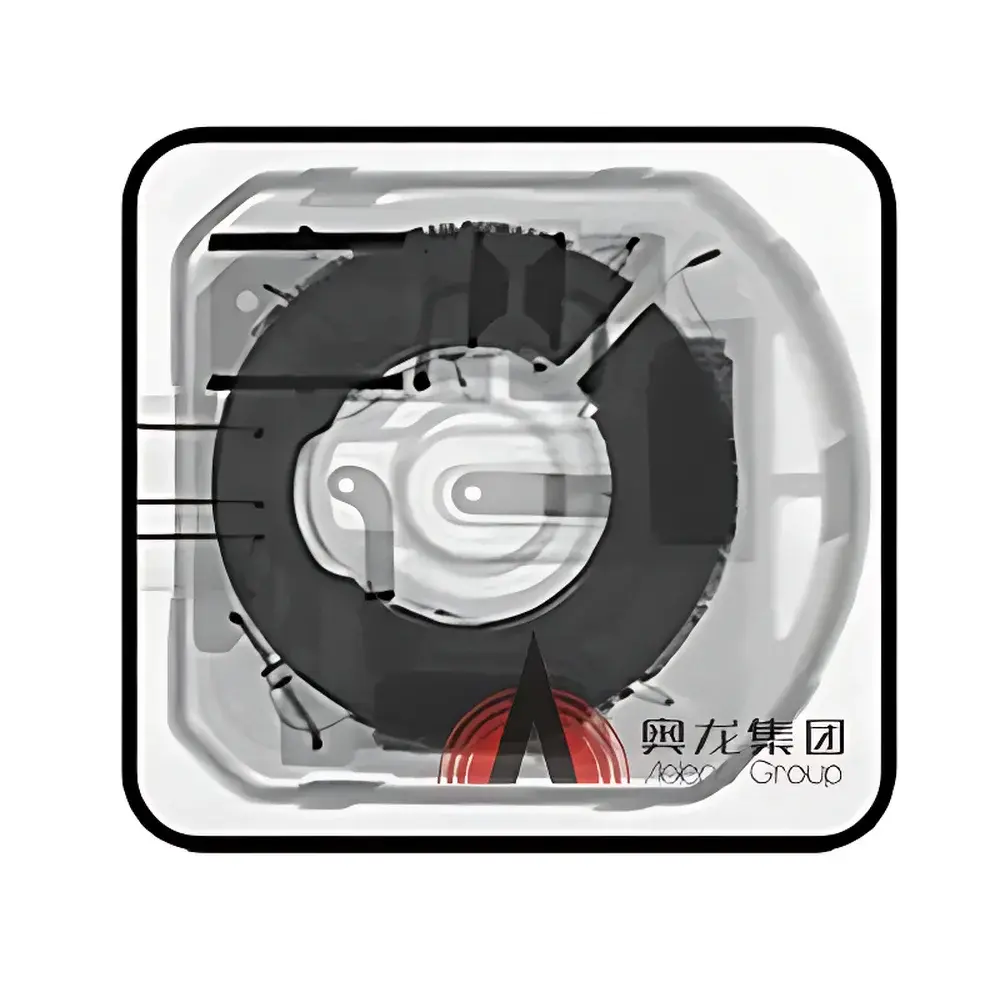
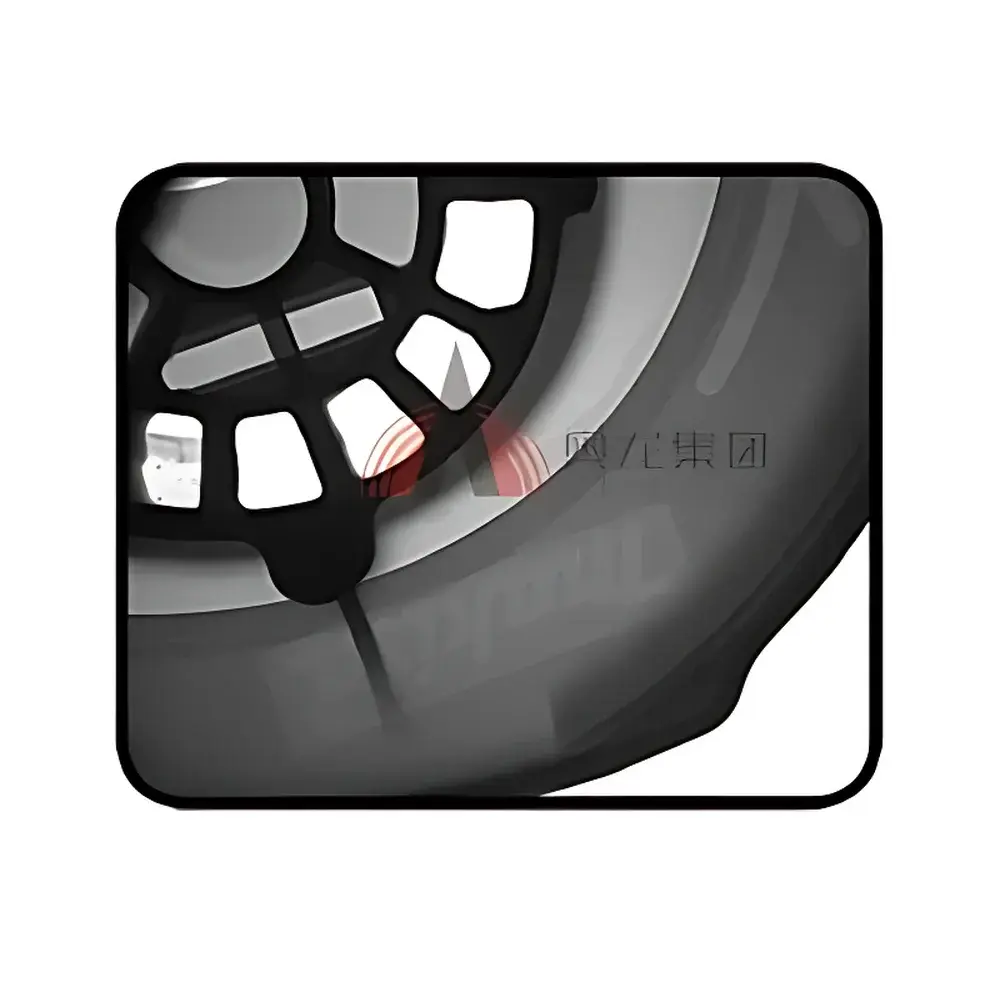
The Aolong XYG-120 Digital Radiographic Imaging System is a compact, high-integration industrial X-ray inspection platform engineered for non-destructive evaluation (NDE) of small-to-medium-sized cast components. It operates on the principle of digital radiography (DR), utilizing a high-frequency, high-voltage X-ray generator coupled with a flat-panel detector to acquire high-fidelity transmission images. Unlike conventional film-based or computed radiography (CR) methods, this system delivers real-time image acquisition and immediate digital processing—enabling rapid defect identification without chemical development or phosphor plate scanning. Its design prioritizes stability, repeatability, and operational safety in production-floor and QC laboratory environments. The system is optimized for detecting volumetric discontinuities—including porosity, shrinkage cavities, inclusions, and core shift—in low-to-medium atomic number materials such as aluminum and magnesium alloys, composites, plastics, and ceramic-matrix components.
Key Features
- High-stability X-ray source with adjustable tube voltage (40–160 kV) and current (0–2 mA), supporting broad material thickness and density ranges;
- Multi-scale focal spot capability (30 µm to 1.2 mm), enabling trade-off optimization between geometric unsharpness and heat loading for varied part geometries;
- Motorized 3-axis (X/Y/Z) manipulator with continuous ±360° rotational capability around the vertical axis—facilitating full 360° projection data acquisition for limited-angle tomographic reconstruction;
- Digital image chain calibrated to ISO 17025 traceable standards, delivering spatial resolution of 18–32 line pairs per centimeter (LP/cm) under standard test conditions;
- Robust mechanical architecture with vibration-damped base and EMI-shielded enclosure, ensuring consistent imaging performance in industrial settings;
- Compliance with IEC 61331-1 (radiation protection), IEC 62495 (safety requirements for industrial X-ray equipment), and GB/T 23907–2009 (Chinese national standard for industrial DR systems);
- Integrated radiation interlock system with door sensors, emergency stop circuitry, and dose monitoring interface for regulatory alignment with local occupational safety regulations.
Sample Compatibility & Compliance
The XYG-120 accommodates specimens up to 300 mm in diameter and 250 mm in height, with maximum weight capacity of 15 kg on the rotating stage. Its energy-tunable X-ray source ensures effective penetration of aluminum castings up to ~80 mm thick and magnesium parts up to ~60 mm—while maintaining contrast sensitivity sufficient to resolve sub-millimeter voids and oxide inclusions. The system supports both static radiography and time-resolved dynamic imaging (e.g., for observing filler flow or thermal distortion during in-situ heating). All hardware and software modules are designed to support audit-ready documentation per ISO 9001, AS9100, and IATF 16949 quality management frameworks. Optional configuration includes DICOM export compatibility and integration with enterprise MES/QMS platforms via HL7 or RESTful API interfaces.
Software & Data Management
The proprietary Aolong DR Studio software provides a deterministic, deterministic image processing environment compliant with FDA 21 CFR Part 11 requirements—including electronic signatures, audit trail logging, user role-based access control, and immutable archive retention. Core functions include real-time zoom and pixel-level magnification; synchronized video capture and frame-by-frame playback; adaptive temporal and spatial noise reduction algorithms; ROI-specific histogram equalization; multi-layer pseudo-color lookup table (LUT) assignment; and emboss filtering for surface topology accentuation. Window-level and window-width controls enable precise contrast manipulation across varying attenuation gradients. All acquired and processed images are stored with embedded metadata (exposure parameters, stage coordinates, timestamp, operator ID) in an embedded SQLite database—exportable in TIFF, PNG, JPEG2000, or DICOM format. Batch reporting tools generate PDF inspection records with pass/fail annotations aligned to internal acceptance criteria or customer-specific specifications (e.g., ASTM E1742, ISO 10675-2).
Applications
- Automotive and aerospace casting suppliers performing first-article inspection and routine lot sampling of engine blocks, housings, brackets, and structural nodes;
- Foundry process development teams correlating gating design, solidification modeling, and actual internal defect distribution;
- Quality assurance labs conducting failure analysis on returned field components to identify root cause (e.g., entrained slag vs. hydrogen porosity);
- R&D departments evaluating additive manufacturing (AM) metal parts for lack-of-fusion defects, powder residue, and residual stress-induced cracking;
- Non-metallic component inspection—including carbon fiber reinforced polymer (CFRP) laminates, injection-molded thermoplastics, and bonded assemblies—for delamination, void content, and adhesive coverage verification.
FAQ
What is the minimum detectable defect size under standard operating conditions?
The theoretical resolution limit is governed by focal spot size and detector pixel pitch. With the 30 µm focal spot and optimized geometry, sub-100 µm voids can be resolved in thin-section aluminum samples (<20 mm), subject to contrast-to-noise ratio and exposure duration.
Does the system support automated defect recognition (ADR)?
ADR is not embedded in the base software but can be implemented via third-party AI inference engines through the open SDK. Aolong provides DICOM-compliant image export and coordinate-mapped ROI annotation for model training pipelines.
Is the XYG-120 certified for use in regulated medical device manufacturing?
No—it is classified as an industrial NDT system and does not meet FDA 510(k) or MDR Annex II requirements for medical imaging devices. It is intended exclusively for non-human, non-clinical applications.
Can the system be upgraded to perform limited-angle micro-CT reconstruction?
Yes—when equipped with the optional high-precision rotary stage (±0.01° repeatability) and extended acquisition module, the system supports filtered back-projection (FBP) and iterative reconstruction of cross-sectional slices from 180–360 projections.
What maintenance intervals are recommended for the X-ray tube?
Under typical usage (≤4 hrs/day, 5 days/week), the tube should undergo vacuum integrity verification every 6 months and full recalibration annually. Tube replacement is typically required after 5,000–8,000 hours of cumulative operation, depending on average kV/mA loading.



