
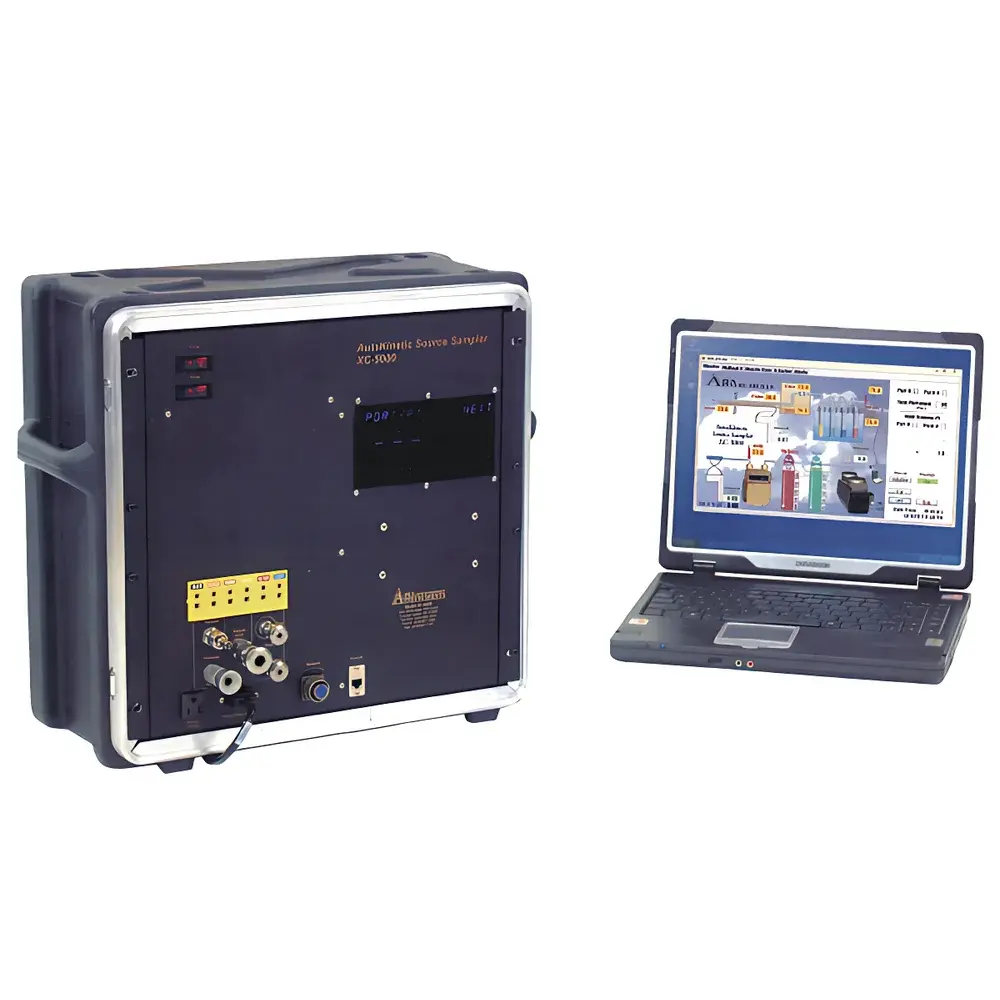
Apex XC-5000 Automated Isokinetic Sampling System
| Origin | USA |
|---|---|
| Manufacturer Type | Authorized Distributor |
| Origin Category | Imported |
| Model | XC-5000 |
| Price Range | USD 7,000 – 14,000 |
Overview
The Apex XC-5000 Automated Isokinetic Sampling System is a field-deployable, EPA-compliant instrument engineered for precise, regulatory-grade sampling of flue gas and particulate matter from stationary emission sources. It operates on the fundamental principle of isokinetic sampling—where the linear velocity of sampled gas entering the probe nozzle matches the undisturbed gas stream velocity at the sampling point—to ensure representative capture of both gaseous pollutants and suspended particulates (e.g., PM₁₀, PM₂.₅, fly ash). Designed to meet U.S. Environmental Protection Agency Methods 5 (particulate matter), 17 (stack particulate sampling under high-moisture conditions), and other internationally recognized isokinetic protocols (including ASTM D6330 and ISO 9096), the XC-5000 integrates real-time flow control, multi-point thermal monitoring, and digital pressure sensing into a single robust platform. Its architecture supports both manual and fully automated sampling sequences, minimizing operator intervention while maximizing data integrity and audit readiness.
Key Features
- Automated isokinetic velocity calculation and dynamic nozzle diameter selection based on stack gas velocity profile and user-defined sampling points
- Dry-gas meter with 0.7 L/rev displacement, 6-digit digital volume display, and ±1 cm³ resolution for traceable volumetric quantification
- Real-time simultaneous monitoring of seven critical temperature parameters via K-type thermocouples: stack gas temperature, heated probe tip, filter heater box, filter media surface, impinger exit, sampling line wall, and dry-gas meter housing
- Digital differential pressure sensing with three independent channels: stack dynamic pressure (±63 mmHg, 0.01 mmHg resolution), orifice pressure drop (0–127 mmHg, 0.01 mmHg), and ambient barometric pressure (450–825 mmHg, 0.01 mmHg)
- Configurable alarm thresholds for flow deviation, temperature excursion, pressure anomaly, and sampling duration—fully user-definable in either metric or imperial units
- Integrated Ethernet and optional wireless communication for remote configuration, live telemetry, and secure firmware updates
- Modular umbilical cable interface supporting stainless-steel quick-connect fittings: ½” for main sampling line, ¼” (or ⅜”) for Pitot tube, ⅜” for external vacuum pump, and standard K-type thermocouple connectors
Sample Compatibility & Compliance
The XC-5000 is compatible with standardized EPA sampling train components—including quartz or ceramic nozzles, glass-fiber filters housed in heated filter boxes, and series-connected impingers (e.g., for SO₂, HCl, or mercury capture). All hardware interfaces adhere to Method 5/17 mechanical specifications, ensuring interchangeability with certified accessories from third-party vendors. The system complies with U.S. EPA 40 CFR Part 60, Appendix A test methods, and supports GLP/GMP-aligned data handling through timestamped, non-erasable storage of raw sensor outputs, operator inputs, and calculated parameters. Data files are exportable in CSV and XML formats for integration into LIMS or EPA’s ERT software. Optional 4-channel analog input module (4–20 mA / 0–10 V / 1–5 V) enables synchronized acquisition of external process variables—such as boiler load, O₂ concentration, or scrubber pH—for contextual correlation during compliance reporting.
Software & Data Management
The XC-5000 runs embedded firmware with a Windows-compatible desktop application for configuration, calibration verification, and post-sampling analysis. All sampling sessions generate tamper-evident log files containing metadata (operator ID, location tag, method reference), time-stamped sensor readings at 1-second intervals, and calculated isokinetic ratios per sampling point. Audit trails record every parameter change, file upload/download event, and calibration action—supporting FDA 21 CFR Part 11 requirements when used in regulated industrial hygiene or pharmaceutical stack testing environments. Data encryption (AES-128) and role-based user access control ensure confidentiality during multi-user deployments across regional environmental agencies or contract laboratories.
Applications
- Regulatory stack testing for coal-fired power plants, cement kilns, waste incinerators, and chemical manufacturing facilities
- Performance evaluation of particulate control devices (ESP, baghouses, wet scrubbers) under variable load conditions
- Source apportionment studies requiring mass-based particulate emission factors aligned with AP-42 or IPCC Tier 2 methodologies
- Method validation and inter-laboratory comparison exercises conducted under ISO/IEC 17025-accredited quality systems
- Long-term continuous emission monitoring system (CEMS) correlation studies for PM and acid gas species
FAQ
Does the XC-5000 support EPA Method 26A for halogenated acid gases?
Yes—the system accommodates Method 26A sampling trains via its configurable impinger manifold and temperature-controlled outlet path; however, acid gas-specific analytical validation remains the responsibility of the end-user laboratory.
Can sampling data be exported directly to EPA’s Electronic Reporting Tool (ERT)?
Yes—CSV exports conform to ERT v7.0+ schema requirements, including mandatory fields for test date, source ID, method number, and isokinetic ratio per traverse point.
Is the dry-gas meter certified to NIST-traceable standards?
The meter is factory-calibrated against NIST-traceable primary standards and includes a calibration certificate valid for 12 months; field recalibration is supported using certified span gases and gravimetric checks.
What is the maximum allowable stack gas moisture content for reliable operation?
The XC-5000 maintains stable isokinetic control up to 30% v/v moisture content when configured with heated probe and filter assemblies operating above dew point; for >30%, Method 17-compliant chilled impinger pre-treatment is recommended.
How does the system handle power interruptions during extended sampling?
An internal UPS buffer sustains critical sensors and memory for ≥90 seconds, preserving all unsaved data and enabling graceful shutdown; upon power restoration, the unit resumes from last valid state without data loss.







