
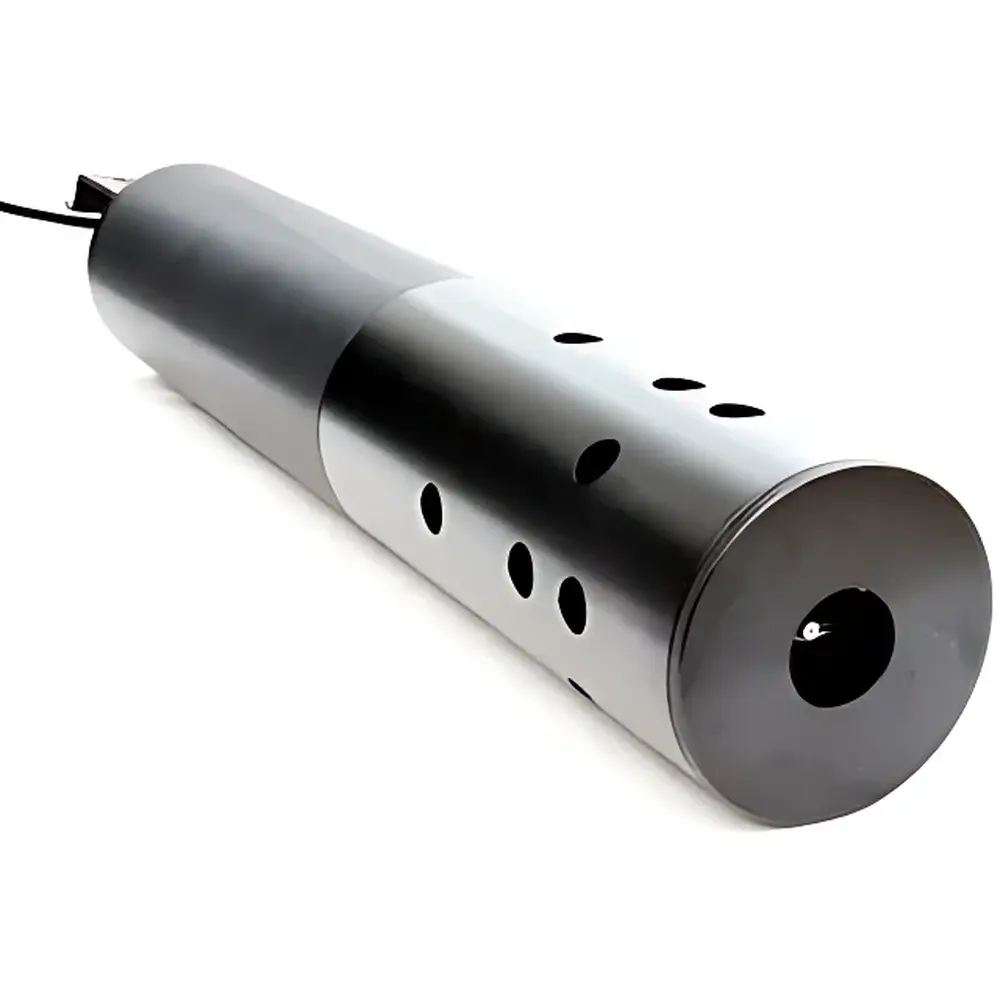
Aquaread AP2000 Portable Chlorophyll-a Fluorometer
| Brand | Aquaread |
|---|---|
| Origin | United Kingdom |
| Model | AP2000 |
| Measurement Principle | In-situ Pulsed LED Excitation & Fluorescence Detection |
| Chlorophyll-a Range | 0–500 µg/L |
| Resolution | 0.1 µg/L |
| Repeatability | ±2% of reading |
| Sensor Housing Diameter | 24 mm |
| Sensor Housing Length | 250 mm |
| Aquameter Dimensions (W×H×D) | 90 × 180 × 39 mm |
| Aquameter Weight (with batteries) | 450 g |
| Display | Backlit 80-character LCD |
| Memory Capacity | 1900 data points |
| GPS | Built-in 12-channel antenna, ±10 m accuracy |
| Barometric Pressure Sensor | 150–1150 mbar, ±1 mbar |
| Power Supply | 5 × AA alkaline or Ni-MH rechargeable batteries |
| Operating Temperature | −20 to +70 °C |
| Enclosure Rating | IP67 |
| Sensor Interchangeability | Yes — supports turbidity, freshwater cyanobacteria, marine phycoerythrin, rhodamine WT, hydrocarbon sensors |
Overview
The Aquaread AP2000 Portable Chlorophyll-a Fluorometer is an in-situ, field-deployable optical sensor system engineered for rapid, non-destructive quantification of chlorophyll-a concentration in natural and engineered aquatic environments. It operates on the principle of pulsed LED-induced fluorescence: a narrow-band blue excitation light (typically ~470 nm) stimulates chlorophyll-a molecules within phytoplankton cells, inducing emission of red fluorescence (~685 nm), which is detected by a matched photodiode. The intensity of this fluorescence signal correlates linearly with chlorophyll-a biomass under controlled conditions—enabling real-time, depth-resolved profiling without sample extraction or chemical reagents. Designed for integration into Aquaread’s modular Aquameter platform, the AP2000 functions as a component of a multi-parameter water quality monitoring system, supporting concurrent measurement of temperature, conductivity, pH, dissolved oxygen, turbidity, and other optically active analytes.
Key Features
- Modular architecture: AP-LITE sensor housing accepts interchangeable optical sensors—including LITE-CPHYLL (chlorophyll-a), LITE-TURB (turbidity), LITE-CYANOFW (freshwater phycocyanin), LITE-CYANOM (marine phycoerythrin), LITE-RHO (rhodamine WT tracer), and LITE-OIL (hydrocarbon fluorescence)—enabling platform reuse across diverse monitoring objectives.
- True field portability: Compact Aquameter host unit (90 × 180 × 39 mm, 450 g) features IP67-rated enclosure, integrated GPS with 12-channel receiver (±10 m horizontal accuracy), barometric pressure sensor (150–1150 mbar, ±1 mbar), and long-life power management for extended battery operation using standard or rechargeable AA cells.
- High-resolution fluorescence detection: LITE-CPHYLL sensor delivers 0.1 µg/L resolution across a validated dynamic range of 0–500 µg/L, with repeatability of ±2% of reading—meeting performance benchmarks for routine limnological and coastal monitoring applications.
- Real-time data acquisition: On-device backlit LCD displays live readings, GPS coordinates, depth (when used with pressure sensor), and timestamp; all measurements are automatically logged to internal memory (1900-point capacity) with full metadata tagging.
- Ruggedized underwater deployment: AP-LITE sensor housing (24 mm Ø × 250 mm length) is rated for submersion up to 30 m and engineered for low biofouling susceptibility via smooth surface geometry and optional anti-fouling coatings.
Sample Compatibility & Compliance
The AP2000 is validated for use in freshwater lakes, reservoirs, rivers, estuaries, and coastal marine waters. Its fluorescence-based measurement is insensitive to colored dissolved organic matter (CDOM) interference when calibrated per manufacturer-recommended protocols and corrected for temperature-dependent quenching effects. Sensor output conforms to ISO 10260:2021 (Water quality — Determination of chlorophyll-a by fluorescence) and aligns with EPA Method 445.0 (In vitro chlorophyll-a fluorescence) for field screening applications. While not intended for regulatory compliance reporting without laboratory verification, the system supports GLP-aligned data integrity through immutable timestamping, GPS georeferencing, and audit-ready export formats (CSV, Excel-compatible). No hazardous reagents or consumables are required—reducing environmental footprint and operational overhead.
Software & Data Management
Data collected by the Aquameter is exported via USB or Bluetooth to Aquaread’s AquaSuite desktop software (Windows/macOS), which provides tools for spectral calibration validation, batch correction for temperature and salinity effects, spatial mapping via integrated GPS, and export to third-party platforms including GIS, LIMS, and SCADA systems. AquaSuite enforces traceable data lineage: each dataset retains original sensor ID, firmware version, calibration date, operator ID (if entered), and environmental context (pressure, temperature, GPS). Audit trails comply with principles of FDA 21 CFR Part 11 for electronic records where configured with user authentication and digital signature options.
Applications
- Algal bloom early warning and tracking in drinking water source protection zones
- Long-term trophic status assessment in lake restoration programs
- Marine phytoplankton productivity studies in shelf ecosystems
- Effluent monitoring at wastewater treatment plant outfalls
- Calibration and validation of satellite-derived chlorophyll-a products (e.g., Sentinel-3 OLCI, MODIS-Aqua)
- Education and citizen science deployments requiring robust, low-maintenance instrumentation
FAQ
Is the AP2000 suitable for saltwater applications?
Yes—the LITE-CPHYLL sensor is factory-calibrated for both freshwater and marine matrices; salinity compensation is applied automatically when paired with a conductivity sensor.
Can chlorophyll-a data be correlated with laboratory HPLC results?
Field fluorescence values require matrix-specific empirical calibration against filtered, acetone-extracted samples analyzed by HPLC or spectrophotometry; Aquaread provides guidance for developing site-specific regression models.
How often does the sensor require recalibration?
Annual factory recalibration is recommended; field verification using certified chlorophyll-a standards (e.g., NIST-traceable reference materials) is advised before critical campaigns.
Does the system support continuous profiling during boat-based surveys?
Yes—real-time streaming mode enables synchronized logging of chlorophyll-a, GPS position, depth, and ancillary parameters at user-defined intervals (1–30 s), compatible with vessel-mounted deployment frames.
What maintenance is required between deployments?
Rinsing with deionized water, visual inspection for biofilm, and storage in a dry, shaded environment are sufficient; no optical alignment or internal servicing is needed under normal operating conditions.







