Artifex LIV100 / LIV120 / LDD100 High-Power Semiconductor Laser Diode LIV Characterization System
| Brand | Artifex |
|---|---|
| Origin | Germany |
| Model | LIV100 (F/L/XL versions), LIV120, LDD100 |
| Current Range | 250 mA – 1200 A |
| Pulse Width Range | 150 ns – 3 s |
| Rise Time | 25 ns (LDD100) to 1 µs (LIV100-XL) |
| Wavelength Coverage | 250–1100 nm & 400–1650 nm |
| Interface | USB 2.0 |
| Measurement Mode | Pulsed (LIV100), Pulsed/QCW/CW (LIV120), Programmable Analog Current Source (LDD100) |
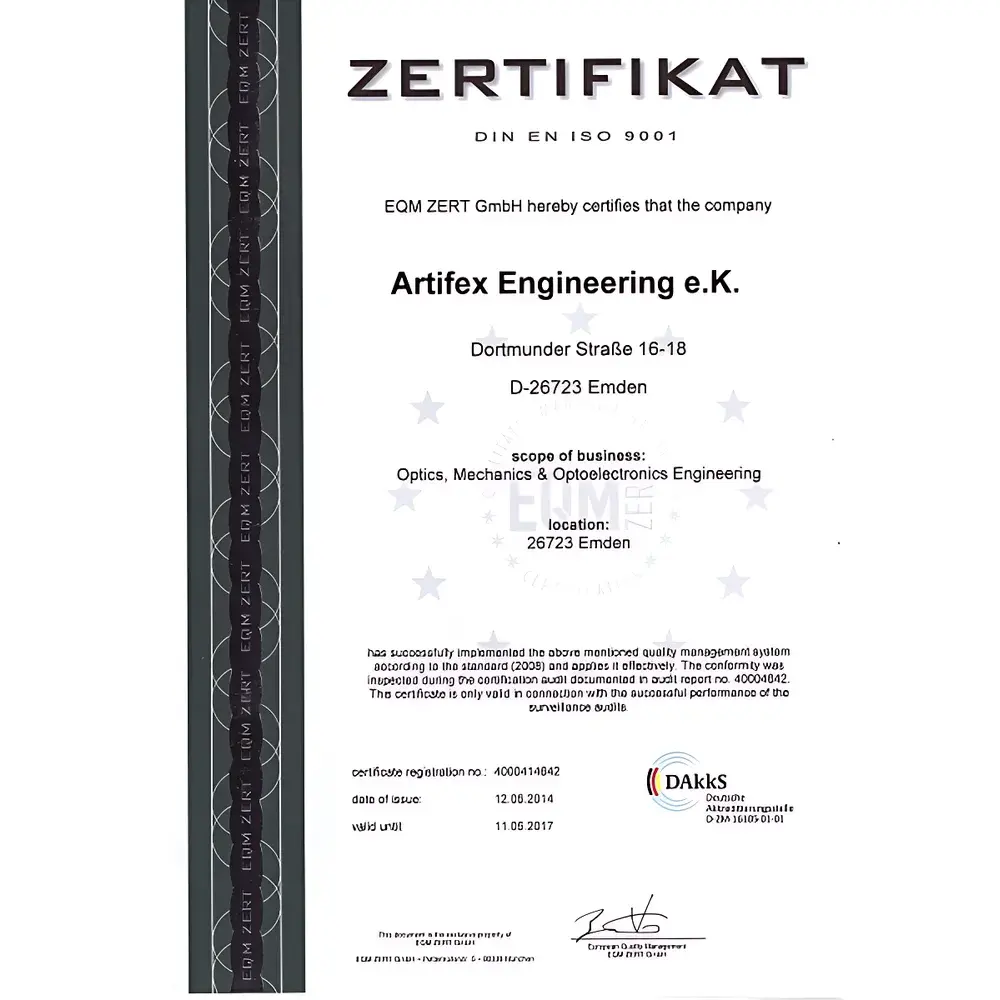
| Compliance | Designed for ISO/IEC 17025-aligned lab environments |
| Software | PC-based GUI with automated PDF report generation, audit-trail-ready configuration logging |
Overview
The Artifex LIV100, LIV120, and LDD100 series constitute a modular, high-fidelity laser diode characterization platform engineered for precision photonic device validation across R&D, incoming inspection, and production-grade reliability testing. These systems implement pulsed current-voltage-optical (LIV) measurement principles based on controlled transient excitation—enabling accurate extraction of threshold current (Ith), slope efficiency, series resistance, quantum efficiency, and thermal roll-over behavior without significant self-heating artifacts. The LIV100 operates exclusively in pulsed mode, optimized for sub-millisecond thermal isolation; the LIV120 extends functionality to quasi-continuous wave (QCW) and true continuous-wave (CW) operation, supporting accelerated aging protocols and dynamic thermal profiling. The LDD100 serves as a standalone, digitally programmable current source with nanosecond-level timing fidelity, suitable for integration into custom test benches or hybrid setups requiring synchronized optical-electrical acquisition.
Key Features
- Three-tier pulse architecture: LIV100-F (50 ns rise, 150 ns–10 µs pulse width), LIV100-L (500 ns rise, 2–100 µs), and LIV100-XL (1 µs rise, 5–2000 µs) — enabling selection based on thermal time constant matching for chip-scale or bar-level devices.
- LIV120 supports four operational modes: CW-LIV, pulse-LIV, CW-burst, and pulse-burst — including “soft-pulse” capability where minimum current is programmable (non-zero baseline), preserving junction temperature stability during multi-step sweeps.
- Current output range spans 250 mA to 1200 A with up to 4000 discrete current steps per sweep, ensuring high-resolution mapping of nonlinear I–V and L–I characteristics.
- Dual-spectrum compatibility: Integrated support for spectrometers covering 250–1100 nm (UV-VIS-NIR) and 400–1650 nm (NIR-SWIR), facilitating wavelength-dependent efficiency analysis and spectral shift tracking under stress conditions.
- LDD100 delivers 200 A peak current with 25 ns rise/fall times (no overshoot), 50 ns–3 s pulse width programmability, and direct USB-controlled analog current regulation — ideal for driving high-power bars, stacks, or VCSEL arrays in custom optical test configurations.
Sample Compatibility & Compliance
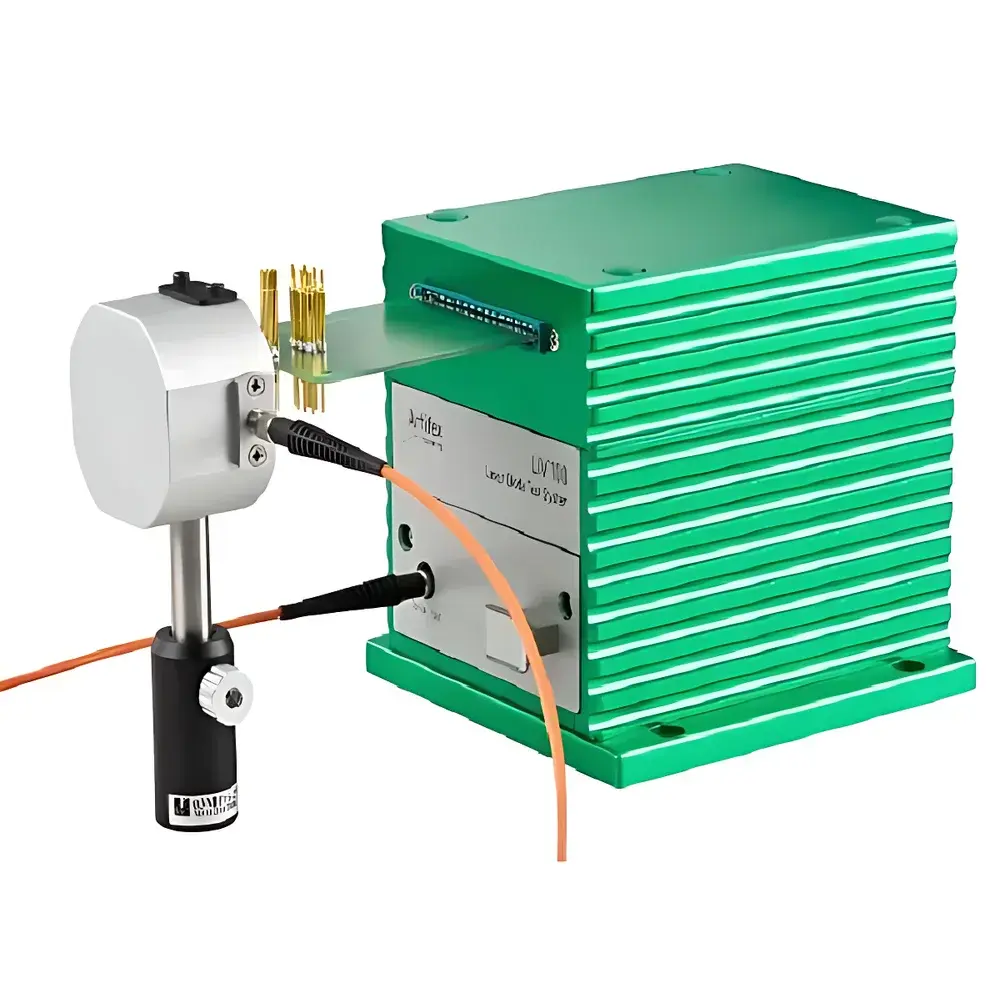
The system accommodates bare die (on submounts), unpackaged bars, and fully packaged TO-cans or butterfly modules via configurable interconnect solutions including ribbon probes, needle-style fixtures, vacuum chucks, and thermoelectric cooler (TEC) stages with closed-loop temperature control (–40 °C to +85 °C). All hardware and firmware are designed to support traceable calibration workflows aligned with ISO/IEC 17025 requirements. Data acquisition timestamps, parameter configurations, and instrument state logs are embedded in exported reports to satisfy GLP/GMP documentation needs. While not certified to FDA 21 CFR Part 11 out-of-the-box, the software architecture supports audit trail implementation and electronic signature integration upon customer-defined validation protocols.
Software & Data Management
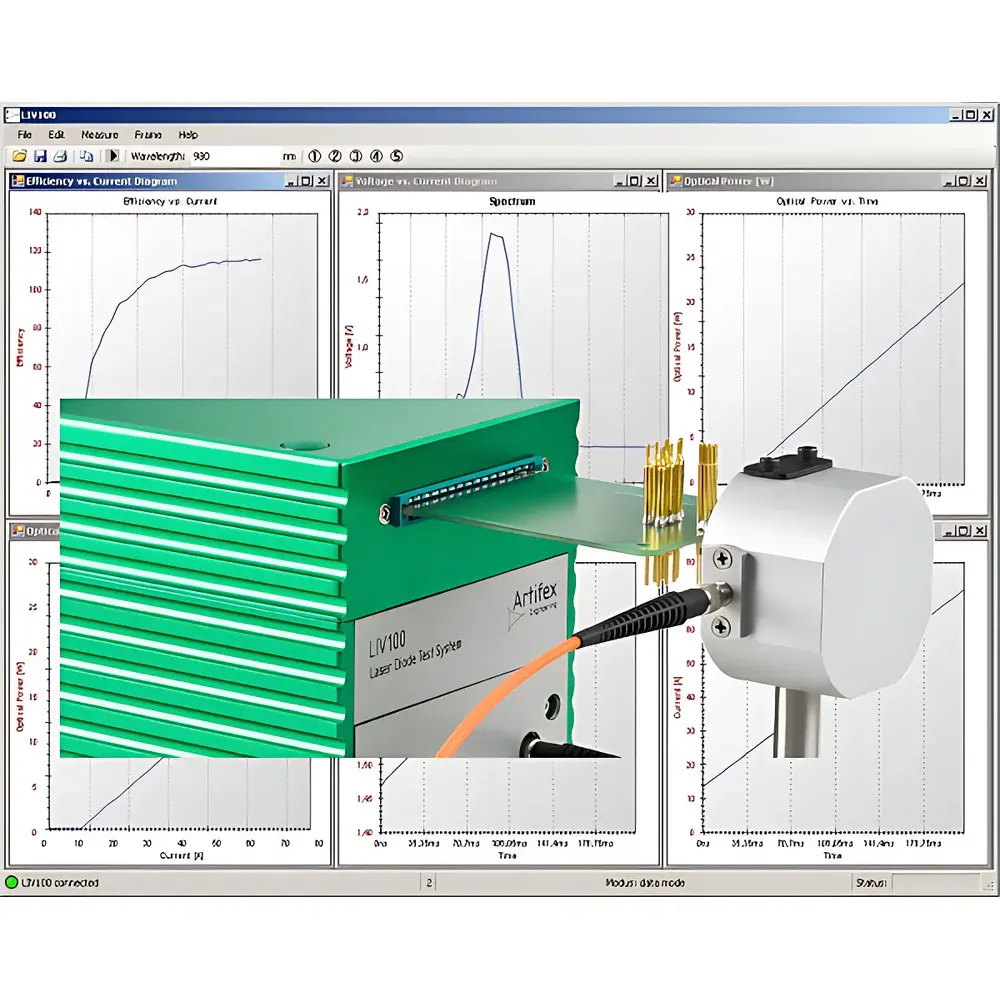
The Windows-based LIV Control Suite provides intuitive graphical setup of measurement sequences, real-time waveform preview, and synchronized optical/electrical data capture at up to 1 GS/s sampling rate (dependent on external digitizer). Each test run generates a timestamped, metadata-rich dataset containing raw I(t), V(t), and Popt(t) traces, derived parameters (e.g., differential quantum efficiency, series resistance), and spectral centroid shifts. One-click PDF report generation includes annotated plots, pass/fail flags against user-defined limits, and full instrument configuration history. Export formats include CSV, HDF5, and MATLAB .mat for downstream statistical analysis or machine learning model training. Configuration files are version-controlled and support batch deployment across multiple units in multi-station test farms.
Applications
- Pre- and post-packaging LIV screening of edge-emitting laser diodes (EELDs), vertical-cavity surface-emitting lasers (VCSELs), and high-power diode bars used in fiber laser pumping, medical aesthetics, and industrial material processing.
- Incoming quality assurance for OEM suppliers — verifying compliance with datasheet specifications including threshold current drift, forward voltage consistency, and optical power linearity across temperature and drive conditions.
- Reliability assessment via accelerated life testing (ALT), including burn-in cycles with periodic LIV snapshots to detect early-stage degradation mechanisms such as facet oxidation or solder fatigue.
- Process development feedback for epitaxial growth, wafer bonding, and packaging teams — correlating structural defects observed via SEM/EBIC with anomalous LIV signatures like kink behavior or hysteresis.
- Integration into automated test equipment (ATE) platforms through USB command scripting (SCPI-like syntax) and DLL-based API access for LabVIEW, Python, or C++ host applications.
FAQ
Does the LIV100 support continuous-wave (CW) measurements?
No — the standard LIV100 is strictly a pulsed-only system. CW capability requires the LIV120 platform or a custom-modified LIV100 configuration.
Can the LIV120 perform simultaneous spectral and LIV measurements?
Yes — its synchronized trigger architecture enables concurrent acquisition of electrical waveforms and spectrometer frames using hardware-level gating, eliminating temporal misalignment errors.
What is the minimum measurable optical power with the integrated spectrometer option?
System sensitivity depends on grating selection and integration time; typical detection limit is ~10 nW with 10 ms integration and high-efficiency optics.
Is TEC temperature control included as standard equipment?
A TEC stage and driver are available as optional accessories — not bundled with base LIV100/LIV120 configurations but fully supported in mechanical and thermal interface design.
How is calibration traceability maintained across units and over time?
Each system ships with factory calibration certificates referencing NIST-traceable standards for current, voltage, and optical power. Users may perform field verification using external reference sources and log results within the software’s calibration management module.
Related Products