
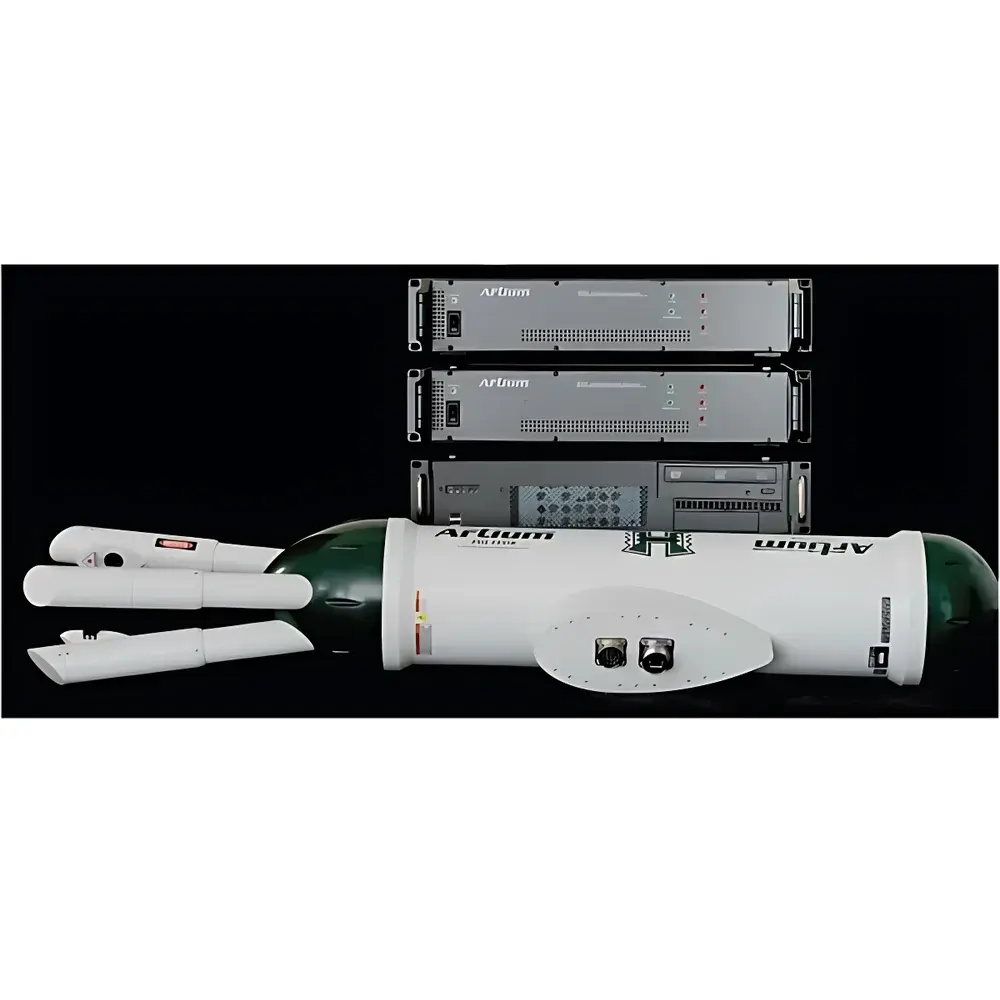
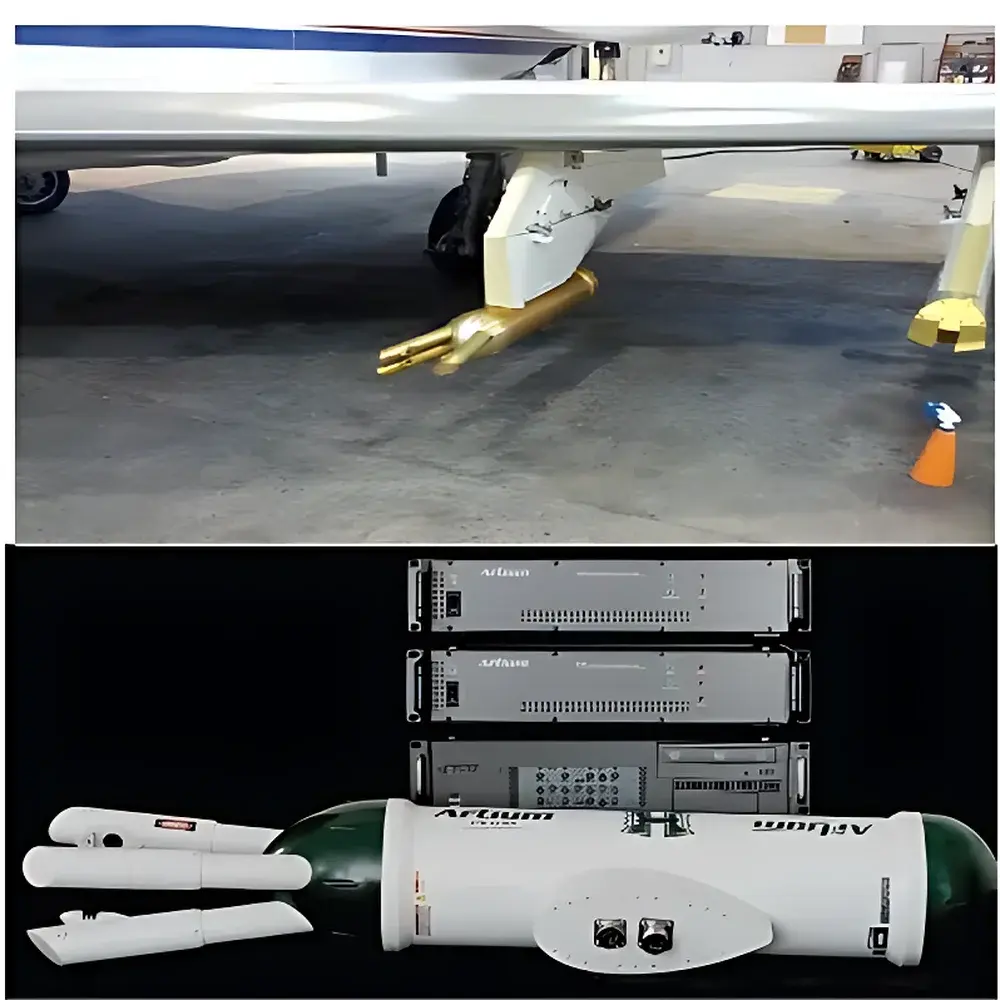
Artium PDI-FPDR Dual-Range Airborne Phase Doppler Interferometry Probe
| Brand | Artium |
|---|---|
| Origin | USA |
| Model | PDI-FPDR |
| Instrument Type | Aerosol Detector |
| Application | Airborne Cloud Microphysics Measurement |
| Laser Source | Diode-Pumped Solid-State (DPSS) |
| Optical Configuration | Transmissive Dual-Beam Interferometric |
| Particle Discrimination | Spherical Liquid Droplets vs. Ice Crystals |
| Optional Feature | Integrated Anti-Icing Heater |
| Compliance Context | Designed for FAA Part 25/27-certified research aircraft integration and NASA GRC-validated flight test protocols |
Overview
The Artium PDI-FPDR Dual-Range Airborne Phase Doppler Interferometry (PDI) Probe is an engineered solution for in-situ, real-time characterization of cloud microphysical properties during high-speed atmospheric flight operations. Unlike conventional forward-scatter or optical array probes, the PDI-FPDR operates on the fundamental principle of phase Doppler interferometry — a coherent laser-based technique that measures both droplet diameter and axial velocity of individual spherical particles by analyzing the phase shift and fringe frequency of scattered light from two intersecting Gaussian laser beams. This physics-based discrimination enables unambiguous rejection of non-spherical ice crystals, dust, or debris, ensuring measurement fidelity exclusively for liquid water droplets within defined size and velocity ranges. The probe’s dual-range optical configuration supports simultaneous high-resolution detection across two distinct particle size domains: 1–100 µm (high-sensitivity low-velocity mode) and 10–1000 µm (extended-range high-velocity mode), making it suitable for stratocumulus, cumulus, and supercooled large droplet (SLD) environments.
Key Features
- Transmissive dual-beam DPSS laser architecture (532 nm wavelength) with <10 mW average power per beam — optimized for long-term stability, minimal thermal drift, and resistance to mechanical shock during turbulent flight
- Real-time, non-intrusive single-particle resolution without sampling artifacts or evaporation bias — no inlet heating, no flow distortion, no particle loss due to inertial impaction
- Integrated anti-icing heater (optional) compliant with MIL-STD-810G thermal shock and icing cycle requirements — maintains optical aperture clarity under sustained −40 °C ambient and liquid water content (LWC) > 0.5 g/m³ conditions
- Modular hardware design: detachable optical head (transmitter/receiver), ASA real-time signal processor (FPGA-accelerated pulse analysis), and AIMS software platform for onboard data reduction and telemetry streaming
- Automated calibration verification via built-in reference scatterers and dynamic alignment monitoring — eliminates need for ground recalibration between sorties
Sample Compatibility & Compliance
The PDI-FPDR is validated for airborne deployment on turboprop and jet-powered research platforms including NASA’s DC-8, NOAA’s WP-3D, and U.S. Army C-12 Huron. It meets structural mounting requirements per DO-160G Section 21 (vibration) and Section 25 (explosive atmosphere). While not a certified aviation safety device, its measurement outputs are traceable to NIST-traceable reference standards for droplet sizing and velocity. Data acquisition conforms to NASA GRC Flight Test Instrumentation Standards (FTIS-001) and supports post-mission reconciliation with ASTM D6491 (Standard Practice for In-Situ Measurement of Cloud Liquid Water Content) and ISO 21507 (Liquid Particle Counting by Light Obscuration). The system does not require external vacuum or purge gas — operation is fully self-contained and compatible with standard aircraft 28 VDC power and ARINC-429 telemetry interfaces.
Software & Data Management
The AIMS (Aerosol Interferometry Measurement System) software suite provides real-time visualization, histogram binning, and statistical moment calculation (D10, D32, Dv50, number concentration, LWC) directly onboard. Raw interferogram data is stored in HDF5 format with embedded metadata (GPS time, pressure altitude, true airspeed, attitude angles) for synchronized multi-instrument analysis. AIMS supports export to NetCDF-4 and CSV formats compliant with ICARTT and NASA’s AMES file standards. Audit trails, user access control, and electronic signature capability align with GLP-compliant workflows; optional 21 CFR Part 11 modules are available for regulated environmental monitoring programs requiring data integrity validation.
Applications
- Cloud physics research: quantification of droplet size distribution evolution during adiabatic ascent, entrainment mixing, and collision-coalescence onset
- Aircraft icing certification testing: SLD characterization per AC 20-137B and EASA CS-25 Appendix C requirements
- Remote sensing validation: ground-truthing of satellite-derived cloud optical depth and effective radius products (e.g., MODIS, CALIPSO)
- Atmospheric chemistry studies: correlation of droplet size-resolved composition (via coupled aerosol mass spectrometry) with hygroscopic growth kinetics
- Wind tunnel validation: benchmarking of LES and DNS simulations of turbulent droplet dispersion in controlled shear flows
FAQ
What particle shapes can the PDI-FPDR reliably measure?
Only optically smooth, spherical liquid droplets produce the coherent interference fringes required for phase-based sizing. Ice crystals, irregular dust, or fragmented particles generate incoherent or multi-modal signals and are automatically excluded from the primary dataset.
Does the probe require optical alignment during flight?
No — the DPSS laser source and monolithic receiver optics are factory-aligned and sealed. Dynamic alignment compensation is performed continuously via internal beam position sensors and closed-loop piezoelectric actuators.
Can the PDI-FPDR operate in mixed-phase clouds?
Yes — its spherical selectivity allows concurrent measurement of liquid droplets while rejecting ice crystals. For full mixed-phase characterization, it is typically deployed alongside a 2D-S or HVPS imaging probe.
Is the system compatible with unmanned aerial systems (UAS)?
Yes — the compact optical head (≤12 kg) and low-power ASA processor support integration on Class III and IV UAS platforms, subject to FAA Part 107 waiver approval and payload envelope constraints.
How is calibration maintained across multiple flight campaigns?
Calibration is verified pre-flight using polystyrene latex (PSL) sphere standards and post-flight via in-air reference aerosols generated by a calibrated vibrating orifice aerosol generator (VOAG); full recalibration is recommended annually or after 200 flight hours.







