
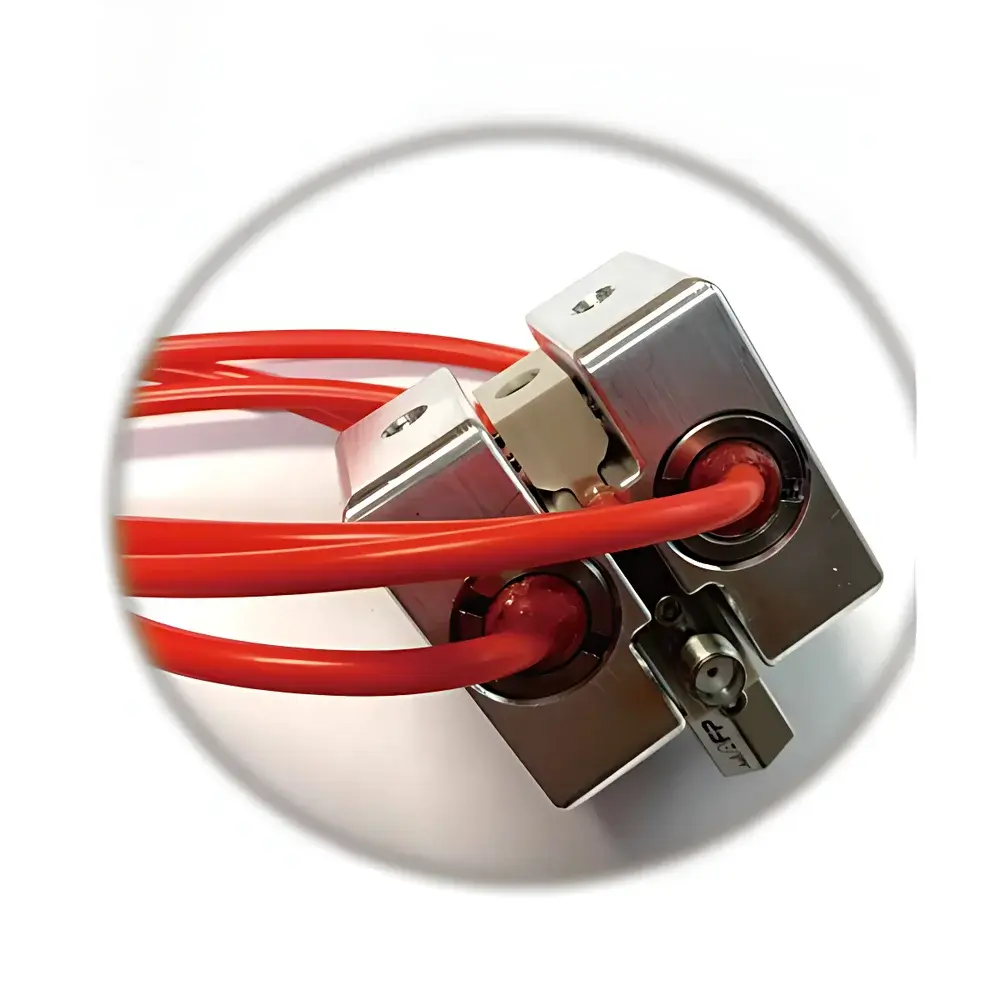
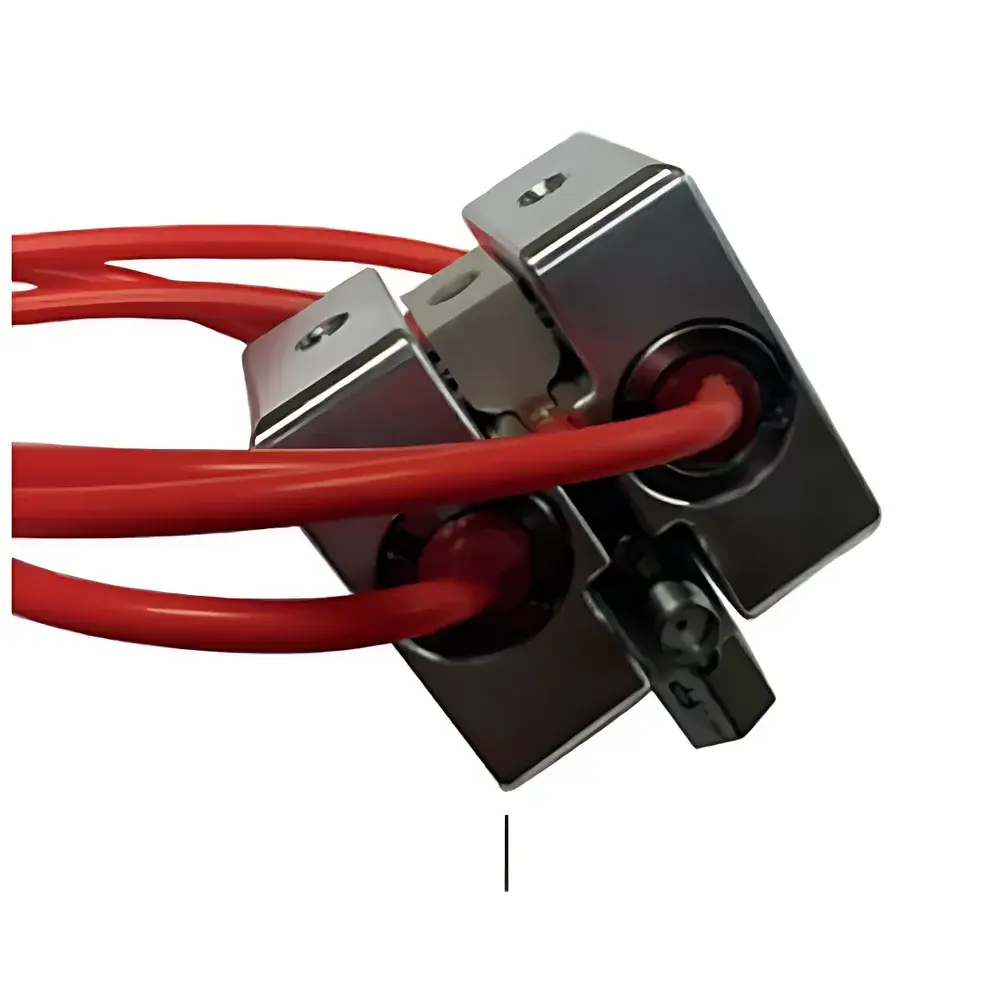
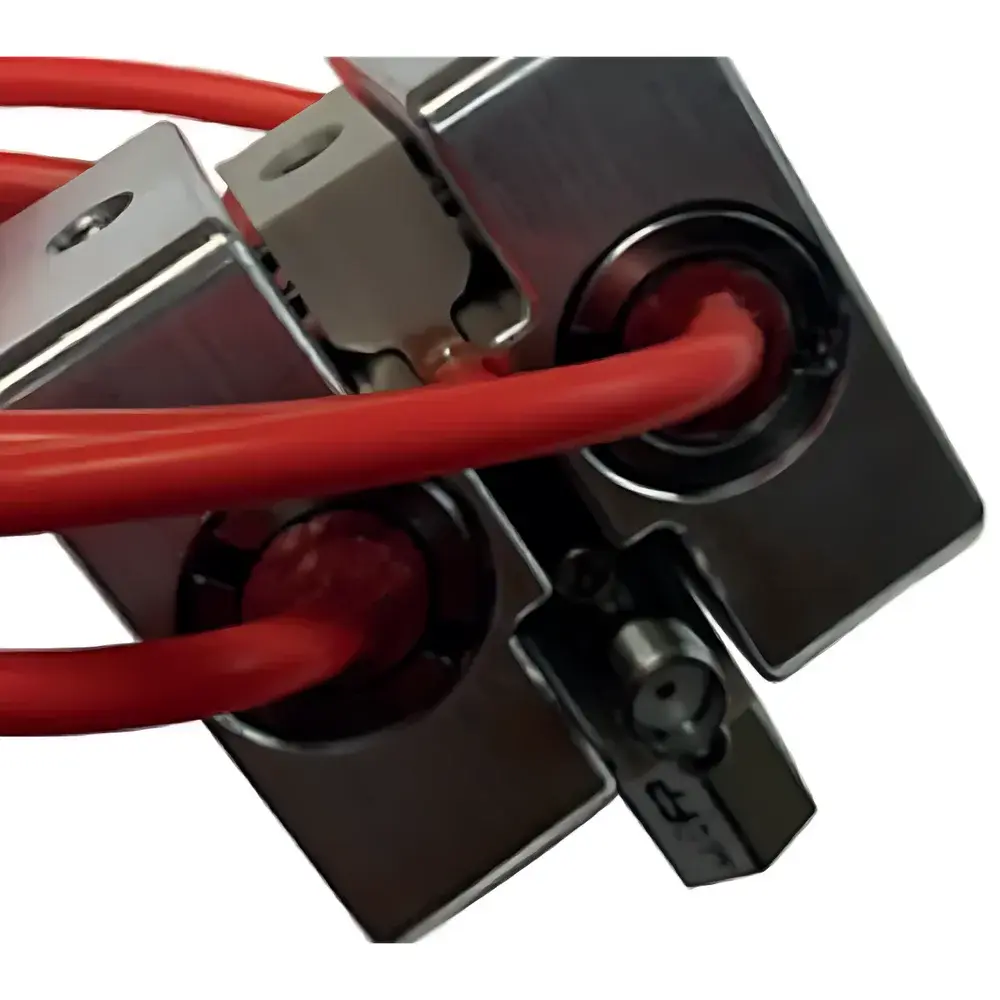
ASD FEPID Field-Emission Photoionization Detector
| Brand | ASD |
|---|---|
| Origin | Canada |
| Manufacturer Type | Authorized Distributor |
| Import Status | Imported |
| Model | FEPID |
| Compatible Instrument | Gas Chromatograph (GC) |
| Detector Type | Photoionization Detector (PID) |
| Wavelength Range | 100–900 nm |
| Detection Principle | Emission-based Photoionization |
| UV Source | Dielectric Barrier Discharge (DBD) Ultraviolet Lamp |
| Noise Level | <1% RMS |
| Detection Limit | 1 ppb (for benzene-equivalent VOCs) |
| Baseline Drift | <1% over 24 h |
| Signal Channels | 4 independent analog/digital outputs |
| Calibration Accuracy & Repeatability | ±0.1% of full scale |
Overview
The ASD FEPID Field-Emission Photoionization Detector is a next-generation, maintenance-free analytical detector engineered for high-sensitivity volatile organic compound (VOC) quantification in gas chromatography (GC) systems. Unlike conventional PID detectors relying on consumable, electrode-based vacuum ultraviolet (VUV) lamps—prone to output decay, quartz window fouling, and frequent recalibration—the FEPID employs a solid-state dielectric barrier discharge (DBD) UV source. This design eliminates filament degradation, mercury vapor constraints, and lamp replacement cycles while delivering stable photon flux across the 100–900 nm spectral band. The detector operates on the principle of photoionization: sample molecules eluting from the GC column are exposed to tunable VUV photons; when photon energy exceeds the ionization potential (IP) of target analytes (typically 7–12 eV), electrons are ejected, generating measurable ion current proportional to concentration. Its field-emission architecture enhances electron extraction efficiency and signal-to-noise ratio, enabling robust, drift-compensated response under continuous operation.
Key Features
- True maintenance-free operation: No lamp replacement, no electrode cleaning, no gas purging required—designed for >12,000 hours of uninterrupted service life.
- Dielectric barrier discharge (DBD) UV source: Generates stable, broad-spectrum VUV output without mercury, ozone generation, or thermal instability.
- Four independent signal channels: Supports simultaneous detection of multiple ionization thresholds or parallel GC column outputs via configurable analog/digital outputs (0–10 V, 4–20 mA, RS-485, Ethernet).
- Ultra-low noise and drift: <1% RMS electronic noise and <1% baseline drift over 24 hours ensure long-duration unattended analysis compliance with EPA Method 8021B and ASTM D6348.
- High ionization efficiency: Optimized electrode geometry and field-enhanced ion collection yield 2–3× higher sensitivity vs. legacy PIDs for C2–C12 hydrocarbons and oxygenated VOCs.
- Integrated temperature-controlled reaction chamber: Maintains consistent ionization conditions across ambient fluctuations (15–40 °C operating range).
Sample Compatibility & Compliance
The FEPID is compatible with all standard capillary and packed GC columns (e.g., DB-5ms, HP-PLOT Al₂O₃, Rt-Q-BOND) and interfaces seamlessly with Agilent, Thermo Fisher, Shimadzu, and PerkinElmer GC platforms via universal analog/digital I/O. It detects compounds with ionization potentials below 10.6 eV—including BTEX, chlorinated solvents, aldehydes, ketones, terpenes, and low-molecular-weight sulfur compounds—with uniform response factors traceable to NIST SRM 1648a (Urban Particulate Matter). The detector meets ISO/IEC 17025 calibration requirements and supports GLP/GMP audit trails through timestamped calibration logs and user-accessible firmware revision history. It is CE-marked, RoHS-compliant, and designed to operate within Class I, Division 2 hazardous locations per UL 60079-0.
Software & Data Management
The FEPID integrates natively with ASD’s ChromaLink™ Control Suite (v4.2+), providing real-time signal visualization, multi-channel baseline correction, auto-zero referencing, and dynamic range extension via programmable gain switching. All calibration data—including response factors, linearity curves (R² ≥ 0.9999), and system suitability test (SST) results—are stored in encrypted SQLite databases compliant with FDA 21 CFR Part 11 requirements (electronic signatures, audit trail, role-based access control). Raw detector output is exportable in .csv, .cdf (NetCDF), and .mzML formats for third-party chemometric processing (e.g., MATLAB, Python SciPy, SIMCA).
Applications
- Environmental monitoring: Real-time detection of fugitive emissions, landfill gas profiling, and ambient air quality screening per EPA TO-15 and EU EN 14662.
- Industrial hygiene: Workplace exposure assessment for solvents, monomers, and process intermediates in pharmaceutical, petrochemical, and coating manufacturing.
- Clinical breath analysis: Quantification of exhaled biomarkers (e.g., isoprene, acetone, pentane) in metabolic disorder and oncology research studies.
- Food and flavor QC: Headspace analysis of off-flavor compounds, packaging migration, and fermentation byproducts.
- Security and forensics: Rapid identification of accelerants, explosives precursors, and illicit drug synthesis volatiles.
FAQ
Does the FEPID require carrier gas or zero air for operation?
No—unlike flame ionization detectors (FID), the FEPID operates without hydrogen, air, or zero-grade nitrogen. Only the GC carrier gas (He, H₂, or N₂) passes through the detection chamber.
Can the DBD UV source be tuned to specific wavelengths?
The DBD lamp emits a broadband continuum; wavelength selectivity is achieved indirectly via selectable ionization thresholds using variable bias voltage on the collector electrode—not optical filtering.
Is the FEPID compatible with GC×GC systems?
Yes—its four independent signal channels support dual-column modulation and synchronous data acquisition from first- and second-dimension detectors.
What is the recommended calibration frequency under routine use?
Initial calibration plus quarterly verification is sufficient for most applications; annual full recalibration is advised for regulated environments (e.g., EPA-certified labs).
How does the FEPID handle humidity interference?
Integrated Nafion®-based moisture management reduces water cluster formation in the ionization region, maintaining <±3% response variation across 10–90% RH.



