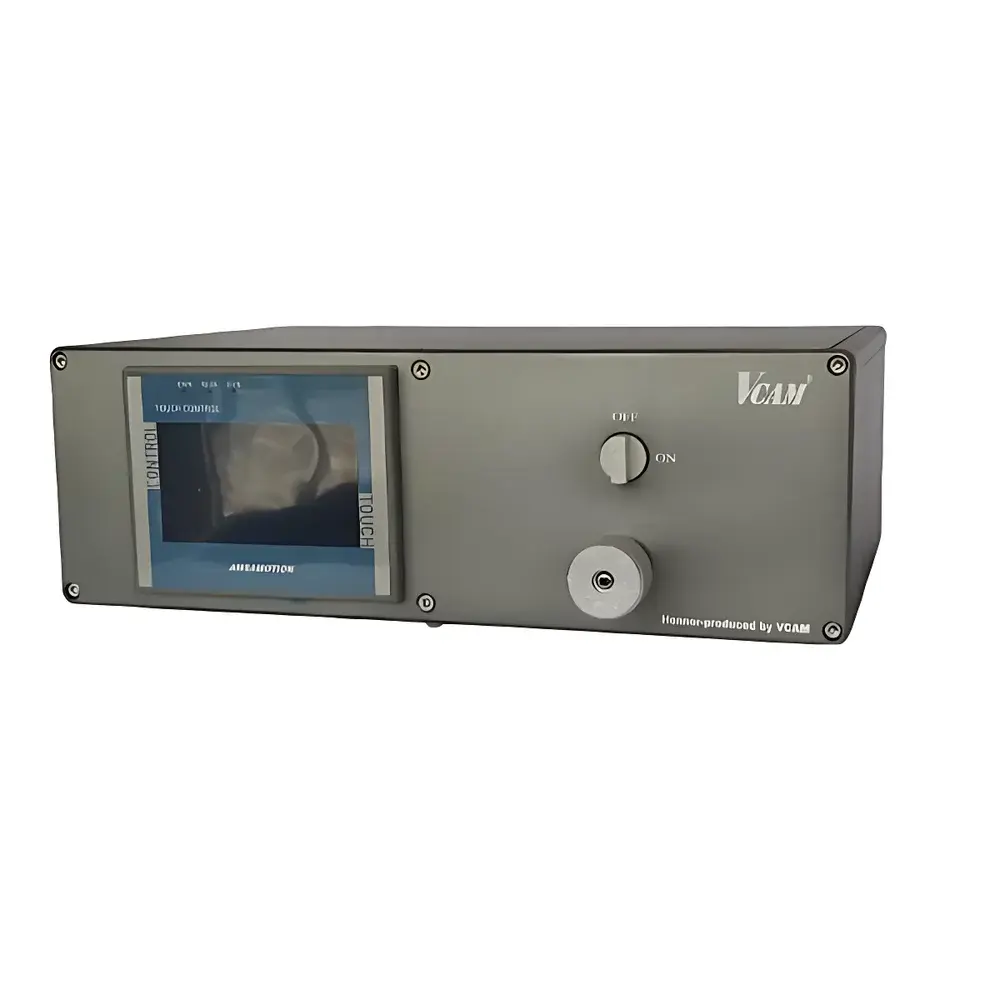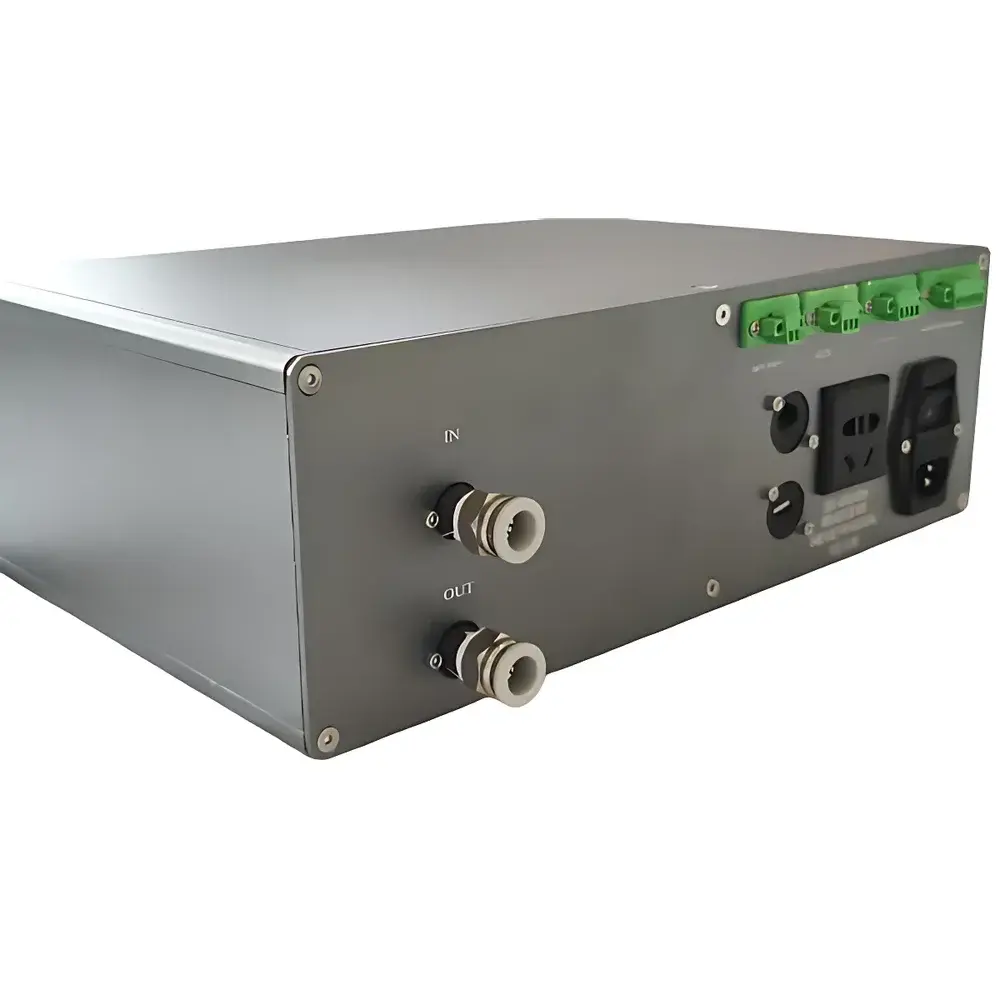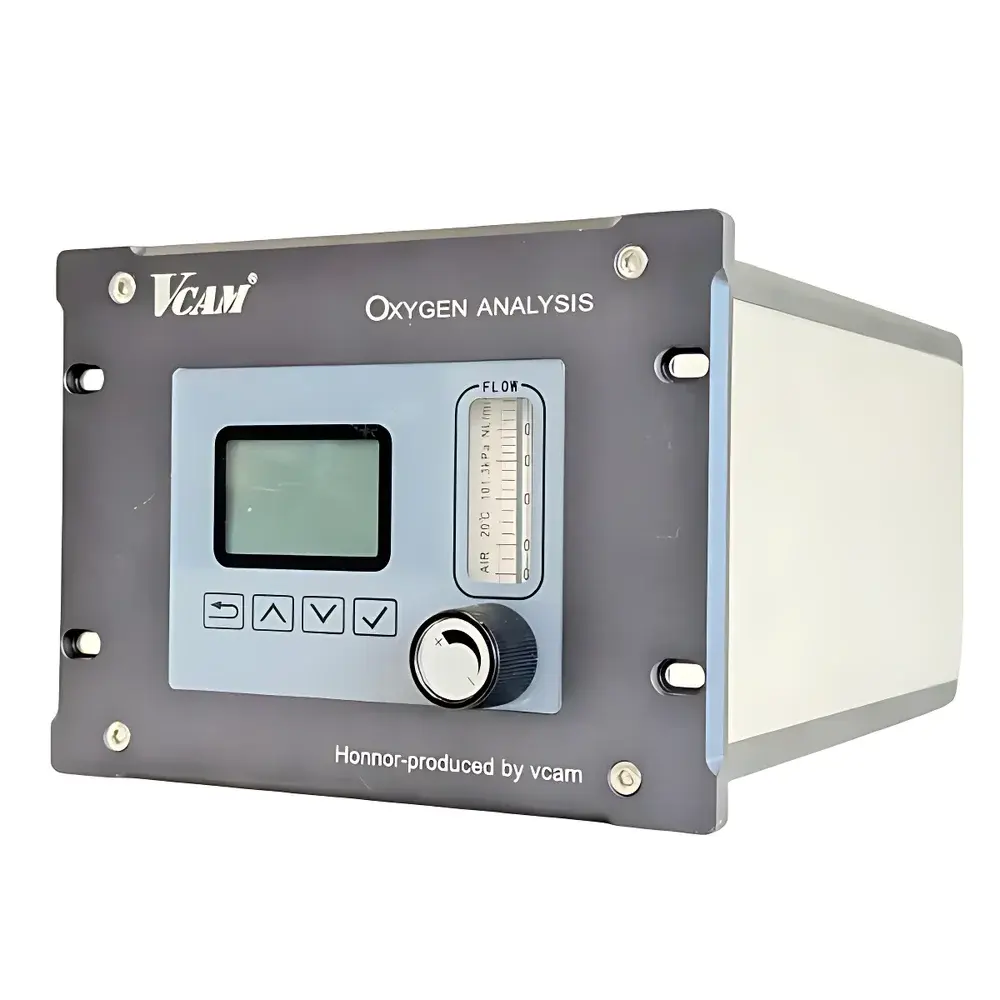
Asicotech PGC-3000 Online Gas Chromatograph
| Brand | Asicotech |
|---|---|
| Origin | Shanghai, China |
| Manufacturer Type | OEM Manufacturer |
| Regional Classification | Domestic (China) |
| Model | PGC-3000 |
| Price Range | USD 70,000 – 140,000 |
Overview
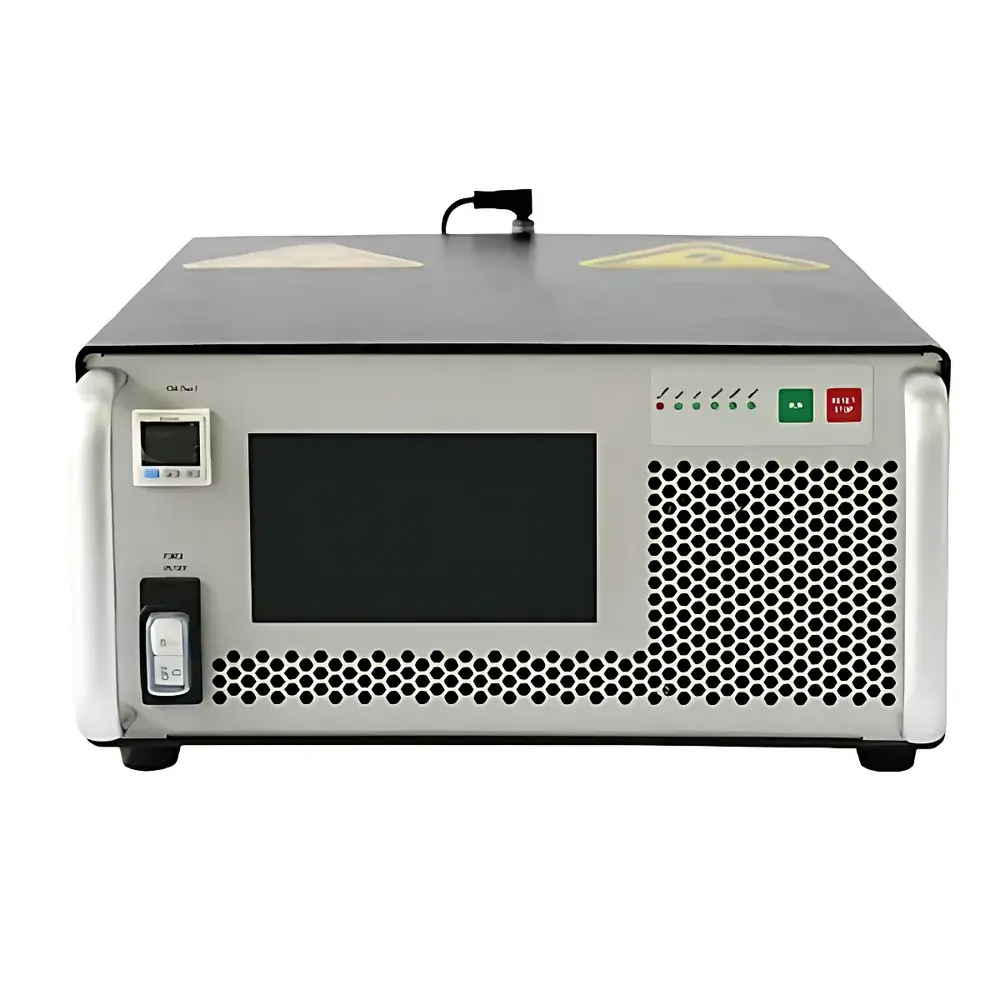
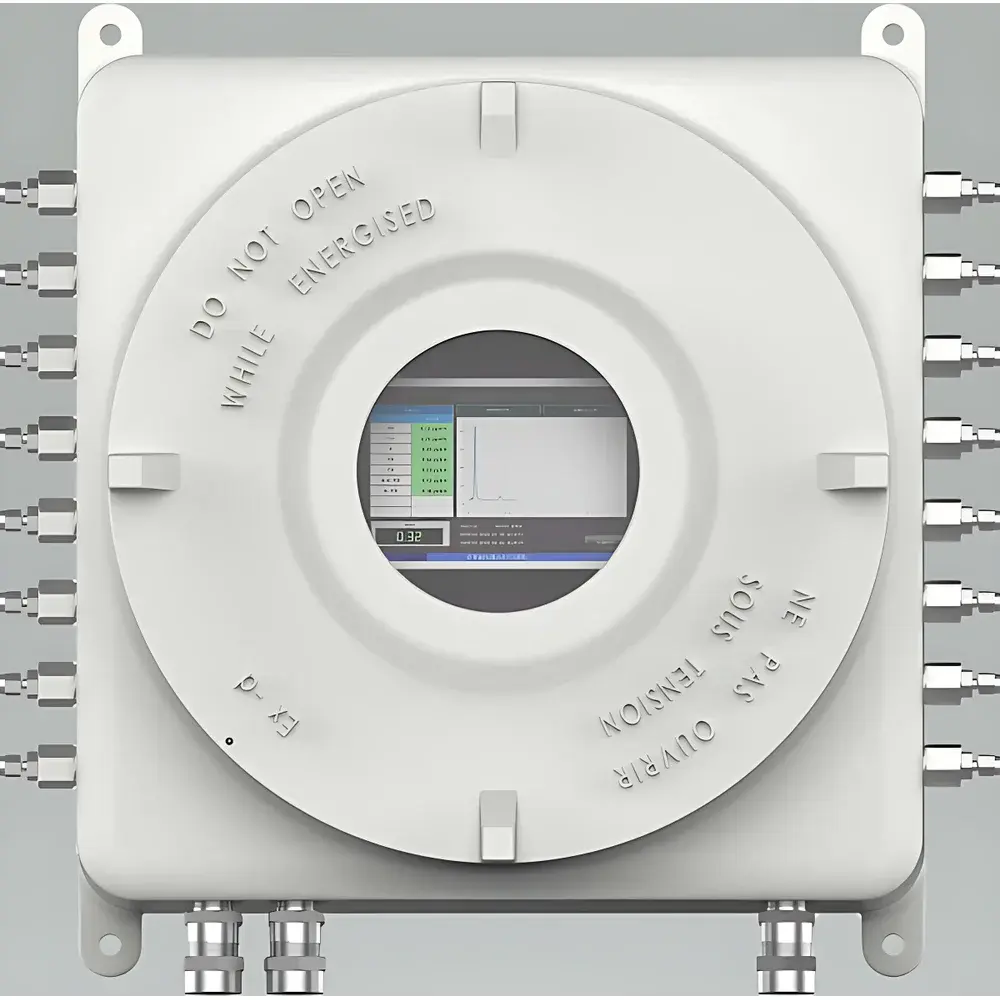
The Asicotech PGC-3000 Online Gas Chromatograph is a purpose-engineered industrial process analytical instrument designed for continuous, unattended operation in demanding production environments. Built on robust gas chromatographic principles—employing capillary column separation coupled with high-sensitivity flame ionization detection (FID), thermal conductivity detection (TCD), or optional pulsed discharge helium ionization detection (PDHID)—the PGC-3000 delivers precise, real-time compositional analysis of permanent gases, light hydrocarbons, and volatile organic compounds (VOCs) directly within process streams. Its architecture integrates temperature-controlled sample conditioning, automated multi-valve switching, and dual-column parallel or sequential analysis capability—enabling simultaneous quantification of complex mixtures across multiple analyte classes without manual intervention. Designed to meet the operational rigor of continuous-process industries, the system complies with IEC 60079-0 and IEC 60079-15 standards for non-sparking (Ex nA) and encapsulated (Ex m) protection, achieving Class I, Division 2 / Zone 2 hazardous area certification.
Key Features
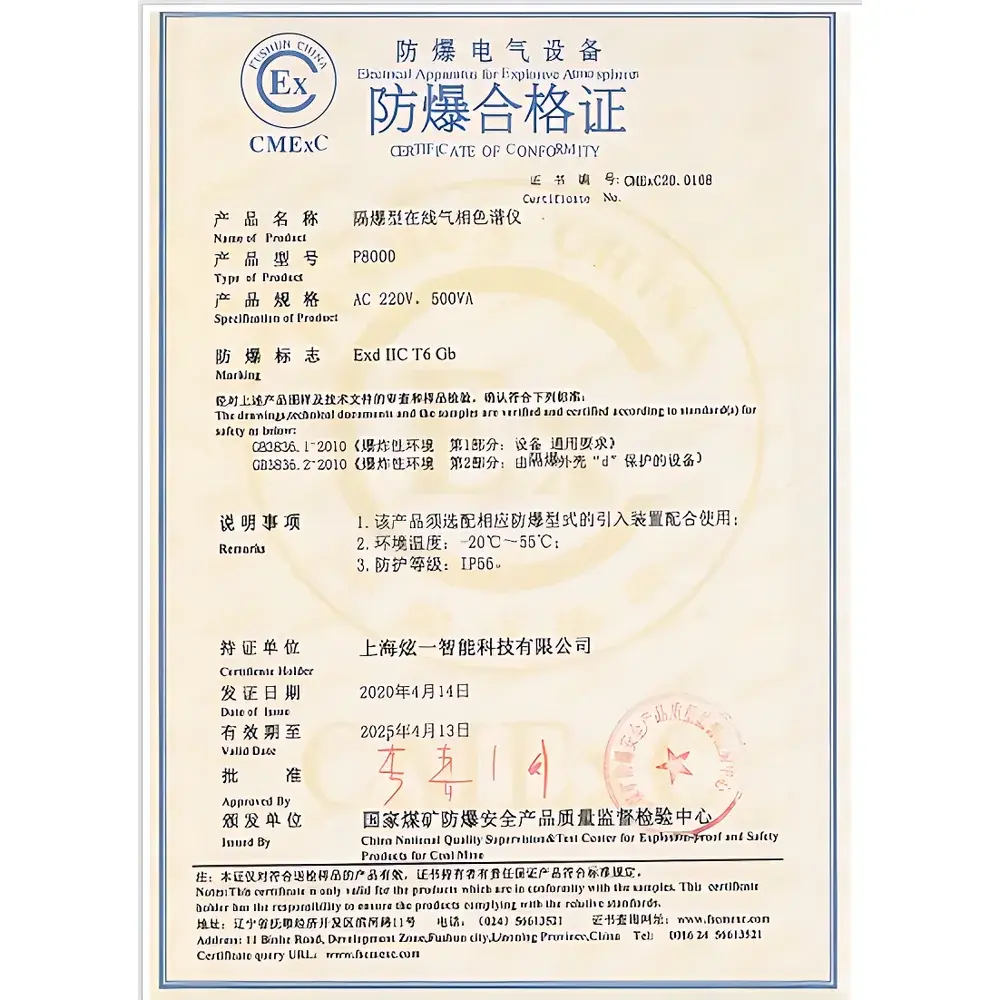
- Explosion-proof design certified to IEC 60079-0/15 (Ex nA II C T4 Gc / Ex m II C T4 Gc), suitable for installation in refinery, petrochemical, and chemical synthesis zones.
- Modular valve manifold architecture supporting up to four independent sample loops and six programmable switching events per analysis cycle—enabling multi-stream, multi-method scheduling.
- Integrated sample conditioning system with heated lines (up to 180 °C), particulate filtration (0.1 µm), moisture removal (membrane dryers or Nafion™), and pressure regulation (0.1–1.0 MPa range).
- Dual-detector configuration support: FID for hydrocarbons (detection limit ≤ 0.1 ppm C₁–C₆), TCD for H₂, O₂, N₂, CO, CO₂, CH₄ (±0.5% full scale reproducibility), with optional PDHID for ultra-trace electronegative species (e.g., Cl₂, HCl, SO₂).
- Embedded Linux-based controller with deterministic real-time OS, enabling sub-second valve actuation timing and cycle-to-cycle retention time stability < 0.02 min (RSD).
- Self-diagnostics including column flow verification, detector baseline drift monitoring, and carrier gas purity validation via built-in pressure decay test routines.
Sample Compatibility & Compliance
The PGC-3000 accommodates gaseous samples across a wide matrix spectrum: refinery off-gases (C₁–C₅), syngas (H₂/CO/CO₂/CH₄), semiconductor-grade ultrahigh-purity (UHP) gases (N₂, Ar, He, H₂ with O₂/H₂O < 1 ppb), ambient air, and stack emissions containing aromatic VOCs, aldehydes, ketones, sulfur compounds, and nitrogen-containing organics. It supports compliance with ASTM D1945 (analysis of natural gas), ASTM D1946 (analysis of reformed gas), ISO 8573-5 (purity testing of compressed air), US EPA Method TO-15 and Method 18 for regulated emission monitoring, and China’s HJ 1012–2018 standard for fixed-source VOCs online monitoring. All data acquisition and reporting workflows are structured to support GLP/GMP audit readiness, including electronic signatures, user access control, and 21 CFR Part 11–compliant audit trails when deployed with optional software modules.
Software & Data Management
The instrument operates with Asicotech’s proprietary ChromoView™ 4.2 platform—a Windows-based engineering workstation software that provides method development, sequence scheduling, calibration management, and trend visualization. Raw chromatograms and processed results are stored in vendor-neutral .CDF (NetCDF) format compliant with ASTM E1319. Data export supports OPC UA (IEC 62541) server integration for direct ingestion into DCS/SCADA systems (e.g., Emerson DeltaV, Honeywell Experion, Siemens PCS7). Remote diagnostics utilize TLS 1.2–encrypted SSH tunnels; firmware updates and method deployments occur over authenticated SFTP channels. All system logs—including hardware status, calibration history, alarm events, and operator actions—are timestamped, digitally signed, and retained for ≥18 months as required under ISO/IEC 17025 clause 7.9.
Applications
- Petrochemical & Refining: Real-time monitoring of FCC off-gas composition, hydrogen purity in hydrotreater recycle streams, MTO product distribution (ethylene, propylene, butenes), and benzene/toluene/xylene (BTX) recovery efficiency in aromatics extraction units.
- Electronics & Specialty Gases: Continuous verification of electronic-grade nitrogen (EN-5.5) and argon (Ar-6.0) for semiconductor fab tool purge lines; detection of ppq-level phosphine (PH₃) and arsine (AsH₃) in dopant gas cylinders.
- Environmental Monitoring: Fixed-source CEMS integration for methane and total hydrocarbon (THC) reporting per EU Directive 2010/75/EU; ambient air quality networks measuring BTEX, formaldehyde, and hydrogen sulfide at urban and industrial fence-line locations.
- Emerging Energy & Advanced Materials: In-situ analysis of plasma-assisted ammonia synthesis effluent, hydrogen isotopic ratio (H/D/T) tracking in fusion fuel loop simulations, and trace amine quantification (e.g., monoethanolamine) in carbon capture solvent regeneration streams.
FAQ
What certifications does the PGC-3000 hold for hazardous area installation?
It carries IECEx and CNEx certifications for Ex nA II C T4 Gc and Ex m II C T4 Gc, meeting ATEX 2014/34/EU Annex II requirements for Zone 2 deployment.
Can the system operate fully autonomously for extended periods without manual calibration?
Yes—using internal standard addition and retention time locking (RTL) with reference compounds, it maintains quantitative accuracy for ≥30 days between calibrations under stable operating conditions.
Is remote firmware update supported, and how is cybersecurity ensured?
Firmware updates are delivered via signed packages over TLS-secured connections; all network interfaces enforce role-based access control and disable unused services (e.g., Telnet, FTP) by default.
Does the system support integration with third-party LIMS or MES platforms?
Yes—via OPC UA, RESTful API endpoints, and configurable CSV/JSON export templates aligned with ISA-95 Part 2 data models.
What is the typical mean time between failure (MTBF) under continuous 24/7 operation?
Field data from 42 deployed units across 5 years indicate an average MTBF of 14,200 hours, with detector modules demonstrating >20,000 hours lifetime under standard maintenance intervals.