
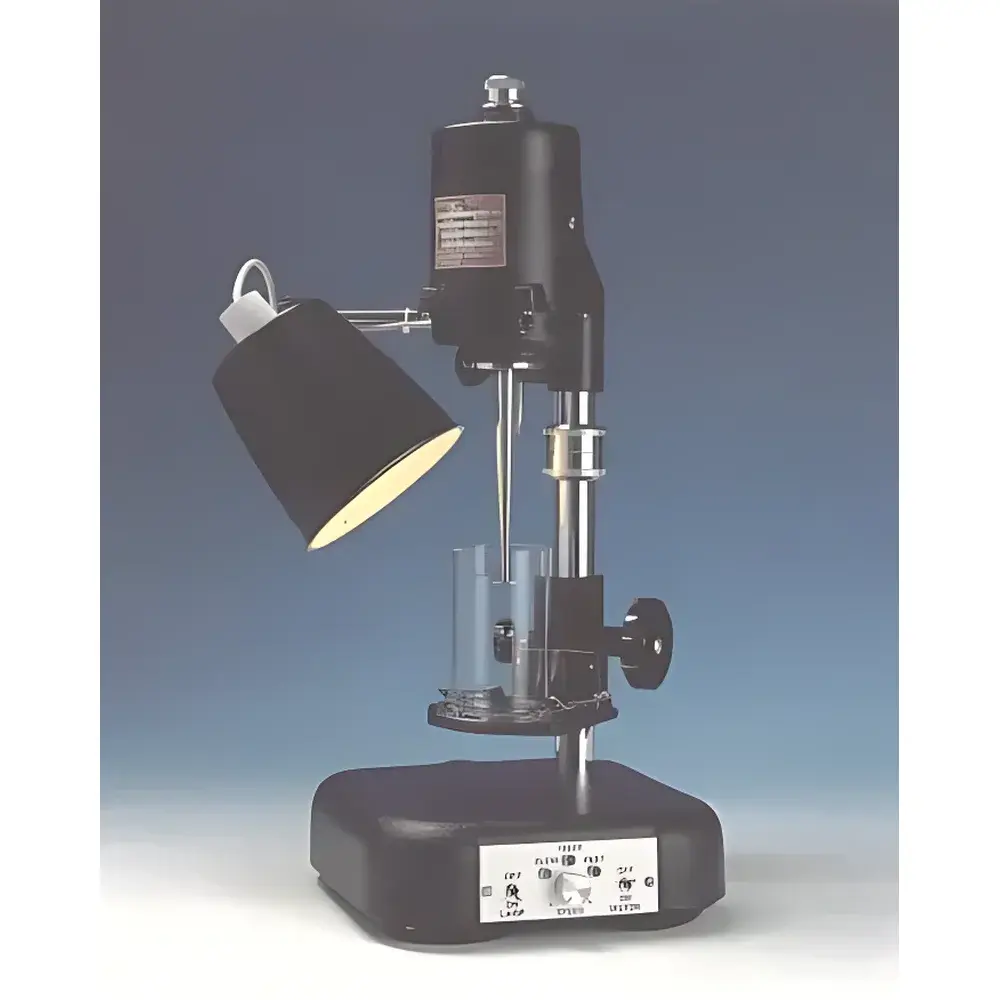
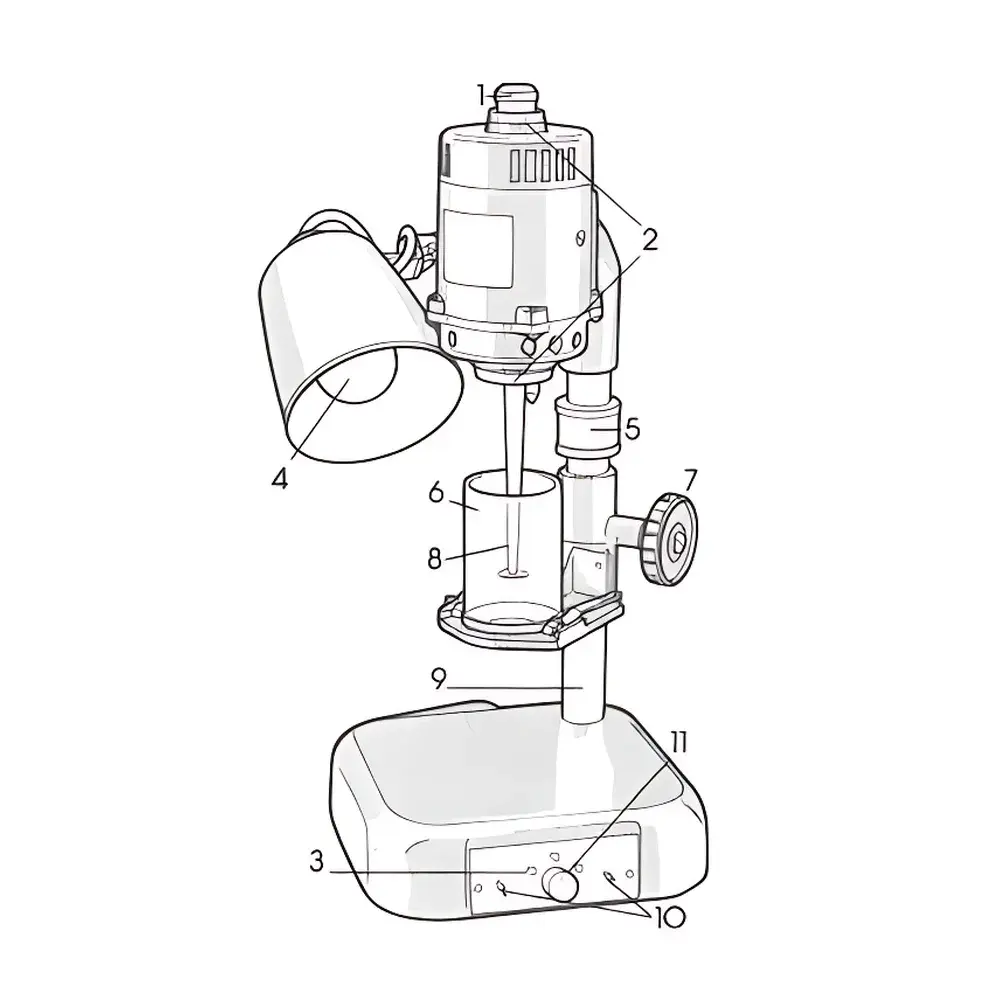
ASTMD1076 Rubber Emulsification Stability Tester
| Origin | USA |
|---|---|
| Manufacturer Type | Authorized Distributor |
| Origin Category | Imported |
| Model | MYL-D1076 |
| Pricing | Available Upon Request |
Overview
The ASTMD1076 Rubber Emulsification Stability Tester (Model MYL-D1076) is a precision-engineered instrument designed to quantitatively assess the emulsification stability of natural and synthetic rubber latex dispersions under standardized thermal and mechanical agitation conditions. Operating on the principle of controlled phase separation kinetics, the system subjects rubber emulsions to regulated temperature (typically 54 °C per ASTM D1076) and reproducible rotational shear via a calibrated motor-driven stirrer assembly. The instrument measures the time required for distinct phase separation—specifically, the formation of a continuous aqueous layer, a dispersed rubber-rich interphase, and an oil or coalesced polymer layer—to occur following cessation of agitation. This measurement directly reflects the colloidal stability and surfactant efficacy within the rubber formulation, serving as a critical quality control parameter in latex compounding, dip-molding, and adhesive manufacturing.
Key Features
- Microprocessor-controlled motor system with closed-loop speed regulation, ensuring consistent rotational velocity (±0.5 rpm) across test cycles
- Integrated Peltier-heated water bath with ±0.3 °C temperature uniformity over the full 25–80 °C operating range, compliant with ASTM D1076’s 54 °C requirement
- Dual-chamber design accommodating two simultaneous 40 mL sample tubes, enabling comparative testing and statistical replication without instrument downtime
- Optically clear borosilicate glass test tubes with engraved volume markings (10–40 mL) and standardized 127 mm height for unambiguous phase boundary observation
- Fail-safe thermal cutoff and motor overload protection, certified to UL 61010-1 and IEC 61000-6-3 electromagnetic compatibility standards
- Modular construction with quick-release tube holders and corrosion-resistant 316 stainless steel housing for long-term laboratory durability
Sample Compatibility & Compliance
The MYL-D1076 is validated for use with natural rubber (NR), styrene-butadiene rubber (SBR), nitrile rubber (NBR), and chloroprene (CR) latex formulations containing ammonia, sodium caseinate, or synthetic nonionic surfactants. It fully supports ASTM D1076 “Standard Test Method for Rubber—Evaluation of Raw Natural Rubber—Emulsification Stability” and cross-references ASTM D1417 “Standard Test Methods for Rubber—Evaluation of Raw Synthetic Rubbers”. All test protocols align with ISO/IEC 17025:2017 general requirements for competence of testing laboratories. The instrument’s mechanical repeatability (RSD ≤ 2.1% for triplicate runs on reference NR latex) satisfies GLP documentation requirements for QC release testing in regulated manufacturing environments.
Software & Data Management
While the base MYL-D1076 operates as a standalone benchtop unit with analog timer and manual observation, optional digital upgrade kits provide USB-connected data logging (via RS-232/USB bridge) compatible with Windows-based LIMS integration. Timestamped phase separation events—including initial separation onset, 10 mL aqueous layer formation, and complete demulsification—are exportable as CSV files. Audit trails record operator ID, calibration date, ambient temperature/humidity, and test chamber setpoints—supporting compliance with FDA 21 CFR Part 11 for electronic records when paired with validated software modules. Calibration certificates traceable to NIST SRM 1965 (viscosity standards) and NIST SRM 1968 (temperature reference materials) are supplied with each unit.
Applications
- Quality assurance of field-grade natural rubber latex prior to shipment or processing
- Formulation development of surfactant systems for high-solids synthetic rubber emulsions
- Stability benchmarking of preserved vs. non-preserved latex batches under accelerated aging protocols
- Root-cause analysis of coagulum formation in glove-dipping tanks and foam rubber production lines
- Supplier qualification testing per OEM technical specifications (e.g., automotive sealant suppliers requiring <15 min demulsification at 54 °C)
- Teaching laboratories conducting polymer colloidal science experiments aligned with ASTM curriculum guidelines
FAQ
Does the MYL-D1076 comply with both ASTM D1076 and ASTM D1417?
Yes—the instrument’s thermal profile, agitation geometry, and timing resolution meet all apparatus and procedural requirements specified in both standards.
Can it be used for non-rubber emulsions, such as bitumen or lubricant emulsions?
No—it is specifically engineered for rubber latex systems; viscosity range, interfacial tension dynamics, and phase separation kinetics differ significantly in petroleum-based emulsions.
Is third-party calibration certification included with delivery?
Each unit ships with a factory-issued calibration report traceable to NIST standards; ISO/IEC 17025-accredited recalibration services are available through authorized service centers.
What maintenance intervals are recommended for routine operation?
Daily visual inspection of stirrer shaft alignment and bath fluid level; quarterly verification of temperature uniformity and motor torque response using supplied calibration check kits.
How is operator error minimized during phase boundary determination?
The instrument includes a standardized viewing stand with backlighting and a 10× magnifier lens, coupled with ASTM-defined acceptance criteria for “distinct aqueous layer” (≥10 mL, ≥5 mm thickness, no visible suspended particles).






