
ATAGO CM-800α Inline Refractometer for Cutting Fluid Monitoring
| Brand | ATAGO |
|---|---|
| Origin | Japan |
| Model | CM-800α |
| Product Type | Inline Refractometer |
| Measurement Range | Brix 0.00–80.00 (ATC) |
| Accuracy | ±0.1% Brix |
| Display | Digital |
| Temperature Compensation | Automatic (ATC) |
| Installation Type | Pipe-mounted, Flow-through |
| Power Supply | DC 24 V |
| Output Signal | 4–20 mA / RS-485 (Modbus RTU) |
| IP Rating | IP65 |
| Process Connection | G1/2" or 1/2" NPT (optional) |
| Wetted Materials | SUS316L stainless steel prism & flow cell |
| Operating Temperature | 0–60 °C (process fluid) |
| Response Time | < 2 s (90% step change) |
Overview
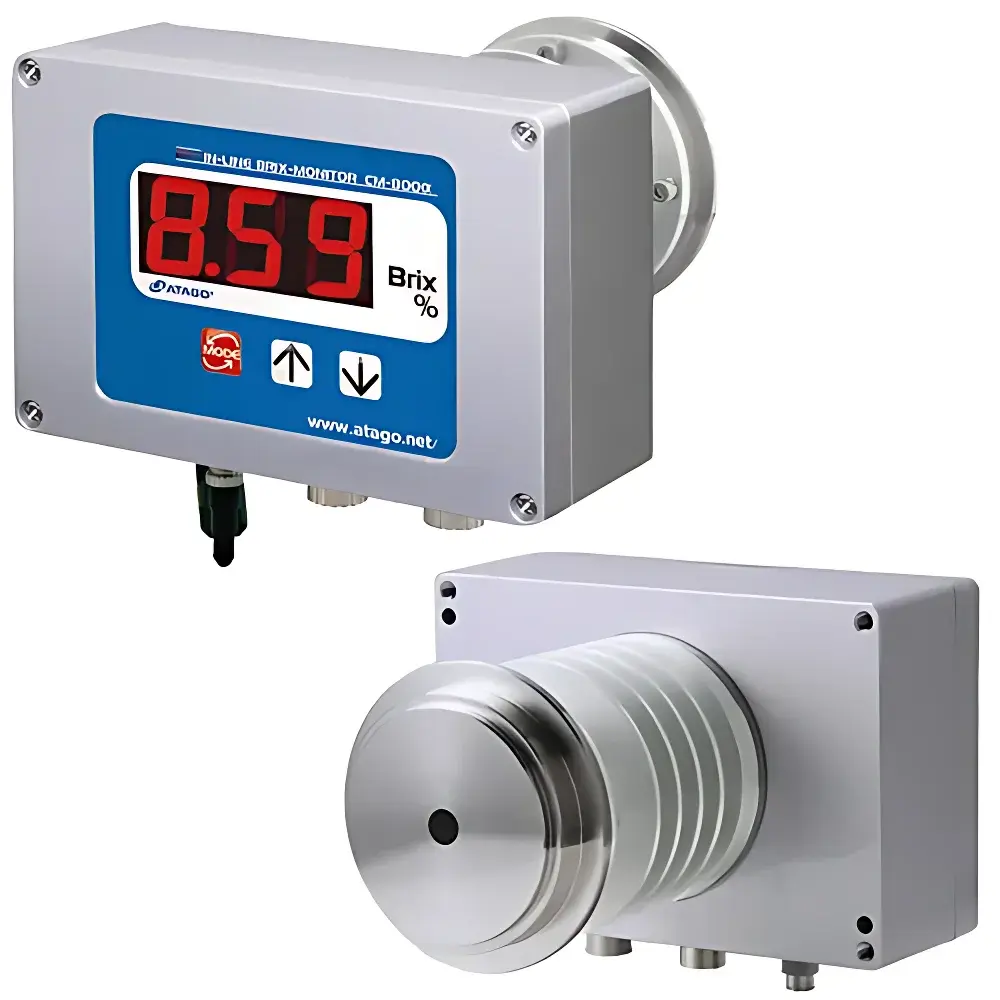
The ATAGO CM-800α Inline Refractometer is an industrial-grade optical sensor engineered for continuous, real-time concentration monitoring of water-based metalworking fluids—including soluble oils, semi-synthetics, and synthetics—in machining coolant circuits. It operates on the principle of critical-angle refractometry: as light passes from a high-refractive-index sapphire prism into the flowing fluid, the angle at which total internal reflection occurs correlates directly with the fluid’s refractive index—and thus its solute concentration, expressed as Brix (% w/w sucrose equivalent). Unlike offline sampling methods, the CM-800α integrates directly into pressurized coolant lines (0.1–6 bar typical), enabling dynamic process control without flow interruption or operator intervention. Its automatic temperature compensation (ATC) algorithm—calibrated to ISO 21748 and ASTM D115—compensates for thermal drift across 0–60 °C, ensuring metrological consistency in fluctuating shop-floor environments.
Key Features
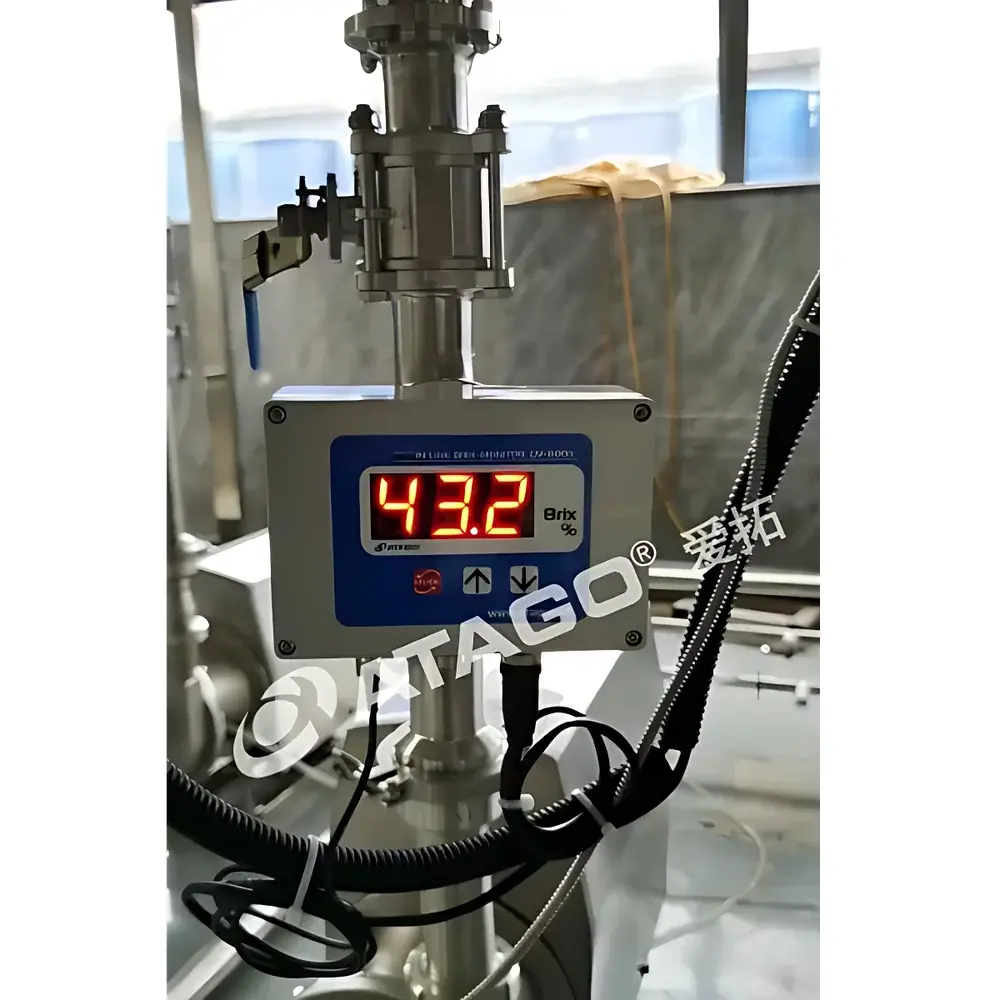
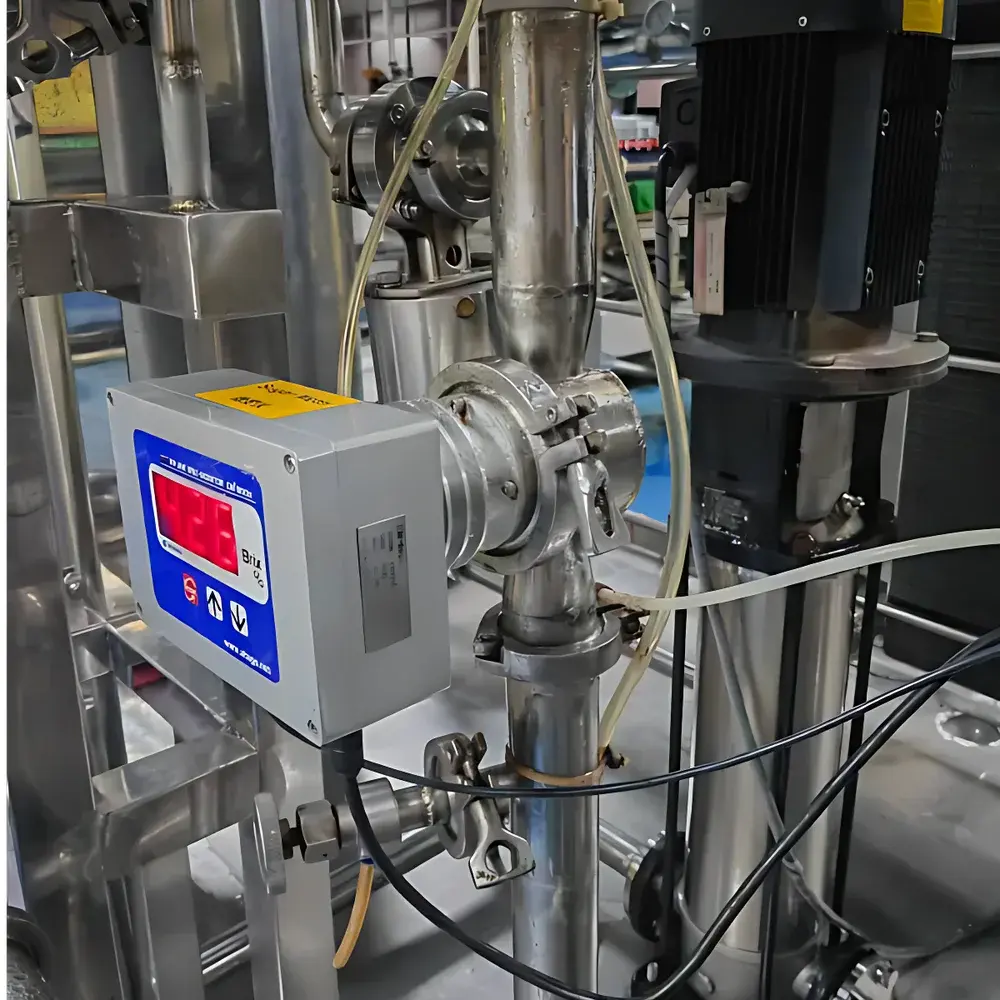
- Pipe-mounted, flow-through design with G1/2″ or 1/2″ NPT process connections for seamless integration into existing CNC machine coolant loops or central filtration systems.
- SUS316L stainless steel wetted parts and sapphire prism provide long-term chemical resistance against amine-based biocides, corrosion inhibitors, and alkaline additives common in modern emulsions.
- Digital display with local readout (Brix %, temperature, status indicators) and dual-output capability: isolated 4–20 mA analog signal for PLC/SCADA integration + RS-485 Modbus RTU for data logging and remote configuration.
- Sub-2-second response time (t90) enables closed-loop feedback control of make-up dosing pumps—critical for maintaining optimal lubricity, rust inhibition, and microbial stability.
- IP65-rated enclosure ensures reliable operation in high-humidity, oil-mist-laden machine shop environments; no moving parts or consumables reduce maintenance overhead.
Sample Compatibility & Compliance
The CM-800α is validated for use with aqueous metalworking fluids containing glycols, fatty acid soaps, sulfonates, triethanolamine, sodium nitrite, and low-concentration biocides (e.g., isothiazolinones). It is not intended for pure hydrocarbon oils, highly viscous fluids (>100 mPa·s), or slurries with suspended solids >50 µm. The instrument complies with IEC 61000-6-2 (EMC immunity) and IEC 61000-6-4 (EMC emissions), and meets CE marking requirements for industrial measurement devices. While not certified for SIL or ATEX zones, its intrinsically safe power input (DC 24 V) permits deployment in non-hazardous areas per NEC Class I, Division 2 guidelines. Data integrity aligns with GLP/GMP expectations through timestamped output and linear calibration traceability to NIST-traceable sucrose standards.
Software & Data Management
The CM-800α interfaces natively with industry-standard automation platforms via Modbus RTU, supporting direct integration into Siemens S7, Rockwell Logix, or Beckhoff TwinCAT systems. Optional ATAGO Data Logger software (Windows-based) enables batch export of time-stamped Brix and temperature logs (.csv), configurable alarm thresholds (e.g., Brix deviation >±0.5%), and trend visualization over shifts or production cycles. All configuration parameters—including calibration offset, damping factor, and ATC coefficient—are stored in non-volatile memory and survive power loss. Audit trails are maintained per FDA 21 CFR Part 11 requirements when used with compliant SCADA historians (e.g., Ignition, WinCC).
Applications
- Real-time concentration control in CNC turning, milling, and grinding operations to prevent under-dosing (leading to tool wear, workpiece burn, rust) or over-dosing (foaming, residue buildup, cost inflation).
- Monitoring emulsion stability in centralized coolant systems serving multiple machines—detecting phase separation or degradation before catastrophic failure.
- Automated feed-forward control of biocide dosing based on concentration-driven microbial risk assessment.
- Validation support for QS-9000, IATF 16949, and ISO 9001 process monitoring clauses requiring documented evidence of coolant parameter control.
- Research applications in tribology labs evaluating additive package performance under shear and thermal stress.
FAQ
How does the CM-800α differ from handheld refractometers?
Unlike portable units requiring manual sampling and subjective scale reading, the CM-800α provides continuous, operator-independent measurement with automated temperature correction and industrial-grade signal outputs.
Can it be calibrated in situ without removing the unit from the line?
Yes—zero and span calibration can be performed using deionized water (0.00 Brix) and certified sucrose standard solutions (e.g., 10.00 ±0.02 Brix) while installed, following ATAGO’s documented procedure.
What maintenance intervals are recommended?
Prism cleaning every 72 operating hours in high-contamination environments; full verification against reference standards every 3 months or per internal QA schedule.
Is firmware upgrade supported remotely?
Firmware updates require physical USB connection to a Windows PC using ATAGO’s proprietary configuration utility; no over-the-air capability is provided.
Does it support custom concentration scales beyond Brix?
The device outputs raw refractive index (nD) and temperature values via Modbus, allowing users to implement proprietary conversion algorithms in their PLC or MES system.




