
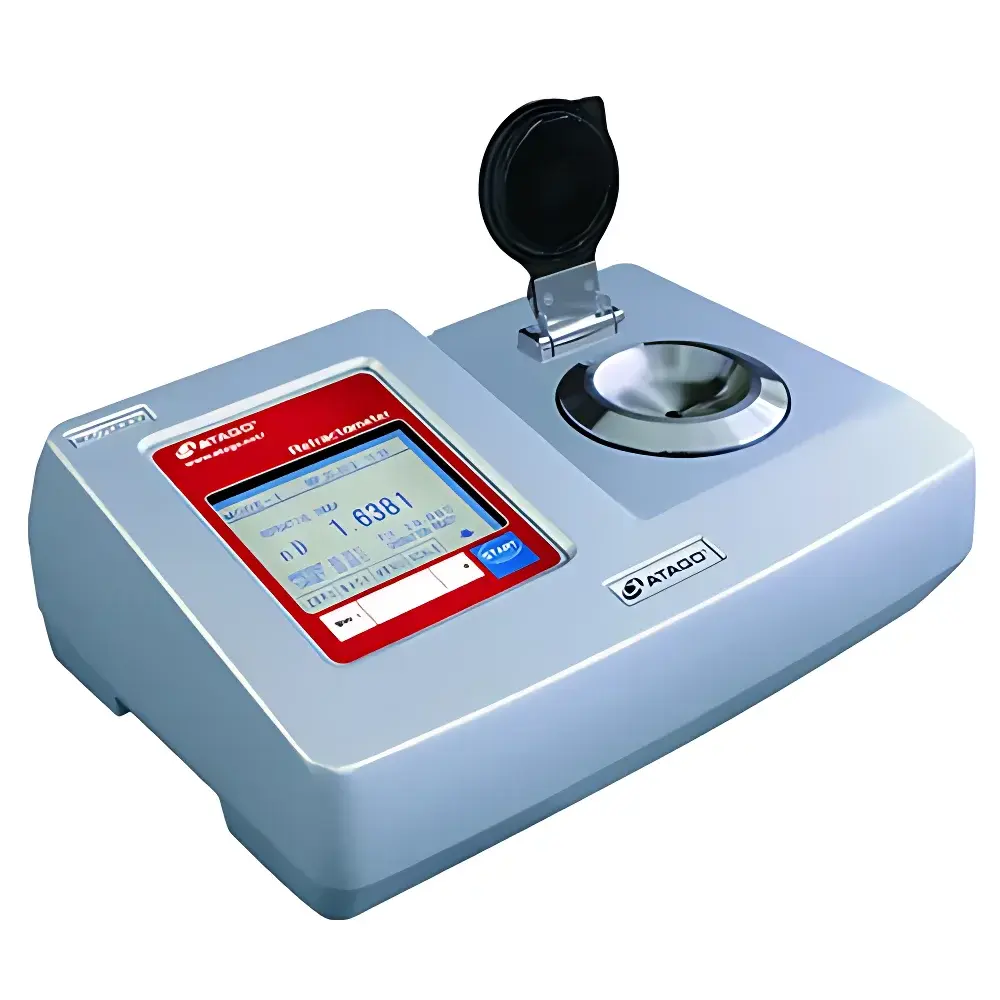
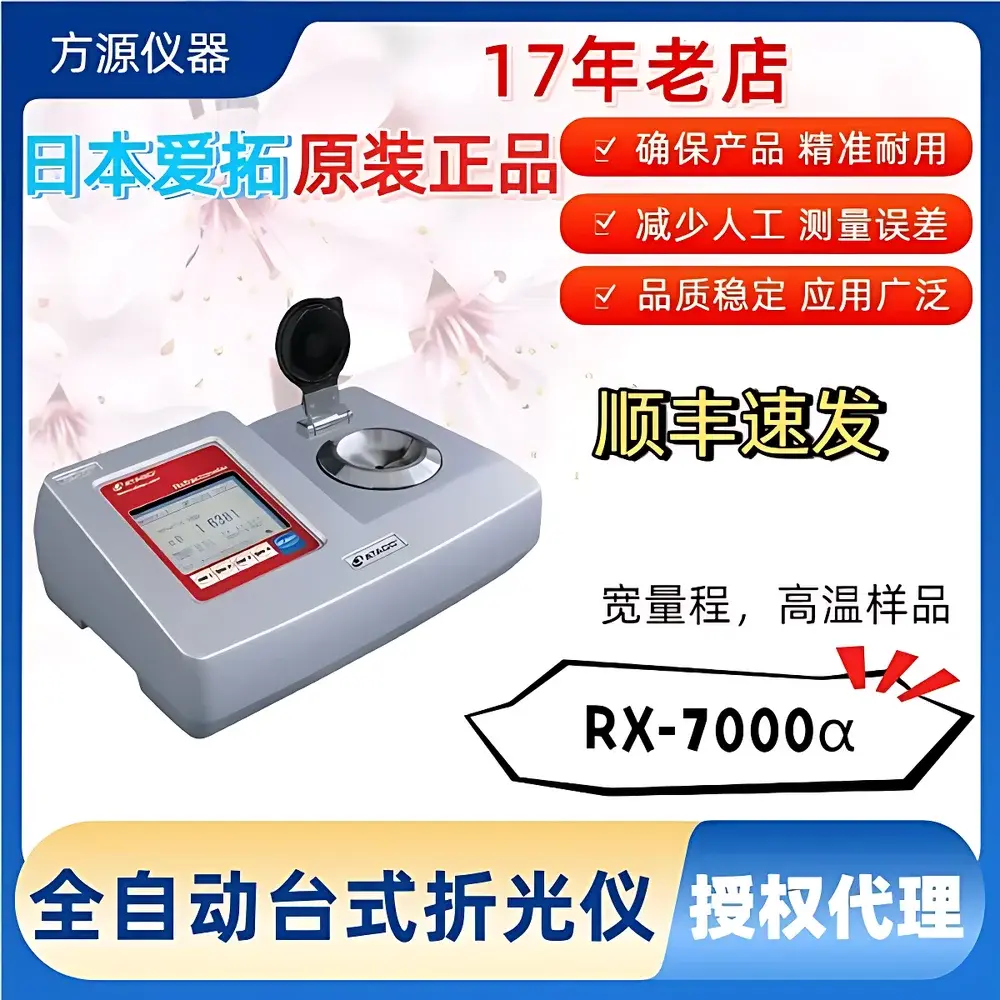
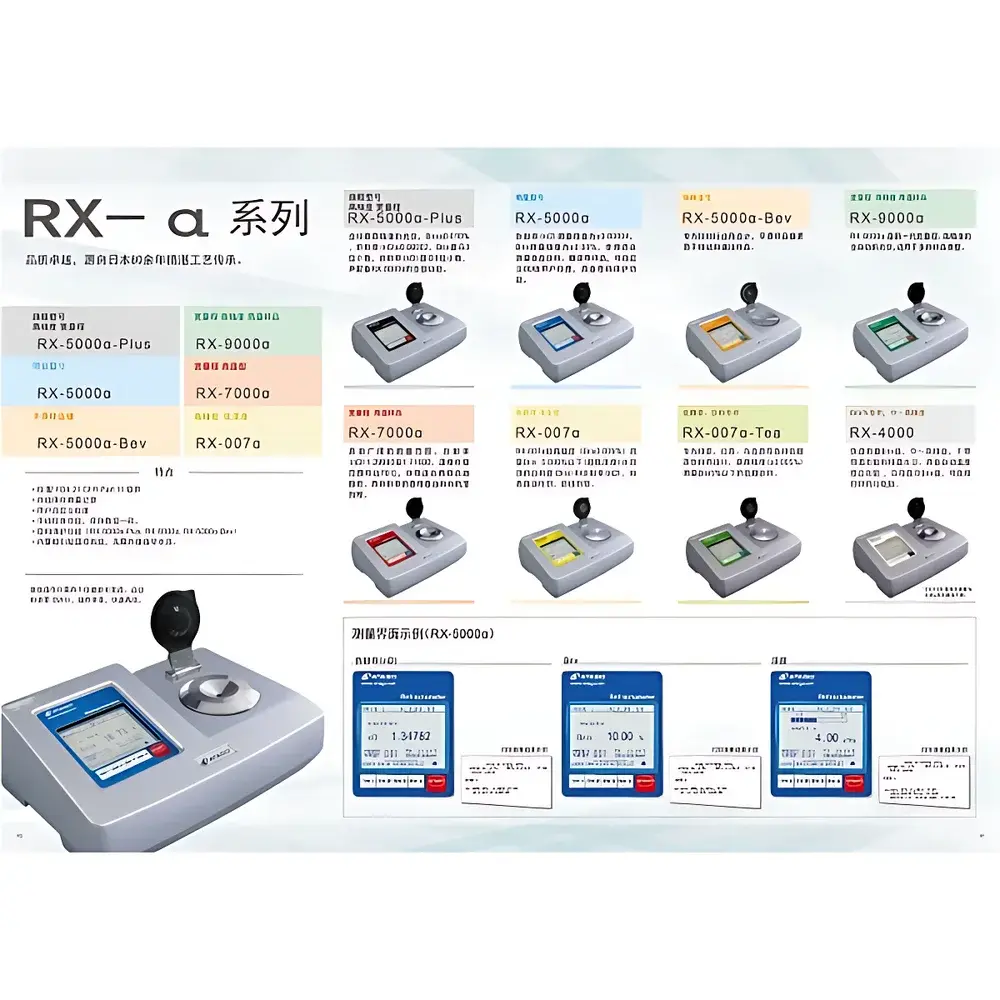
ATAGO RX-7000α Desktop Automatic Digital Refractometer
| Brand | ATAGO |
|---|---|
| Origin | Japan |
| Model | RX-7000α |
| Measurement Range | Brix 0.00–100.0% |
| Accuracy | ±0.1% Brix |
| Display | Digital LCD |
| Instrument Type | Benchtop Refractometer |
| Temperature Control | None |
| Compliance | ISO 21542, ASTM D1218, JIS K 0061 |
Overview
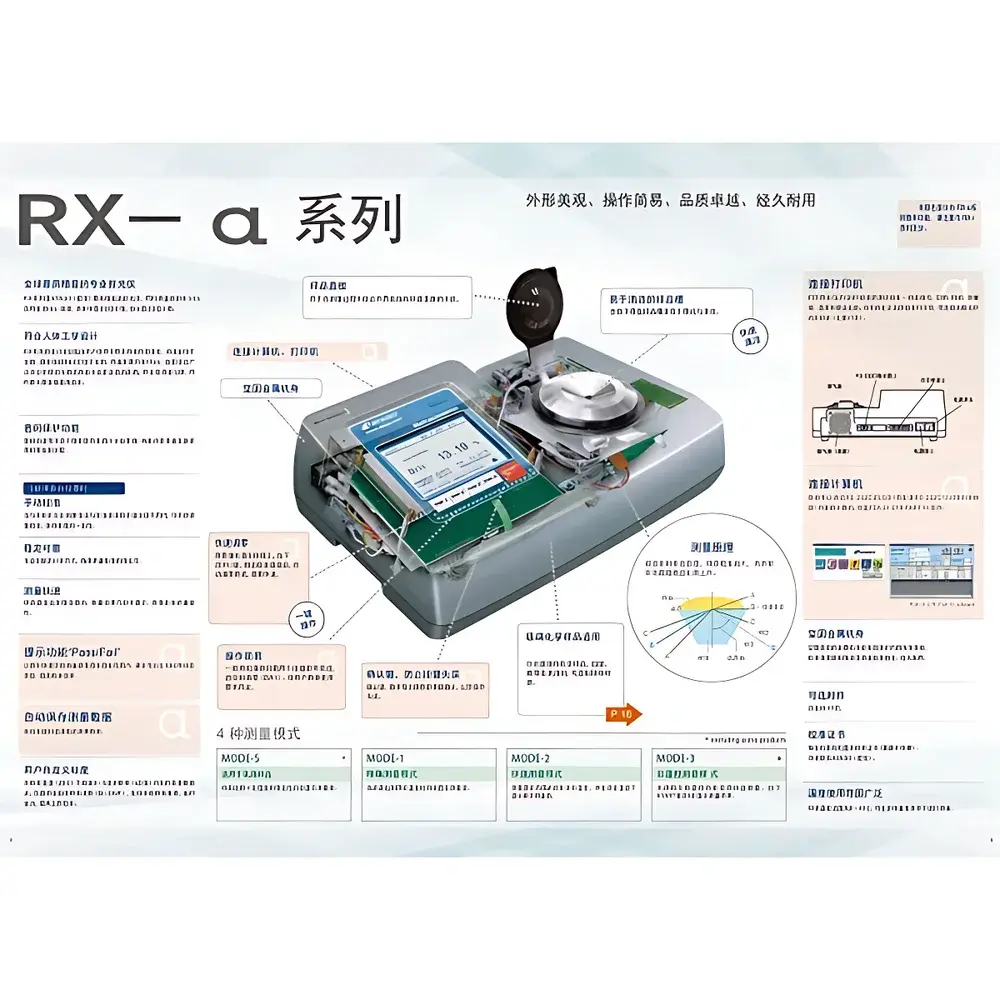
The ATAGO RX-7000α is a high-precision benchtop digital refractometer engineered for rapid, repeatable measurement of refractive index and Brix concentration across diverse liquid and semi-liquid samples. Based on the principle of total internal reflection at the prism-sample interface, the instrument determines Brix values by measuring the critical angle shift induced by sample density—enabling direct correlation to soluble solids content in aqueous solutions. Designed for routine quality control laboratories in food & beverage, pharmaceutical, chemical, and academic research settings, the RX-7000α delivers robust performance without integrated temperature regulation, making it ideal for ambient-stable applications where sample pre-conditioning is controlled externally. Its optical architecture features a high-stability sapphire prism and precision-aligned LED light source, ensuring long-term calibration stability and minimal drift over extended operational cycles.
Key Features
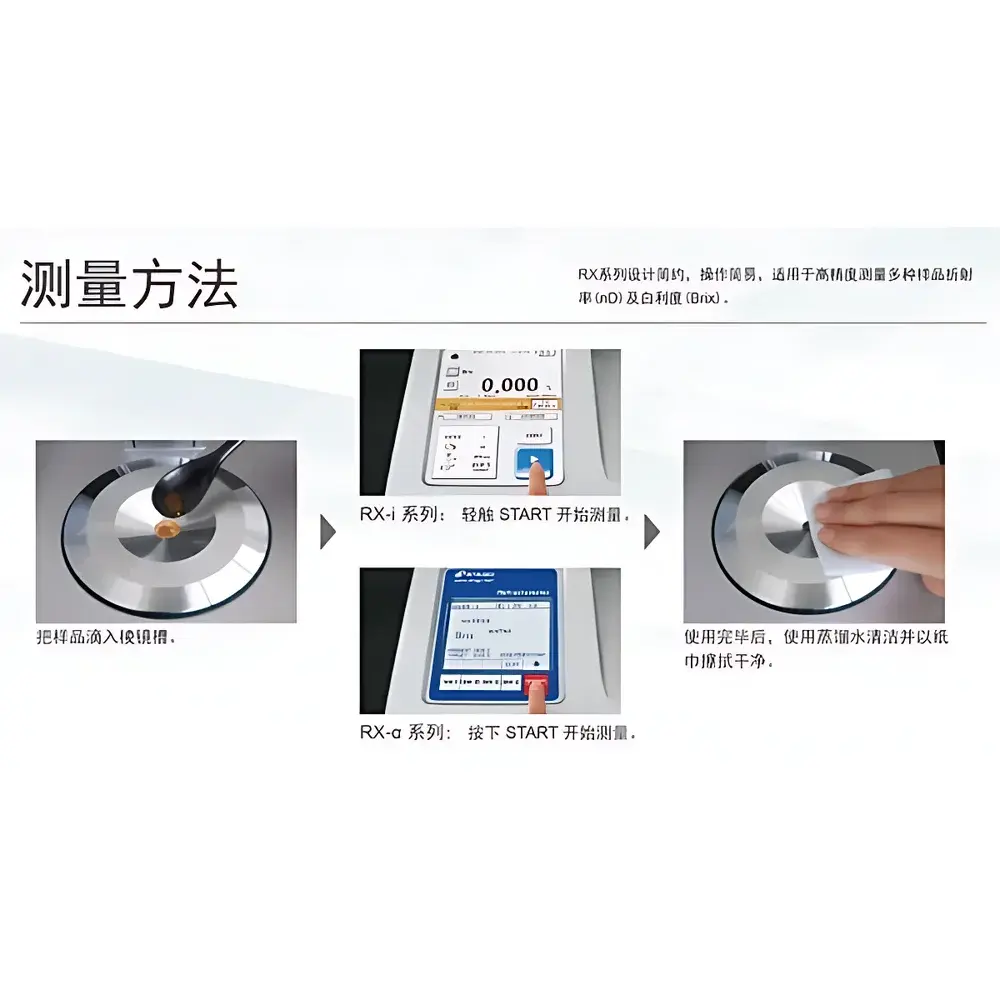
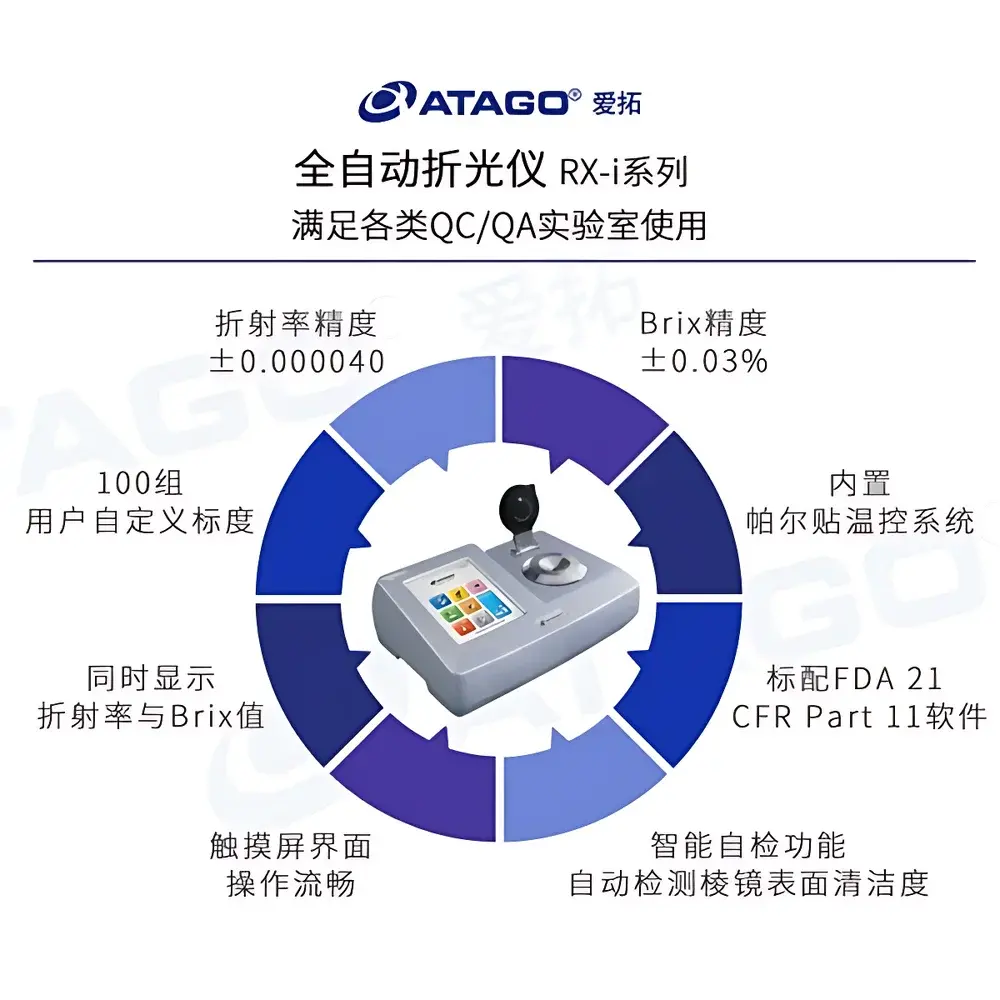
- Full digital operation with intuitive menu navigation and one-touch measurement initiation
- Wide Brix measurement range from 0.00 to 100.0%, supporting applications from ultra-dilute syrups to concentrated honey, molasses, and industrial glycol solutions
- Measurement accuracy of ±0.1% Brix (at 20°C), validated per ISO 21542 guidelines for refractometric analysis
- High-resolution LCD display with backlight for clear readability under varied lab lighting conditions
- Automatic endpoint detection with real-time signal stabilization algorithm to eliminate operator-dependent timing errors
- Non-contact prism surface design minimizes contamination risk and simplifies cleaning between samples
- Compact benchtop footprint (240 × 220 × 180 mm) optimized for space-constrained QC labs and production line environments
- Internal memory stores up to 1,000 measurement records with timestamp and user ID tagging (when paired with optional PC software)
Sample Compatibility & Compliance
The RX-7000α accommodates a broad spectrum of homogeneous, non-volatile, and low-viscosity liquids—including fruit juices, soft drinks, dairy products, saline solutions, antifreeze mixtures, and pharmaceutical excipients. Samples must be free of suspended particulates or air bubbles to ensure optical path integrity. While the unit lacks active Peltier temperature control, its optical system is thermally compensated within an ambient operating range of 10–40°C, and measurements are referenced to standard 20°C calibration points. The instrument conforms to international standards governing refractometric methodology: ISO 21542 (optical instruments — refractometers — terminology and metrological characteristics), ASTM D1218 (standard test method for refractive index of hydrocarbon liquids), and JIS K 0061 (Japanese Industrial Standard for general specifications of refractometers). It supports GLP-compliant workflows when used with traceable NIST-certified sucrose reference standards.
Software & Data Management
Data export and advanced configuration are enabled via optional PC connectivity using ATAGO’s proprietary “Refractometer Manager” software (Windows-compatible). This application facilitates automated report generation in PDF/CSV formats, batch calibration verification, statistical process control (SPC) charting, and audit-trail logging—including operator identification, measurement timestamp, environmental notes, and calibration history. All data transfers comply with FDA 21 CFR Part 11 requirements when configured with electronic signature protocols and role-based access controls. The software also supports custom Brix-to-density or Brix-to-concentration conversion tables for non-sucrose matrices (e.g., glucose, fructose, or sodium chloride solutions), enhancing flexibility beyond default sucrose-equivalent reporting.
Applications
- Food & Beverage: Routine Brix verification in juice blending, jam manufacturing, wine must evaluation, and confectionery syrup formulation
- Pharmaceuticals: Excipient concentration checks in oral solutions, syrups, and topical gels; raw material identity testing per USP
- Chemicals: Glycol concentration monitoring in heat transfer fluids and antifreeze formulations
- Agriculture & Horticulture: Harvest readiness assessment of fruits and vegetables via sap Brix screening
- Academic Research: Teaching labs for physical chemistry principles including solution thermodynamics and colligative properties
- Quality Assurance: In-process verification during filling, mixing, and dilution steps across GMP-regulated environments
FAQ
Does the RX-7000α support automatic temperature compensation (ATC)?
No—the RX-7000α does not include built-in temperature control or ATC functionality. Users must condition samples to 20°C prior to measurement or apply manual correction factors based on published Brix-temperature tables.
Can the instrument measure non-aqueous solutions?
It is calibrated for aqueous sucrose solutions; measurements of non-aqueous or mixed-solvent systems require matrix-specific calibration and are not covered under standard warranty or compliance statements.
What is the minimum sample volume required?
Approximately 0.3 mL is sufficient to fully cover the prism surface; excessive volume is unnecessary and may impair cleanup efficiency.
Is the prism surface scratch-resistant?
Yes—the sensing surface uses synthetic sapphire (Mohs hardness 9), offering superior resistance to abrasion compared to optical glass prisms.
How often should calibration be performed?
Daily calibration with certified 0% and 50% Brix reference standards is recommended for regulated environments; weekly verification suffices for routine industrial use when instrument usage frequency is low.






