
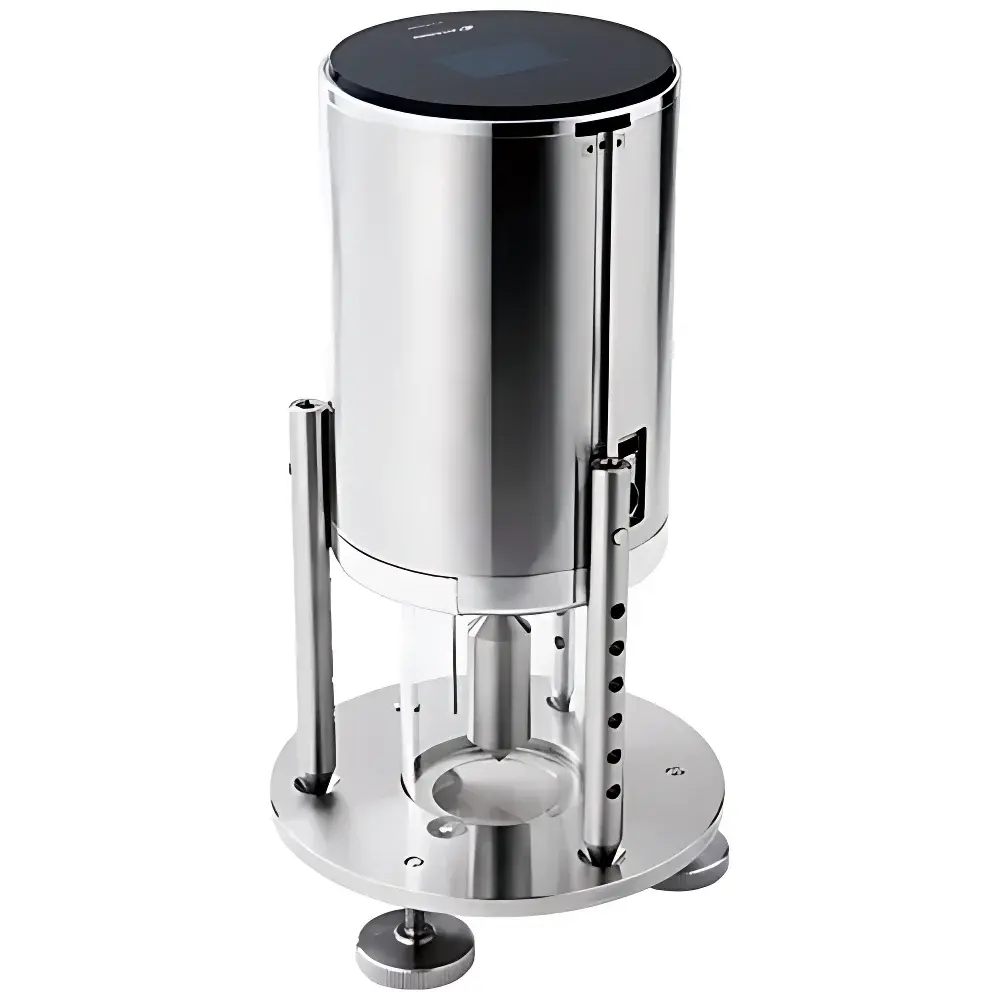
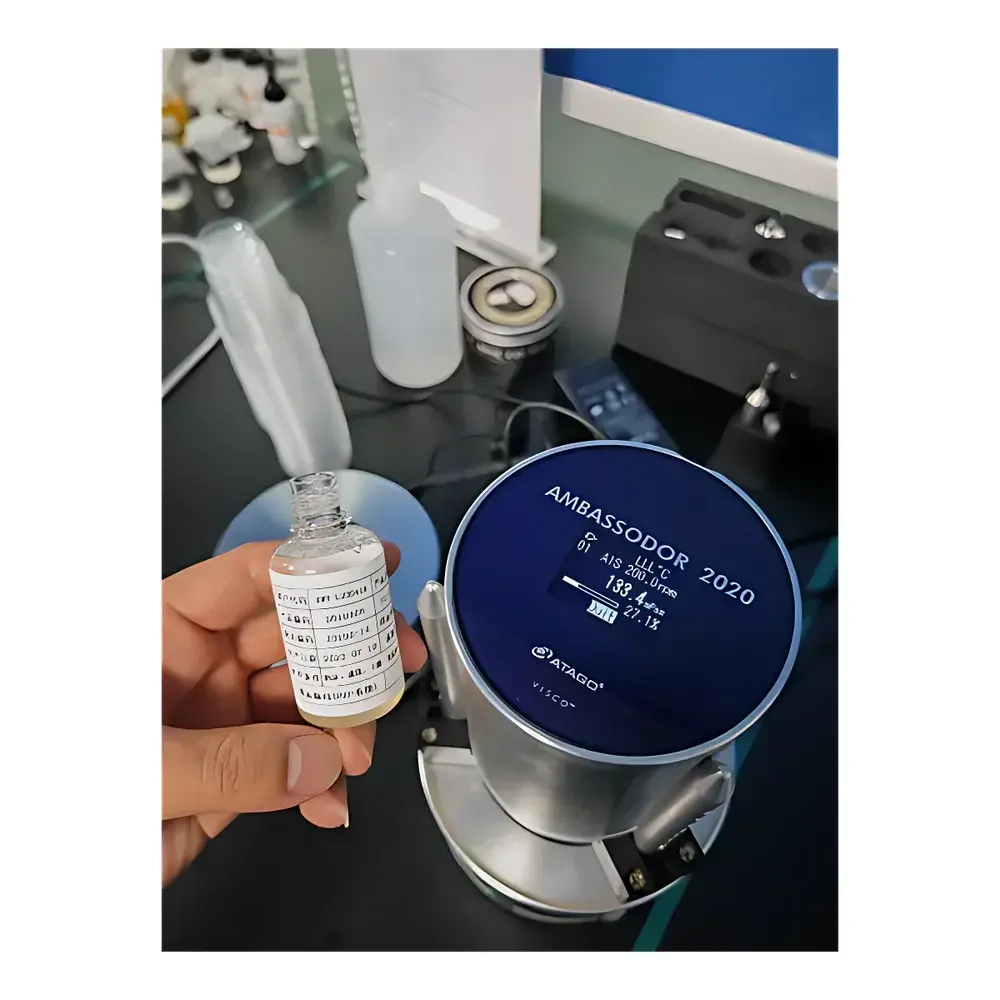
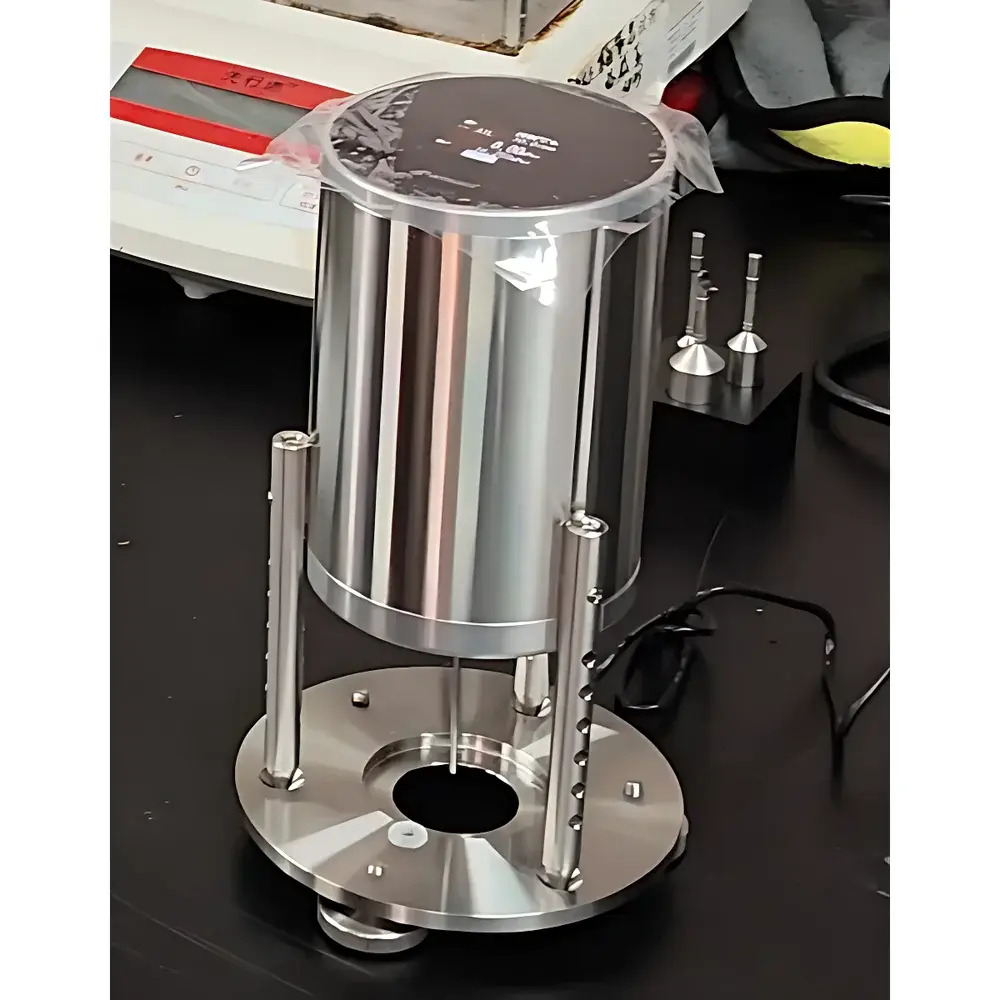
ATAGO VISCO Portable Rotational Viscometer for Adhesives and Industrial Glues
| Brand | ATAGO |
|---|---|
| Origin | Japan |
| Instrument Type | Portable Rotational Viscometer |
| Viscosity Range | 50–16,000,000 mPa·s |
| Temperature Resolution | 0.1 °C |
| Temperature Accuracy | ±0.2 °C |
| Model | VISCO |
Overview
The ATAGO VISCO is a precision-engineered portable rotational viscometer specifically designed for rapid, on-site viscosity assessment of industrial adhesives and bonding agents—including cyanoacrylates, anaerobic sealants, epoxy resins, polyurethane adhesives, hot-melt formulations, silicone gels, and UV-curable systems. It operates on the principle of controlled shear rate measurement via coaxial cylinder (Couette) flow geometry, where torque exerted on a rotating spindle immersed in the sample is directly proportional to dynamic viscosity. Unlike capillary or falling-ball methods, rotational viscometry provides reproducible data across non-Newtonian regimes common in adhesive formulations—enabling reliable characterization of shear-thinning behavior, yield stress estimation, and temperature-dependent rheological profiling under ambient conditions (15–35 °C). Its compact architecture supports field deployment in production lines, QC labs, R&D pilot stations, and supplier audit environments without requiring external power or climate-controlled enclosures.
Key Features
- Wide dynamic viscosity range: 50 to 16,000,000 mPa·s — suitable for low-viscosity monomers and ultra-high-viscosity gels, pastes, and filled polymer systems.
- Integrated Peltier-independent temperature sensing with ±0.2 °C accuracy and 0.1 °C resolution — enabling real-time thermal monitoring during manual or sequential measurements.
- True portable design: battery-powered operation, lightweight chassis (<1.2 kg), and ergonomic handheld interface — optimized for benchtop, line-side, or mobile quality verification.
- Dual-speed motor control with selectable RPM settings — facilitates both low-shear screening and high-shear stability evaluation per ASTM D1084 and ISO 2555.
- Stainless-steel spindle sets compatible with high-torque adhesives — resistant to chemical degradation from solvents, amines, and acidic monomers.
- Auto-zero calibration routine and digital signal processing — minimizes drift and ensures long-term repeatability within ±1% of reading (per NIST-traceable validation protocols).
Sample Compatibility & Compliance
The VISCO accommodates viscous, thixotropic, and particle-laden samples typical of industrial adhesive manufacturing—such as solvent-based acrylics, water-dispersed PVAs, reactive epoxies, and radiation-cured acrylates. Its open-cup measurement configuration allows direct sampling from dispensing containers, drums, or reaction vessels without transfer-induced shear history alteration. The instrument complies with core regulatory frameworks governing material release testing: it supports GLP-compliant documentation workflows when paired with external logging software; meets mechanical safety requirements per IEC 61010-1; and enables traceable calibration against certified standard oils (e.g., Cannon-Manning series) referenced in ISO/IEC 17025-accredited laboratories. While not intrinsically compliant with FDA 21 CFR Part 11, its analog output and timestamped readings are fully compatible with validated LIMS or ELN platforms that enforce electronic signature and audit trail functionality.
Software & Data Management
The VISCO operates as a standalone unit with an integrated LCD display showing real-time viscosity (mPa·s), temperature (°C), RPM, and elapsed measurement time. Raw data export is supported via USB-C interface to PC-based applications—enabling batch export of CSV-formatted datasets including sample ID, operator code, ambient conditions, and statistical summaries (mean, SD, CV%). Optional ATAGO ViscoLink software (v3.2+) provides advanced features: multi-curve overlay for comparative rheogram generation, automatic Newtonian deviation alerts, temperature-compensated viscosity interpolation (based on Arrhenius modeling), and PDF report generation compliant with internal QA templates. All stored records retain immutable timestamps synchronized to system clock—facilitating retrospective review during internal audits or regulatory inspections.
Applications
- Pharmaceutical excipient qualification: viscosity profiling of hydrogels, mucoadhesive polymers (e.g., carbomer, HPMC), and sterile ophthalmic gels.
- Chemical process control: monitoring resin polymerization kinetics, solvent evaporation effects in coating formulations, and filler dispersion stability in conductive adhesives.
- Food-grade adhesive validation: assessing viscosity consistency of edible starch-based binders used in confectionery and meat processing.
- R&D formulation screening: rapid iteration of crosslinker ratios, plasticizer loadings, and nanofiller concentrations in structural bonding systems.
- Supplier qualification: on-site verification of incoming adhesive lots against technical datasheet specifications prior to release into lean manufacturing cells.
- Educational use: hands-on rheology instruction in undergraduate materials science curricula—demonstrating structure–property relationships in polymer melts and colloidal suspensions.
FAQ
Is the VISCO suitable for measuring yield stress?
The VISCO does not provide direct yield stress quantification; it delivers steady-state viscosity at discrete shear rates. For yield stress determination, complementary instruments such as controlled-stress rheometers (e.g., TA Instruments AR-Series) are recommended.
Can it measure non-Newtonian fluids accurately?
Yes—the VISCO captures apparent viscosity across its operational RPM range, allowing users to construct flow curves and identify shear-thinning or shear-thickening trends typical of associative thickeners and fumed silica-filled adhesives.
What calibration standards are required?
Certified reference oils traceable to NIST SRM 2363 or equivalent (e.g., Cannon-Manning Viscosity Standards) are recommended for annual verification. ATAGO provides factory calibration certificates with each unit.
Does it support continuous monitoring mode?
No—it performs discrete point measurements only. For real-time inline viscosity tracking, consider ATAGO’s process-compatible refractometer or dedicated online viscometers with 4–20 mA output.
How often should temperature sensor verification be performed?
We recommend quarterly verification using a calibrated RTD probe in a stable water bath, especially when operating near the upper limit of the specified temperature range (35 °C).



