
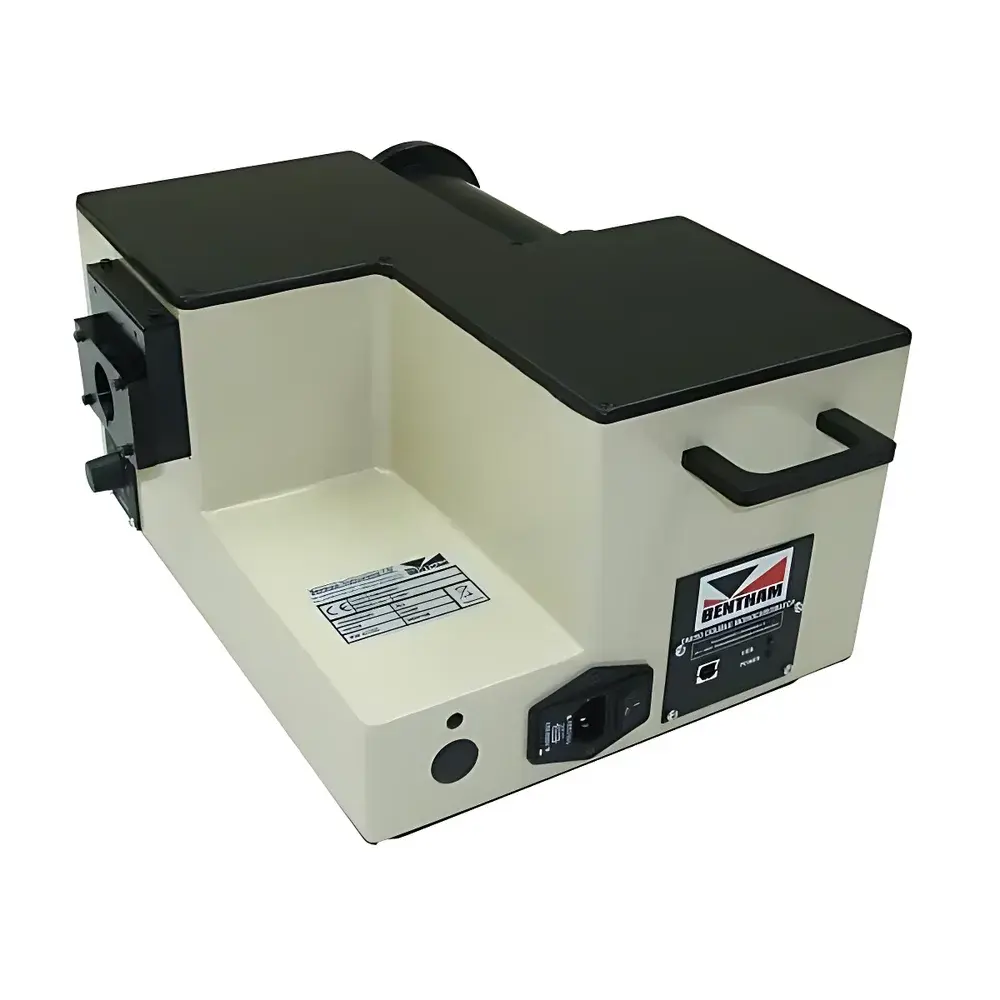
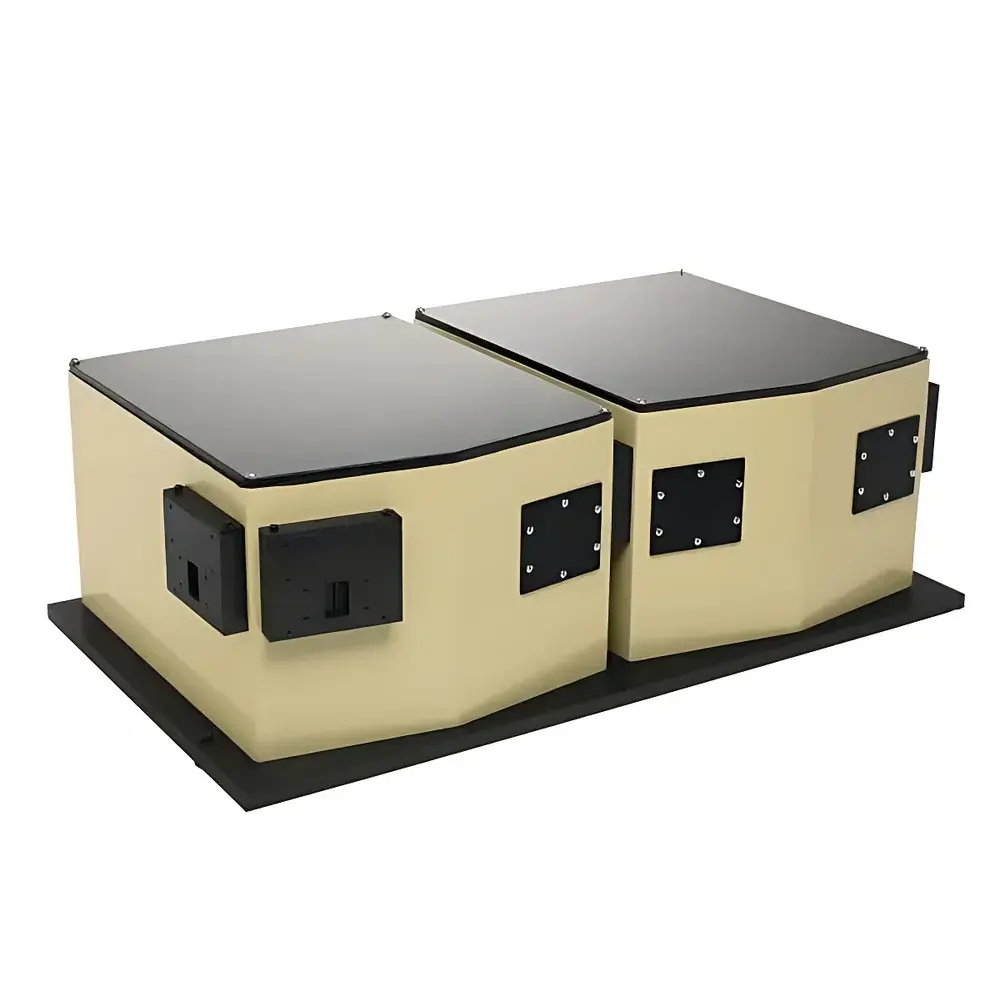
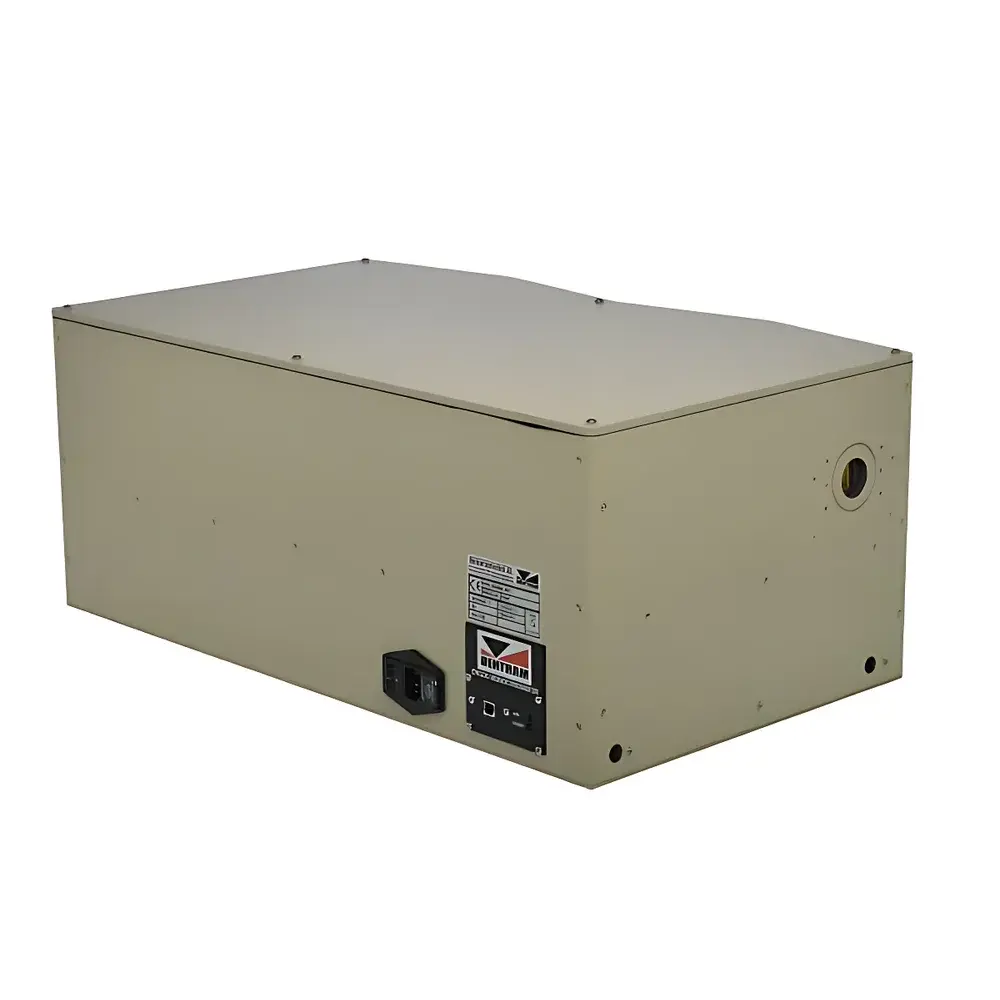
Auniontech DMc150, DTMc300 & DTMS300 Automated Cascade Monochromators
| Brand | Auniontech |
|---|---|
| Focal Length (per stage) | 150 mm (DMc150), 300 mm (DTMc300/DTMS300) |
| Optical Configuration | Dual Czerny-Turner monochromators in additive or subtractive dispersion mode |
| Grating Capacity | Up to three interchangeable gratings per monochromator stage |
| Spectral Range | 200 nm – 50 µm (DTMc300 & DTMS300) |
| Linear Dispersion | 2.7 nm/mm (DMc150), 1.35 nm/mm (DTMc300 & DTMS300) |
| Wavelength Accuracy | ±0.3 nm (DMc150), ±0.1 nm (DTMc300 & DTMS300) |
| Wavelength Repeatability | ±0.05 nm (DMc150), ±0.025 nm (DTMc300 & DTMS300) |
| Resolution | 0.5/0.1 nm (DMc150), 0.15/0.05 nm (DTMc300 & DTMS300) |
| Stray Light Suppression | ≤10⁻⁸ |
| F/# | f/4.1–f/4.2 |
| Slit Type | Motorized variable slits (10 µm–10 mm width × 20 mm height) |
| Interface | USB 2.0 with BenWin+ software and SDK support |
| Mechanical Drive Resolution | 0.000072°/step |
Overview
The Auniontech DMc150, DTMc300, and DTMS300 automated cascade monochromators are precision optical instruments engineered for high-fidelity spectral isolation in demanding research and industrial metrology environments. Based on the Czerny-Turner optical architecture, each system comprises two independently aligned monochromator stages—configured either in additive dispersion mode (for enhanced resolution and throughput) or subtractive dispersion mode (for ultra-low stray light and maximum spectral purity). The DMc150 integrates two 150 mm focal length stages into a compact, rigid single-cast housing—optimized for portable spectroradiometry and UV source characterization where footprint and mechanical stability are critical. In contrast, the DTMc300 and DTMS300 employ dual 300 mm focal length stages, enabling broad spectral coverage from 200 nm to 50 µm in a single scan while maintaining sub-0.1 nm wavelength accuracy and repeatability better than ±0.025 nm. All models support up to three motorized, kinematically mounted diffraction gratings per stage—allowing seamless switching between UV-VIS-NIR-MIR spectral bands without realignment.
Key Features
- Automated dual-stage Czerny-Turner design with selectable additive or subtractive dispersion configuration
- Motorized variable entrance/exit slits (10 µm–10 mm width × 20 mm height) for precise bandwidth control and maintenance-free operation
- High-precision stepper-motor-driven grating rotation with 0.000072°/step mechanical resolution and sine-bar coupling for minimal backlash
- Integrated USB 2.0 interface with BenWin+ control software and comprehensive SDK for custom integration into OEM systems or automated test benches
- Rigid aluminum alloy monoblock construction ensuring thermal and mechanical stability—critical for long-term calibration retention under laboratory or field conditions
- Multi-port optical routing via computer-controlled mirror-based port selection: up to two inputs and two outputs across cascaded stages, supporting complex beam routing for multi-detector or multi-source setups
- Optimized f/4.1–f/4.2 aperture for balanced throughput and resolution; compatible with standard 23–25 mm diameter filter wheels and fiber-coupled accessories
Sample Compatibility & Compliance
These monochromators are designed for universal compatibility with broadband light sources—including deuterium, xenon, tungsten-halogen, and synchrotron beamlines—as well as pulsed and CW lasers. Their low-stray-light performance (≤10⁻⁸) meets stringent requirements for solar simulator spectral match validation (IEC 60904-9, ASTM E927), NVIS-compliant cockpit lighting testing (MIL-STD-3009), and UV irradiance metrology (CIE S 026/E:2019). The DTMc300 and DTMS300 support full-spectrum scanning from deep UV to far-infrared, making them suitable for Fourier-transform reference applications and detector linearity verification per ISO/IEC 17025-accredited calibration laboratories. All units comply with CE marking directives for electromagnetic compatibility (EMC) and low-voltage equipment, and their firmware architecture supports audit-trail logging required for GLP/GMP environments when integrated with compliant data acquisition software.
Software & Data Management
Control is delivered through BenWin+, a platform-independent application supporting real-time wavelength scanning, grating selection, slit width adjustment, and multi-axis synchronization. The included SDK provides native C/C++, Python, MATLAB, and LabVIEW APIs—enabling full programmability for time-resolved spectroscopy, hyperspectral imaging pipelines, and closed-loop feedback systems. All wavelength commands include built-in interpolation and nonlinearity correction based on factory-measured grating groove density and optical path calibration. Data export conforms to ASCII and HDF5 formats, with metadata fields compliant with the Spectral Data Interchange Format (SDIF) specification. Optional timestamped logging and user-accessible calibration history support traceability per ISO/IEC 17025 Clause 7.7 and FDA 21 CFR Part 11 electronic record requirements when deployed with validated IT infrastructure.
Applications
- UV-VIS-NIR-MIR spectral radiometry and photometry of lamps, LEDs, and solar simulators
- Stray-light-sensitive measurements including Raman background suppression and fluorescence lifetime excitation profiling
- Calibration transfer between primary and secondary standards in national metrology institutes
- Time-resolved emission spectroscopy requiring high temporal resolution and spectral fidelity
- OEM integration into custom spectroradiometers, ellipsometers, and laser-induced breakdown spectroscopy (LIBS) platforms
- Defense and aerospace applications involving night-vision imaging system (NVIS) compatibility testing and multispectral signature analysis
FAQ
What is the difference between additive and subtractive dispersion modes?
Additive dispersion combines angular deviations from both monochromator stages to increase spectral resolution at the expense of throughput; subtractive dispersion cancels first-order dispersion while retaining higher-order rejection—resulting in superior stray light suppression and ideal conditions for low-signal detection.
Can these monochromators be used with fiber-optic inputs?
Yes—each model accepts standard SMA905 or FC/PC fiber couplers via optional input adapters; collimation optics are optimized for NA ≤ 0.22 to preserve étendue and minimize aberrations.
Are grating calibrations NIST-traceable?
Factory calibrations include certified groove density measurements and wavelength reference scans using stabilized He-Ne and Hg-Ar spectral lines; full calibration certificates with uncertainty budgets are available upon request.
Is remote operation supported over Ethernet or GPIB?
Native control is USB 2.0 only; however, USB-to-Ethernet converters with kernel-level driver support have been validated in third-party installations—GPIB is not supported.
What maintenance is required for long-term wavelength accuracy?
No routine optical alignment is needed due to monoblock construction; annual verification against a reference lamp is recommended per ISO/IEC 17025 guidelines—mechanical drift remains below ±0.01 nm/year under stable environmental conditions.




