
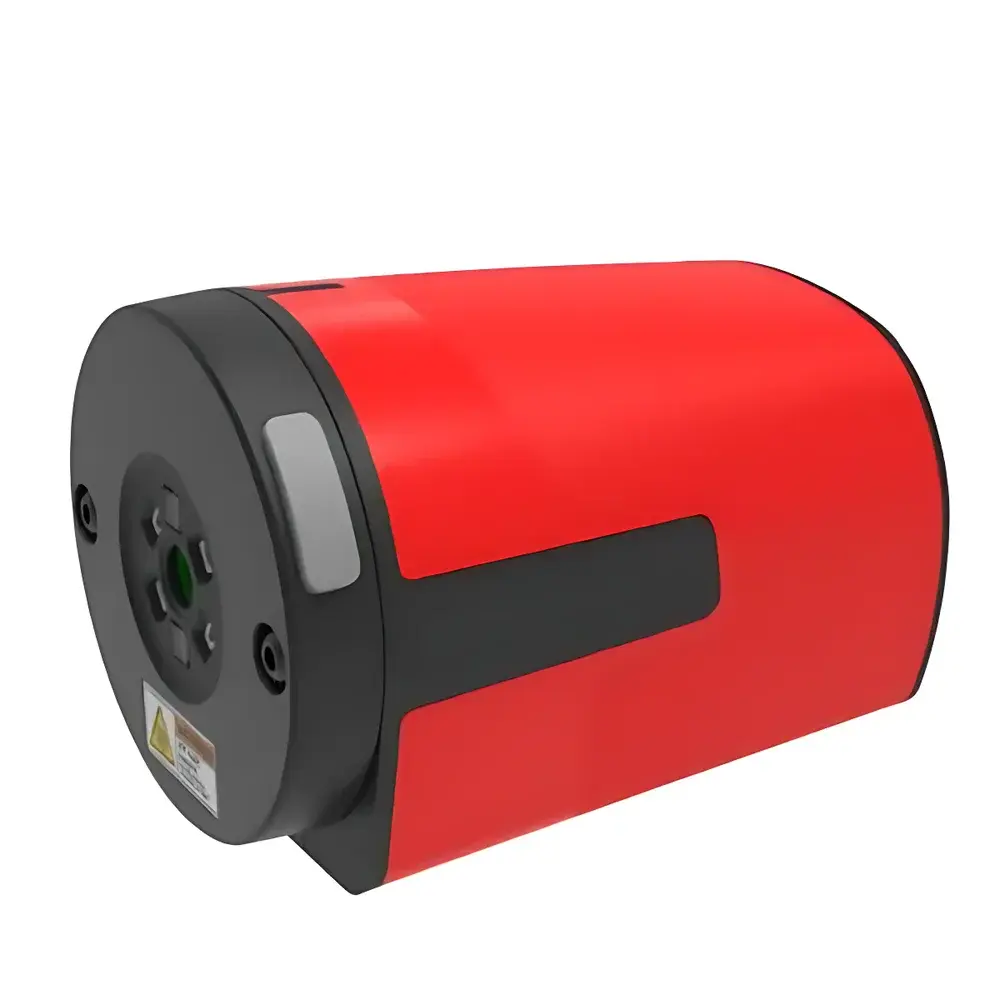
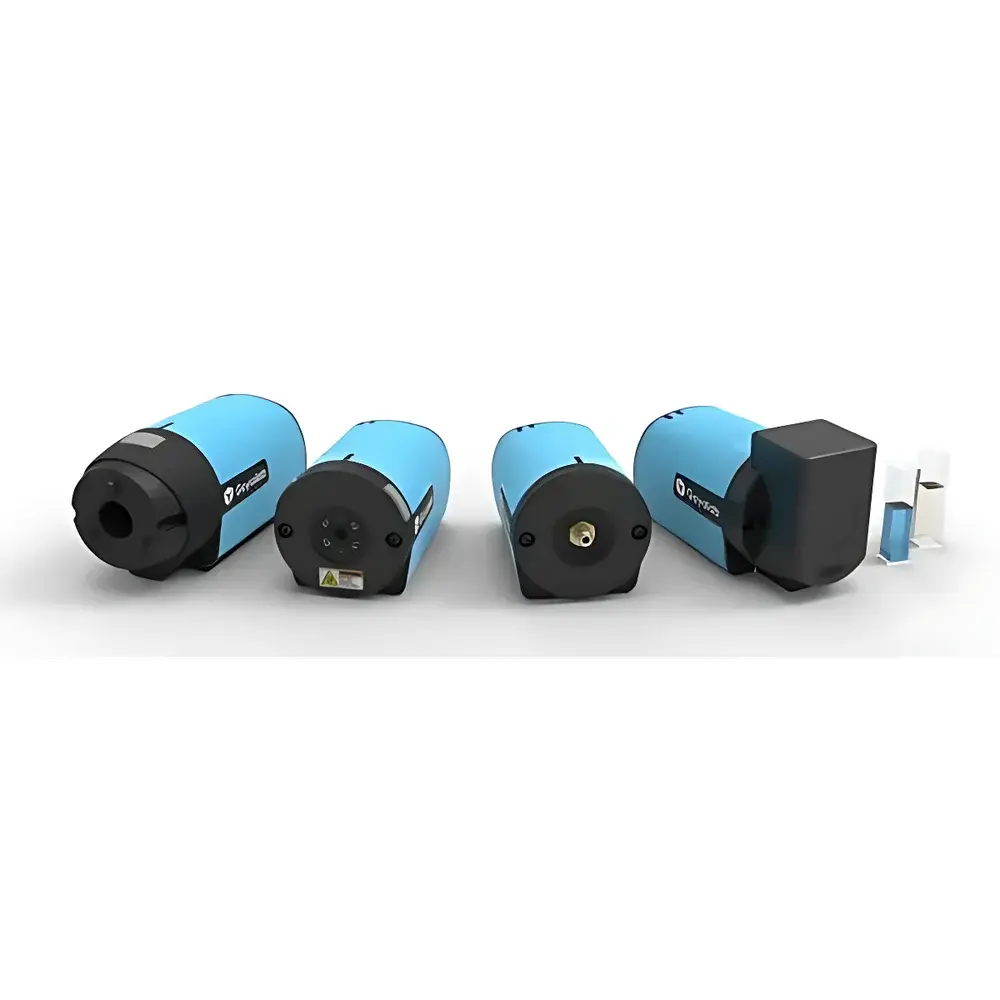
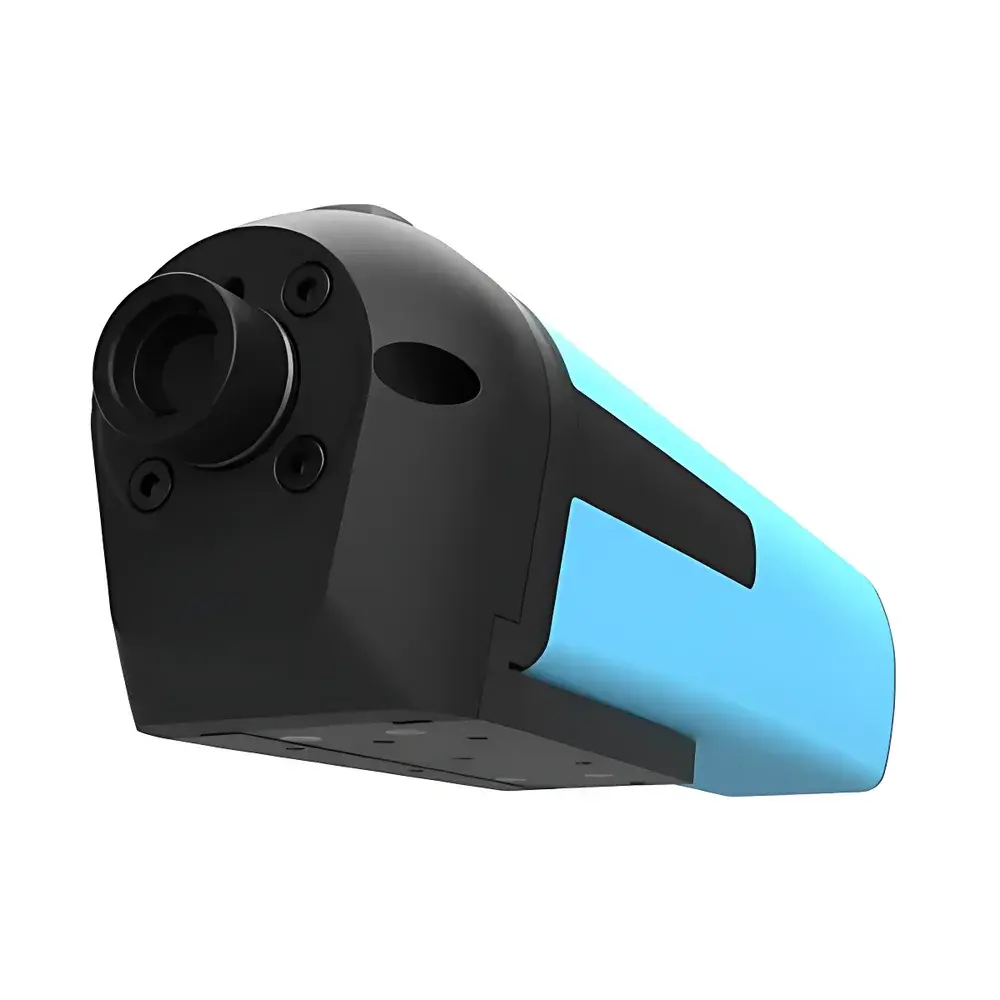
Auniontech IndiGo Handheld Raman & Fluorescence Spectrometer
| Brand | Auniontech |
|---|---|
| Origin | Shanghai, China |
| Model | IndiGo Series (Raman/Fluorescence/NIR/UV-Vis) |
| Excitation | 532 nm laser (±0.1 nm, 80 mW) & 365 nm UV-A LEDs (6×) |
| Raman Shift Range | 200–4000 cm⁻¹ |
| Raman Resolution (FWHM) | 12 cm⁻¹ |
| Fluorescence Range | 380–780 nm |
| Fluorescence Resolution (FWHM) | <1.5 nm |
| NIR Range | 720–1050 nm |
| NIR Resolution (FWHM) | <2 nm |
| Slit Width | 15 µm (Raman), 25 µm (Fluorescence/NIR) |
| Grating | 600 l/mm (Raman/Fluorescence), 300 l/mm (NIR) |
| Detector | Sony IMX334 CMOS (Raman), OnSemi MT9M001 CMOS (Fluorescence), Sony IMX464 NIR-enhanced CMOS (NIR) |
| Integration Time | 1 ms – 24 s |
| SNR | 1000:1 (Raman & NIR), 400:1 (Fluorescence) |
| Battery Life | >10 h continuous operation |
| Software | SpectroLab v3.x (Windows 10/11), Android mobile app |
| Compliance | CE, RoHS, ISO/IEC 17025-compatible measurement traceability |
Overview
The Auniontech IndiGo Handheld Raman & Fluorescence Spectrometer is a field-deployable, modular spectroscopic platform engineered for quantitative molecular identification and compositional analysis outside the controlled laboratory environment. Based on confocal dispersive Raman spectroscopy (532 nm excitation) and broadband fluorescence spectroscopy (365 nm UV-A LED array), the system enables non-destructive, contactless interrogation of solid and liquid samples with spectral fidelity suitable for research-grade validation. Its optical architecture employs a Czerny–Turner monochromator design with thermally stabilized gratings and back-illuminated CMOS detectors optimized for low-light signal capture. The instrument operates across three interchangeable spectral domains—Raman shift (200–4000 cm⁻¹), visible fluorescence (380–780 nm), and near-infrared absorption (720–1050 nm)—each calibrated against NIST-traceable standards. Designed for portability without compromising metrological integrity, the IndiGo meets the functional requirements of ASTM E1840 (Standard Practice for Raman Spectroscopy), ISO 8573-9 (optical purity assessment), and USP (fluorescence-based identity testing), supporting GLP-compliant data acquisition workflows.
Key Features
- Modular optical head architecture enabling rapid reconfiguration between Raman, fluorescence, and NIR operational modes via interchangeable slits, gratings, and excitation sources
- Thermally stabilized 532 nm diode-pumped solid-state laser (DPSS) with wavelength stability ±0.1 nm and power output of 80 mW — compliant with IEC 60825-1 Class 3B laser safety requirements
- Dual-excitation capability: integrated 365 nm UV-A LED array (6× high-radiance emitters) for broad-spectrum fluorescence induction, eliminating need for external lamp sources
- High-throughput optical path featuring f/2.0 collection optics and anti-reflection coated fused silica windows, delivering >65% total system throughput in Raman mode
- Low-noise, cooled CMOS detectors with 16-bit digitization and hardware-based dark current compensation — enabling integration times from 1 ms to 24 s with linear response over 5 decades
- Ruggedized magnesium alloy chassis (IP54 rated), weighing ≤100 g, certified to MIL-STD-810G for shock, vibration, and thermal cycling durability
Sample Compatibility & Compliance
The IndiGo supports direct analysis of powders, tablets, crystals, thin films, liquids in cuvettes or capillaries, and bulk solids—including gemstones, polymers, pharmaceutical intermediates, and agricultural commodities. Sample interfaces include magnetic-mount tube holders (for 12.5 mm OD glass vials), adjustable focus lens assemblies for macro/micro sampling (spot size down to 150 µm), and optional fiber-coupled probes for remote or hazardous-environment deployment. All spectral data are acquired with embedded time-stamped metadata (GPS coordinates, ambient temperature/humidity, operator ID), satisfying audit trail requirements under FDA 21 CFR Part 11 and EU Annex 11. Calibration certificates reference NIST SRM 2241 (Raman shift), SRM 2035 (fluorescence quantum yield), and SRM 2068 (NIR reflectance), with full uncertainty budgets provided per ISO/IEC 17025:2017 Clause 7.7.
Software & Data Management
SpectroLab software (v3.2+) provides full spectral acquisition, real-time baseline correction (Asymmetric Least Squares), peak deconvolution (Voigt fitting), multivariate calibration (PLS, PCA), and library matching (user-definable spectral databases). The application enforces role-based access control, electronic signatures, and immutable audit logs — meeting ALCOA+ principles for regulated environments. Raw spectra are stored in HDF5 format with embedded metadata schema compliant with ISA-Tab and FAIR data principles. Mobile versions (Android 10+) enable offline acquisition and preliminary analysis on tablets or smartphones; exported data support .csv, .jdx, and .spc formats for interoperability with chemometric platforms including Unscrambler X, MATLAB, and Python (SciPy/NumPy). Remote firmware updates and spectral library synchronization occur over TLS 1.3-secured HTTPS channels.
Applications
- Jewelry authentication: Identification of natural vs. synthetic gemstones (e.g., ruby, emerald, sapphire) via characteristic Raman lattice modes and fluorescence emission fingerprints
- Pharmaceutical QA/QC: Rapid verification of active pharmaceutical ingredient (API) identity and crystallinity in raw materials and finished dosage forms per USP and Ph. Eur. 2.2.48
- Food authenticity screening: Detection of adulterants in olive oil (e.g., hazelnut oil), honey (corn syrup), and dairy products using NIR lipid/protein/water ratio models
- Industrial forensics: In-field verification of polymer composition (e.g., PE vs. PP), pigment formulation in coatings, and lubricant degradation markers
- Agricultural phenotyping: Non-invasive chlorophyll fluorescence (Fv/Fm) and carotenoid index mapping in live plant tissue using dual-excitation protocols
- Counterfeit detection: Spectral signature matching of security inks, banknotes, and branded packaging materials under UV-induced fluorescence
FAQ
Is the IndiGo Raman module capable of quantitative analysis?
Yes — when used with certified reference standards and validated PLS regression models, the system achieves repeatability of ±2% RSD for concentration measurements of common analytes (e.g., ethanol in water, caffeine in tablets) under controlled environmental conditions.
Can SpectroLab export data compatible with LIMS systems?
Yes — SpectroLab supports HL7 v2.5.1 and ASTM E1384-compliant structured data export, including sample ID, instrument parameters, raw spectrum, processed result, and analyst signature fields.
What regulatory documentation is supplied with each unit?
Each shipment includes a Certificate of Conformance, Factory Calibration Report (with uncertainty values), CE Declaration of Conformity, RoHS compliance statement, and ISO/IEC 17025-accredited calibration certificate (optional add-on).
Does the NIR module require external light sources for reflectance measurements?
No — the integrated 700–1100 nm broadband LED source provides uniform illumination; optional halogen lamp accessory available for extended range (400–2500 nm) applications.
How is laser safety managed during field use?
The 532 nm laser incorporates interlocked shuttering, automatic power ramp-down upon lens misalignment detection, and Class 3B warning labels conforming to EN 60825-1:2014; training modules and SOP templates are included in the delivery package.





