
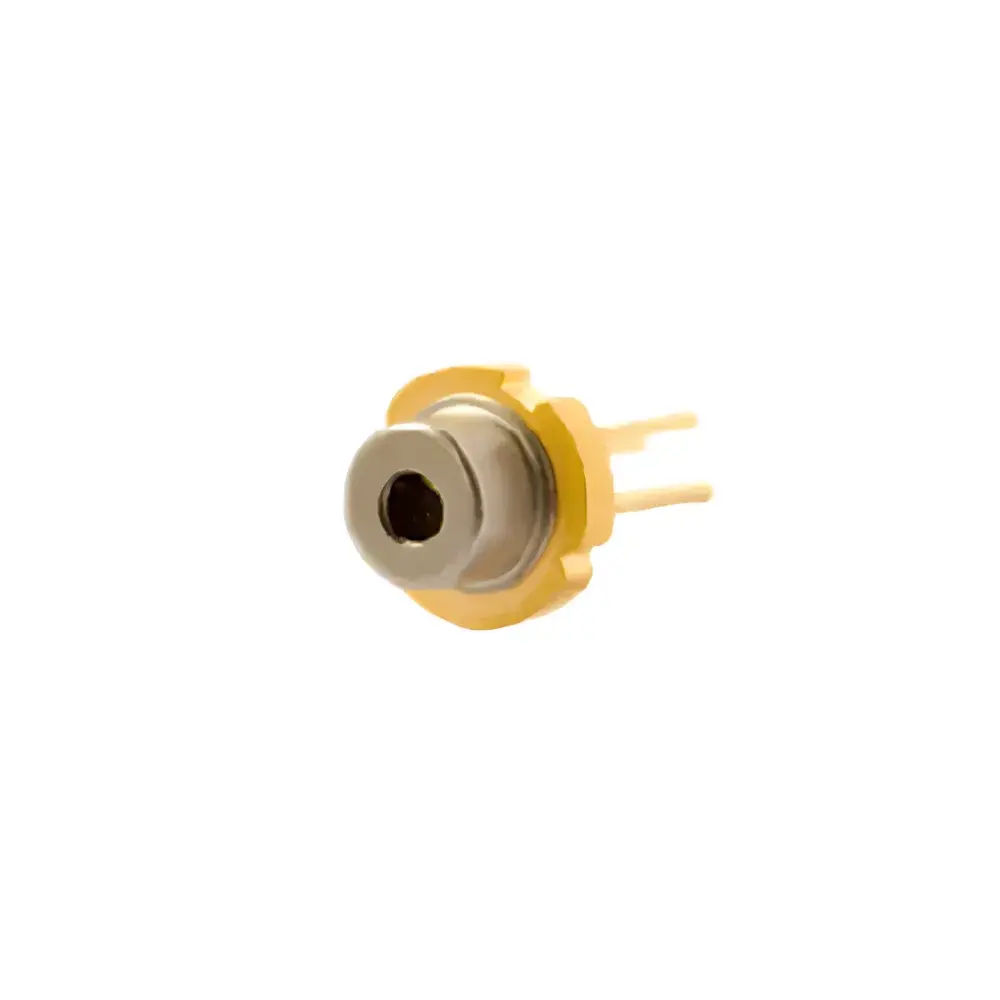
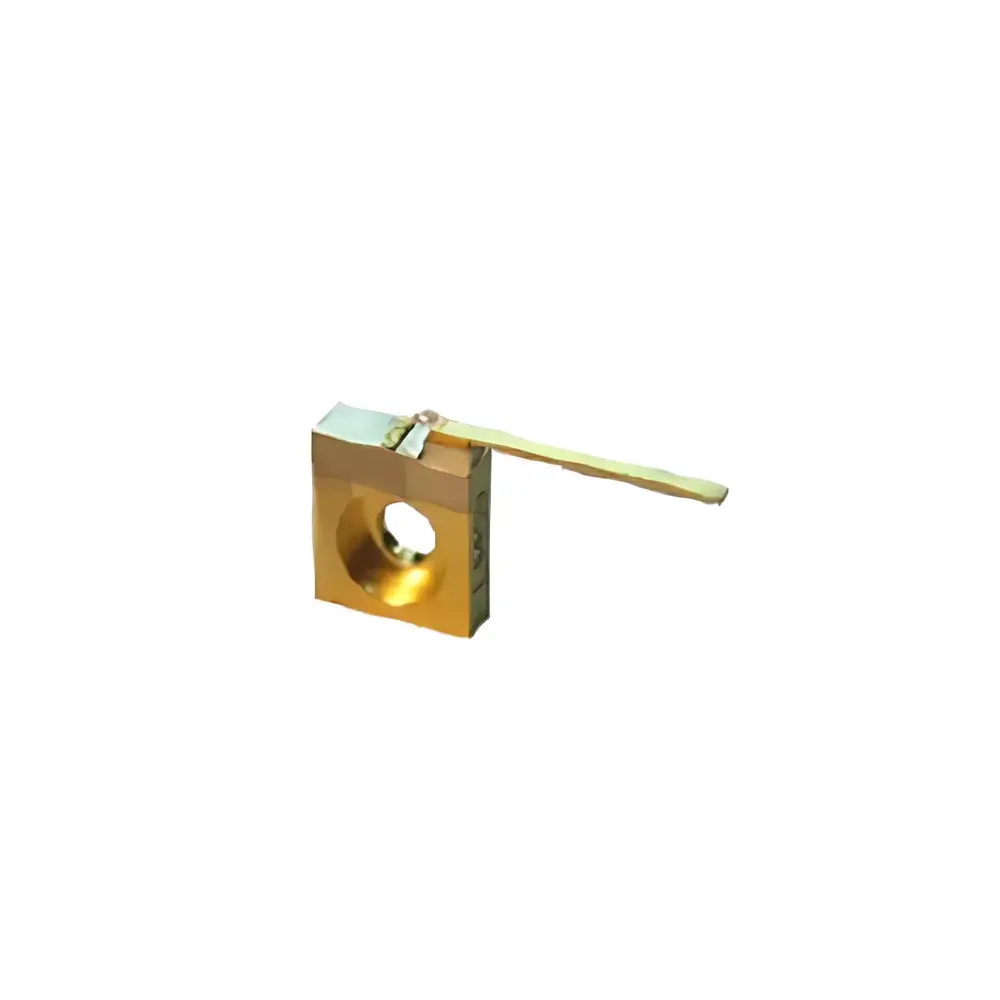
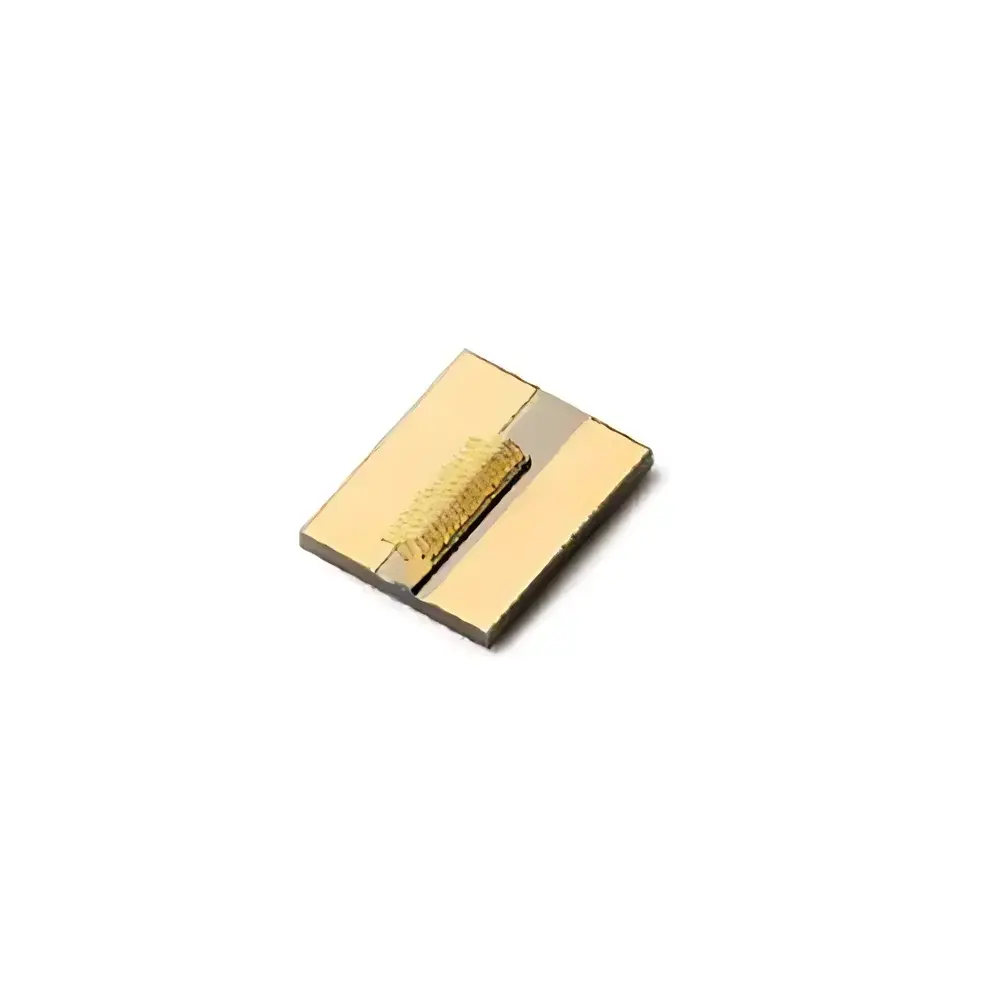
Auniontech LD Series Laser Diodes
| Brand | Auniontech |
|---|---|
| Model | LD Series (CW & Pulsed) |
| Wavelength Range | 445–1850 nm |
| Packaging Options | Free-Space & Fiber-Coupled |
| Compliance | RoHS, CE (EU), IEC 60825-1:2014 Class Compliance |
| Customization | Available for Wavelength, Output Power, Spectral Linewidth, and Package Configuration |
| Regulatory Support | Documentation provided for ISO/IEC 17025 lab integration and FDA 21 CFR Part 11–compatible system validation |
Overview
Auniontech LD Series Laser Diodes are semiconductor optoelectronic devices engineered to generate coherent, monochromatic, and highly directional light via stimulated emission under forward bias conditions. Operating on the principle of carrier injection into a p-n junction with an optical cavity formed by cleaved facets or distributed Bragg reflectors (DBRs), these diodes deliver stable output across continuous-wave (CW) and pulsed operation modes. Designed for integration into precision optical systems, the LD Series supports demanding applications requiring spectral purity, low temporal jitter (in pulsed variants), and high electro-optical conversion efficiency. Unlike gas or solid-state lasers, laser diodes offer compact form factors, low power consumption, and direct electrical modulation capability—making them foundational components in modern photonics infrastructure.
Key Features
- Wide Spectral Coverage: Standard offerings span 445 nm (blue) to 1850 nm (mid-infrared), enabling selection for fluorescence excitation, optical coherence tomography (OCT), gas sensing (e.g., H2O, CO2 absorption lines), and telecom C/L-band amplification.
- Flexible Packaging Architectures: Free-space TO-can, butterfly, and coaxial packages support collimated beam delivery; fiber-coupled variants include single-mode (SMF-28), polarization-maintaining (PM980), and multimode options with FC/APC or SMA905 connectors.
- Thermal & Electrical Stability: Integrated thermistor and TEC elements (in selected models) enable active temperature control within ±0.1 °C, ensuring wavelength drift < 0.05 nm/°C and power stability < ±1% over 8 hours (under constant current).
- Compliance-Ready Design: All units comply with IEC 60825-1:2014 for laser safety classification (Class 3B or 4, depending on output); full test reports—including LIV curves, far-field divergence, and spectral FWHM—are supplied with each batch.
- Customization Pathway: Auniontech supports tailored specifications including custom drive current thresholds, spectral narrowing via external cavity configurations, hermetic sealing for harsh environments, and OEM labeling per ISO 9001 traceability requirements.
Sample Compatibility & Compliance
The LD Series is compatible with standard laboratory and industrial platforms including OEM laser drivers (e.g., ILX Lightwave LDC-37xx, Thorlabs ITC4000), temperature controllers (Wavelength Electronics QCL series), and optical alignment stages. Devices meet RoHS Directive 2011/65/EU and CE marking requirements for electromagnetic compatibility (EN 61326-1) and low-voltage safety (EN 61010-1). For regulated environments—such as clinical diagnostics or pharmaceutical analytical instrumentation—laser modules can be supplied with calibration certificates traceable to NIST standards and documentation supporting GLP/GMP audit readiness, including device-specific risk assessments per ISO 14971 and software validation protocols aligned with FDA 21 CFR Part 11 Annex 11 expectations.
Software & Data Management
While laser diodes themselves are analog devices, Auniontech provides reference firmware libraries (C/C++, Python) for integration with common controller ecosystems (NI LabVIEW, MATLAB Instrument Control Toolbox, Arduino IDE). These libraries support real-time monitoring of photodiode feedback signals, temperature telemetry, and safe interlock status reporting. For system-level traceability, timestamped operational logs—including drive current, case temperature, and output power estimates—can be exported in CSV or HDF5 format. When integrated into larger optical measurement platforms (e.g., spectrometers or interferometers), the LD Series supports synchronization via TTL triggers (rise time < 5 ns) and analog modulation inputs (0–5 V, bandwidth up to 10 MHz), facilitating lock-in detection and swept-wavelength acquisition schemes compliant with ASTM E131 and ISO/IEC 17025 clause 5.9.
Applications
- Optical Communications: Pump sources for erbium-doped fiber amplifiers (EDFAs), transceivers in 10G–400G coherent systems, and VCSEL alternatives in short-reach datacom links.
- Biomedical Instrumentation: Excitation sources in flow cytometry (488 nm, 640 nm), confocal microscopy (532 nm, 785 nm), and photoacoustic imaging (1064 nm, 1310 nm).
- Industrial Metrology: Interferometric displacement sensors, laser triangulation profilers, and structured light 3D scanners requiring stable, narrow-linewidth illumination.
- Scientific Research: Seed lasers for ultrafast amplifier systems, atomic physics experiments (Rb/D2 line at 780 nm, Cs/D2 at 852 nm), and quantum optics setups requiring high spatial mode quality (M² < 1.1).
- Environmental Sensing: Tunable diode laser absorption spectroscopy (TDLAS) platforms targeting greenhouse gases (CH₄ at 1653 nm, CO at 1567 nm) and industrial process monitoring.
FAQ
What is the typical lifetime of Auniontech LD Series devices under rated operating conditions?
Rated lifetime exceeds 10,000 hours at 25 °C case temperature and nominal drive current, validated per Telcordia GR-468-CORE reliability testing protocols.
Do you provide spectral characterization data for each individual diode?
Yes—every unit ships with a factory-measured LIV curve, spectral plot (resolution ≤ 0.05 nm), and beam profile (M², BPP) report generated using calibrated OSA and beam profiler systems.
Can these laser diodes be integrated into FDA-cleared medical devices?
Absolutely—the design, documentation package, and change control processes align with IEC 62304 for embedded software and ISO 13485 manufacturing quality management, supporting regulatory submissions.
Is pulse-to-pulse timing jitter specified for pulsed variants?
Jitter is characterized at < 100 ps RMS (10–90% rise time) for nanosecond-pulsed models operating at repetition rates up to 100 MHz, measured with a 50-GHz real-time oscilloscope and fast photodetector.
How does Auniontech ensure wavelength consistency across production batches?
Wavelength binning is performed using high-resolution grating spectrometers calibrated against NIST-traceable HeNe and Hg/Ar lamps; statistical process control (SPC) charts monitor center wavelength drift with CpK ≥ 1.67.





