
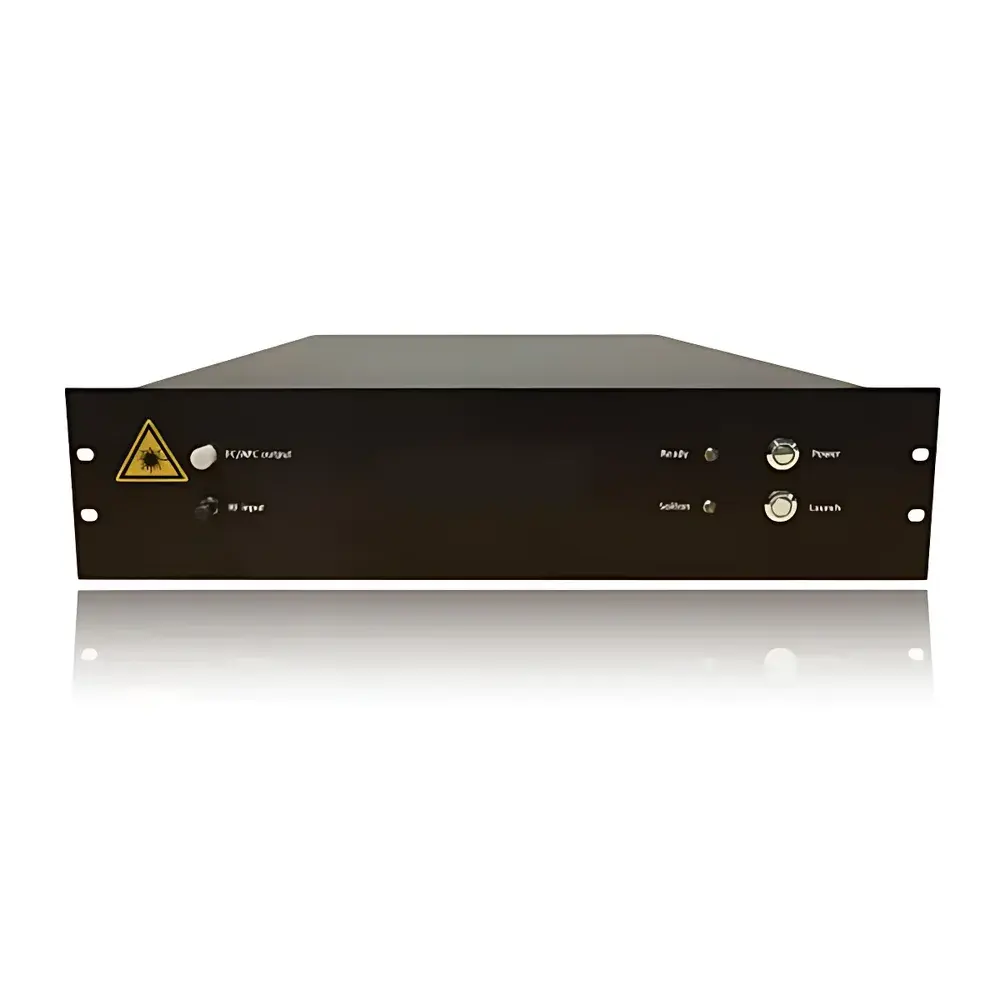
Auniontech Microresonator-Based Optical Frequency Comb
| Brand | Auniontech |
|---|---|
| Model | Optical Frequency Comb |
| Origin | Shanghai, China |
| Type | Commercial Microresonator Kerr Frequency Comb System |
| Spectral Coverage | C-band and O-band (customizable) |
| Free Spectral Range (FSR) | 20–1000 GHz |
| ITU Grid Spacing Options | 100 / 200 / 400 / 800 GHz |
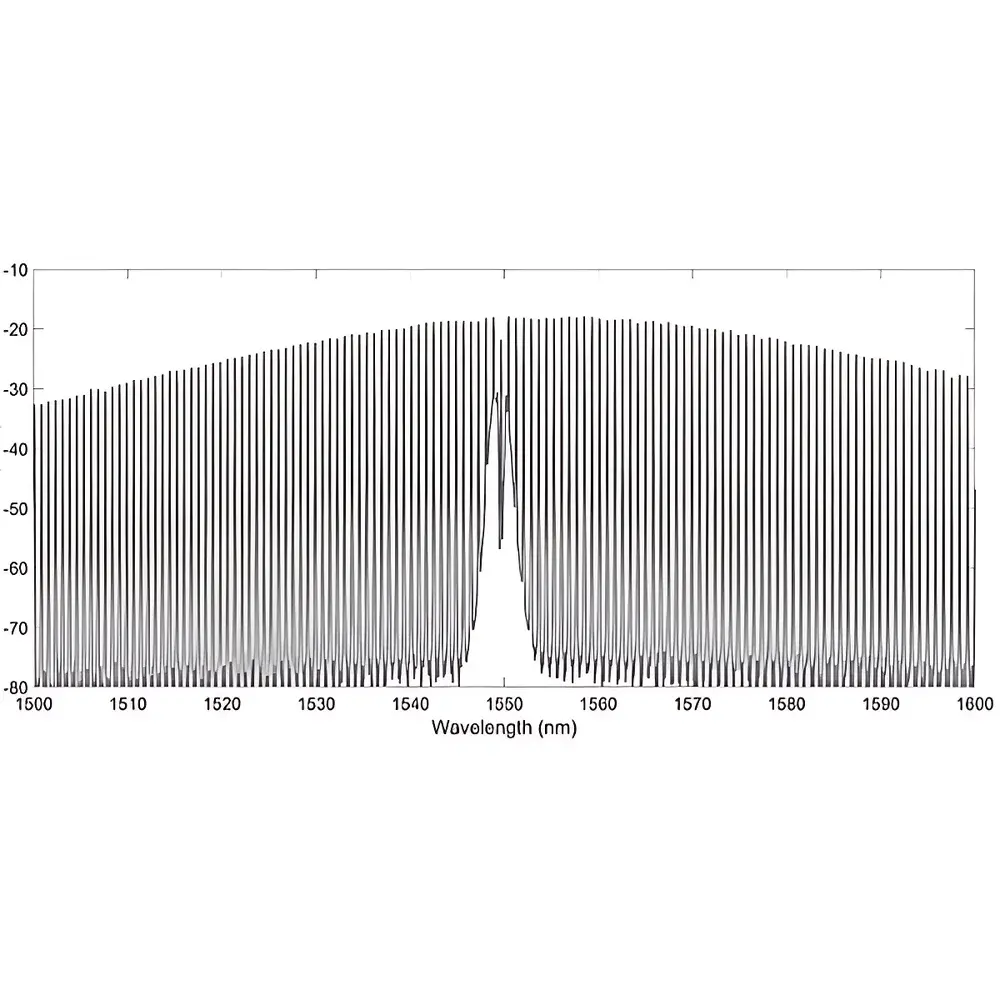
| 3-dB Optical Bandwidth | >50 nm |
| Optical Signal-to-Noise Ratio (OSNR) | >50 dB |
| Individual Comb Line Linewidth | <100 kHz |
| Pump Laser Integration | On-board high-power amplifier available |
| Resonator Platform | High-Q Whispering Gallery Mode (WGM) microresonator |
| Compliance | Designed for laboratory-grade metrology and spectroscopy applications |
Overview
The Auniontech Microresonator-Based Optical Frequency Comb is a fully commercialized, chip-scale optical frequency comb source engineered for precision spectroscopy, optical atomic clocks, coherent communications, and photonic microwave synthesis. Unlike traditional mode-locked laser-based combs—bulky, power-intensive, and vibration-sensitive—this system leverages Kerr nonlinearity in ultra-high-Q whispering gallery mode (WGM) microresonators to generate broadband, equidistant spectral lines with exceptional phase coherence. The comb operates on the principle of parametric four-wave mixing in dispersion-engineered resonators, enabling octave-spanning spectra when pumped by a single-frequency continuous-wave (CW) laser. Its frequency domain coverage exceeds 100 THz, with absolute line spacing accuracy traceable to primary frequency standards (e.g., Cs or Rb atomic references), and intrinsic frequency stability at the mHz level under active stabilization. This architecture bridges the gap between microwave electronics and optical frequencies, establishing a direct, coherent link across 12+ octaves.
Key Features
- Compact, turnkey design based on monolithic WGM microresonators fabricated from low-loss crystalline or integrated photonic platforms (e.g., MgF2, Si3N4, or CaF2)
- Programmable free spectral range (FSR) from 20 GHz to 1 THz, aligned with ITU-T grid standards (100/200/400/800 GHz options)
- High optical signal-to-noise ratio (>50 dB) achieved via intracavity field enhancement and optimized pump coupling
- Sub-100 kHz intrinsic linewidth per comb tooth, supporting high-resolution heterodyne detection and dual-comb spectroscopy
- On-board semiconductor optical amplifier (SOA) for post-generation amplification without significant noise penalty
- C-band (1530–1565 nm) and O-band (1260–1360 nm) configurations available; custom band extension supported upon request
- Integrated thermal and piezoelectric tuning for fine comb offset control and repetition rate stabilization
Sample Compatibility & Compliance
This frequency comb system is designed for integration into metrology-grade optical laboratories and industrial R&D environments. It does not require sample contact or consumables—its operation is purely photonic and non-invasive. The device complies with IEC 61000-6-3 (EMC emission limits) and IEC 61000-6-2 (immunity requirements) for laboratory instrumentation. While not certified for clinical or GMP manufacturing use out-of-the-box, its architecture supports traceability to SI second definitions per BIPM recommendations and is compatible with calibration workflows adhering to ISO/IEC 17025:2017 for measurement uncertainty quantification. When paired with appropriate reference lasers and f–2f interferometers, it satisfies the technical prerequisites for participation in international time/frequency comparisons coordinated by the International Bureau of Weights and Measures (BIPM).
Software & Data Management
The system ships with a vendor-provided LabVIEW-based control suite and Python SDK (PyAunionComb), enabling full remote orchestration of pump laser wavelength, temperature setpoints, cavity resonance tracking, and real-time comb spectrum acquisition via integrated optical spectrum analyzers (OSAs). All instrument parameters—including FSR, offset frequency (fceo), and individual line power—are logged with timestamped metadata in HDF5 format, ensuring compatibility with FAIR (Findable, Accessible, Interoperable, Reusable) data principles. Audit trails record user-initiated configuration changes, aligning with GLP documentation practices. For regulated environments, optional 21 CFR Part 11-compliant electronic signature modules and role-based access control (RBAC) can be deployed through third-party middleware integrations.
Applications
- Direct frequency comb spectroscopy: Enables broadband molecular fingerprinting with Doppler-limited resolution in gas-phase, liquid-phase, and solid-state samples
- Optical clockwork: Serves as a flywheel oscillator for optical lattice clocks and ion trap frequency standards
- Dual-comb interferometry: Facilitates rapid, calibration-free Fourier-transform spectroscopy with kHz acquisition rates
- Photonic microwave generation: Produces low-phase-noise RF signals up to 100 GHz via photodetection of comb harmonics
- Wavelength-division multiplexing (WDM) channel calibration: Provides absolute wavelength references traceable to primary standards for telecom test equipment
- Quantum photonics: Supplies entangled photon pairs and multi-wavelength pump sources for integrated quantum circuits
FAQ
What is the typical threshold pump power required to initiate comb formation?
Threshold power depends on the specific microresonator platform and targeted FSR, but typically ranges from 50 mW to 500 mW for CW diode-pumped systems operating near telecommunication wavelengths.
Can this comb be locked to an external RF reference?
Yes—the repetition rate (frep) and carrier-envelope offset (fceo) are accessible via built-in photodiodes and can be phase-locked using standard PID controllers and voltage-controlled oscillators (VCOs) or direct digital synthesizers (DDS).
Is vacuum or active vibration isolation required for stable operation?
No—unlike femtosecond laser combs, this microresonator system exhibits inherent mechanical robustness due to its monolithic architecture and short cavity length (<1 mm effective path), permitting benchtop deployment without optical tables.
Does the system support real-time comb line identification and tracking?
Yes—integrated wavelength meters and fast-scanning OSAs enable automated line indexing and drift compensation algorithms embedded in the control software.
Are OEM integration options available for embedded photonic systems?
Yes—Auniontech offers wafer-level packaging, fiber-pigtailed modules, and custom driver electronics for integration into photonic integrated circuits (PICs) and portable metrology platforms.






