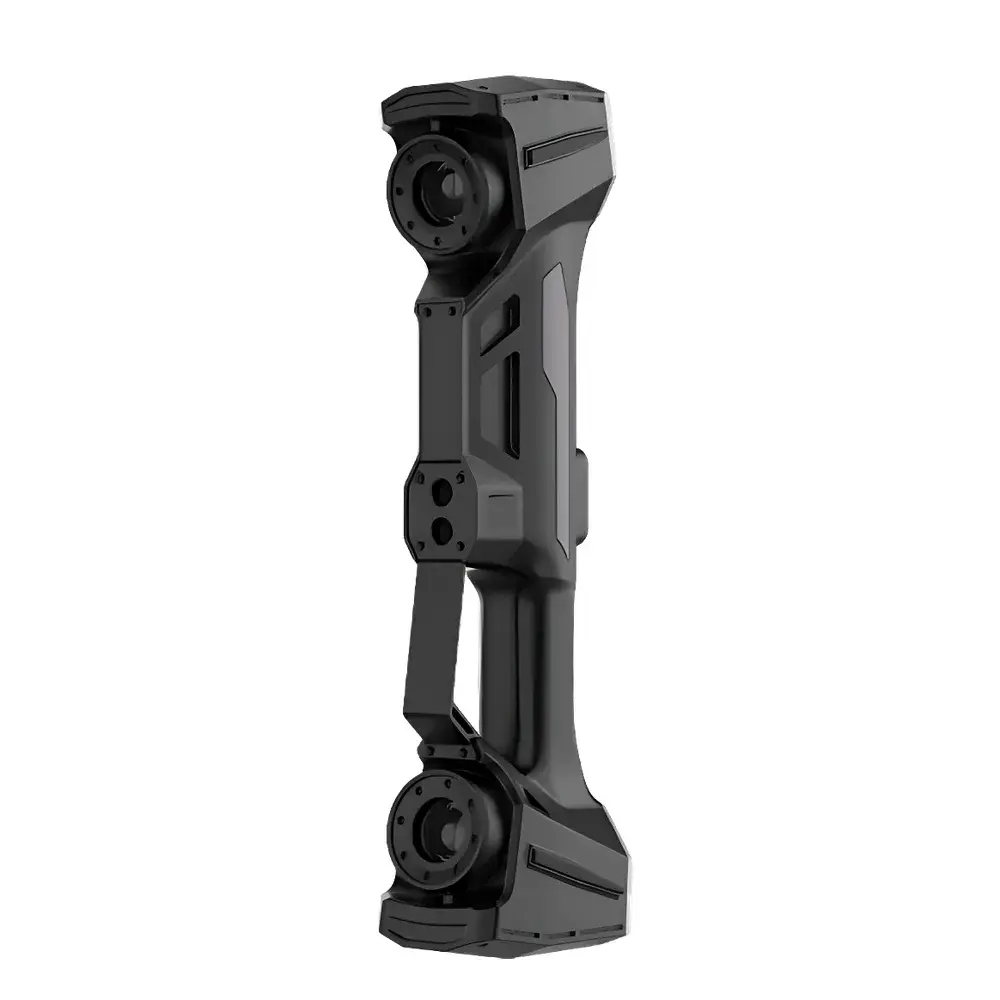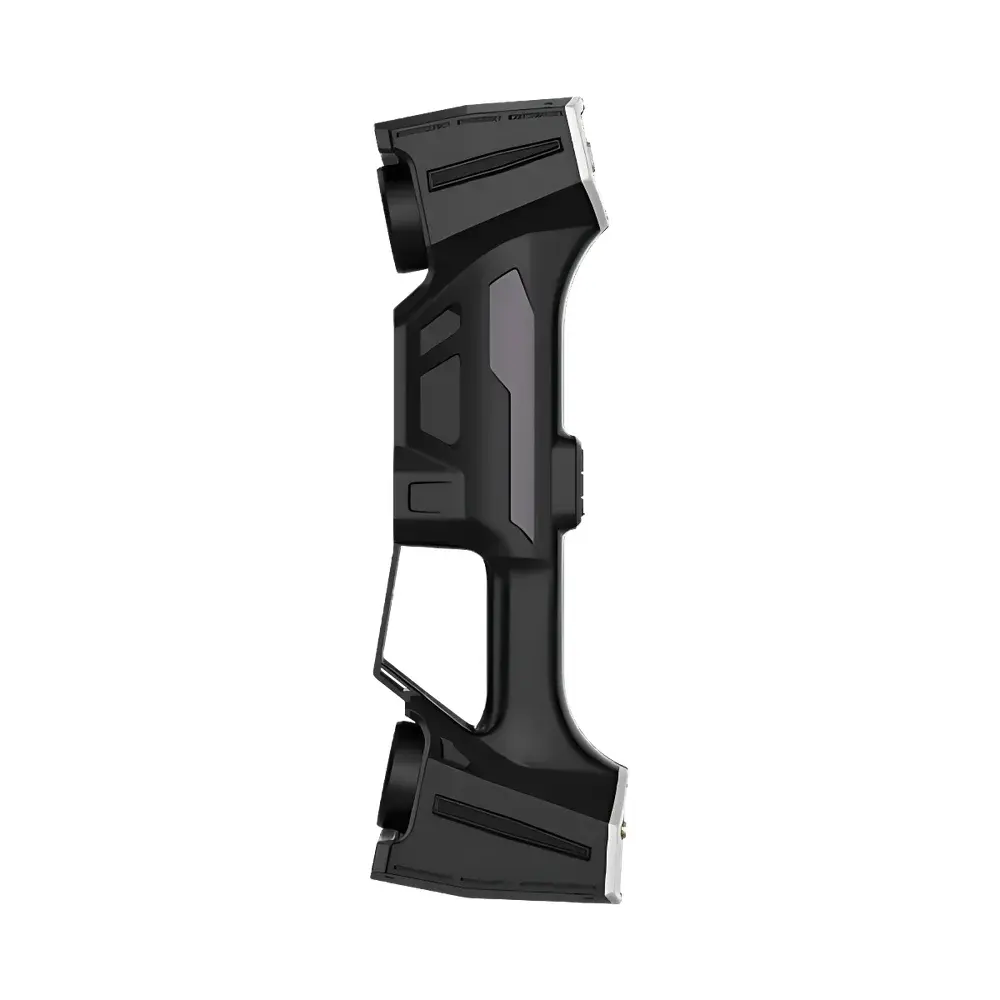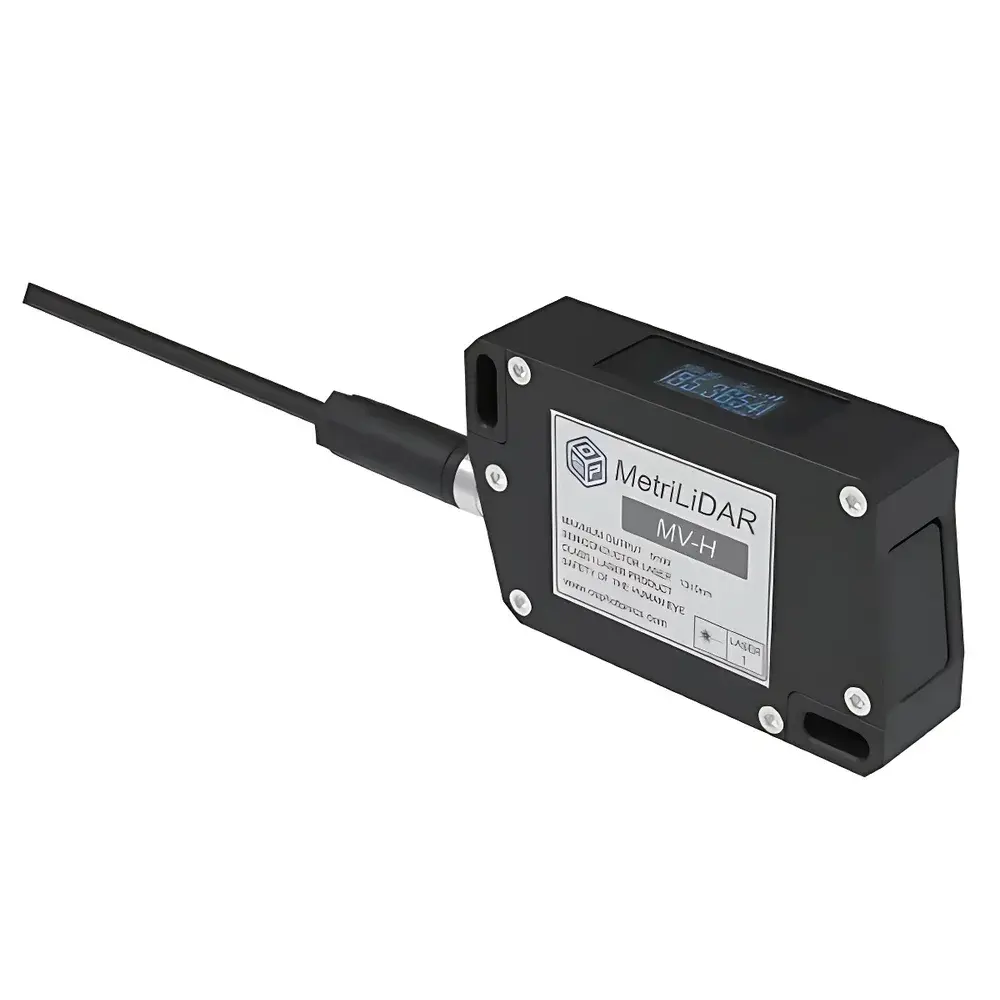
Auniontech MV-H Series Integrated Laser Doppler Vibrometer
| Brand | Auniontech |
|---|---|
| Model | MV-H Series |
| Measurement Principle | Heterodyne Laser Interferometry (Dual-Frequency He–Ne or 1310 nm Semiconductor Laser) |
| Displacement Noise Density | Down to 0.3 pm/√Hz |
| Maximum Velocity Range | Up to 4500 mm/s |
| Displacement Resolution | As low as 0.02 nm |
| Frequency Range | DC to 2.5 MHz |
| Optical Wavelength | 1310 nm |
| Laser Safety Class | I (IEC 60825-1) |
| IP Rating | IP67 |
| Operating Temperature | 0–50 °C |
| Weight | 180 g |
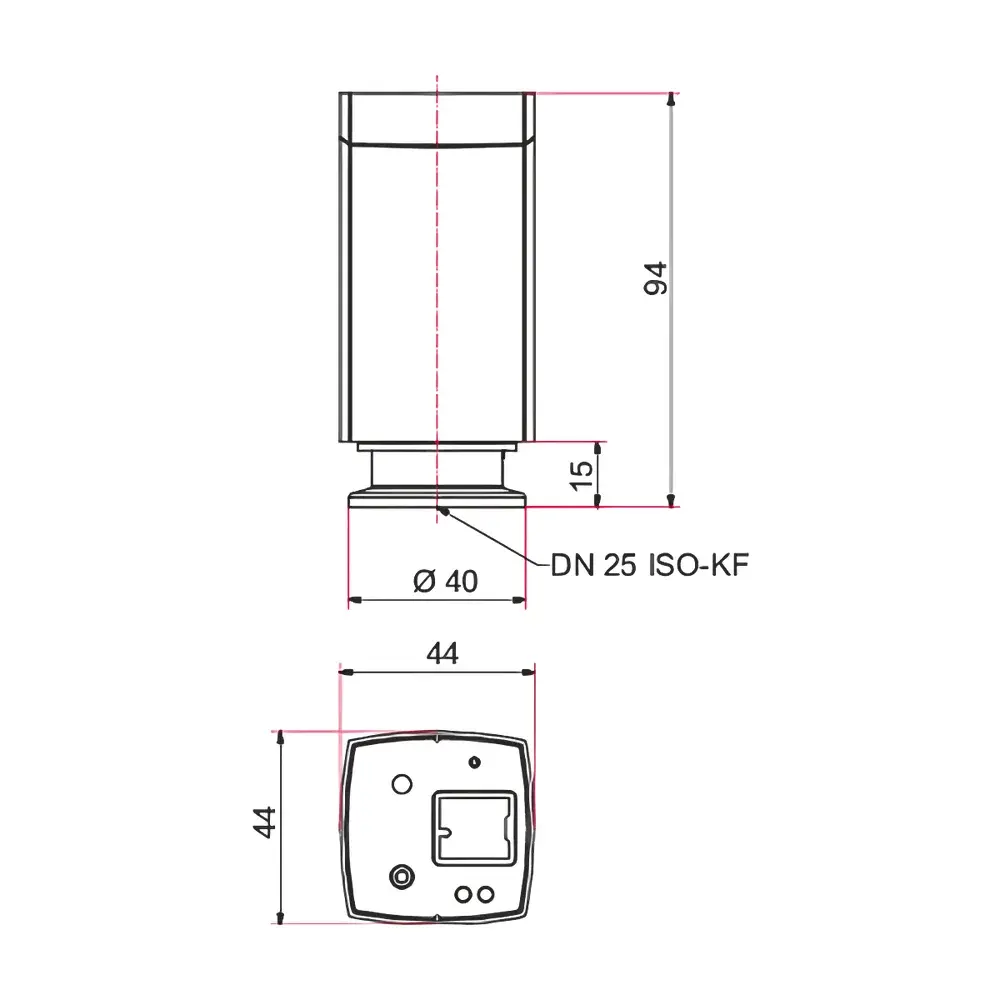
| Dimensions | 83.7 × 50 × 22 mm³ |
| Power Supply | 2–24 VDC, <4 W |
| Output Interface | Ethernet (Real-time Digital Output) |
| Lens Options | F14, F8.9, F28 (Standardized F-number designations for calibrated working distance and field-of-view) |
Overview
The Auniontech MV-H Series Integrated Laser Doppler Vibrometer is a high-performance, fully integrated optical vibration measurement system engineered for precision dynamic displacement and velocity characterization in industrial, aerospace, and academic research environments. Unlike conventional laser vibrometers requiring external controllers, signal conditioners, and bulky interferometric optics, the MV-H platform embeds the entire optical path—including dual-frequency laser source, integrated photonic chip-based interferometer, balanced detector array, and collimating lens assembly—within a single monolithic aluminum housing. Its core measurement principle relies on heterodyne laser interferometry, where a frequency-shifted reference beam interferes with the Doppler-shifted backscattered light from the target surface. This enables direct, phase-resolved extraction of instantaneous displacement, velocity, and acceleration without mechanical contact or mass loading. The system operates at 1310 nm, offering superior immunity to ambient visible-light interference (>60,000 lux tolerance) and compatibility with standard single-mode fiber infrastructure. With a DC-coupled bandwidth extending to 2.5 MHz and displacement noise density as low as 0.3 pm/√Hz, the MV-H series meets stringent requirements for micro-vibration analysis in semiconductor metrology, MEMS device validation, ultrasonic transducer characterization, and structural health monitoring of lightweight composites.
Key Features
- Fully Integrated Photonic Architecture: Combines laser diode, waveguide-based Mach–Zehnder interferometer with programmable delay lines, InGaAs photodetector array, and aspheric collimation optics into one compact module—eliminating alignment sensitivity and thermal drift associated with free-space interferometers.
- True Controller-Free Operation: Delivers raw digital vibration data via Gigabit Ethernet; no external amplifier, analog-to-digital converter, or real-time processing unit required—reducing system footprint, power consumption (<4 W), and integration complexity.
- Sub-picometer Displacement Sensitivity: Achieves theoretical displacement resolution down to 0.02 nm (MV-H3500 variant) enabled by proprietary DSP algorithms implementing coherent FM-CW demodulation and real-time phase unwrapping over multi-cycle acquisitions.
- Wide Dynamic Range & Velocity Capability: Supports velocity measurements up to ±4500 mm/s with linearity deviation <0.1% FS across full bandwidth—validated per ISO 16063-11 and ASTM E1876 standards for electrodynamic shaker calibration.
- Ruggedized Industrial Design: IP67-rated enclosure, aluminum chassis with CTE-matched optical mounts, and operational stability across 0–50 °C ambient range ensure reliable deployment in factory-floor environments and outdoor structural testing scenarios.
Sample Compatibility & Compliance
The MV-H series is compatible with a broad spectrum of reflective and diffusely scattering surfaces—including polished metals, anodized aluminum, painted composites, silicon wafers, and biological tissues—without requiring retroreflective tape or surface preparation. Its 1310 nm wavelength minimizes speckle noise on rough surfaces while maintaining sufficient coherence length (>20 m) for long-range operation. For targets beyond 15 m, custom collimation optics and higher-power laser modules (≤10 mW) are available under IEC 60825-1 Class 1 compliance. All configurations conform to electromagnetic compatibility (EMC) requirements per EN 61326-1 and meet safety directives for Class I laser products. Traceable calibration certificates (NIST-traceable reference accelerometers and interferometric step gauges) are provided with each unit, supporting GLP/GMP audit readiness and ISO/IEC 17025-accredited laboratory workflows.
Software & Data Management
Auniontech provides the VibroLink Pro software suite, a Windows-based application supporting real-time FFT, order tracking, time-domain waveform capture, and modal parameter extraction (damping ratio, natural frequency, mode shape). Raw Ethernet packets contain 32-bit signed integer displacement samples at user-configurable sampling rates up to 5 MHz (MV-H3500), synchronized via IEEE 1588 Precision Time Protocol (PTP) for multi-sensor network deployments. Data export formats include HDF5, MATLAB .mat, CSV, and UFF58—ensuring interoperability with MATLAB, Python (SciPy, PyVib), LMS Test.Lab, and Siemens Simcenter. Audit trails, user access control, and electronic signature functionality comply with FDA 21 CFR Part 11 requirements for regulated pharmaceutical and medical device manufacturing applications.
Applications
- Non-contact vibration mapping of turbine blades, aircraft fuselage panels, and satellite solar array hinges under operational loads.
- In-line monitoring of wafer-stage dynamics and lithography tool stage positioning accuracy in semiconductor fabrication cleanrooms.
- Characterization of piezoelectric actuators, ultrasonic cleaners, and MEMS resonators across resonant modes up to 2.5 MHz.
- Structural dynamic testing of civil infrastructure (bridges, wind turbine towers) using remote sensing at distances up to 15 m.
- Biomechanical studies of vocal fold vibration, tympanic membrane motion, and dental implant osseointegration kinetics.
FAQ
What is the maximum measurable distance without signal degradation?
The standard configuration supports stable operation from 60 mm to 15 m. Beyond 15 m, custom F28 lens variants with extended depth-of-field optics and optional 10 mW laser modules are available—subject to local laser safety regulations.
Does the system require periodic recalibration?
No routine recalibration is needed under normal operating conditions. However, annual verification against traceable interferometric standards is recommended for ISO/IEC 17025 compliance and long-term measurement assurance.
Can multiple MV-H sensors be synchronized for multi-point vibration analysis?
Yes—via IEEE 1588 PTP over Ethernet, enabling sub-microsecond timing alignment across ≥16 sensors for full-field operational deflection shape (ODS) reconstruction.
Is the output signal compatible with third-party DAQ systems?
Raw digital displacement data is delivered via TCP/IP stream over Ethernet; API documentation and Python/C++ SDKs are provided for seamless integration with National Instruments PXI, Dewesoft, or custom LabVIEW environments.
How does ambient lighting affect measurement fidelity?
The 1310 nm detection band and narrowband optical filtering suppress interference from visible-light sources up to 60,000 lux—making the sensor suitable for daylight outdoor use and bright industrial settings without shielding.