
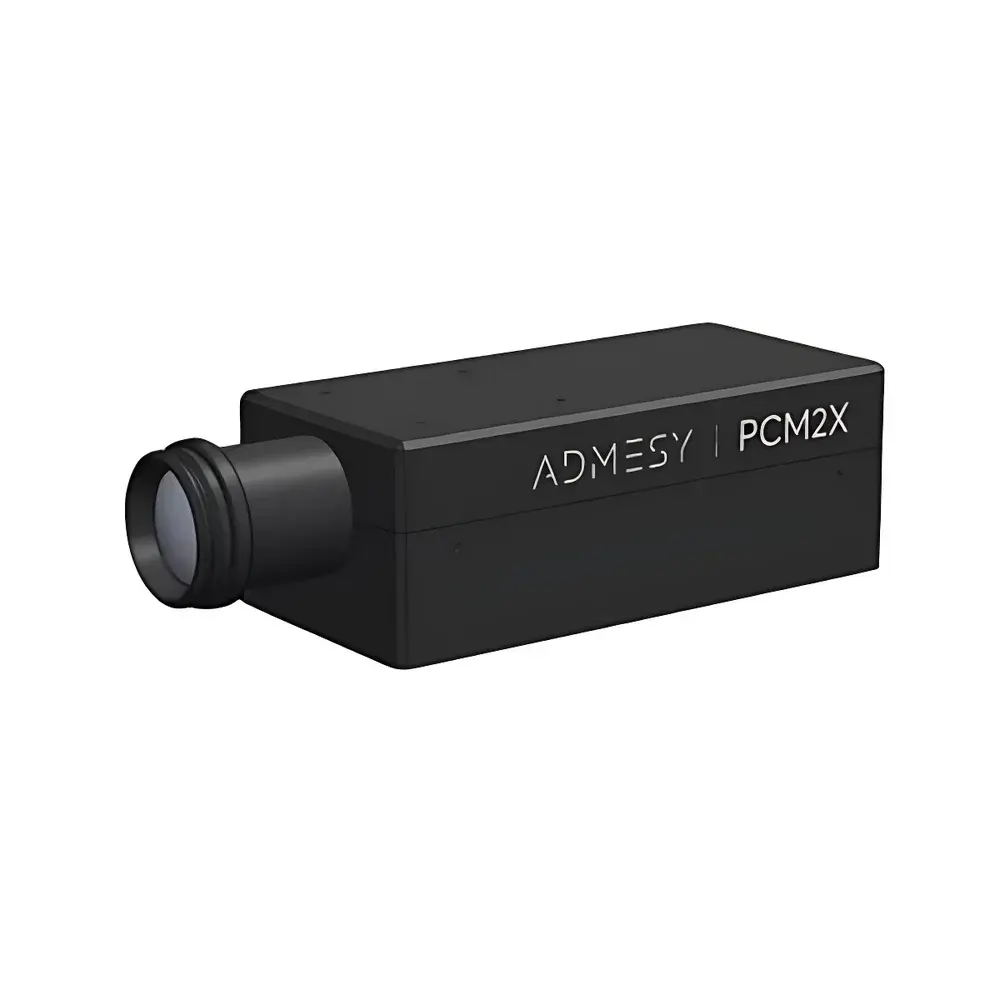
Auniontech PCM2X-270 Low-Luminance High-Precision Colorimeter
| Brand | Auniontech |
|---|---|
| Origin | Netherlands |
| Model | PCM2X-270 |
| Luminance Range | 5×10⁻⁵ – 6×10⁴ cd/m² |
| Chromaticity Accuracy | ±0.0005 (x,y) |
| Sampling Rate (XYZ) | 600 kHz |
| Field of View | ±3° |
| Measurement Spot Size | 29 mm @ 50 mm Working Distance |
| Shutter | Mechanical, USB-MTC Compliant |
| OS Compatibility | Windows, Linux, macOS |
| Software Interface | VISA-based (LabVIEW, LabWindows/CVI, Visual Studio) |
| Trigger Support | Hardware VSYNC Sync |
| Flicker Analysis | FFT-based (FMA, JEITA, Custom), Time-Domain FMA (VRR), FIR-filtered |
Overview
The Auniontech PCM2X-270 is a low-luminance, high-precision colorimeter engineered for photometric and colorimetric characterization of displays, OLED microdisplays, AR/VR waveguides, and ultra-low-brightness light sources where conventional instruments fail. Operating on the CIE 1931 2° standard observer spectral response (with optional CIE 170-2:2015 compliance), the PCM2X-270 employs dual-stage amplification circuitry and optimized optical path design to minimize photon loss while maintaining signal integrity at luminance levels as low as 5×10⁻⁵ cd/m². Its core architecture integrates a thermally stabilized silicon photodiode array with spectrally tuned interference filters matched to the CIE tristimulus functions (x̄(λ), ȳ(λ), z̄(λ)), enabling direct XYZ tristimulus value acquisition without interpolation or calibration drift under thermal transients. Unlike filter-wheel or scanning-spectrometer-based systems, the PCM2X-270 delivers true simultaneous XYZ sampling at up to 600,000 samples per second—critical for capturing transient flicker, pulse-width-modulated (PWM) drive artifacts, and temporal chromatic shifts in next-generation emissive technologies.
Key Features
- Ultra-low luminance capability: validated measurement down to 0.00005 cd/m² with <±0.0005 chromaticity uncertainty (Δx, Δy) across full dynamic range
- Simultaneous XYZ acquisition at 600 kHz native sampling rate—enabling full waveform reconstruction of flicker, modulation depth, and temporal color drift
- Integrated mechanical shutter compliant with USB-MTC (Measurement & Test Class) standards for precise exposure control and dark-reference synchronization
- Auto-ranging photometric amplifier with 12-decade dynamic span (10⁻⁵ to 10⁴ cd/m²), eliminating manual gain selection and associated quantization errors
- Dual-path analog signal conditioning: high-gain low-noise channel for sub-0.001 cd/m² operation; wide-range channel for display verification up to 60,000 cd/m²
- VSYNC hardware trigger input for pixel-accurate synchronization with display frame timing, essential for evaluating variable refresh rate (VRR) and adaptive sync protocols
- Cross-platform driver support via NI-VISA: native integration with LabVIEW, LabWindows/CVI, Python (PyVISA), and C++/C# applications on Windows, Linux, and macOS
Sample Compatibility & Compliance
The PCM2X-270 is optimized for non-contact measurement of self-emissive and reflective surfaces with angular acceptance of ±3° (f/# ≈ 9.5), ensuring minimal cosine error and spatial averaging over a 29 mm diameter spot at 50 mm working distance. It supports standardized evaluation of display performance per IEC 62341-6-3 (OLED), VESA DisplayHDR™ True Black, and ISO 13406-2 Annex B (flicker assessment). The instrument’s firmware implements traceable calibration routines aligned with NIST-traceable reference standards, and its data output structure complies with ASTM E308-23 for CIE colorimetric computations. Audit-ready metadata logging—including timestamp, integration time, shutter state, and ambient temperature—is embedded in every exported dataset to satisfy GLP and ISO/IEC 17025 laboratory accreditation requirements.
Software & Data Management
The PCM2X-270 operates without proprietary closed software: all functionality is exposed via documented SCPI-like command set over USB/VISA. Users may implement custom acquisition pipelines supporting real-time FFT-based flicker analysis (FMA, JEITA, user-defined weighting), time-domain flicker metrics (including VRR-aware FMA), and moving-window chromaticity tracking. Raw XYZ time-series data is streamed in IEEE 754 double-precision format with nanosecond-resolution timestamps. Optional MATLAB and Python SDKs provide wrappers for spectral correction, CIEDE2000 ΔE computation, and compliance reporting against ISO 9241-307 (flicker perception thresholds) and IEC TR 62778 (blue-light hazard). All firmware updates are digitally signed and validated prior to installation to ensure integrity under FDA 21 CFR Part 11 electronic record/electronic signature (ERES) environments.
Applications
- Characterization of micro-OLED and quantum-dot LED (QD-LED) displays used in AR glasses and head-mounted displays
- Flicker and temporal uniformity validation of automotive HUDs and transparent OLED dashboards
- Low-light emissivity mapping of photoluminescent safety signage and emergency exit indicators
- Color stability testing of laser-scanned projection systems under pulsed illumination
- Research-grade validation of human visual system models requiring sub-threshold luminance resolution
- Calibration transfer between primary standards labs and display manufacturing test benches
FAQ
What is the minimum measurable luminance, and how is it verified?
The PCM2X-270 achieves a lower limit of 5×10⁻⁵ cd/m², verified using NIST-traceable calibrated blackbody sources and aperture-restricted collimated beams under ISO/CIE-defined dark-adapted viewing conditions.
Does the device support automated compliance reporting for display certification standards?
Yes—through programmable scripting interfaces, users can generate reports conforming to VESA DisplayHDR True Black, IEC 62341-6-3, and ISO 9241-307, including pass/fail flags, statistical confidence intervals, and raw waveform exports.
Is mechanical shutter operation synchronized with external video timing signals?
Yes—the USB-MTC-compliant shutter accepts TTL-level VSYNC triggers with sub-microsecond jitter, enabling frame-locked dark/light measurements for PWM-driven panels.
Can the PCM2X-270 be integrated into automated production test fixtures?
Absolutely—the device exposes deterministic command-response latency (<1.2 ms), supports multi-unit daisy-chaining over USB, and includes hardware interlock pins for safety-critical inline metrology stations.
How is long-term calibration stability maintained?
Each unit ships with a factory-applied spectral responsivity map and undergoes thermal soak testing from 15°C to 35°C; onboard temperature sensors feed real-time compensation coefficients into the XYZ calculation engine to maintain chromaticity accuracy within specification across ambient drift.





