
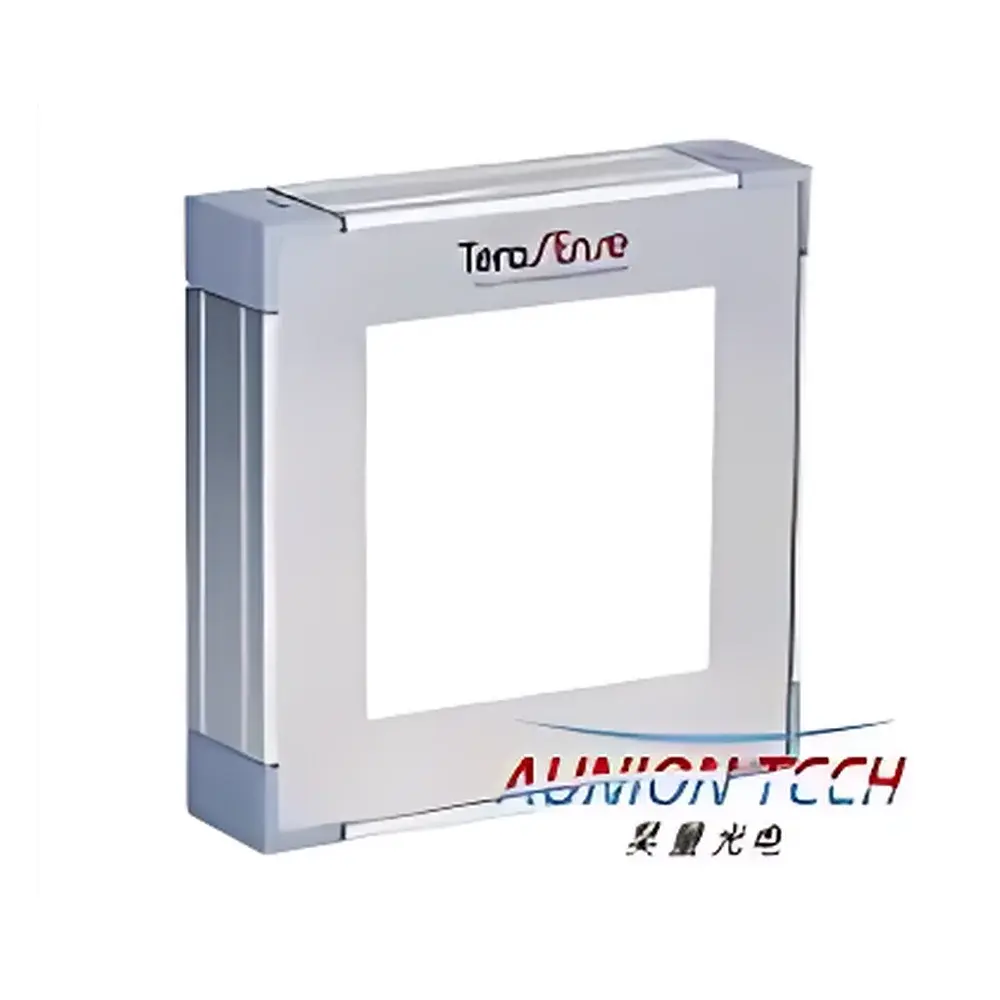
Auniontech THz-Imager Pro Series Ultra-High-Speed Terahertz Imaging System (0.05–0.7 THz)
| Brand | Auniontech |
|---|---|
| Origin | Shanghai, China |
| Model | THz-Imager Pro |
| Spectral Range | 0.05–0.7 THz |
| Frame Rate | Up to 5000 fps |
| Detector Type | Semiconductor Array |
| Pixel Options | 256 × 1, 1024 × 1, or 4096 × 1 linear array |
| Pixel Size | 1.5 × 1.5 mm |
| NEP | 1 nW/√Hz (detector), 14–100 nW/pixel (system, frame-rate dependent) |
| THz Source Options | Fixed-frequency (100/140 GHz), Tunable CW (70–310 GHz), High-Power (up to 300 mW) |
| Detector Response Time | 150 ps (ultrafast), 1 µs (standard) |
| Impedance | 50 Ω |
| Responsivity | 0.5–10 V/W |
| Optical Components Available | PTFE/TPX lenses (Ø1–30 cm, f = 50–300 mm), windows, prisms, polarizers, beam splitters, attenuators |
Overview
The Auniontech THz-Imager Pro Series is an ultra-high-speed, coherent terahertz (THz) imaging system engineered for time-resolved, non-contact inspection and dynamic process monitoring across scientific, industrial, and biomedical domains. Operating in the 0.05–0.7 THz spectral band—spanning the sub-millimeter wave to far-infrared transition region—the system leverages monolithic semiconductor-based linear array detectors to achieve frame rates up to 5000 Hz. Unlike conventional single-pixel scanning architectures or cryogenically cooled bolometer arrays, this platform employs room-temperature, uncooled semiconductor detector chips with integrated readout electronics, enabling high temporal resolution without thermal drift or mechanical latency. The system functions as a real-time intensity mapping instrument: incident THz radiation—generated by either fixed-frequency or tunable continuous-wave (CW) sources—is modulated, transmitted through or reflected from the sample, and captured by the linear array with microsecond-level synchronization. Its design adheres to fundamental principles of electromagnetic wave propagation and photoconductive sampling, supporting both transmission and reflection geometries. This architecture delivers high reproducibility in thickness measurement, layer delamination detection, and hydration-state mapping—particularly where millisecond-scale dynamics are critical.
Key Features
- Ultra-high frame rate: Sustained acquisition at 5000 fps (full array), scalable to lower frame rates for improved signal-to-noise ratio (e.g., 1000 fps at 45 nW/pixel NEP, 100 fps at 14 nW/pixel)
- Modular detector configuration: Selectable linear array formats—256 × 1, 1024 × 1, or 4096 × 1 pixels—with uniform 1.5 × 1.5 mm pixel pitch and optional custom pixelation
- Multi-source compatibility: Integrated support for fixed-frequency (100 GHz / 140 GHz), tunable CW (70–77 GHz, 140–155 GHz, 280–310 GHz), and high-power (>300 mW) THz sources with TTL modulation (<1 µs rise/fall time)
- Sub-nanosecond temporal response: Dual-mode detector variants—150 ps ultrafast response for pump-probe applications and 1 µs standard mode for steady-state imaging
- Room-temperature operation: No liquid nitrogen or Stirling cooler required; stable baseline performance over 8+ hour continuous runs
- 50 Ω impedance matching and broadband RF coupling: Ensures minimal signal reflection and optimal power transfer across the full 50 GHz–0.7 THz bandwidth
Sample Compatibility & Compliance
The THz-Imager Pro accommodates non-conductive and semi-conductive samples up to 300 mm × 300 mm in planar geometry, including polymer composites, pharmaceutical tablets, biological tissues (ex vivo), ceramics, foam insulation, and packaged electronic assemblies. Its low-energy, non-ionizing radiation (photon energy < 2.8 meV at 0.7 THz) ensures intrinsic safety for repeated exposure of sensitive organic materials. The system supports ASTM E2986–22 (Standard Guide for Terahertz Imaging) workflows and is compatible with ISO/IEC 17025-aligned calibration protocols when paired with NIST-traceable THz power meters and reference standards. While not FDA-cleared as a medical device, its optical configuration meets IEC 60601-2-66 requirements for auxiliary diagnostic imaging subsystems under laboratory-use conditions. Data acquisition complies with GLP documentation standards, including timestamped metadata embedding and audit-ready log export.
Software & Data Management
Control and analysis are performed via THzStudio Pro—a cross-platform application built on Qt and Python (NumPy, SciPy, OpenCV). The software provides real-time FFT-based spectral filtering, line-scan reconstruction into 2D/3D volumetric stacks, and quantitative parameter extraction (e.g., absorption coefficient, refractive index via phase retrieval). All raw frames are saved in HDF5 format with embedded EXIF-style metadata: timestamp, source frequency, modulation duty cycle, gain setting, and environmental sensor readings (ambient temperature/humidity). Software supports API-driven automation via RESTful endpoints and Python bindings, enabling integration into automated QA/QC pipelines compliant with ISA-88 and ISA-95 frameworks. Audit trails—including user login, parameter changes, and export actions—are recorded in SQLite databases with SHA-256 hashing, satisfying 21 CFR Part 11 electronic record requirements when deployed on validated Windows Server environments.
Applications
- Industrial NDT: Real-time defect detection in multilayer polymer films, adhesive bond integrity assessment in aerospace composites, and void mapping in injection-molded plastic housings—deployed inline on conveyor systems operating at >1 m/s
- Pharmaceutical QA: Coating thickness uniformity analysis of enteric-coated tablets, crystallinity mapping of amorphous dispersions, and moisture diffusion profiling during stability testing
- Biomedical research: Ex vivo corneal hydration mapping, burn-depth stratification in porcine skin models, and label-free differentiation of tumor margins in resected breast tissue specimens
- Security screening: Concealed object identification beneath clothing or packaging using differential absorption contrast at characteristic resonances (e.g., 140 GHz for cotton, 280 GHz for polyethylene)
- Fundamental THz science: Carrier dynamics in 2D materials (graphene, MoS₂), phonon-polariton dispersion in ferroelectrics, and ultrafast spin precession in thin-film heterostructures
FAQ
What is the minimum detectable THz power per pixel at 5000 fps?
At maximum frame rate, the system achieves a noise-equivalent power (NEP) of 100 nW per pixel, measured under standardized blackbody illumination at 300 K and 0.3 THz center frequency.
Can the linear array be upgraded to a 2D focal plane array (FPA)?
Current hardware supports only linear scanning configurations; however, motorized XY translation stages with sub-10 µm repeatability are available as factory-integrated options to enable raster-scanned 2D imaging with <100 µm spatial resolution.
Is source frequency tuning automated within the software interface?
Yes—tunable sources (70–310 GHz variants) integrate with THzStudio Pro via USB-controlled synthesizer modules, allowing programmable frequency sweeps with 10 MHz step resolution and dwell times configurable from 10 ms to 10 s.
Do you provide calibration certificates traceable to national metrology institutes?
Auniontech offers optional factory calibration services accredited to ISO/IEC 17025, including spectral responsivity verification using NIST SRM 2500a and power calibration against PTB-traceable THz pyroelectric sensors.
What optical components are included by default with the base system?
The standard delivery includes one PTFE collimating lens (f = 100 mm, Ø25 mm), two TPX anti-reflection coated windows (5 mm thick), and a calibrated THz power monitor head with analog output—additional optics are available as configurable accessories.



