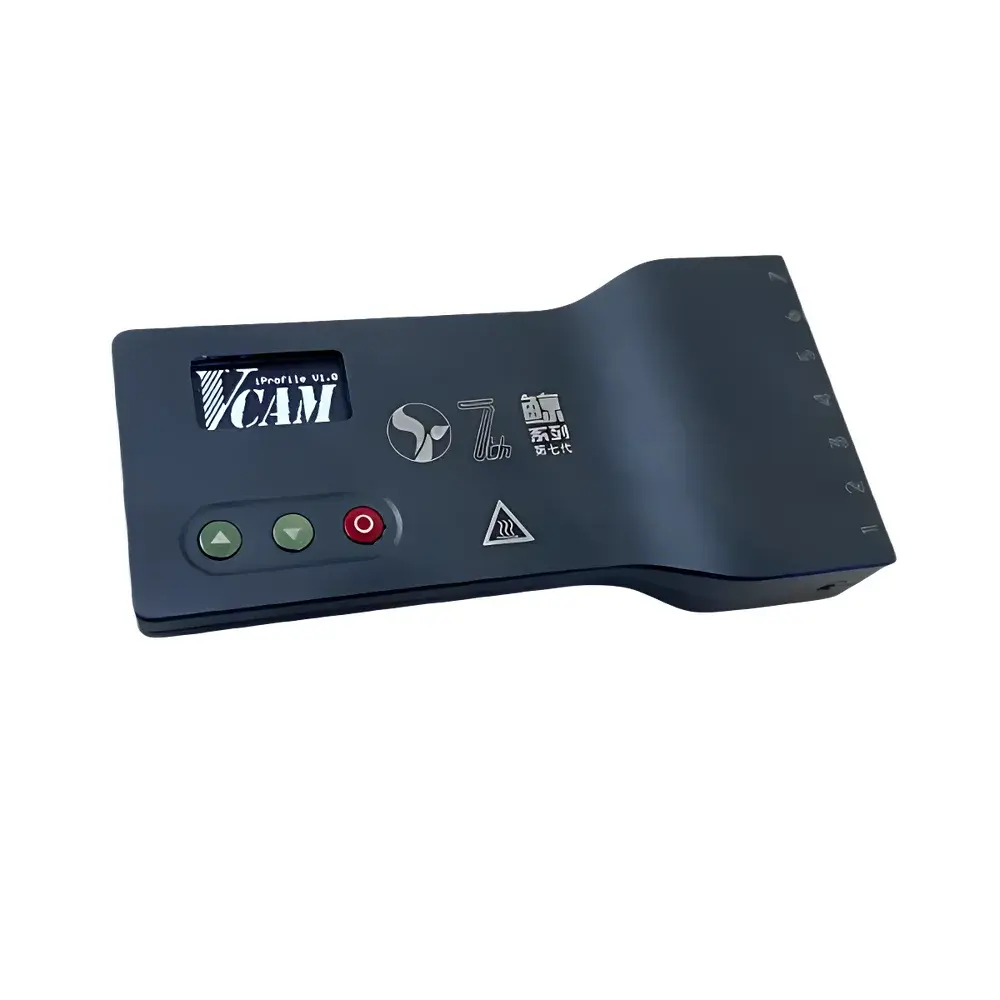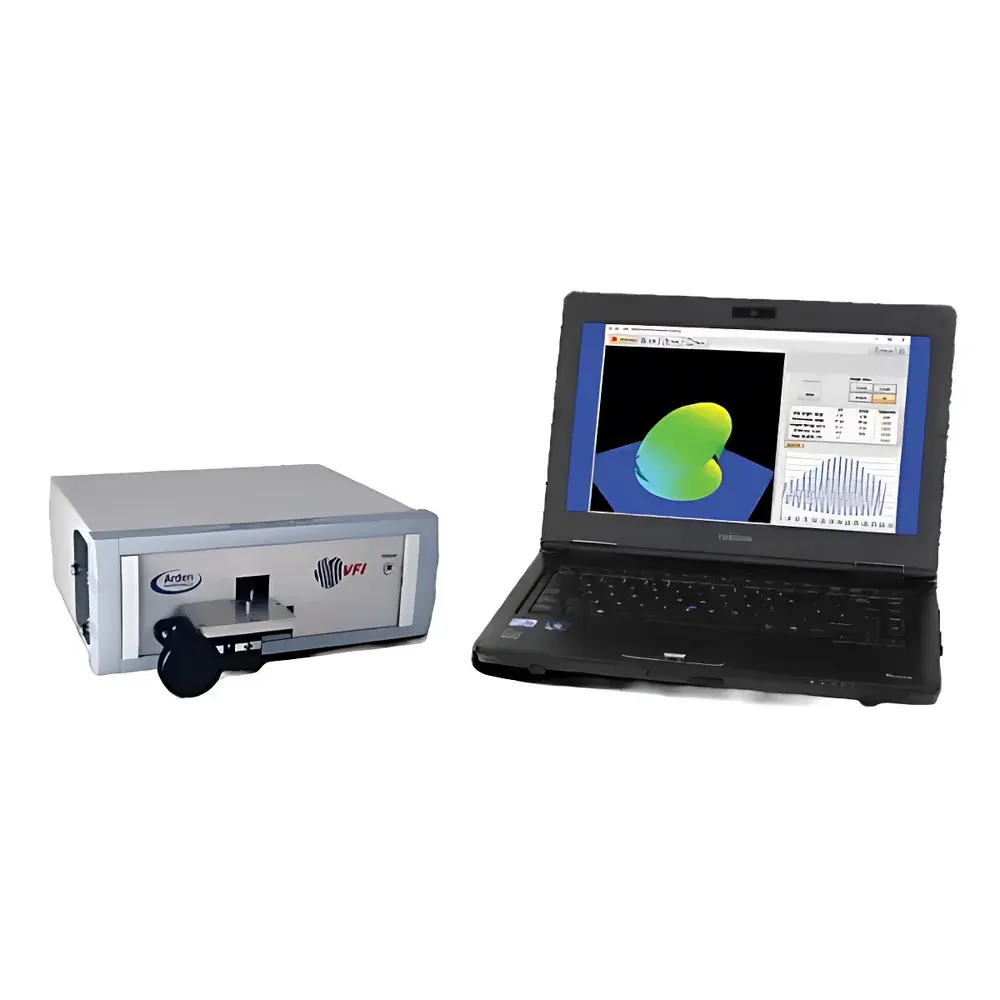
Auniontech VFI Fiber End-Face Interferometer
| Brand | Auniontech |
|---|---|
| Origin | Shanghai, China |
| Manufacturer Type | Authorized Distributor |
| Product Category | Domestic |
| Model | VFI |
| Pricing | Available Upon Request |
Overview
The Auniontech VFI Fiber End-Face Interferometer is a high-precision, non-contact optical metrology system engineered for quantitative characterization of fiber optic end-face geometry. It operates on the principle of phase-shifting white-light interferometry (PSI), enabling sub-nanometer vertical resolution and micron-level lateral accuracy in surface topography measurement. Designed specifically for telecom, datacom, and specialty fiber manufacturing environments, the VFI instrument delivers traceable, repeatable measurements critical to ensuring low insertion loss, minimal back reflection, and long-term reliability in high-speed optical interconnects. Its optical architecture is optimized for rapid acquisition of both 2D intensity images and full 3D surface height maps—essential for evaluating cleave quality, polish uniformity, curvature radius (ROC), apex offset, fiber height, and angle deviation in single-mode, multimode, polarization-maintaining (PM), hollow-core, and multicore fibers.
Key Features
- Three selectable field-of-view (FOV) options: 100 µm, 400 µm, and 1500 µm—enabling flexible inspection from individual fiber cores to multi-fiber arrays
- Simultaneous support for flat and angled (8°, 12°, 25°, custom) end-face geometries with automatic tilt compensation
- Dual-mode operation: real-time 2D interference fringe visualization and quantitative 3D topographic reconstruction
- Automated end-angle measurement with manual override capability for validation and calibration verification
- Full 3D surface map generation completed in ≤7 seconds per acquisition, with RMS repeatability <0.5 nm over 10 repeated measurements
- Height data export in CSV format; comprehensive reporting in Excel (.xlsx) and HTML formats compliant with internal QA documentation standards
- Integrated vibration-isolation design and thermal drift compensation algorithms for stable operation in production-floor environments
Sample Compatibility & Compliance
The VFI system accommodates standard fiber diameters from 125 µm to 2000 µm—including 250 µm coated, 900 µm buffered, and jacketed ribbon fibers—as well as specialty geometries such as PM fibers with stress rods, photonic crystal fibers, and air-clad hollow-core fibers. It meets functional requirements aligned with IEC 61300-3-35 (Fiber Optic Interconnecting Devices and Passive Components – Mechanical and Environmental Tests – End Face Geometry of Fiber Optic Connectors) and supports measurement traceability to NIST-traceable reference standards. While not certified to ISO/IEC 17025, the instrument’s measurement uncertainty budget is documented per ISO/IEC Guide 98-3 (GUM), and its software architecture supports audit trails required under GLP and GMP-aligned quality systems.
Software & Data Management
The proprietary VFI Control Suite provides intuitive workflow-driven operation via a Windows-based GUI. All measurement parameters—including numerical aperture, wavelength calibration, and Z-stage offset—are stored in encrypted project files with timestamped metadata. The software implements role-based user access control, electronic signature support for report approval, and configurable data retention policies. Exported Excel reports include pass/fail flags against user-defined specification limits (e.g., ROC: 10–25 mm; apex offset: <50 nm; angle deviation: ±0.1°), while HTML reports embed interactive 3D surface renderings viewable without plugin dependencies. Data integrity complies with FDA 21 CFR Part 11 principles through secure login, change logging, and immutable audit trails for all measurement sessions.
Applications
- Development and qualification of precision fiber cleavers and scribing tools
- Maintenance and performance verification of laser-assisted and mechanical cleaving platforms
- End-face metrology in high-power laser delivery fiber assembly (e.g., LDF, QBH connectors)
- Quality assurance in medical fiber-optic device manufacturing (endoscopes, ablation catheters)
- R&D validation of novel fiber geometries: tapered, lensed, and capillary-coupled end caps
- Process monitoring during polishing sequence optimization for ultra-low-loss patch cords
- Angle-cut tooling validation for angled physical contact (APC) connector production
- Characterization of multicore and few-mode fiber arrays prior to fan-out assembly
FAQ
What fiber types are supported by the VFI interferometer?
Standard SMF-28, MMF (OM1–OM5), PM fibers (PANDA, bow-tie), hollow-core photonic bandgap fibers, and multicore fibers—with or without protective coatings up to 2000 µm outer diameter.
Is the system compatible with automated production line integration?
Yes—via TCP/IP and RS-232 interfaces, the VFI supports external trigger input and programmable command execution (SCPI-compatible syntax) for integration into PLC-controlled or robotic handling workflows.
Does the software support multi-user environments with permission levels?
Yes—administrator, operator, and viewer roles are configurable, with password-protected access to calibration settings, report generation, and system configuration modules.
Can measurement data be exported directly to LIMS or MES platforms?
CSV and Excel exports are structured for direct ingestion into common laboratory information management systems (LIMS); custom API wrappers are available upon request for enterprise-level MES integration.
What maintenance is required to ensure long-term measurement stability?
Annual recalibration using NIST-traceable step-height standards is recommended; daily verification using included reference fiber samples ensures ongoing confidence in geometric fidelity.