
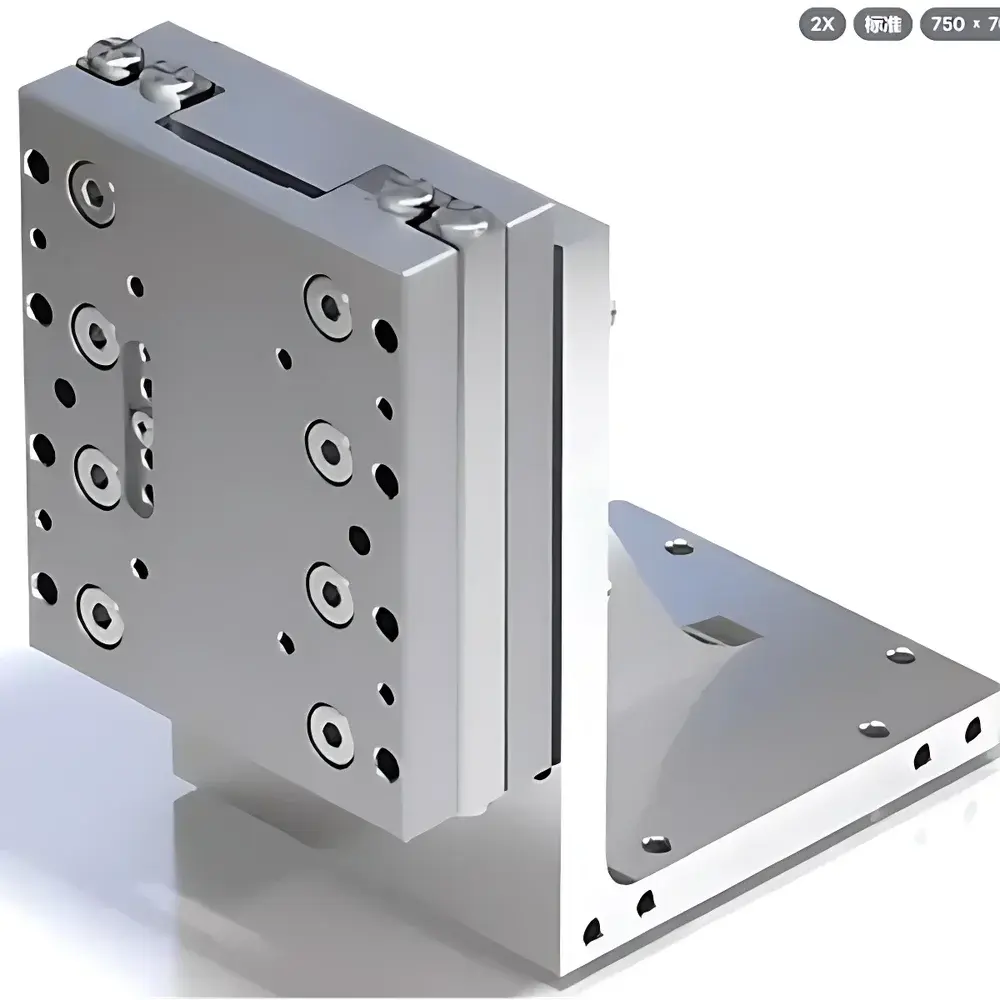
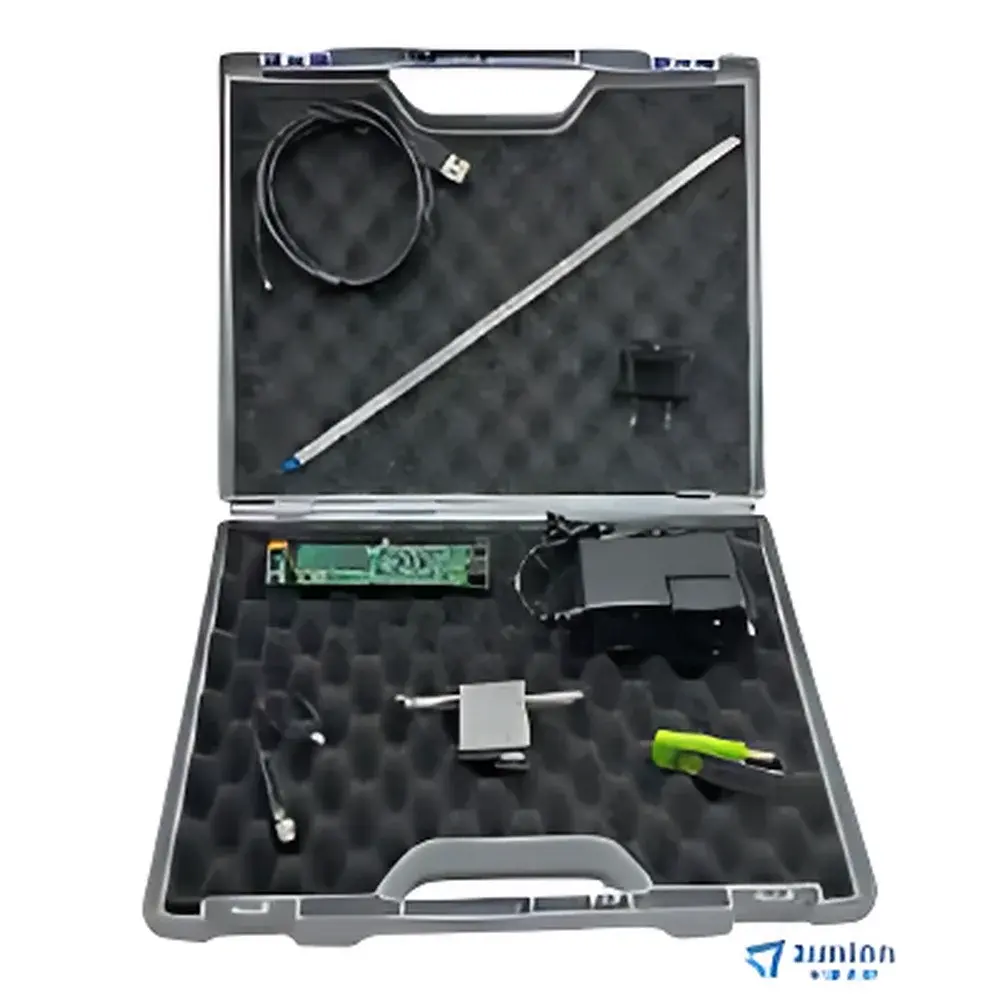
Auniontech XVS/XVP/XLA Series High-Precision Vertical & Linear Piezoelectric Translation Stages
| Brand | Auniontech |
|---|---|
| Origin | Imported (Non-China) |
| Manufacturer Type | Authorized Distributor |
| Model | XVS-1-4025, XVS-3-4025, XVS-3-6040, XVS-3-8050, XVP-8010, XLA-1, XLA-3, XLA-5, XLA-10 |
| Travel Range | 5–285 mm |
| Resolution | 5–1250 nm |
| Repeatability | ±50–±160 nm |
| Max Speed | 5.5–1000 mm/s |
| Load Capacity | 0.35–2.5 kg |
| Drive Force | 3–15 N (holding force up to 30 N) |
| Operating Temperature | −30 °C to +70 °C |
| Humidity | 20–90% RH |
| Vacuum Compatibility | HV/UHV options available |
| Control Interface | Windows GUI, LabVIEW, MATLAB, C++, Python |
| Power Supply | 12 V DC (low-voltage embedded integration) |
Overview
The Auniontech XVS, XVP, and XLA series of vertical and linear piezoelectric translation stages are engineered for nanoscale precision motion control in demanding optical, vacuum, and industrial environments. Based on Crossfixx™ ultrasonic piezoelectric motor technology, these stages deliver silent, vibration-free actuation without electromagnetic interference—critical for interferometric alignment, adaptive optics, and scanning probe applications. Unlike conventional stepper or servo-driven stages, the Crossfixx™ mechanism operates via resonant micro-motion of piezoceramic elements, enabling sub-nanometer resolution without backlash, cogging, or thermal drift. The XVS series targets ultra-precise vertical positioning (up to 50 mm travel) with resolutions down to 5 nm and repeatability of ±50 nm—ideal for optical cavity alignment and cryogenic microscope Z-axis control. The XVP series employs dual parallel Crossfixx™ motors to achieve 2.5 kg payload capacity and bidirectional speeds up to 1000 mm/s, meeting high-throughput requirements in PCB inspection and robotic end-effector positioning. The XLA series offers compact linear motion (as thin as 5.4 mm), supporting both open-loop (1000 mm/s max) and closed-loop (78 nm resolution, ±160 nm repeatability) operation across travel ranges from 5 mm to 285 mm.
Key Features
- Ultrasonic piezoelectric drive (Crossfixx™): Zero vibration, no magnetic field generation, and inherent power-off position holding.
- High-resolution closed-loop variants: Up to 5 nm resolution (XVS-3-40-5-HV) and 78 nm resolution (XLA-1/XLA-3) with analog or digital position feedback.
- Vacuum compatibility: HV and UHV versions available with low-outgassing materials, unshielded cables, and ceramic connectors; thermal dissipation <5 W.
- Load-enhancement options: Mass compensation modules (MC1–MC4) extend effective payload capacity to 350 g on XVS platforms.
- Low-voltage operation: 12 V DC input enables seamless integration into embedded systems, medical devices, and MRI-safe robotic interfaces.
- Optional non-magnetic (-NM) and low-magnetic (-LM) bearing variants eliminate field perturbation in magneto-optical or quantum sensing setups.
Sample Compatibility & Compliance
These stages are routinely deployed in ISO/IEC 17025-accredited calibration labs, FDA-regulated medical device assembly lines, and EU-funded quantum photonics facilities. Their mechanical stability and thermal neutrality support GLP-compliant long-term drift testing (<0.5 nm/h over 8 h at 23 °C). All HV/UHV models conform to ASTM E595 outgassing specifications (TML <1.0%, CVCM <0.1%). Electromagnetic compatibility meets IEC 61326-1 for laboratory equipment. For GMP environments requiring audit trails, optional XD-OEM controllers support 21 CFR Part 11–compliant electronic records with user authentication, action logging, and data integrity safeguards.
Software & Data Management
Stages integrate natively with industry-standard platforms via USB, RS-422, or Ethernet interfaces. Auniontech provides full SDKs for C++, Python, MATLAB, and LabVIEW—including real-time streaming APIs for synchronized multi-axis motion and position-triggered data acquisition. The Windows-based MotionStudio GUI supports waveform-based trajectory planning (trapezoidal, S-curve, custom profiles), live position monitoring, and automated calibration routines. Closed-loop models log encoder data at up to 10 kHz sampling rate, enabling post-hoc analysis of settling behavior and thermal hysteresis. Firmware updates and configuration backups are managed through secure signed binaries with version-controlled revision history.
Applications
- Semiconductor manufacturing: Wafer stage fine-alignment in mask aligners (ASML-compatible metrology); high-speed autofocus in AOI systems using XLA-5’s 25 ms point-to-point response.
- Vacuum & cryogenic research: Nanopositioning of optical components inside UHV chambers (e.g., synchrotron beamlines); thermal-stable Z-stage for scanning tunneling microscopy.
- Biomedical instrumentation: Vertical feed control in MRI-compatible surgical robots (12 V / -NM configuration); precise focus adjustment in confocal and light-sheet microscopes.
- Photonics & laser processing: Adaptive optic wavefront correction (XVS-series sub-10 nm step accuracy); beam steering in ultrafast laser micromachining platforms.
- Industrial automation: High-duty-cycle PCB defect scanning at 1000 mm/s (XVP-8010); end-effector load handling of 2.5 kg optical assemblies with 30 N holding force.
FAQ
What resolution can be achieved in vacuum?
XVS-3-40-5-HV achieves 5 nm resolution under UHV conditions (10⁻⁹ mbar), verified per ISO 230-2 Annex B using laser interferometry.
Is closed-loop operation mandatory for nanometer repeatability?
Yes—open-loop variants exhibit ±20–50 µm hysteresis; closed-loop feedback (via capacitive or strain-gauge sensors) is required to guarantee ±80 nm repeatability.
Can these stages operate at cryogenic temperatures?
Standard models are rated to −30 °C; custom cryo-optimized variants (down to 4 K) are available with Invar bodies and low-temperature piezoceramics.
How is position data timestamped for synchronization?
All controllers support hardware-triggered timestamping aligned to PPS (pulse-per-second) or IEEE 1588 PTP inputs, enabling sub-microsecond inter-device synchronization.
What controller is required for 5 nm resolution models?
The XD-M controller is mandatory for 5 nm resolution operation, providing 24-bit DAC resolution, real-time PID tuning, and active thermal compensation algorithms.





