
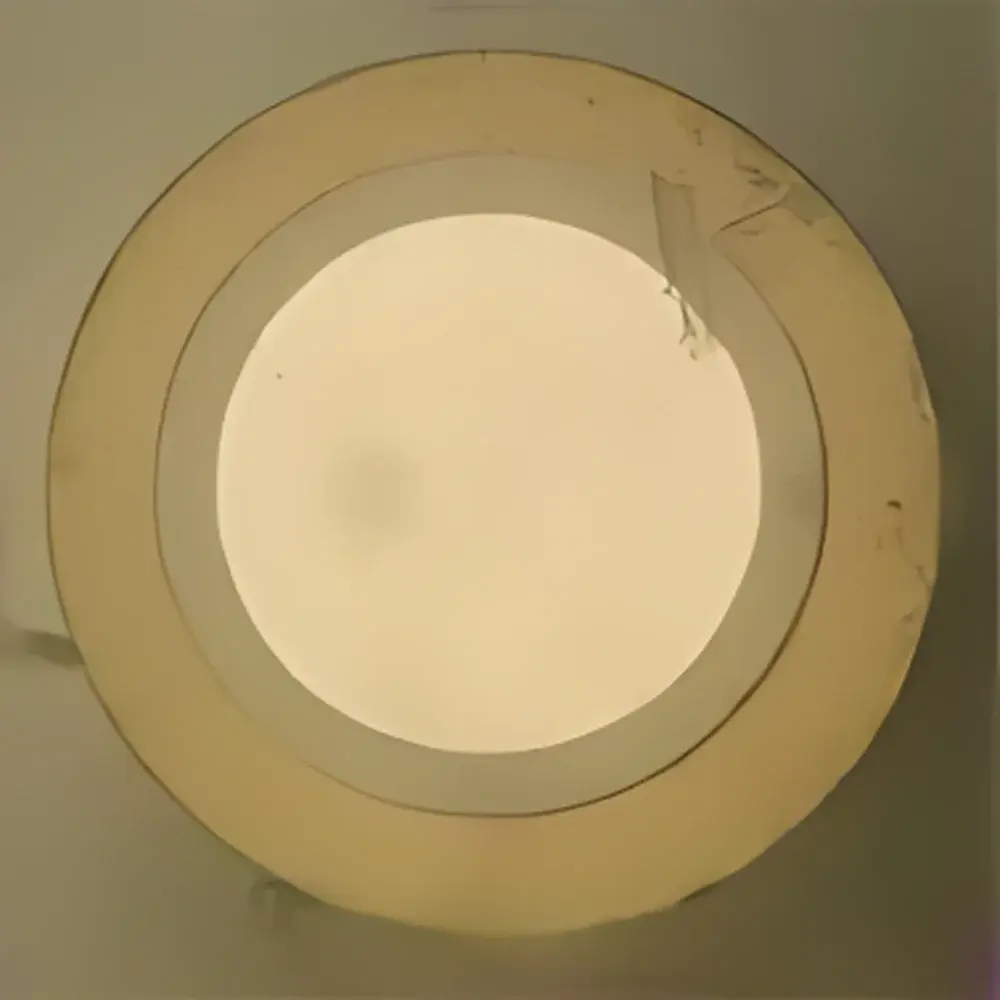
Auniontech ZBLAN Multimode Fluoride Optical Fiber
| Brand | Auniontech |
|---|---|
| Material Composition | ZrF₄-BaF₂-LaF₃-AlF₃-NaF Heavy Metal Fluoride Glass |
| Operating Wavelength Range | 300 nm – 4500 nm |
| Typical Attenuation @ 3.5 µm | < 10 dB/km |
| Numerical Aperture (NA) | High Core-to-Cladding Ratio Configuration |
| Fresnel Reflectance (Air Interface) | 4% |
| Coating | UV-Cured Acrylic Epoxy |
| Operating Temperature Range | –180 °C to +150 °C |
| Compliance | ISO 10110–7 (Optical Component Surface Quality), IEC 61300–2–4 (Fiber Endface Geometry), MIL-STD-883 (Environmental Robustness) |
| Component Type | Specialty Optical Fiber |
Overview
Auniontech ZBLAN Multimode Fluoride Optical Fiber is a high-performance mid-infrared (MIR) transmission medium engineered from heavy metal fluoride glass—specifically the ZrF₄–BaF₂–LaF₃–AlF₃–NaF (ZBLAN) composition. Unlike conventional fused silica fibers limited to wavelengths below 2.2 µm, ZBLAN fiber exhibits exceptionally low intrinsic attenuation across an ultra-broad spectral window spanning 300 nm to 4500 nm. Its transmission mechanism relies on the low phonon energy (<600 cm⁻¹) of the fluoride lattice, which suppresses multiphonon absorption—enabling efficient guidance in the 2.5–4.5 µm atmospheric transmission windows where silica-based fibers are opaque. This makes ZBLAN fiber indispensable for applications requiring coherent or broadband light delivery beyond the near-infrared, including rare-earth-doped fiber laser pumping, MIR spectroscopy, and thermal imaging signal routing.
Key Features
- Ultra-Wideband Transmission: Supports continuous single-mode or multimode propagation from deep ultraviolet (300 nm) through visible, near-infrared (NIR), short-wave infrared (SWIR), and into the mid-infrared (MIR) up to 4.5 µm—enabling cross-regime optical system integration.
- Low Intrinsic Loss: Achieves attenuation as low as <10 dB/km at 3.5 µm under optimized fabrication conditions; theoretical minimum loss (~0.01 dB/km) remains attainable with reduced crystallinity and impurity control.
- High Laser Damage Threshold: Engineered for pulsed and CW laser delivery up to 100 MW/cm² (at 2.94 µm, 10 ns pulses), validated per ISO 21254–1, making it suitable for Ho:YAG (2.1 µm), Er:YAG (2.94 µm), and Tm:fiber (1.9–2.1 µm) systems.
- Enhanced Rare-Earth Ion Host Compatibility: Low phonon energy enables radiative lifetimes >10 ms for Er³⁺, Ho³⁺, and Dy³⁺ dopants—critical for high-gain MIR fiber amplifiers and upconversion lasers.
- Thermally Stable Architecture: Maintains mechanical integrity and waveguide performance over –180 °C to +150 °C, supporting cryogenic spectroscopy and high-temperature industrial sensing environments.
Sample Compatibility & Compliance
ZBLAN fibers are supplied with standardized FC/PC, SMA-905, or custom ferrule terminations compatible with OEM optomechanical mounts and spectrometer interfaces. All fibers undergo endface inspection per IEC 61300–2–4 (core/clad concentricity 50 µm, scratch-dig 20–10). Batch certification includes spectral attenuation mapping (300–4500 nm, ±0.5 nm resolution), NA verification (±0.01 tolerance), and coating adhesion testing (ASTM D3359–22). The material complies with RoHS Directive 2011/65/EU and is exempt from REACH Annex XIV due to its inorganic, non-volatile composition. For regulated environments, traceability documentation supports GLP/GMP-aligned validation protocols—including IQ/OQ/PQ templates upon request.
Software & Data Management
While ZBLAN fiber itself is a passive component, Auniontech provides full metrology support via calibrated spectral loss databases (CSV/HDF5 format) aligned with NIST-traceable reference standards. These datasets integrate seamlessly with LabVIEW™, Python (via PyVISA and SciPy), and MATLAB® toolchains for predictive modeling of beam propagation (using BeamPROP or MODE Solutions), nonlinear conversion efficiency estimation, and thermal load simulation. Optional fiber characterization reports include polarization extinction ratio (PER) measurements, bend-loss curves (radius ≥15 mm), and humidity-induced degradation kinetics (per IEC 60068–2–30).
Applications
- Laser Remote Sensing Spectroscopy: Enables open-path detection of greenhouse gases (CH₄, CO₂, N₂O) using tunable diode laser absorption spectroscopy (TDLAS) at fundamental vibrational bands (e.g., 3.3 µm C–H stretch).
- Molecular Chemical Sensing: Serves as evanescent-field waveguides in attenuated total reflection (ATR) configurations for real-time monitoring of organic solvents, pharmaceutical intermediates, and polymer degradation products.
- Medical Diagnostics: Delivers MIR pulses for minimally invasive tissue ablation (e.g., dental caries removal at 2.94 µm) and label-free histopathology via Fourier-transform infrared (FTIR) microspectroscopy.
- FLIR & Radiometry: Transmits blackbody radiation from 300–1000 °C sources to cooled MCT detectors without spectral truncation—supporting non-contact temperature measurement per ASTM E1256–21.
- Mid-IR Frequency Comb Delivery: Maintains coherence and dispersion characteristics required for dual-comb spectroscopy platforms operating near 3–4 µm.
FAQ
What is the maximum recommended bending radius for ZBLAN fiber during installation?
For multimode ZBLAN fibers with standard acrylate coating, the minimum long-term bend radius is 15 mm; for short-duration handling (e.g., connectorization), 10 mm is permissible if strain does not exceed 0.15% elongation.
Can ZBLAN fiber be spliced to silica fiber?
Yes—using fusion splicing with optimized arc parameters (reduced current, extended pre-fuse time) and index-matching gel at the joint interface; typical splice loss is 0.3–0.8 dB at 2.0 µm, with PMD <0.05 ps/√km.
Is ZBLAN fiber susceptible to moisture-induced degradation?
Unlike chalcogenide fibers, ZBLAN exhibits negligible hydrolytic corrosion below 80% RH; however, prolonged exposure above 90% RH at elevated temperatures (>60 °C) may cause surface crystallization—mitigated by hermetic metal-coated variants.
Does Auniontech offer custom core/clad geometries?
Yes—standard offerings include 100/125 µm, 200/220 µm, and 400/440 µm configurations; specialty designs (e.g., large-mode-area, double-clad, or photonic crystal structures) are available under NDA with lead times of 8–12 weeks.



