
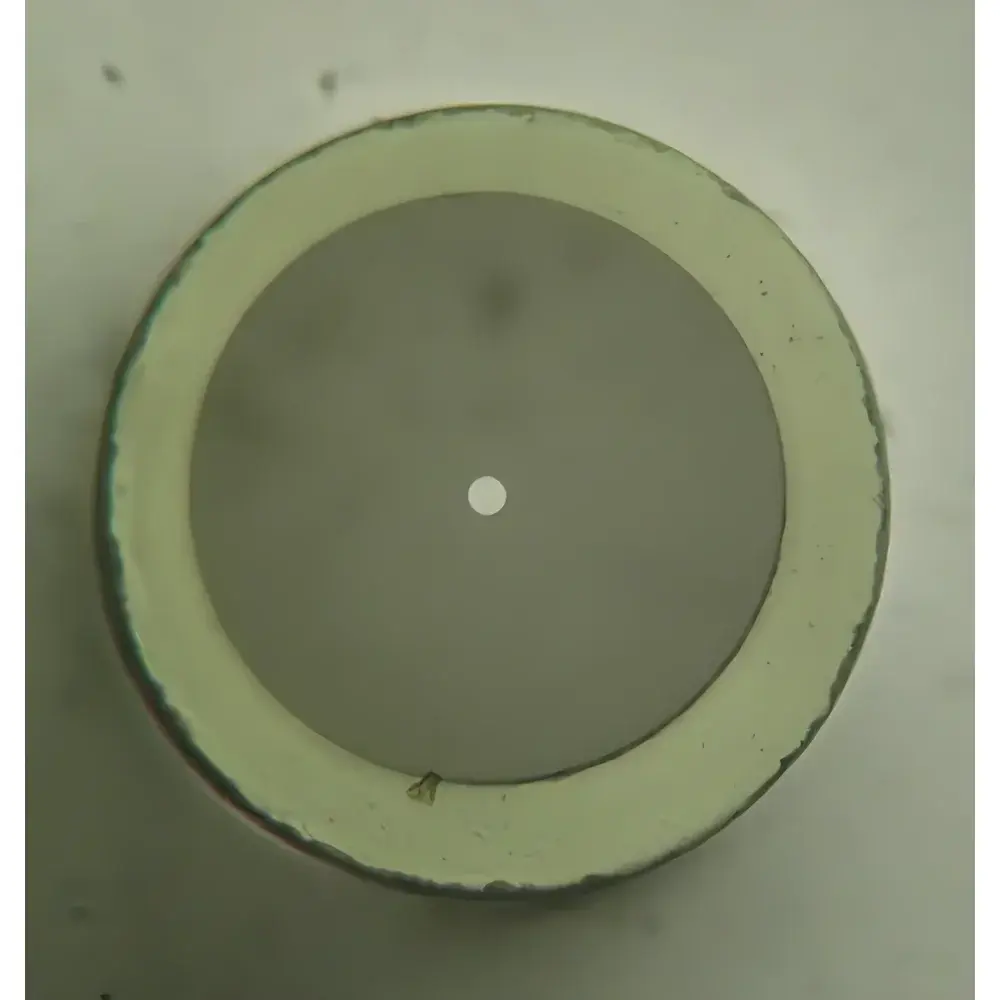
Auniontech ZBLAN Single-Mode Fluoride Fiber
| Brand | Auniontech |
|---|---|
| Model | ZBLAN |
| Core Material | ZrF₄–BaF₂–LaF₃–AlF₃–NaF Heavy Metal Fluoride Glass |
| Operating Wavelength Range | 300 nm – 4500 nm |
| Typical Attenuation @ 3.5 µm | < 10 dB/km |
| Numerical Aperture (NA) | ~0.12–0.15 (customizable) |
| Cladding Diameter | 240 ± 5 µm |
| Coating | UV-Cured Acrylate |
| Operating Temperature | –180 °C to +150 °C |
| Fresnel Reflectance (Air Interface) | ~4% |
| Laser Damage Threshold | > 1 GW/cm² (ns-pulsed, 1064 nm), > 5 MW/cm² (CW, 2.94 µm) |
| Core Diameter | ~7–12 µm (wavelength-dependent, SM at ≥2.0 µm) |
| Component Category | Optical Component |
| Origin | Imported |
| Distribution Type | Authorized Distributor |
Overview
Auniontech ZBLAN single-mode fluoride fiber is a specialty mid-infrared (MIR) optical waveguide engineered for low-loss transmission across an exceptionally broad spectral window—from the near-ultraviolet (300 nm) through the visible and near-infrared, extending continuously into the mid-infrared up to 4.5 µm. Unlike conventional fused silica fibers limited by multiphonon absorption beyond ~2.2 µm, ZBLAN fiber leverages the low vibrational energy of heavy metal fluoride bonds (Zr–F, Ba–F, La–F) to suppress intrinsic absorption, enabling sub-10 dB/km attenuation at 3.5 µm—a performance benchmark unattainable with oxide-based fibers. Its single-mode guidance is maintained above ~2.0 µm under standard bending conditions, making it a foundational component for coherent MIR laser delivery, spectroscopic sensing, and rare-earth-doped fiber source development (e.g., Er³⁺, Ho³⁺, Dy³⁺).
Key Features
- Ultra-broad transmission spectrum: 300 nm – 4500 nm, supporting UV-excited fluorescence, visible pump lasers, and MIR emission from doped fiber amplifiers
- Low propagation loss: < 10 dB/km at 3.5 µm; < 0.05 dB/m in optimized segments (3.0–4.0 µm range)
- High laser-induced damage threshold (LIDT): > 1 GW/cm² (nanosecond pulses at 1064 nm); > 5 MW/cm² (continuous-wave at 2.94 µm), validated per ISO 21254
- Thermally robust architecture: Stable operation from cryogenic (–180 °C) to elevated temperatures (+150 °C), compatible with vacuum and inert-gas environments
- UV-cured acrylate coating: Provides mechanical protection, microbend resistance, and compatibility with standard fiber handling tools and connectorization processes
- Customizable geometry: Core/cladding diameters, NA, cutoff wavelength, and termination (FC/PC, SMA-905, bare fiber) available per application requirements
Sample Compatibility & Compliance
This ZBLAN fiber meets material traceability and dimensional consistency standards required for research-grade optical systems. While not classified as a medical device or industrial safety component per se, its fabrication adheres to ISO 10110-3 (optical component surface quality) and IEC 60793-2-40 (multimode/single-mode fiber specifications). It is routinely deployed in setups compliant with ASTM E1421 (standard practice for FTIR spectrometer calibration), ISO 13485 (for medical diagnostic subsystems), and GLP-regulated chemical sensing platforms. The fiber’s low OH⁻ content (< 1 ppm) and absence of transition-metal impurities ensure minimal background fluorescence and high signal-to-noise ratio in time-resolved spectroscopy.
Software & Data Management
ZBLAN fiber itself is a passive optical component and does not incorporate embedded firmware or digital interfaces. However, when integrated into active systems—such as tunable MIR laser delivery modules or fiber-coupled Fourier-transform infrared (FTIR) spectrometers—it interfaces seamlessly with industry-standard control software (e.g., LabVIEW™ drivers, Python-based PyVISA instrument control libraries, MATLAB® Instrument Control Toolbox). For system validation, users may log spectral transmission data, power stability metrics, and thermal drift profiles using calibrated photodetectors (e.g., InSb, HgCdTe) and data acquisition hardware compliant with IEEE 1241 (ADC testing standards). Audit trails for fiber qualification tests (attenuation mapping, mode field diameter verification) are maintained per internal QA protocols aligned with ISO/IEC 17025.
Applications
- Laser remote sensing and differential absorption lidar (DIAL) operating at 2.7–3.5 µm for greenhouse gas detection (CH₄, CO₂, N₂O)
- Fiber-optic chemical sensors based on evanescent wave absorption in the fingerprint region (2.5–4.0 µm)
- MIR endoscopic diagnostics leveraging Ho:YAG (2.1 µm) and Er:YAG (2.94 µm) laser ablation and tissue interaction monitoring
- High-power beam delivery for industrial processing lasers (e.g., thulium-doped fiber lasers at 1.9–2.0 µm)
- Forward-looking infrared (FLIR) and radiation thermometry systems requiring stable, low-noise MIR light guides
- Seed sources and amplifier stages in ZBLAN-based supercontinuum generation systems spanning 0.4–6.0 µm
FAQ
Is this fiber polarization-maintaining?
Standard ZBLAN single-mode fiber is not polarization-maintaining; however, PM-ZBLAN variants with elliptical stress rods or Panda-style geometry are available upon request and subject to minimum order quantity.
Can it be spliced to silica fiber?
Direct fusion splicing is not recommended due to thermal expansion mismatch and refractive index discontinuity; instead, we recommend free-space coupling or lensed-fiber butt-coupling with AR-coated collimators optimized for the 2–4 µm band.
What is the typical proof test level?
All standard reels undergo 100 kpsi tensile proof testing per ITU-T G.652.D guidelines, with full test reports provided upon shipment.
Do you offer coated or jacketed versions for harsh environments?
Yes—metal hermetic coatings (aluminum or gold), polyimide buffer layers, and stainless-steel loose-tube packaging are available for aerospace, defense, and high-vibration applications.
Is the fiber compliant with RoHS and REACH?
Yes. Batch-certified material declarations confirm full compliance with EU Directive 2011/65/EU (RoHS2) and Regulation (EC) No 1907/2006 (REACH), including SVHC screening for all five ZBLAN constituent fluorides.




