
Avesta TiF-100 Titanium:Sapphire Femtosecond Laser System
| Brand | Avesta |
|---|---|
| Origin | Russia |
| Model | TiF-100 |
| Configuration Options | TiF-100 (external pump) / TiF-100F (integrated industrial pump laser) |
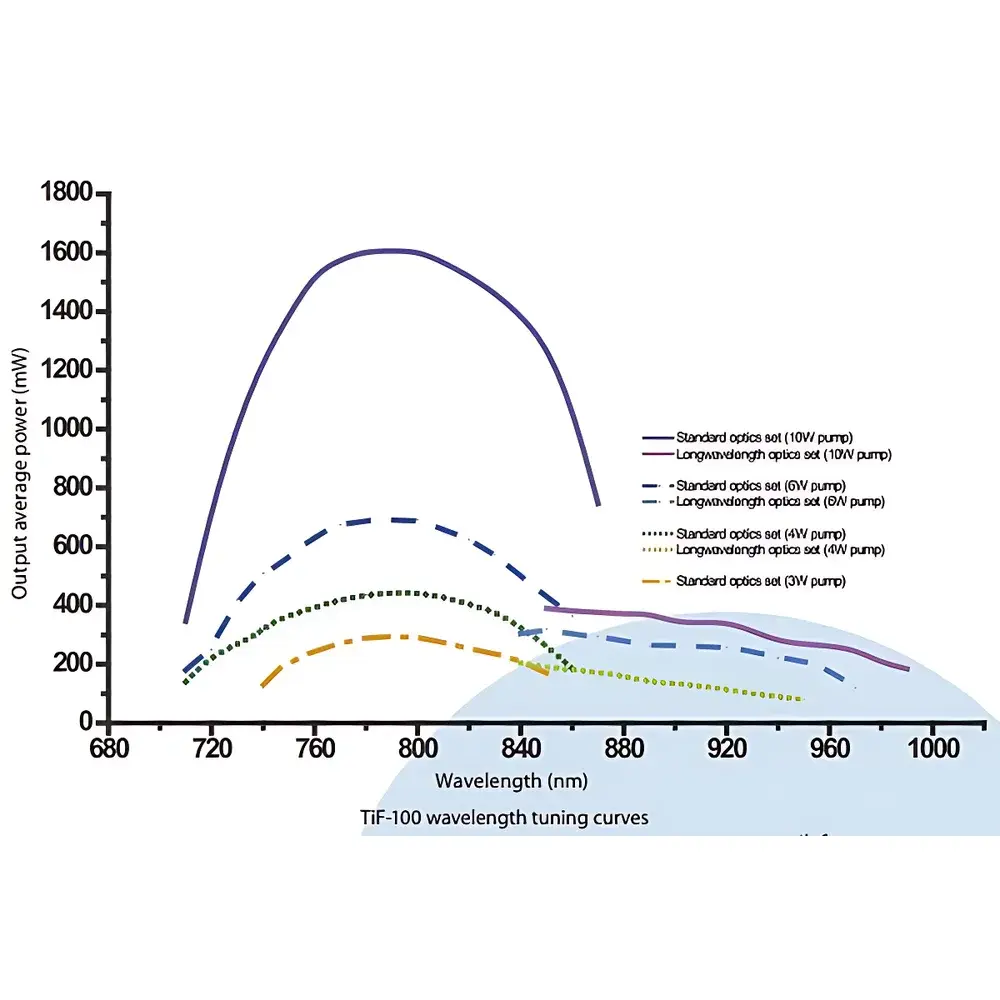
| Tuning Range | 715–980 nm |
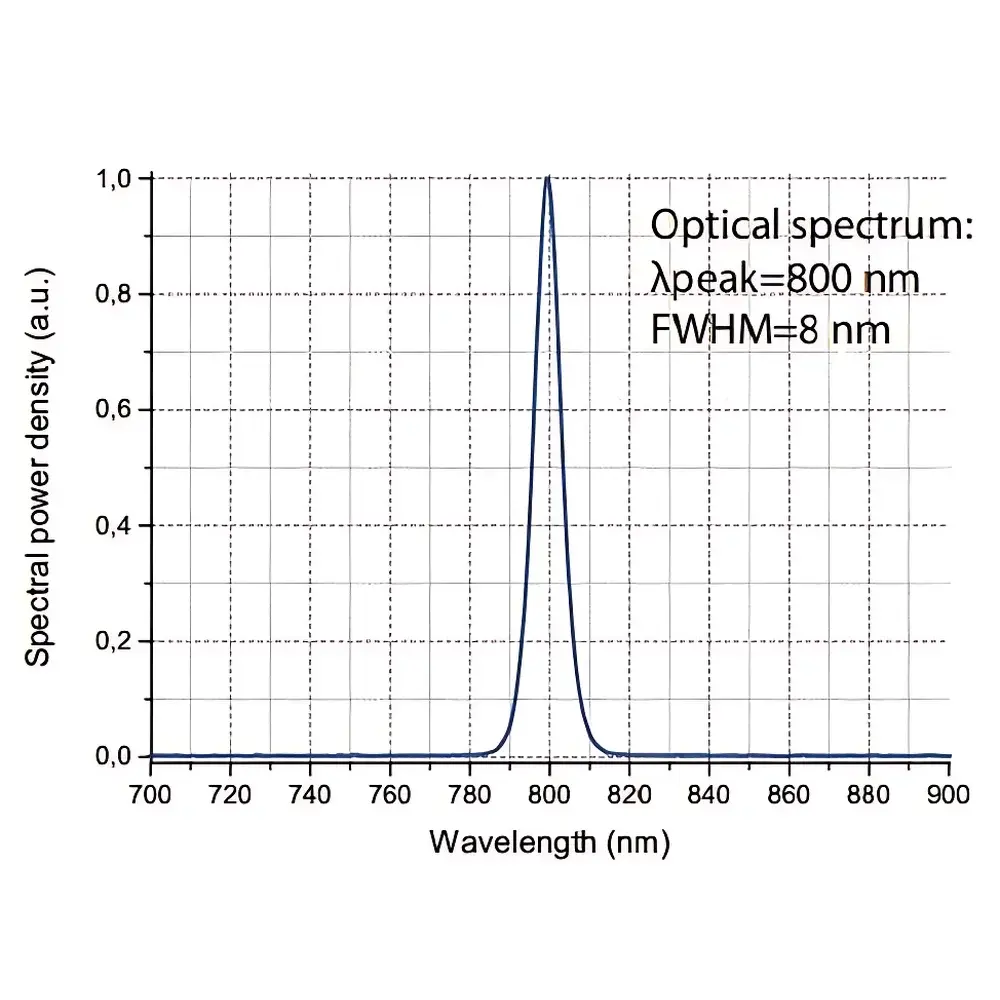
| Pulse Width | <100 fs |
| Avg. Output Power | up to 1.5 W (@ 10 W pump) |
| Repetition Rate | 80 MHz |
| Beam Quality | TEM₀₀ |
| Polarization | Linear, horizontal |
| Beam Divergence | <1 mrad |
| Power Stability | <1% RMS |
| Control Interface | USB-driven motorized wavelength tuning |
| Optional Features | Birefringent filter, etalon, prism pair or APC for dispersion pre-compensation |
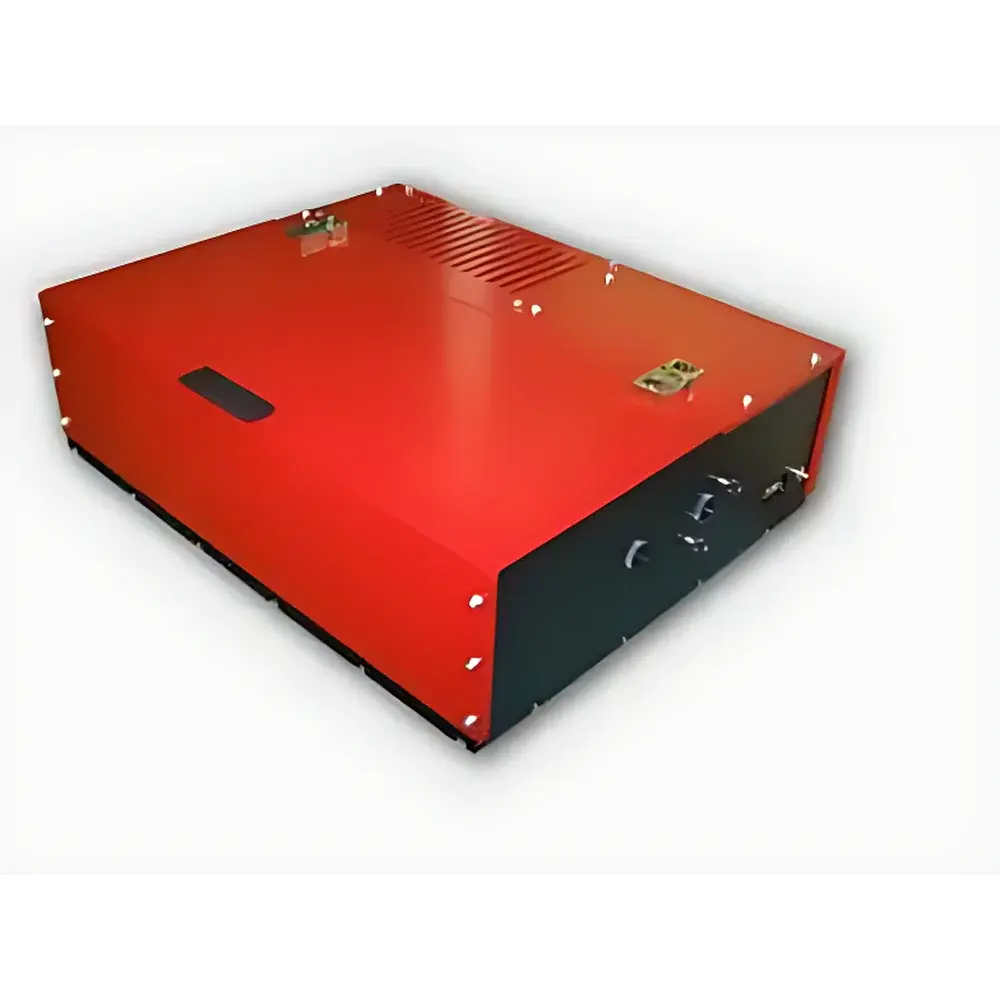
| Dimensions | 610 × 450 × 197 mm |
Overview
The Avesta TiF-100 is a high-performance, tunable titanium:sapphire (Ti:S) femtosecond oscillator engineered for precision ultrafast photonics applications. Based on the well-established Kerr-lens mode-locking (KLM) principle, the TiF-100 delivers transform-limited pulses with sub-100 fs duration across a broad spectral range from 715 nm to 980 nm. Its design emphasizes optical stability, long-term reproducibility, and compatibility with demanding laboratory environments—including cleanroom-integrated setups and OEM instrument platforms. Unlike fixed-wavelength oscillators, the TiF-100 provides continuous, motorized wavelength tuning via USB-controlled optics, enabling seamless adaptation to varying excitation requirements in nonlinear microscopy, spectroscopy, and frequency conversion experiments. The system operates at a fundamental repetition rate of 80 MHz and maintains diffraction-limited beam quality (TEM₀₀) with linear horizontal polarization and low divergence (<1 mrad), ensuring efficient coupling into downstream components such as amplifiers, parametric devices, or scanning optics.
Key Features
- Wide, continuously tunable output spectrum: 715–980 nm — optimized for multi-modal excitation in biological and material science applications
- Pulse duration <100 fs (transform-limited, verified by autocorrelation and FROG measurements)
- High average power scalability: up to 1.5 W at 800 nm under 10 W diode-pumped solid-state (DPSS) green pump illumination
- Two operational configurations: TiF-100 (requires external 532 nm pump laser) and TiF-100F (factory-integrated or field-installable industrial-grade pump source)
- Motorized, USB-controlled wavelength selection with sub-nanometer repeatability and real-time feedback
- Optional intracavity elements: birefringent filter and Fabry–Pérot etalon for narrowband CW or fs operation
- Integrated thermal stabilization and active temperature feedback loop for ambient drift compensation
- Electromagnetic shutter for rapid fs/CW switching (optional accessory)
- Pre-aligned, hermetically sealed Ti:S laser head (610 × 450 × 197 mm) compatible with standard optical tables and vibration-isolated platforms
Sample Compatibility & Compliance
The TiF-100 is designed for integration into regulated research and industrial systems requiring traceable performance and operational reliability. While not a medical device per se, its output characteristics comply with Class 4 laser safety standards (IEC 60825-1:2014), and all mechanical and electrical interfaces conform to CE marking directives. The system supports GLP-compliant workflows through deterministic parameter logging (wavelength, pump power, cavity alignment status) when used with Avesta’s optional control software suite. For applications in pharmaceutical development or semiconductor metrology, the TiF-100’s stable pulse-to-pulse energy (10,000 hours of nominal operation under specified thermal management conditions.
Software & Data Management
Avesta provides a native Windows-based control application (TiF-Control v3.x) supporting USB 2.0 communication for full remote orchestration of wavelength, pump coupling alignment presets, and shutter state. The software exports timestamped metadata—including central wavelength, measured output power, and internal photodiode readings—in CSV and HDF5 formats for integration with MATLAB, Python (via PyVISA), or LabVIEW environments. Audit trails record all user-initiated configuration changes, satisfying basic FDA 21 CFR Part 11 requirements for electronic records when deployed in GxP-aligned labs. Firmware updates are delivered via signed binary packages with SHA-256 verification. No cloud connectivity or telemetry is enabled by default; all data remains local unless explicitly exported by the user.
Applications
- Two-photon and three-photon fluorescence microscopy: optimized for deep-tissue imaging using red-shifted fluorophores (e.g., tdTomato, mRuby3) and infrared-excitable nanoparticles
- Seed source for chirped-pulse amplification (CPA) systems operating at kHz–MHz repetition rates
- Terahertz time-domain spectroscopy (THz-TDS): serving as the optical pump for photoconductive antennas or nonlinear crystals (e.g., ZnTe, GaP)
- Time-resolved pump-probe spectroscopy in condensed matter physics and photochemistry
- OCT (Optical Coherence Tomography) system development, particularly swept-source and full-field variants requiring broadband coherence gating
- Micromachining of transparent dielectrics (fused silica, sapphire) and polymers using multiphoton absorption mechanisms
FAQ
What pump laser specifications are required for the TiF-100 standalone version?
The TiF-100 requires a CW 532 nm pump source with TEM₀₀ mode, M² <1.1, power stability <0.5% RMS, and beam diameter 1.2–1.8 mm (1/e²). Recommended vendors include Cobolt, Spectra-Physics (Millennia eV), or Coherent Verdi.
Can the TiF-100 be synchronized to an external clock signal?
Yes—via TTL input on the rear panel, the oscillator can be phase-locked to an external 80 MHz reference or divided-down signal (e.g., 10 MHz) using optional RF electronics.
Is vacuum or purged operation necessary for long-term stability?
No. The sealed Ti:S head operates reliably in ambient air; however, for extended (>12 h) acquisition in high-humidity environments, nitrogen purge via the optional gas port is recommended to minimize water absorption bands near 940 nm.
Does the system support group-delay dispersion (GDD) monitoring or compensation?
The TiF-100 does not include built-in GDD measurement, but it features standardized kinematic mounts for prism pairs or acousto-optic programmable dispersive filters (AOPDFs); Avesta offers factory-aligned APC modules for pre-compensation down to −10⁴ fs².
What maintenance is required during normal operation?
No routine optical alignment or crystal replacement is needed. Annual verification of pump coupling efficiency and thermal sensor calibration is advised; Avesta provides certified service documentation compliant with ISO/IEC 17025.





