
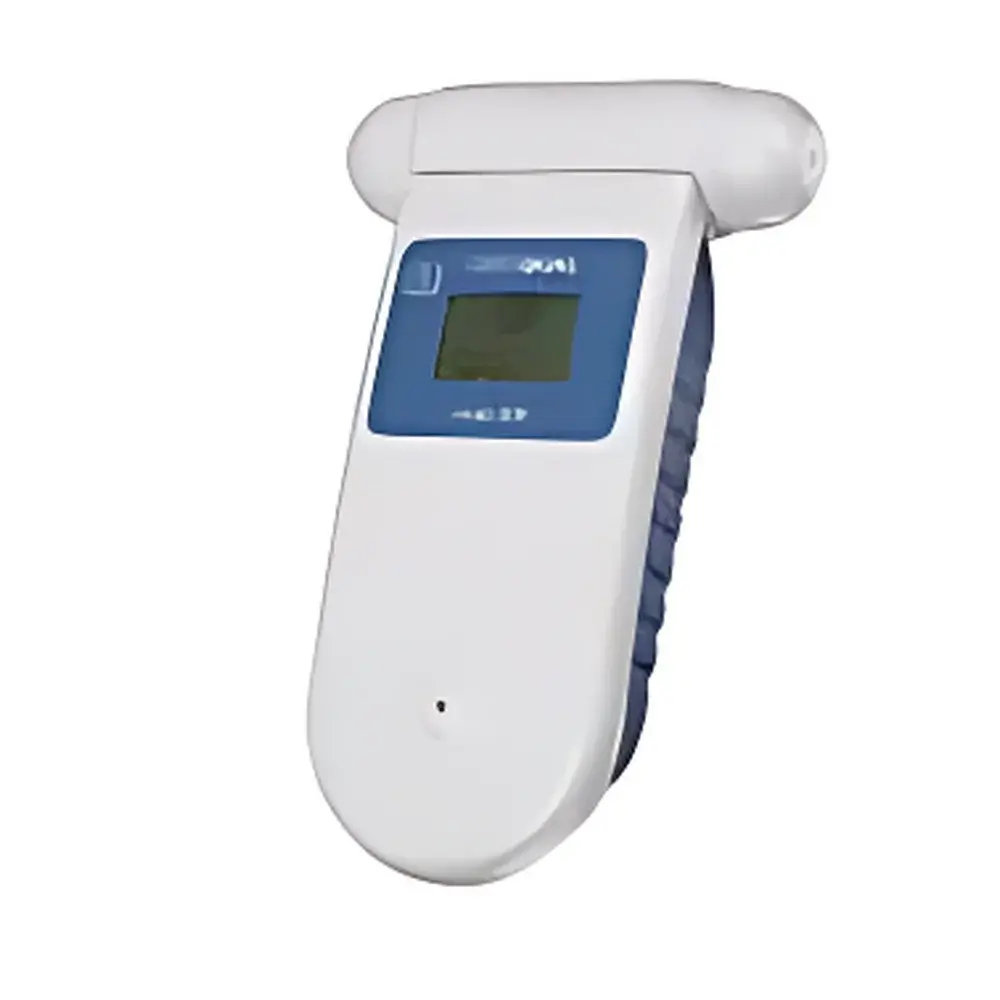
B6/1F & 5090 Series Dissolved Ozone Monitor and Controller – Portable / Fixed-Mount Electrochemical Analyzer for Water Treatment and Industrial Process Monitoring
| Origin | USA |
|---|---|
| Manufacturer Type | Authorized Distributor |
| Origin Category | Imported |
| Model | B6/1F, 5090 |
| Price | Upon Request |
| Measurement Range | 0–32 ppm (O₃, aqueous phase, electrode-dependent) |
| Output Signals | Dual 4–20 mA (isolated), Dual SPDT Relays (230 VAC / 2 A), Pulse Frequency Output (48 VDC / 40 mA), Dry-Contact Alarm |
| Control Algorithms | P, PI, PD, PID |
| Enclosure Dimensions | 160 × 160 × 58.5 mm |
| Sensor Power | 12–30 VDC, 15 mA |
| Operating Temperature | 0–50 °C |
| Max Flow Rate | 30 L/hr |
| Pressure Rating | 10 mWS (≈1 bar) |
Overview
The B6/1F and 5090 Series Dissolved Ozone Monitor and Controller is an industrial-grade electrochemical measurement and process control system engineered for real-time, high-stability monitoring of dissolved ozone (O₃) concentration in water treatment, pharmaceutical clean-in-place (CIP) systems, semiconductor ultrapure water loops, and food & beverage disinfection processes. Unlike optical or UV-absorption methods, this system employs amperometric sensing with replaceable membrane-covered electrodes—providing direct, linear response to aqueous ozone partial pressure under controlled flow and temperature conditions. The controller integrates embedded CMOS microprocessor logic with configurable analog and digital I/O, enabling closed-loop dosing control without external PLC intervention. Its compact DIN-rail or wall-mountable chassis complies with IP65 front-panel ingress protection, supporting deployment in humid utility corridors, pump rooms, and ISO-classified cleanroom support areas.
Key Features
- Electrochemical sensor platform with four interchangeable ozone-selective electrodes (OZ02 series), each optimized for specific pH, conductivity, and oxidant interference profiles
- Dual independent 4–20 mA outputs: one dedicated to real-time concentration reporting (e.g., to DCS/SCADA), the other programmable for proportional control of metering pumps or solenoid valves
- Two fully configurable SPDT relays rated at 230 VAC / 2 A for actuating motor starters, 2-position control valves, or alarm annunciators
- Pulse-frequency output (48 VDC / 40 mA) synchronized with measured ozone deviation—designed for integration with peristaltic dosing pumps requiring pulse-width modulation
- Onboard PID control engine with adjustable setpoint ramping, integral windup protection, and user-defined deadband to minimize actuator cycling
- Programmable safety limits: maximum feed duration (5–240 minutes or unlimited), start-up delay timer, and flow interlock verification prior to chemical injection
- Backlit LCD interface with intuitive menu navigation; no proprietary software required for basic commissioning or calibration
Sample Compatibility & Compliance
The system is validated for continuous operation in deionized water, municipal tap water, chlorinated secondary effluent, and low-conductivity ultrapure water (UPW) streams. Sensor response remains stable across pH 4–9 and total dissolved solids (TDS) up to 2,000 µS/cm. Interference from residual chlorine, hydrogen peroxide, and nitrite is minimized via selective cathode materials and diffusion-limiting membranes. The controller meets IEC 61000-6-2 (EMC immunity) and IEC 61000-6-4 (EMC emission) standards. All firmware and configuration logs adhere to ALCOA+ principles, supporting audit-ready documentation for FDA 21 CFR Part 11-compliant environments when paired with timestamped data historians.
Software & Data Management
While the device operates autonomously without PC dependency, optional Modbus RTU (RS-485) or HART communication modules enable bidirectional parameter read/write and event logging via industry-standard SCADA protocols. Configuration changes—including PID tuning constants, relay hysteresis, and alarm thresholds—are stored in non-volatile memory with write-protection lockout. Audit trails record all parameter modifications with operator ID (if integrated with LDAP/RADIUS), timestamp, and pre-/post-change values—satisfying GLP and GMP traceability requirements. Raw 4–20 mA outputs are calibrated to NIST-traceable ozone standards using certified gas-phase O₃ generators and aqueous spiking protocols per ASTM D7252.
Applications
- Final rinse monitoring in pharmaceutical vial washing lines to verify O₃ residual removal before sterile filling
- Real-time feedback control of ozone generators in municipal drinking water ozonation contact basins
- Monitoring dissolved O₃ decay kinetics during cold storage of produce in hydrocooling systems
- Validation of ozone-based biofilm eradication in HVAC condensate drain pans and cooling tower sidestream units
- Integration into multi-gas environmental safety systems—when combined with compatible VOC, NH₃, CO, and H₂S sensors—enabling unified alarm escalation and ventilation staging per ISO 16000-23
FAQ
What calibration frequency is recommended for routine compliance?
Annual full calibration against a certified aqueous ozone standard is required; field zero checks using nitrogen-purged deionized water should be performed weekly.
Can the OZ02 sensor operate in seawater or high-chloride brines?
No—standard OZ02 electrodes are not rated for chloride concentrations >500 mg/L; alternative titanium-body sensors with Ag/AgCl reference systems are available upon request.
Is the controller compatible with Profibus DP or EtherNet/IP?
Native support is limited to Modbus RTU and analog I/O; gateway modules for Profibus DP and EtherNet/IP integration are offered as OEM-configured options.
Does the system support automatic temperature compensation?
Yes—the controller accepts input from an integrated Pt100 RTD (included with OZ02 sensor housing) and applies polynomial correction per ISO 15705:2019 Annex C.
How is sensor drift managed during extended unattended operation?
The system includes automated zero-drift diagnostics triggered by periodic flow interruption; deviation alerts are logged and can initiate maintenance notifications via relay or Modbus flag.
Related Products







