
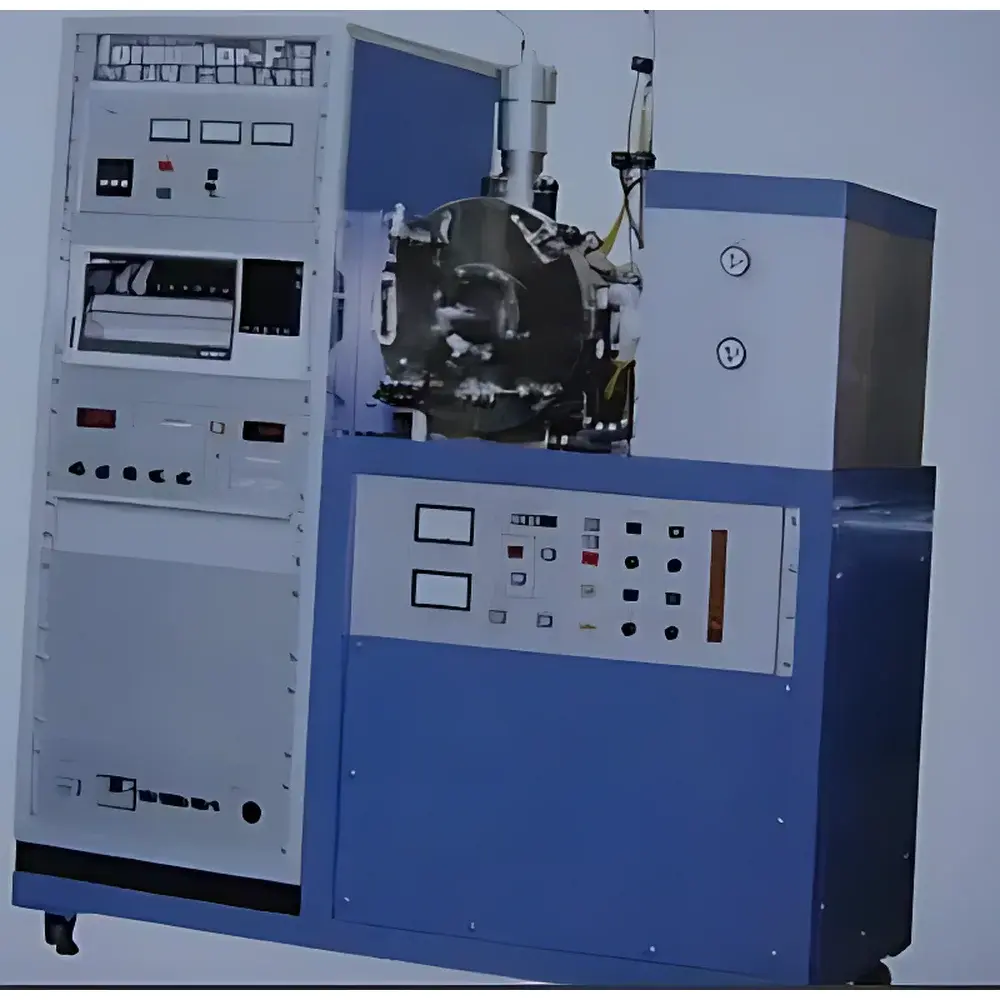
Bähr Formastor-FII Low-Temperature Fully Automated Dilatometric Phase Transformation Analyzer
| Origin | Japan |
|---|---|
| Manufacturer Type | Authorized Distributor |
| Origin Category | Imported Instrument |
| Model | Formastor-FII |
| Price | USD 295,000 (FOB Yokohama) |
Overview
The Bähr Formastor-FII is a high-precision, fully automated dilatometer engineered for quantitative measurement of dimensional changes during solid-state phase transformations in metallic alloys—particularly ferrous materials—under precisely controlled thermal cycles. Operating on the principle of high-resolution linear variable differential transformer (LVDT)-based dilatometry coupled with differential phase detection, the instrument enables real-time monitoring of lattice expansion/contraction associated with austenite formation, ferrite/pearlite precipitation, bainitic transformation, and martensitic start (Ms) and finish (Mf) events. Its dual-range thermal architecture supports both conventional high-temperature analysis (RT to 1400 °C) and deep cryogenic characterization (–150 °C to 1200 °C), making it uniquely suited for constructing continuous cooling transformation (CCT) and time–temperature–transformation (TTT) diagrams in compliance with ASTM E1266, ISO 10837, and JIS G 0551 standards. First introduced in 1963 and recognized as one of Japan’s Top Ten Inventions that year, the Formastor platform has undergone continuous engineering refinement over six decades—evidenced by repeat orders from China’s leading metallurgical R&D institutions including Baosteel, Baotou Steel, Pangang Group, and the Central Iron & Steel Research Institute (CISRI), many of which have upgraded legacy systems to the current FII configuration.
Key Features
- Multi-regime thermal control: Integrated high-frequency induction heating (RT–1400 °C) and cryogenic helium gas quenching (–150 °C–1200 °C), with programmable non-linear and linear ramp profiles
- Dual thermocouple calibration: Type R (high-temp range) and Type K (cryo range), each with static temperature stability of ±1 °C (RT–1200 °C) and ±5 °C (–150 °C–RT)
- Four-range differential dilatometric detection system: Full-scale measurement ranges of ±0.5, ±0.2, ±0.1, and ±0.05 mm, with accuracy of ±1.0% FS and long-term baseline stability of ≤1 µm/4 h at ambient conditions
- Vacuum-compatible chamber: Equipped with a 162–197 L/min mechanical pump and 360 L/s oil diffusion pump, achieving base pressure <1 × 10⁻³ Pa within 15 minutes
- Gas-switching manifold: Automatic selection among N2, Ar, He, and vacuum environments—optimized nozzle design (copper for high-temp, fused quartz for cryo) ensures laminar, reproducible heat extraction
Sample Compatibility & Compliance
The Formastor-FII accepts standard cylindrical specimens (φ3 × 10 mm), optimized for minimal thermal gradient and maximal signal-to-noise ratio in dilatometric response. It accommodates conductive metallic samples—including carbon steels, alloy steels, stainless grades, titanium alloys, and Ni-based superalloys—without requiring surface metallization or special mounting fixtures. All thermal and dimensional data acquisition adheres to GLP and GMP documentation requirements; audit trails, user access logs, and electronic signature support are embedded in firmware per FDA 21 CFR Part 11 guidelines. Test protocols align with ASTM A1033 (dilatometric determination of transformation temperatures), ISO 10837 (metallic materials—determination of phase transformation points), and JIS Z 2244 (thermal expansion testing methods).
Software & Data Management
The proprietary Thermo-Calc™-integrated control software provides full automation of heating/cooling sequences, dwell times, and gas flow modulation via intuitive graphical parameter entry. Real-time data visualization includes synchronized plots of displacement vs. temperature/time, derivative dL/dT curves for inflection point identification, and automatic annotation of critical transformation temperatures (Ac1, Ac3, Ar1, Ar3, Ms, Mf). The software natively generates ASTM-compliant CCT and TTT diagrams with interpolation algorithms validated against NIST SRM reference datasets. Export functionality supports CSV, XML, and native Excel (.xlsx) formats—with column headers mapped to ISO/IEC 17025 traceable metadata fields (operator ID, calibration certificate number, environmental log, uncertainty budget). Raw binary archives are stored with SHA-256 checksums for integrity verification.
Applications
- Determination of equilibrium and non-equilibrium transformation temperatures in steel heat treatment process development
- Quantification of martensite start (Ms) and finish (Mf) points for cryogenic forming and low-temperature aging studies
- Construction of industrial CCT diagrams for predictive modeling of microstructure evolution during hot rolling and welding thermal cycles
- Validation of CALPHAD-based thermodynamic databases through experimental dilatometric constraint of γ→α, γ→ε, and γ→M transitions
- Thermal expansion coefficient (CTE) profiling across multi-phase regimes—from austenitic to ferritic–pearlitic to bainitic–martensitic mixtures
FAQ
What is the minimum detectable dimensional change under cryogenic conditions?
At –150 °C, the system achieves a resolution of 0.05 mm full scale with LVDT linearity maintained to ±0.1% FS, enabling reliable detection of sub-micron lattice contractions during martensitic nucleation.
Can the Formastor-FII be integrated into an existing laboratory LIMS or MES environment?
Yes—the instrument supports OPC UA server mode and provides RESTful API endpoints for bidirectional data exchange with LabWare LIMS, Thermo Fisher SampleManager, and Siemens Opcenter Execution modules.
Is vacuum annealing capability included in the base configuration?
Yes—mechanical pumping and oil diffusion pumping are standard; vacuum hold stability is verified to <5 × 10⁻³ Pa for durations exceeding 8 hours, suitable for oxide-sensitive alloy processing.
How does the system ensure thermal uniformity across the sample during rapid heating?
High-frequency induction (≥200 kHz) induces eddy currents concentrated within the outer 0.2 mm of the specimen, while the 3 mm diameter ensures axial homogeneity; finite-element thermal modeling confirms ΔT < 2 °C across the gauge length at 100 °C/s ramp rates.
Are calibration certificates traceable to national metrology institutes?
All temperature and displacement calibrations are performed using NIST-traceable Pt/Pt–10%Rh thermocouples and laser interferometer standards (NPL UK), with certificates issued per ISO/IEC 17025:2017 by Bähr’s accredited calibration lab in Reutlingen, Germany.



