
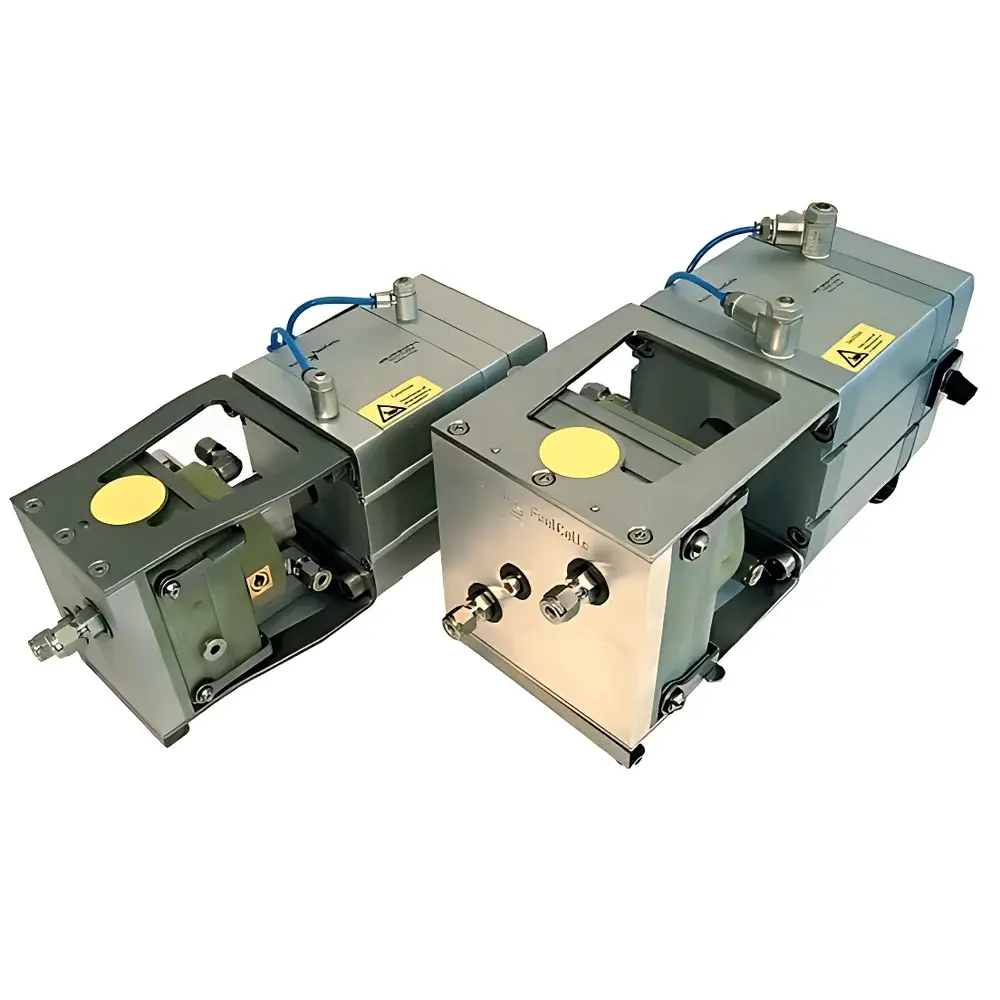
Baltic FuelCells QCF25 Quick-Connect Fuel Cell Fixture
| Brand | Baltic FuelCells |
|---|---|
| Origin | Germany |
| Model | QCF25 |
| Instrument Type | Electrochemical Workstation Accessory |
| Current Range | ±5 A |
| Current Accuracy | ±0.1% of full scale |
| Potential Accuracy | ±15–32 µV |
| Potentiostatic Range | ±25 V |
| EIS Frequency Range | 10 Hz – 1 MHz (system-dependent, requires compatible potentiostat) |
Overview
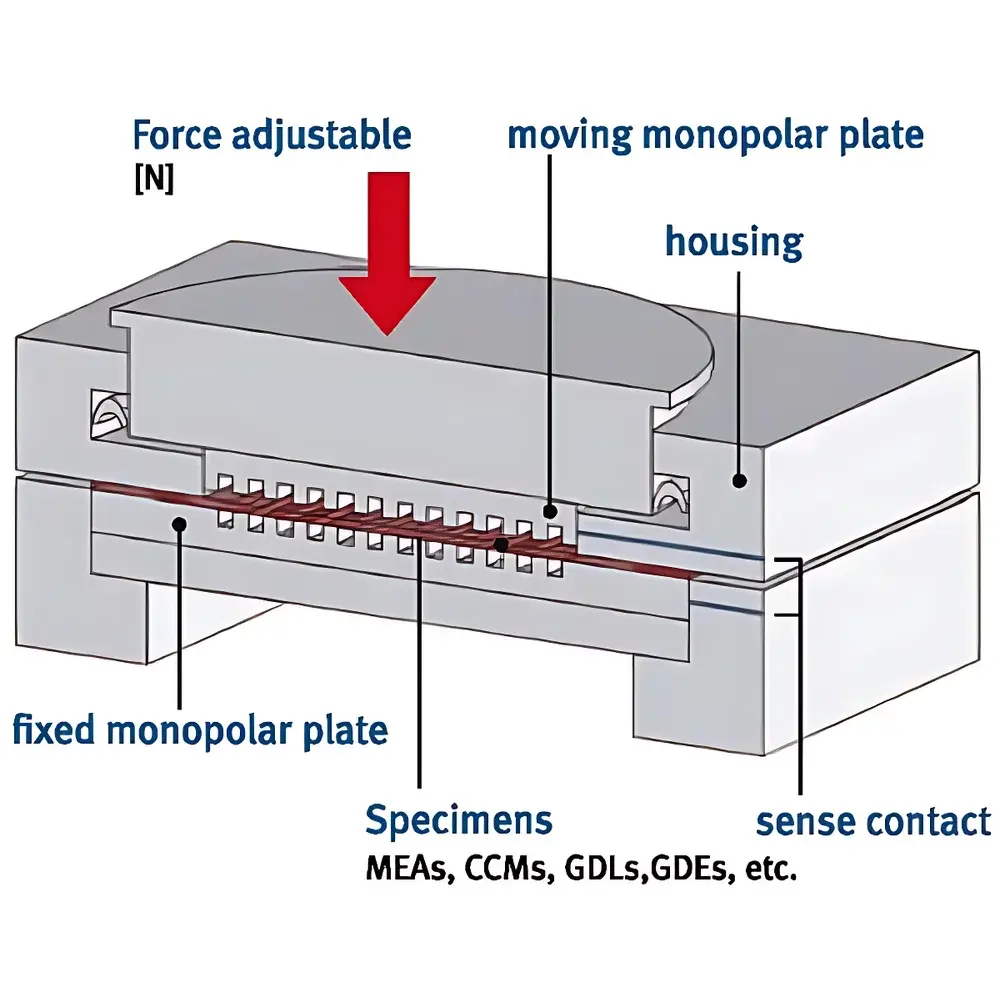
The Baltic FuelCells QCF25 Quick-Connect Fuel Cell Fixture is a precision-engineered mechanical test platform designed for laboratory-scale evaluation and quality assurance of proton exchange membrane (PEM) fuel cell components—including membrane electrode assemblies (MEAs), catalyst-coated membranes (CCMs), gas diffusion layers (GDLs), and gas diffusion electrodes (GDEs). Unlike conventional static fixtures, the QCF25 integrates pneumatic actuation to deliver controlled, uniform compressive force directly across the active area (25 cm²), enabling reproducible electrochemical characterization under defined mechanical boundary conditions. Its operation is grounded in fundamental contact mechanics and interfacial resistance modeling: precise clamping pressure modulates interfacial contact resistance between bipolar plates and porous components, thereby influencing ohmic losses, mass transport efficiency, and overall polarization behavior. The fixture is not an electrochemical instrument per se but a critical interface accessory—designed to be paired with industry-standard bipotentiostats (e.g., BioLogic SP-300, Gamry Interface 5000E, or Metrohm Autolab PGSTAT series) to ensure measurement integrity during cyclic voltammetry, chronoamperometry, and electrochemical impedance spectroscopy (EIS).
Key Features
- Pneumatically actuated clamping system enabling continuous, stepless adjustment of compressive load (0–2.5 MPa typical range) over the 25 cm² active area
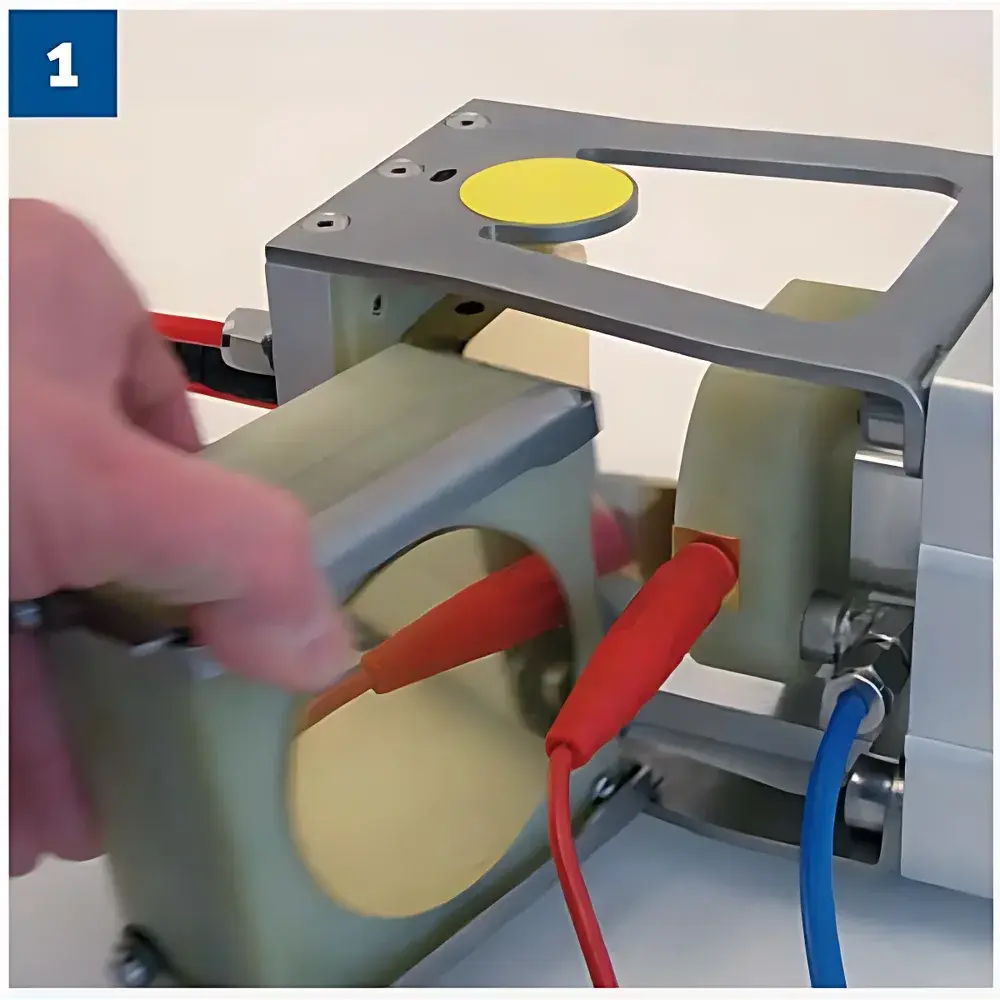
- Tool-free assembly and disassembly: rapid interchange of MEAs, CCMs, or GDLs without wrenches, torque drivers, or hose fittings
- Patented single-moving endplate design (EP 183936438, US2007/0275287A1, WO 2006/056195A1) ensuring axial symmetry and uniform pressure distribution
- Integrated sealing architecture minimizing gas crossover and electrolyte leakage under operational humidity and temperature gradients
- Modular base frame compatible with vertical environmental test chambers, thermal control units (TCU), and flow-through gas manifolds
- Gold-plated stainless steel or titanium current collector plates (optional) for low-contact-resistance, corrosion-resistant operation in H₂/air and reformate environments
Sample Compatibility & Compliance
The QCF25 supports standardized 25 cm² PEM components conforming to DOE and IEA fuel cell component testing protocols. It accommodates standard 50–200 µm Nafion membranes, carbon-supported Pt/C catalyst layers (0.1–0.4 mgₚₜ/cm²), hydrophobic microporous layers (MPLs), and Toray TGP-H series GDLs. Fixture geometry complies with ASTM D7232–22 (Standard Practice for Evaluating Membrane Electrode Assemblies) and ISO 14687–2:2019 (Hydrogen fuel quality specifications), particularly regarding dimensional tolerances and surface flatness requirements (<5 µm deviation across active zone). When integrated with GLP-compliant potentiostats and validated data acquisition systems, the QCF25 enables audit-ready test records aligned with FDA 21 CFR Part 11 electronic signature requirements.
Software & Data Management
The QCF25 operates as a hardware interface—not a standalone controller—and relies on host potentiostat software (e.g., EC-Lab®, Framework, or NOVA) for experiment sequencing and real-time parameter logging. Pressure setpoints are externally regulated via analog 0–10 V or digital RS-485 signals from programmable pneumatic controllers (e.g., Festo CPE10 series). Optional accessories—including the CMD compression measurement device and CSL current distribution scanner—output calibrated analog voltage signals traceable to NIST standards. All sensor outputs (pressure, temperature, humidity, current density mapping) can be time-synchronized and logged alongside electrochemical data using third-party DAQ platforms (NI LabVIEW, MATLAB Data Acquisition Toolbox) supporting TDMS or HDF5 export formats for long-term archival and cross-laboratory benchmarking.
Applications
- Routine QA/QC screening of MEA batches prior to stack integration
- Parametric studies of compression-induced performance degradation in accelerated stress tests (ASTs)
- Validation of novel catalyst layer architectures under variable interfacial pressure
- Correlation of in-situ current distribution (via CSL probe) with local water accumulation and oxygen transport limitations
- Development and validation of high-temperature PEM (HT-PEM) and anion exchange membrane (AEM) components requiring elevated clamping stability up to 120°C
- Electrolyzer mode testing of PEM water electrolysis cells using reversible configurations
FAQ
Is the QCF25 compatible with commercial potentiostats?
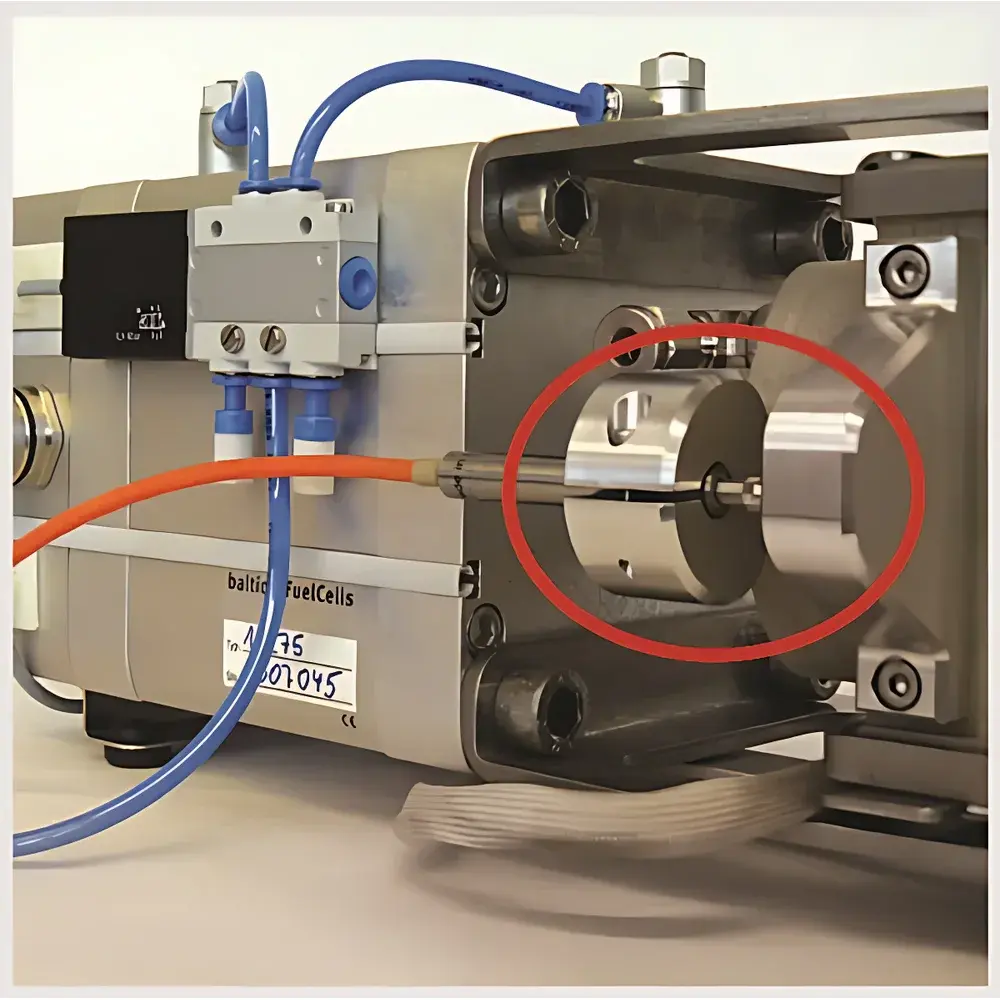
Yes—the fixture includes standard BNC and banana-jack terminals for working, counter, and reference electrode connections, fully interoperable with all major bipotentiostat platforms.
Does the QCF25 include built-in temperature or humidity control?
No—thermal and humidification control are provided by external subsystems (e.g., TCU temperature control unit, DHRE_Pt humidity-sensing reference electrode, or HSE anode-side humidity sensors), which mount directly onto the fixture’s modular interface ports.
Can the QCF25 be scaled to larger active areas?
Yes—Baltic FuelCells offers QCF50 (50 cm²), QCF100 (100 cm²), and custom-engineered variants up to 225 cm², including multi-cell stack adapters and liquid-cooled plate integration.
What materials are used in the flow field plates?
Standard options include machined graphite, 316L stainless steel, and grade 2 titanium; custom coatings (e.g., Au, Pt, or conductive polymer) are available upon request for specific corrosion or catalytic requirements.
Is calibration documentation provided with the fixture?
Each unit ships with a factory-verified pressure calibration certificate (traceable to PTB, Germany) and dimensional inspection report confirming active-area flatness, parallelism, and seal groove tolerances.



