BATOP PCA Series Photoconductive Antennas for Terahertz Generation and Detection
| Brand | BATOP |
|---|---|
| Origin | Germany |
| Model | PCA- |
| Wavelength Options | 800 nm / 1064 nm / 1550 nm |
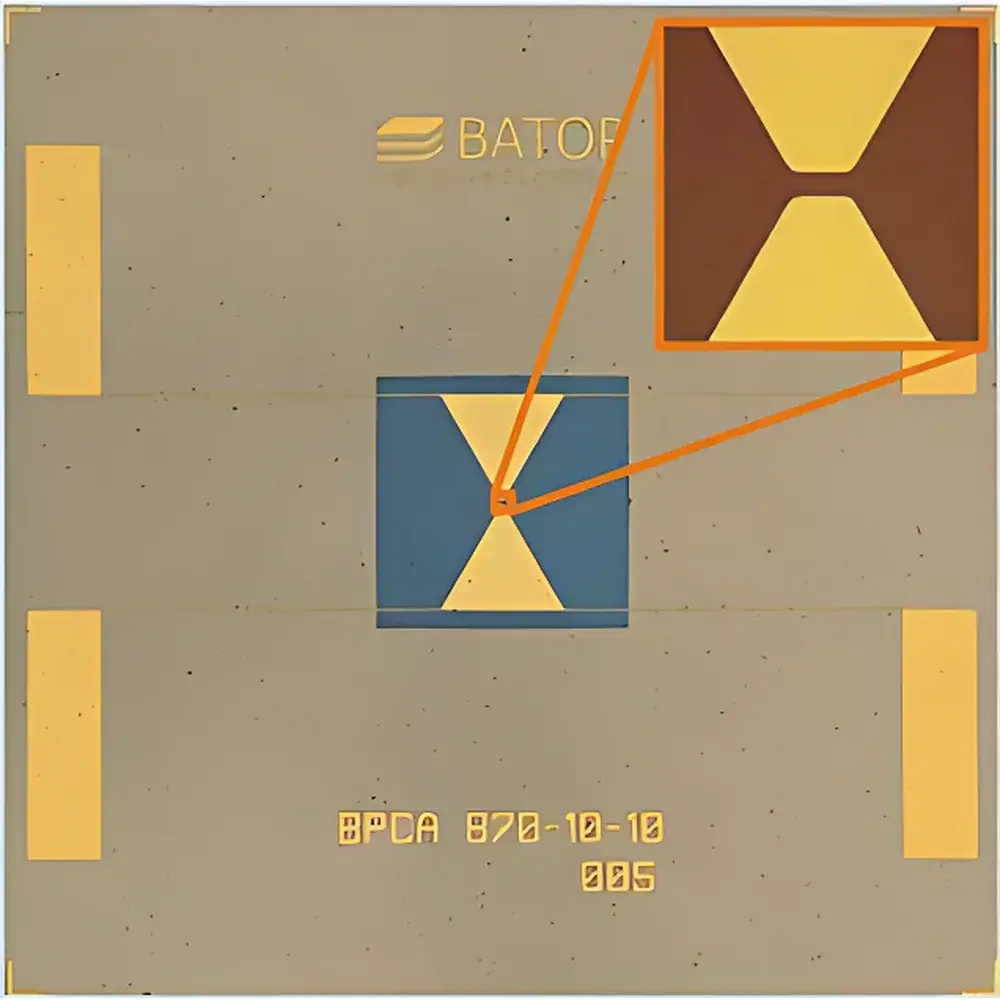
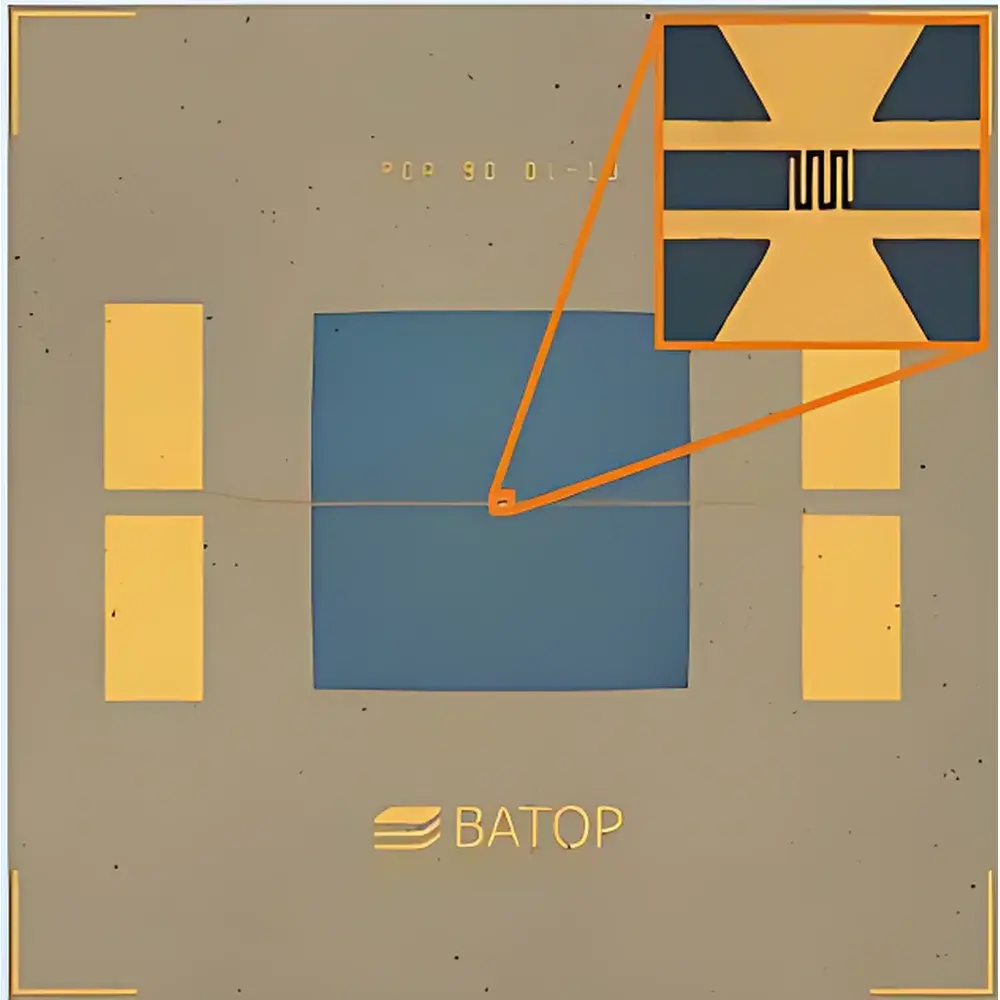
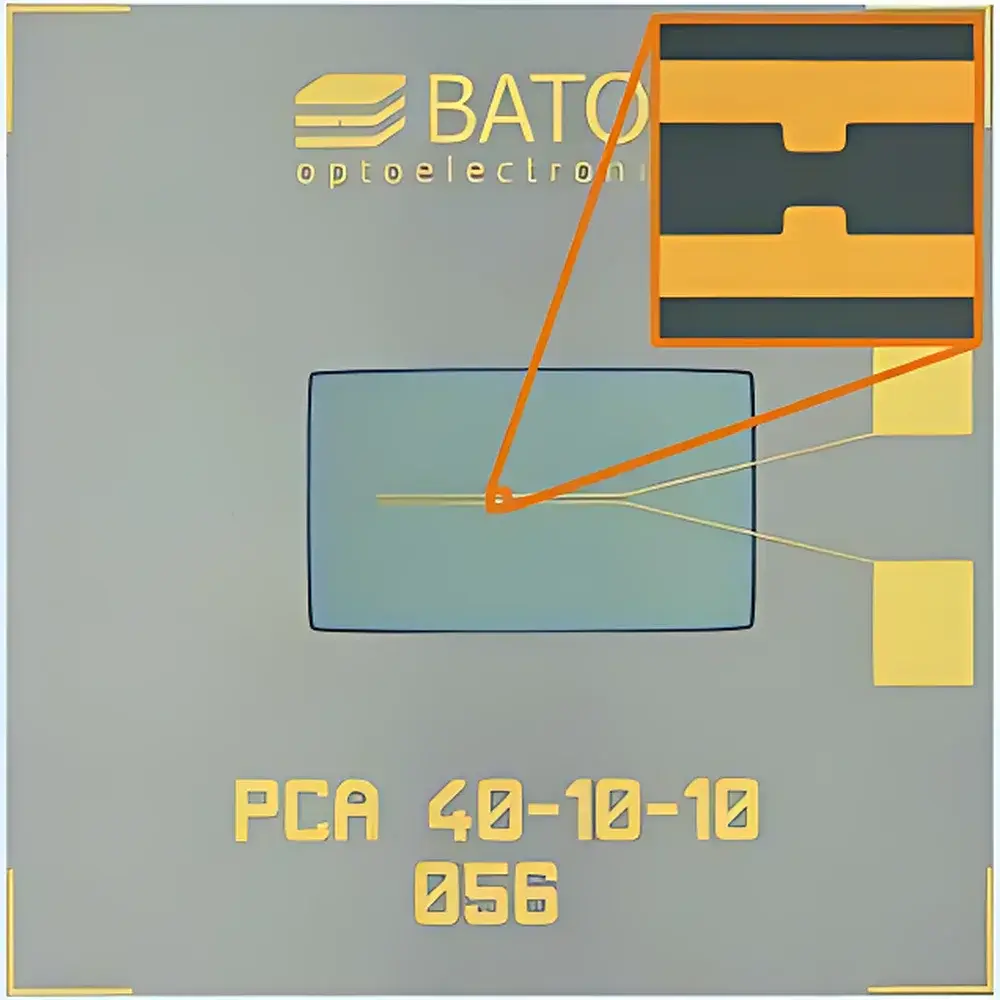
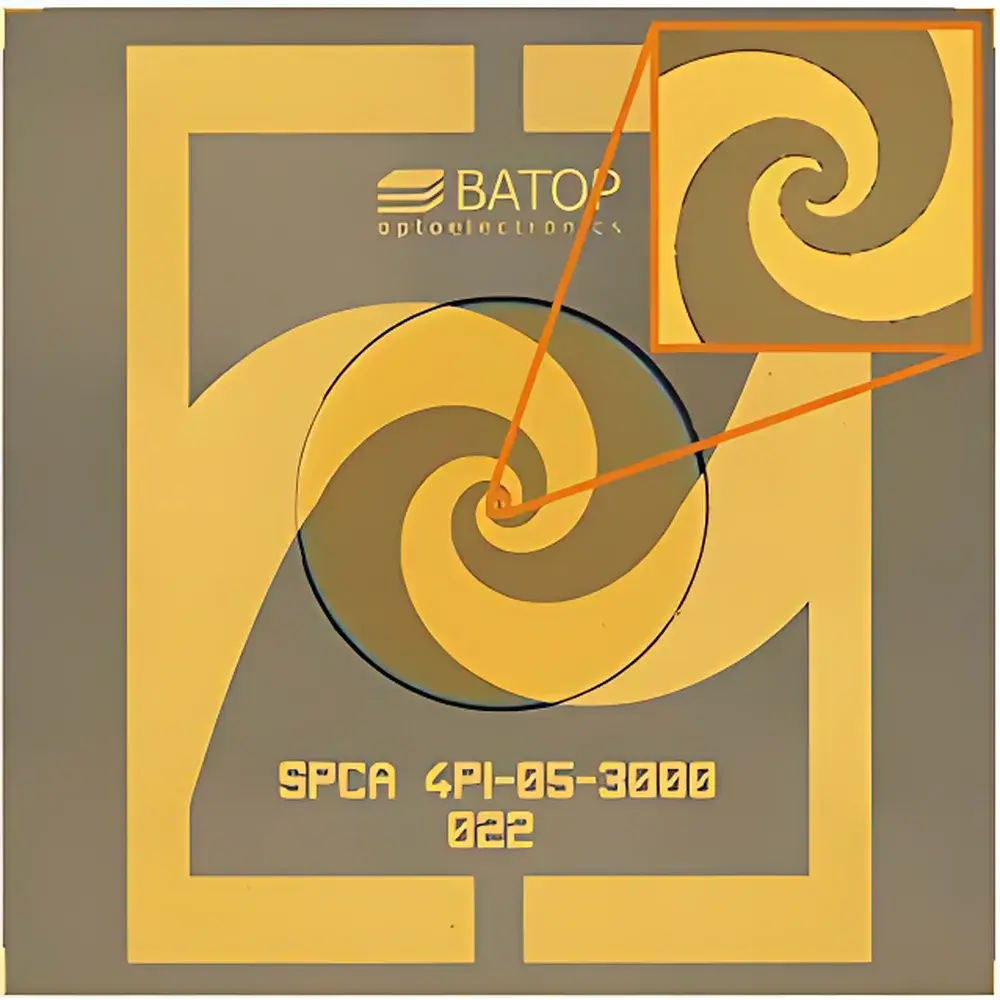
| Antenna Types | Bow-tie, Parallel-line, Butterfly, Interdigital Array, Finger-gap, Logarithmic Spiral |
| Lens Options | Aspheric Silicon Lenses (Collimating or Focusing) |
| Compliance | RoHS-compliant semiconductor fabrication |
| Packaging | Hermetically sealed, anti-reflection coated Si substrate housing |
Overview
The BATOP PCA Series photoconductive antennas (PCAs) are engineered for high-fidelity terahertz (THz) time-domain spectroscopy (TDS) systems operating in the 0.1–4 THz range. These devices function on the principle of ultrafast photoconductive switching: when illuminated by femtosecond laser pulses—typically from Ti:sapphire (800 nm), Nd:YAG (1064 nm), or fiber-based (1550 nm) sources—carriers are generated in low-temperature-grown gallium arsenide (LT-GaAs) or radiation-damaged silicon-on-sapphire (RD-SOS) substrates. The applied bias field (for emitters) or transient photocurrent (for detectors) drives broadband THz pulse emission or coherent electro-optic sampling, respectively. Designed for integration into both free-space and fiber-coupled THz platforms, the PCA series supports precise temporal resolution (90 dB), and excellent signal-to-noise ratio across multiple excitation wavelengths.
Key Features
- Multi-wavelength compatibility: Optimized for 800 nm, 1064 nm, and 1550 nm ultrafast laser excitation—enabling flexibility across Ti:sapphire, solid-state, and telecom-band THz systems.
- Modular antenna architecture: Six distinct electrode geometries—including bow-tie, parallel-line, butterfly, interdigital array, finger-gap, and logarithmic spiral—each tailored to specific spectral bandwidth, power handling, and polarization response requirements.
- Integrated aspheric silicon optics: Optional collimating or focusing lenses fabricated from high-resistivity, -oriented silicon with anti-reflection coating (AR @ target wavelength) to maximize THz coupling efficiency and minimize dispersion.
- Robust packaging: Hermetically sealed TO-8 or custom ceramic housings with gold-plated RF contacts ensure long-term stability under vacuum or controlled-atmosphere environments typical in research-grade THz labs.
- Substrate material options: LT-GaAs for high-speed, low-dark-current operation at 800 nm; RD-SOS for enhanced thermal stability and higher damage thresholds at 1064/1550 nm.
Sample Compatibility & Compliance
BATOP PCAs are compatible with standard THz-TDS configurations using delay-stage-based pump-probe architectures or asynchronous optical sampling (ASOPS) setups. All devices are fabricated in ISO 9001-certified cleanrooms and comply with EU RoHS Directive 2011/65/EU. Substrate materials meet ASTM F2735 (Standard Specification for Low-Temperature-Grown GaAs Wafers) and IEC 60747-14-1 (Semiconductor Devices – Discrete Devices – Photodiodes). For regulated applications—such as pharmaceutical crystallinity analysis or non-destructive testing in aerospace composites—the antenna modules support GLP/GMP-aligned documentation packages upon request.
Software & Data Management
While BATOP PCAs operate as hardware components without embedded firmware, they are fully interoperable with industry-standard THz acquisition software suites including TeraView’s TeraPulse, Menlo Systems’ TERA K15, and open-source platforms such as THzTools (Python-based) and LabVIEW-based DAQ drivers. All models support analog voltage output (detector) or DC-biased RF input (emitter), enabling seamless integration with digitizers compliant with IEEE 1241-2010 (ADC testing standards) and synchronized triggering via TTL/PECL signals. Audit trails for calibration history and laser alignment logs can be maintained within FDA 21 CFR Part 11-compliant LIMS environments when paired with validated data acquisition workflows.
Applications
- Time-domain spectroscopy of dielectric materials (polymers, ceramics, pharmaceuticals)
- Non-invasive imaging of concealed objects in security screening and cultural heritage inspection
- Carrier dynamics characterization in 2D materials (graphene, TMDCs) and perovskite photovoltaics
- Gas-phase rotational spectroscopy for trace molecular detection (e.g., NH₃, H₂O, CH₄)
- Quality control of multilayer packaging films and tablet coatings in pharma manufacturing
- Fundamental studies of superconducting gap dynamics and topological insulator surface states
FAQ
What is the typical bias voltage requirement for PCA emitters?
Most BATOP PCA emitters operate optimally at DC bias voltages between 10 V and 30 V, depending on antenna geometry and substrate material. Higher voltages increase THz amplitude but require careful thermal management.
Can these antennas be used in cryogenic environments?
Yes—LT-GaAs-based PCAs retain functionality down to 4 K; RD-SOS variants demonstrate improved performance below 77 K due to reduced carrier freeze-out.
Is lens alignment required after installation?
Precise optical alignment of the integrated silicon lens is critical. BATOP provides alignment fixtures and recommends use of a six-axis kinematic mount with sub-micron resolution for optimal THz coupling.
Do you offer custom electrode designs or substrate doping profiles?
Custom fabrication is available under NDA for academic and industrial R&D partners, subject to minimum order quantities and wafer-level process qualification.
How does dark current affect detector sensitivity?
Dark current remains below 100 pA at room temperature for LT-GaAs detectors biased at ≤5 V, ensuring minimal baseline drift during long-integration measurements.