
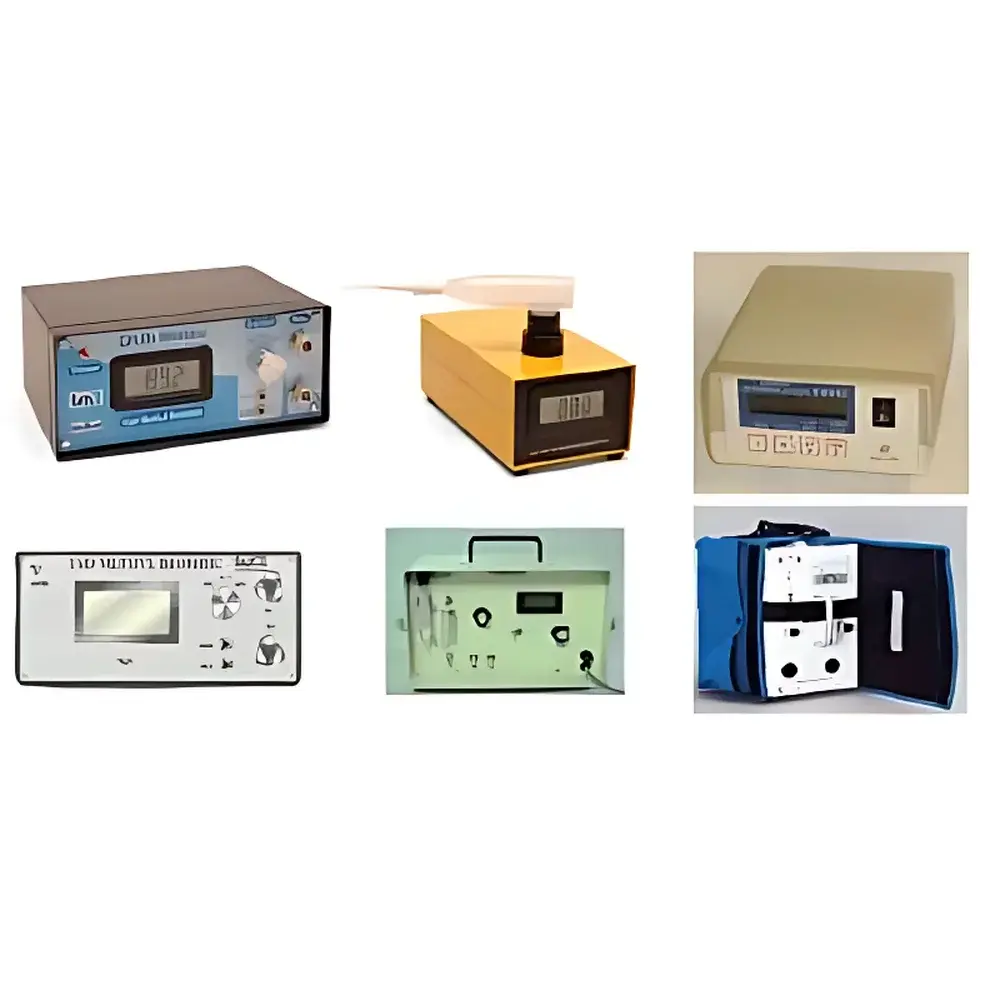
BDF TM3 Series Multi-Gas Fumigant Analyzers: Sulfuryl Fluoride (SO₂F₂), Methyl Bromide (CH₃Br), Phosphine (PH₃), and Ethylene Oxide (C₂H₄O) Concentration Analyzers
| Origin | United Kingdom |
|---|---|
| Manufacturer Type | Authorized Distributor |
| Origin Category | Imported |
| Pricing | Available Upon Request |
| Detection Principle | Thermal Conductivity (SO₂F₂, CH₃Br), Electrochemical (PH₃, C₂H₄O) |
| Measurement Ranges | SO₂F₂: 0–200 mg/L (0–200 g/m³) or 0–3000 mg/L (FUMIS) |
| PH₃ | 0–1999 ppm |
| C₂H₄O | 0–20 ppm (configurable up to 100 ppm) |
| CH₃Br | 0–200 mg/L (with optional ranges up to 1000 ppm or % v/v) |
| Resolution | SO₂F₂: 1 mg/L |
| PH₃ | 1 ppm |
| C₂H₄O | 0.1 ppm |
| CH₃Br | 0.1 mg/L or 0.1 ppm |
| Response Time | SO₂F₂/CH₃Br: <30 s |
| PH₃ | <30 s |
| C₂H₄O | 120 s |
| Accuracy | ±2% FS (SO₂F₂, PH₃, CH₃Br) |
| Operating Temperature | 0–40 °C |
| Operating Humidity | 0–95% RH (non-condensing) |
| Power Supply | 6×C batteries (portable units) or 115/220 V AC (FUMIS benchtop) |
| Weight | 0.8–3.9 kg |
| Enclosure | Stainless steel (TM3, EC80) or anodized aluminum (FUMIS) |
Overview
The BDF TM3 Series Multi-Gas Fumigant Analyzers are engineered for precision quantification of critical fumigants used in phytosanitary and structural pest control applications—specifically sulfuryl fluoride (SO₂F₂), methyl bromide (CH₃Br), phosphine (PH₃), and ethylene oxide (C₂H₄O). These instruments comply with internationally recognized fumigation protocols governed by the International Plant Protection Convention (IPPC), FAO guidelines, and national regulatory frameworks including USDA-APHIS, EPPO, and ISPM 15. Each analyzer employs gas-specific sensing technology: thermal conductivity detection for high-concentration SO₂F₂ and CH₃Br (where molecular thermal diffusivity differences enable selective measurement without cross-interference), and electrochemical cells for low-ppm PH₃ and C₂H₄O—optimized for stability in humid, variable-pressure environments typical of sealed fumigation chambers, shipping containers, and grain silos. The modular architecture supports field-deployable handheld operation (TM3, EC80, 100XP) and fixed-position monitoring (FUMIS), with all models calibrated traceably to NIST-traceable gas standards and validated per ISO 17025-accredited procedures.
Key Features
- Thermal conductivity sensor (patented design) for SO₂F₂ and CH₃Br—immune to humidity-induced drift and stable over extended exposure to high-concentration fumigant atmospheres
- Electrochemical sensors with integrated temperature and pressure compensation for PH₃ and C₂H₄O, ensuring accuracy across dynamic environmental conditions
- Fast thermal stabilization (<60 s) and rapid response (<30 s for thermal conductivity models; 120 s for C₂H₄O) enabling real-time process verification during fumigation cycles
- High-resolution LCD display with dual-mode readout: instantaneous concentration and peak-hold (for 100XP), plus low-battery and fault diagnostics
- Integrated sampling pump (FUMIS, 100XP) and passive diffusion inlet (TM3, EC80) to accommodate both continuous chamber monitoring and spot-check sampling
- Ruggedized enclosure: stainless steel housing (IP65-rated) for TM3 and EC80; anodized aluminum for FUMIS—designed for mechanical durability and chemical resistance in industrial fumigation facilities
- Configurable measurement ranges: users select appropriate span (e.g., 0–20 ppm or 0–100 ppm for C₂H₄O; % v/v options for CH₃Br) to maximize signal-to-noise ratio and minimize quantification uncertainty
Sample Compatibility & Compliance
These analyzers are validated for use with complex matrices encountered in commercial fumigation—including porous agricultural commodities (grains, seeds, dried fruits), horticultural products (cut flowers, vegetables), and wooden packaging materials. All models meet operational requirements specified in ASTM E2687 (Standard Practice for Monitoring Fumigant Concentrations in Structures), ISO 11382 (Phosphine gas detection), and EN 14603 (Ethylene oxide workplace monitoring). The thermal conductivity sensors are intrinsically safe for use in non-explosive atmospheres (IEC 60079-0 compliant), while electrochemical variants include built-in catalytic filters to suppress interference from CO, H₂S, and NO₂—common co-contaminants in stored-product environments. Data integrity complies with FDA 21 CFR Part 11 when paired with optional PC interface software (100XP), supporting audit-ready electronic records, user access control, and time-stamped calibration logs.
Software & Data Management
The 100XP model includes a USB-enabled PC interface and proprietary data acquisition software compatible with Windows OS. This software enables real-time graphing of concentration profiles, automated report generation (PDF/CSV), and compliance documentation aligned with GLP and GMP record-keeping standards. Calibration history—including date, operator ID, standard gas lot number, and deviation values—is stored with cryptographic timestamping. For TM3 and EC80 units, manual calibration is performed using certified zero air and span gases; FUMIS supports both manual and automated multi-point calibration via front-panel menu navigation. All firmware versions are version-controlled and field-upgradable via secure USB key—ensuring long-term regulatory alignment as fumigation standards evolve.
Applications
- Pre-shipment phytosanitary treatment verification for export compliance (e.g., ISPM 15-certified wood packaging)
- In-chamber SO₂F₂ concentration profiling during Vikane® fumigation of temperature-sensitive commodities
- Residual PH₃ monitoring in grain storage facilities to ensure worker safety prior to re-entry (OSHA PEL: 0.3 ppm TWA)
- C₂H₄O residual verification in medical device sterilization validation (ISO 10993-7)
- CH₃Br phase-out transition support: quantitative comparison of alternative fumigant efficacy under identical exposure conditions
- Third-party certification audits requiring documented, repeatable gas concentration measurements
FAQ
What calibration gases are required for routine maintenance?
Certified zero air and NIST-traceable SO₂F₂ (in nitrogen), CH₃Br (in air), PH₃ (in nitrogen), or C₂H₄O (in nitrogen) standards—concentration matched to instrument range. Calibration frequency follows ISO/IEC 17025:2017 Clause 7.7 recommendations (typically before each daily use or per fumigation cycle).
Can these analyzers operate inside refrigerated or heated fumigation chambers?
Yes—operational temperature range is 0–40 °C. For sub-zero or >40 °C environments, external sample draw with heated transfer line (optional accessory) is recommended to prevent condensation and maintain sensor integrity.
Is sensor replacement a user-serviceable task?
Thermal conductivity sensors (TM3, FUMIS) are field-replaceable with factory-supplied kits and torque-spec tools; electrochemical sensors (EC80, 100XP) require return-to-factory service to preserve calibration traceability and electrolyte integrity.
Do these instruments meet international shipping regulations for hazardous cargo?
All portable units (TM3, EC80, 100XP) are UN 38.3 certified for air transport; lithium-free C-cell battery configuration complies with IATA Dangerous Goods Regulations Section II for equipment containing non-spillable batteries.
How is measurement uncertainty quantified for audit purposes?
Total expanded uncertainty (k=2) is calculated per GUM (JCGM 100:2008) incorporating contributions from sensor repeatability (±0.8% FS), calibration standard uncertainty (±0.5% FS), temperature coefficient (±0.02%/°C), and pressure sensitivity (±0.1% per 1% deviation from ambient). Full uncertainty budgets are provided in calibration certificates.
Related Products







