
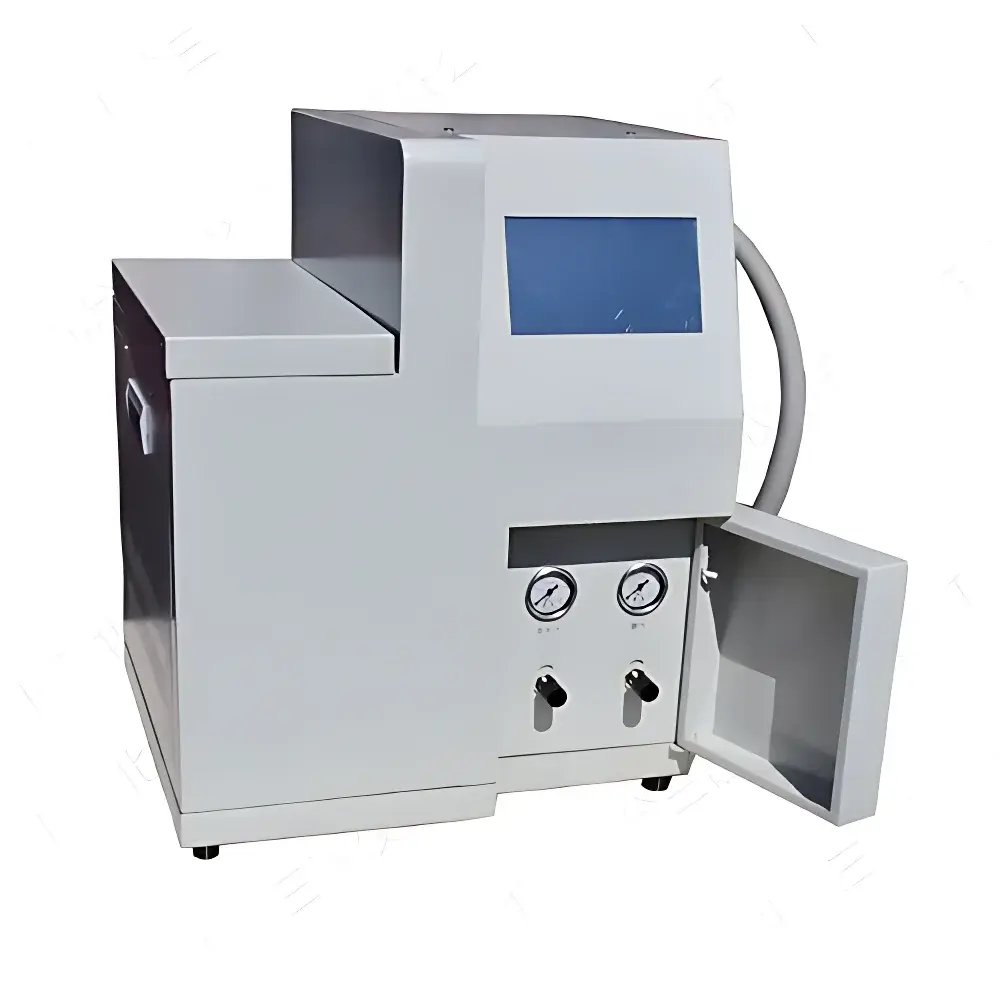
Beifen Sanpu AHpS-20A Plus Fully Automated Static Headspace Sampler for Ethylene Oxide (EO) Residual Analysis
| [Brand | Beifen Sanpu |
|---|---|
| Origin | Beijing, China |
| Manufacturer Type | Original Equipment Manufacturer (OEM) |
| Instrument Type | Static Headspace Sampler |
| Automation Level | Fully Automatic |
| Vial Heating Range | Ambient to 200 °C (1 °C increment) |
| Valve Temperature Control Range | 40–220 °C (±1 °C accuracy) |
| Sample Loop Volume | 1 mL |
| Sample Capacity | 20 positions |
| Compatible Vial Sizes | 10 mL and 20 mL] |
Overview
The Beifen Sanpu AHpS-20A Plus is a fully automated static headspace sampler engineered for precise, reproducible quantification of residual ethylene oxide (EO) in medical devices and pharmaceutical packaging following sterilization. It operates on the principle of equilibrium headspace gas-phase extraction: solid or liquid samples are sealed in vials, heated to a defined temperature, and allowed to equilibrate—enabling volatile EO to partition into the headspace above the matrix. A precisely metered volume of this equilibrated vapor is then transferred via a thermostated injection valve to a gas chromatograph (GC) for separation and detection. This method aligns with internationally recognized regulatory frameworks for biocompatibility assessment, particularly where EO residue poses cytotoxic or mutagenic risk. The system is designed for routine compliance testing in quality control laboratories operating under ISO 13485, FDA QSR (21 CFR Part 820), and GLP environments.
Key Features
- Fully automated 20-position carousel with programmable sequence control and unattended operation overnight.
- Independent, high-stability temperature zones: vial oven (ambient to 200 °C, ±1 °C) and transfer line/injection valve (40–220 °C, ±1 °C), minimizing condensation and carryover.
- 1 mL fixed-volume quantitative loop ensures volumetric precision and inter-run repeatability—critical for meeting ISO 10993-7:2008 and GB/T 16886.7–2001 requirements.
- Compatible with standard 10 mL and 20 mL crimp-top headspace vials; supports both aqueous and semi-solid sample matrices (e.g., polymer films, gels, sponges, and capsule shells).
- Robust architecture with corrosion-resistant internal surfaces and inert flow path materials (e.g., SilcoNert®-treated stainless steel), ensuring minimal adsorption or degradation of reactive EO.
- Integrated leak-check protocol and pressure monitoring at valve actuation to verify sampling integrity prior to each injection.
Sample Compatibility & Compliance
The AHpS-20A Plus is validated for use with polymeric, elastomeric, and cellulose-based medical device components—including catheters, syringes, surgical drapes, and gelatin capsules—following post-sterilization aeration (desorption). Sample preparation follows pharmacopoeial guidelines: aqueous dissolution (e.g., USP , ChP 2020 Ed. Vol II, “Ethylene Oxide Residue in Polymeric Medical Devices”), with calibration via gravimetric standard preparation per Chinese Pharmacopoeia (ChP) Volume II, Section on Polysorbate 80 and Gelatin Capsules. The system meets technical prerequisites for ISO 10993-7:2008 Annex B (gas chromatographic determination), ASTM D6205–22 (standard test method for EO in medical packaging), and EU MDR Annex I, Section 10.2 (chemical characterization of sterilants).
Software & Data Management
Controlled via Beifen Sanpu’s proprietary HS-Link software (Windows-based), the AHpS-20A Plus supports audit-trail-enabled method storage, user-level access control (admin/operator), and electronic signature capability compliant with FDA 21 CFR Part 11 requirements when deployed with validated GC data systems (e.g., Shimadzu GCsolution, Thermo Chromeleon). All method parameters—including equilibration time, vial pressurization, loop fill/purge cycles, and valve timing—are fully configurable and saved with timestamped run logs. Raw acquisition files include instrument status flags (temperature stability, pressure validation pass/fail), enabling full traceability during regulatory inspections or GMP audits.
Applications
- Quantitative EO residue analysis in Class I–III medical devices per ISO 10993-7 thresholds (e.g., ≤10 µg/g for long-term implantables; ≤60 µg/g for surface devices).
- Stability-indicating method development for EO desorption kinetics studies across varying temperature/humidity conditions.
- Validation of EO sterilization process parameters (e.g., concentration, exposure time, temperature) in conjunction with biological indicator challenge testing.
- Residual solvent screening in pharmaceutical excipients (e.g., polysorbates, PVP, hydroxypropyl methylcellulose) per ICH Q3C(R8) guidelines.
- Supporting extractables and leachables (E&L) studies in combination with GC–MS for identification of EO-related degradation products (e.g., ethylene glycol, diethylene glycol).
FAQ
What GC detectors are recommended for EO analysis using this headspace system?
Flame ionization detection (FID) is standard for routine quantitation due to its linear dynamic range (0.1–1000 ng EO on-column) and robustness. For trace-level confirmation or co-elution resolution, electron capture detection (ECD) or mass spectrometry (GC–MS in SIM mode) may be employed.
Can the AHpS-20A Plus be integrated with third-party GC systems?
Yes—it features universal TTL/RS-232 and Ethernet interfaces compatible with major GC platforms (Shimadzu, Agilent, Thermo Fisher, PerkinElmer) without proprietary hardware dependency.
Is method validation support provided by Beifen Sanpu?
The company supplies IQ/OQ documentation templates and application notes aligned with ICH Q2(R2), including precision (intra-day/inter-day RSD ≤3%), accuracy (recovery 95–105%), LOD/LOQ determination, and robustness testing protocols.
How is carryover mitigated during high-concentration sample runs?
The system implements multi-stage purge cycles (carrier gas + bake-out), valve temperature zoning above EO boiling point (10.7 °C), and optional cold trap bypass to prevent condensation in the transfer line.
Does the instrument comply with environmental safety standards for EO handling?
While the sampler itself does not emit EO, it is designed for use within certified fume hoods or ventilated analytical suites. Exhaust routing from the GC vent and auxiliary purge lines must conform to local occupational exposure limits (e.g., OSHA PEL: 1 ppm TWA; ACGIH TLV: 0.1 ppm STEL).






