
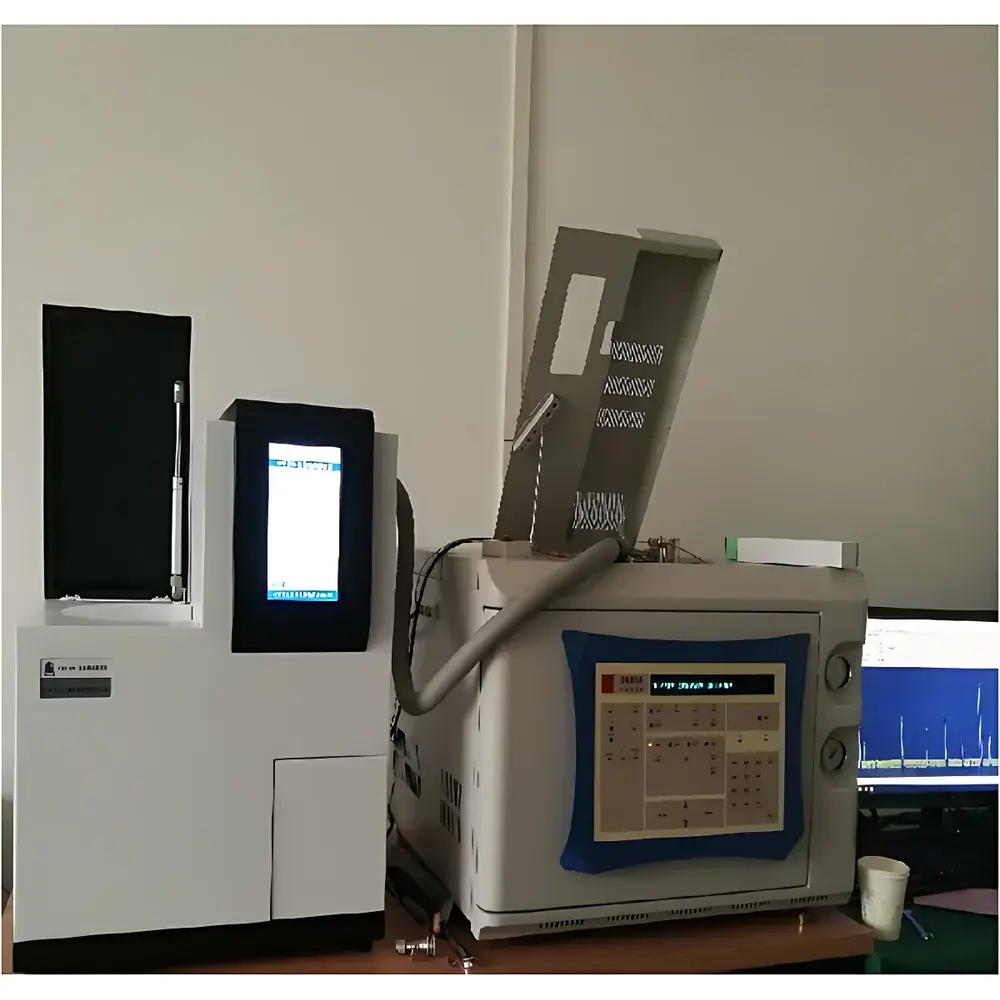
Beifen Sanpu ATD1S-20A Dual-Stage Thermal Desorber for Indoor Air Benzene and TVOC Analysis
| Brand | Beifen Sanpu |
|---|---|
| Origin | Beijing, China |
| Manufacturer Type | Manufacturer |
| Product Category | Domestic |
| Model | ATD1S-20A |
| Price Range | USD 1,400 – 7,000 |
| Instrument Type | Dual-stage thermal desorber |
| Desorption Temperature Range | Ambient to 400 °C |
| Cold Trap Temperature Range | −30 °C to 400 °C |
| Desorption Recovery Rate | ≥95% (for C6–C12 VOCs per ISO 21045) |
| Sample Position Capacity | 20 tubes |
Overview
The Beifen Sanpu ATD1S-20A Dual-Stage Thermal Desorber is an automated, two-step thermal desorption system engineered for quantitative analysis of volatile organic compounds (VOCs), including benzene and total volatile organic compounds (TVOC), in indoor air samples. It operates on the principle of cryogenic focusing followed by rapid thermal desorption into a gas chromatograph (GC) or GC–MS system. The instrument integrates precise temperature control across three critical zones—sample tube furnace, transfer line, and cryogenic cold trap—to ensure high analyte recovery, minimal breakthrough, and exceptional reproducibility. Designed to meet regulatory requirements outlined in ISO 16000-6, HJ 644–2013, HJ 583–2010, GB/T 18883–2002, and GB 50325–2020, the ATD1S-20A delivers trace-level sensitivity (sub-ppt detection limits achievable with FID or MS detection) and robust performance for routine environmental monitoring laboratories operating under GLP or ISO/IEC 17025 frameworks.
Key Features
- Dual-stage desorption architecture with independent temperature control for adsorbent tube (ambient to 400 °C), transfer line (up to 350 °C), and cryogenic cold trap (−30 °C to 400 °C)
- 20-position autosampler compatible with standard 6 mm OD × 110 mm stainless steel or quartz adsorption tubes (e.g., Tenax TA, Carbopack B/C, Carboxen 1000)
- Electrically actuated pneumatic valves and high-stability mass flow control for precise carrier gas management during desorption, backflush, and trap desorption steps
- Integrated synchronization signal output to trigger GC oven start, detector activation, and data acquisition software upon injection
- Programmable method storage supporting up to 20 user-defined methods with customizable ramp rates, hold times, and valve sequencing
- Compliance-ready design with hardware-level event logging, audit trail capability, and configurable password-protected access levels
Sample Compatibility & Compliance
The ATD1S-20A supports direct analysis of sorbent tube-collected air samples containing target analytes such as benzene, toluene, ethylbenzene, xylenes (BTEX), C3–C12 aliphatics, halogenated hydrocarbons, and oxygenated VOCs. It accommodates high-moisture samples via integrated water management protocols—including dry purge and optional Nafion-based moisture removal—and enables reliable quantification across concentration ranges from low-ppt ambient levels to percent-level industrial emissions. The system conforms to key international standards including ISO 21045 (determination of VOCs in indoor air), ASTM D6196 (selection of sorbents), and EPA TO-17 (determination of VOCs in ambient air). Its operational parameters align with quality assurance requirements specified in ISO/IEC 17025:2017 for calibration traceability, measurement uncertainty estimation, and method validation documentation.
Software & Data Management
The ATD1S-20A interfaces seamlessly with third-party GC and GC–MS data systems via TTL-level trigger signals and RS-232/USB communication. Optional Beifen Sanpu ControlSuite™ software provides full remote configuration, real-time status monitoring, method development tools, and electronic record retention compliant with FDA 21 CFR Part 11 when deployed with appropriate IT infrastructure. All desorption events—including tube ID, temperature profiles, valve actuation timestamps, and error logs—are time-stamped and stored locally in non-volatile memory. Audit trails capture operator identity, parameter changes, and sequence execution history, supporting laboratory accreditation audits and internal quality reviews.
Applications
This thermal desorber is routinely deployed in environmental testing laboratories for compliance monitoring under national indoor air quality regulations; occupational health and safety assessments in manufacturing and construction sectors; forensic analysis of fire debris and illicit substance residues; and research-grade VOC profiling in building materials, consumer products, and vehicle cabin air. Its flexibility extends to method development for emerging contaminants such as SVOCs (semi-volatile organic compounds) and polar VOCs when coupled with derivatization-compatible sorbents and optimized cold trap conditions. Universities and government institutes utilize the platform for student training, inter-laboratory comparison studies, and validation of passive sampling techniques.
FAQ
What sample tube formats are supported?
Standard 6 mm OD × 110 mm stainless steel or quartz tubes, including those conforming to ASTM D6196 and ISO 16017 specifications.
Does the system support single-stage desorption mode?
Yes—user-selectable operation modes include single-stage (direct desorption), dual-stage (cold trap focusing), and backflush-enabled configurations.
Is the ATD1S-20A compatible with GC–MS systems?
Fully compatible; synchronization signals and flow stability meet the timing and sensitivity requirements of modern benchtop and high-resolution mass spectrometers.
Can the cold trap temperature be set below −20 °C?
The standard Peltier-cooled trap achieves −30 °C; liquid nitrogen cooling is not required but may be integrated externally for ultra-trace applications.
What maintenance intervals are recommended for routine operation?
Valve inspection every 6 months; cold trap cleaning after 200 runs; annual calibration verification using certified reference standards per ISO/IEC 17025 guidelines.





