
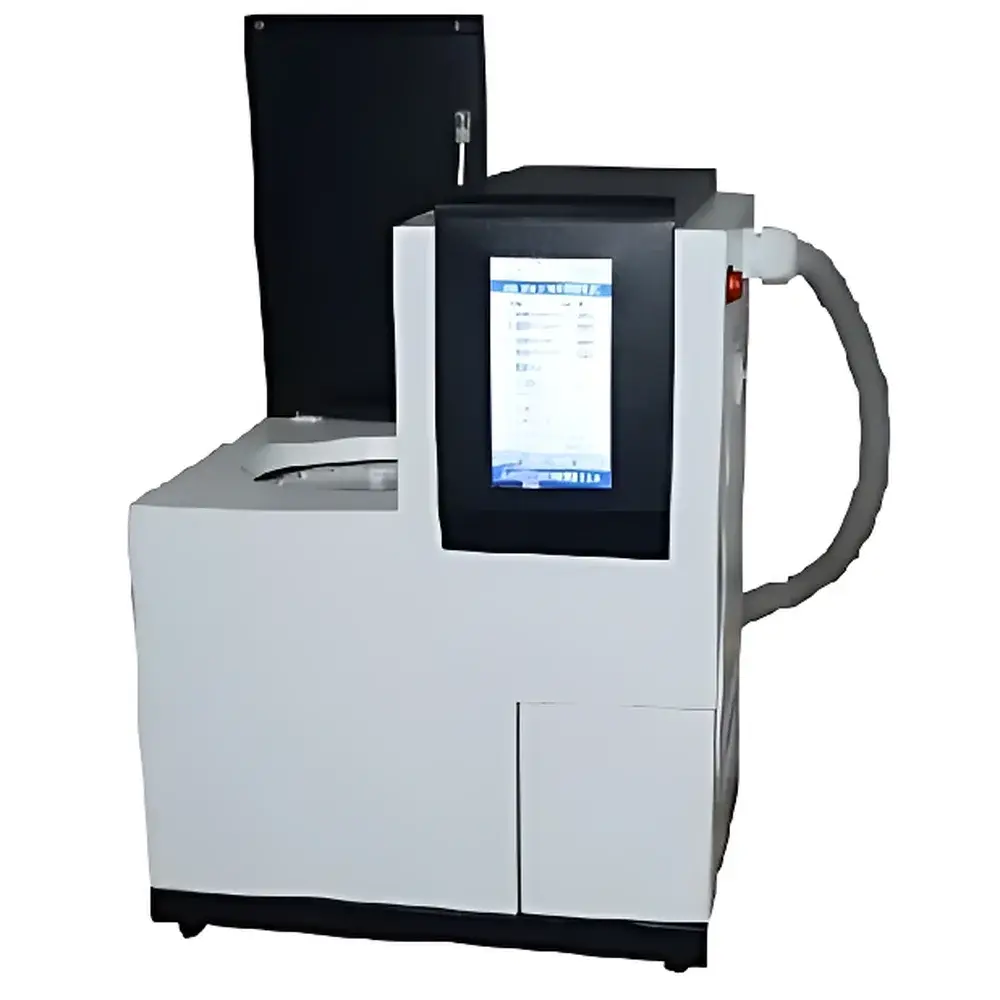
Beifen Sanpu ATDS-20A Dual-Stage Thermal Desorber with Cryogenic Trap
| Brand | Beifen Sanpu |
|---|---|
| Origin | Beijing, China |
| Manufacturer Type | OEM Manufacturer |
| Region Category | Domestic (China) |
| Model | ATDS-20A |
| Instrument Type | Dual-Stage Thermal Desorber, Thermal Desorption Unit |
| Primary Desorption Temp Range | Ambient to 450 °C |
| Secondary Desorption Temp Range | 100–450 °C |
| Cryotrap Temp Range | −35 °C to Ambient |
| Desorption Recovery Rate | >99% (compound-dependent) |
| Sample Capacity | 20 positions |
| Cooling Method | Electronic refrigeration |
| Temperature Control Precision | ±0.5 °C |
| RSD | ≤2.5% (benzene at 0.05 μg) |
| Valve Actuation | Motor-driven 6-port switching valve |
| Sample Tube Format | 1/4″ OD × 3.5″ (ASTM D6196-compliant) |
| GC Interface | Universal low-diffusion interface compatible with all major GC/GC-MS systems |
Overview
The Beifen Sanpu ATDS-20A Dual-Stage Thermal Desorber with Cryogenic Trap is an automated sample introduction system engineered for trace-level volatile organic compound (VOC) analysis in environmental, automotive cabin, and indoor air monitoring applications. It operates on the principle of two-stage thermal desorption coupled with cryofocusing: volatile analytes pre-concentrated on sorbent tubes are first thermally released from the tube matrix (primary desorption), then refocused into a narrow band within a cryogenically cooled trap (−35 °C), and finally rapidly injected as a sharp plug into the gas chromatograph (GC) or GC-mass spectrometer (GC-MS) via secondary desorption. This architecture delivers high sensitivity, excellent peak shape, and minimal carryover—critical for compliance with stringent regulatory methods including HJ/T 400–2007 (VOCs in vehicle cabins), HJ 644–2013, HJ 583–2010, and HJ 734–2014.
Key Features
- Fully automated 20-position carousel enables unattended batch processing without manual intervention;
- Independent four-zone temperature control: primary desorption oven, secondary desorption zone, transfer line (24 V low-voltage heated), and valve manifold—each adjustable in 1 °C increments (range: ambient to 450 °C);
- Integrated electronic cryocooler maintains trap temperature from −35 °C to ambient with ±0.5 °C stability, eliminating liquid nitrogen dependency;
- Motor-driven 6-port valve ensures precise, repeatable switching timing and long-term mechanical reliability;
- Programmable time-sequence control for desorption, purge, re-desorption, injection, and back-flush cycles—fully customizable per method;
- Onboard calibration and validation functions: built-in simulated sampling mode for direct standard curve generation; automatic tube reactivation protocol post-analysis;
- Low-diffusion universal GC interface accommodates split/splitless injectors across Agilent, Thermo Fisher, Shimadzu, and PerkinElmer platforms;
- Real-time status visualization via 7-inch capacitive touchscreen with animated workflow display and error diagnostics;
- Self-calibrating carousel positioning using proprietary alignment algorithm ensures positional repeatability and minimizes tube misalignment risk;
- Optional quartz-lined transfer line available for enhanced recovery of reactive compounds (e.g., aldehydes, acids).
Sample Compatibility & Compliance
The ATDS-20A supports standard 1/4″ OD × 3.5″ stainless steel or fused-silica-coated sorbent tubes compliant with ASTM D6196 and ISO 16017-1. It is validated for use with multi-bed sorbents (e.g., Tenax TA, Carbopack B/C, Carboxen 1000) and meets performance criteria outlined in Chinese national standards: HJ/T 400–2007 (in-vehicle VOCs), GB/T 18883–2002 (indoor air quality), GB 50325–2010 (civil construction), and HJ 734–2014 (stationary source emissions). Its design incorporates hardware-level safeguards—including inert flow paths, zero-dead-volume connections, and programmable back-flush—to ensure data integrity under GLP and ISO/IEC 17025 laboratory accreditation requirements. All temperature and timing parameters are logged with timestamps for audit readiness.
Software & Data Management
The instrument is controlled via embedded firmware with method-based operation—no external PC required for routine runs. Method files store complete thermal profiles, valve sequences, flow settings (purge: 0–100 mL/min; simulate sampling: 0–160 mL/min), and GC synchronization triggers. Data logs include temperature histories, cycle completion timestamps, and diagnostic flags for maintenance tracking. For laboratories operating under FDA 21 CFR Part 11, optional PC-based software provides electronic signatures, user access controls, and full audit trail functionality—including operator ID, parameter changes, and run history export in CSV or PDF. Firmware updates are delivered via USB and retain all user-defined methods post-installation.
Applications
- Regulatory analysis of VOCs in passenger vehicle cabins per HJ/T 400–2007, including benzene, toluene, ethylbenzene, xylenes (BTEX), styrene, and C3–C12 aliphatics;
- Indoor air quality assessment per GB/T 18883–2002 and GB 50325–2010, covering formaldehyde, TVOC, and individual aromatic compounds;
- Ambient air monitoring for ozone precursors under HJ 644–2013 and HJ 583–2010;
- Fixed emission source testing per HJ 734–2014, including stack gas and fugitive emissions from industrial facilities;
- Method development for semi-volatile organics (SVOCs) up to 350 °C boiling point, leveraging rapid secondary desorption (>3000 °C/min) and cold trap focusing;
- Quality control of polymer materials, adhesives, and interior trim components for off-gassing characterization.
FAQ
What regulatory standards does the ATDS-20A support?
It is fully compatible with HJ/T 400–2007, HJ 644–2013, HJ 583–2010, HJ 734–2014, GB/T 18883–2002, and GB 50325–2010.
Does the system require liquid nitrogen?
No—it uses solid-state electronic refrigeration to achieve −35 °C trap temperatures, reducing operational complexity and consumable costs.
Can it be integrated with third-party GC or GC-MS systems?
Yes—universal low-diffusion interfaces and TTL/RS232 GC trigger outputs ensure seamless synchronization with Agilent, Thermo Fisher, Shimadzu, and PerkinElmer instruments.
What is the typical recovery rate for polar compounds like formaldehyde?
Recovery exceeds 90% when using quartz-lined transfer lines and optimized secondary desorption parameters; validation data are available upon request.
Is remote monitoring or network connectivity supported?
The base unit operates standalone; optional Ethernet-enabled controller modules support LabView integration and centralized fleet management in multi-instrument labs.





