
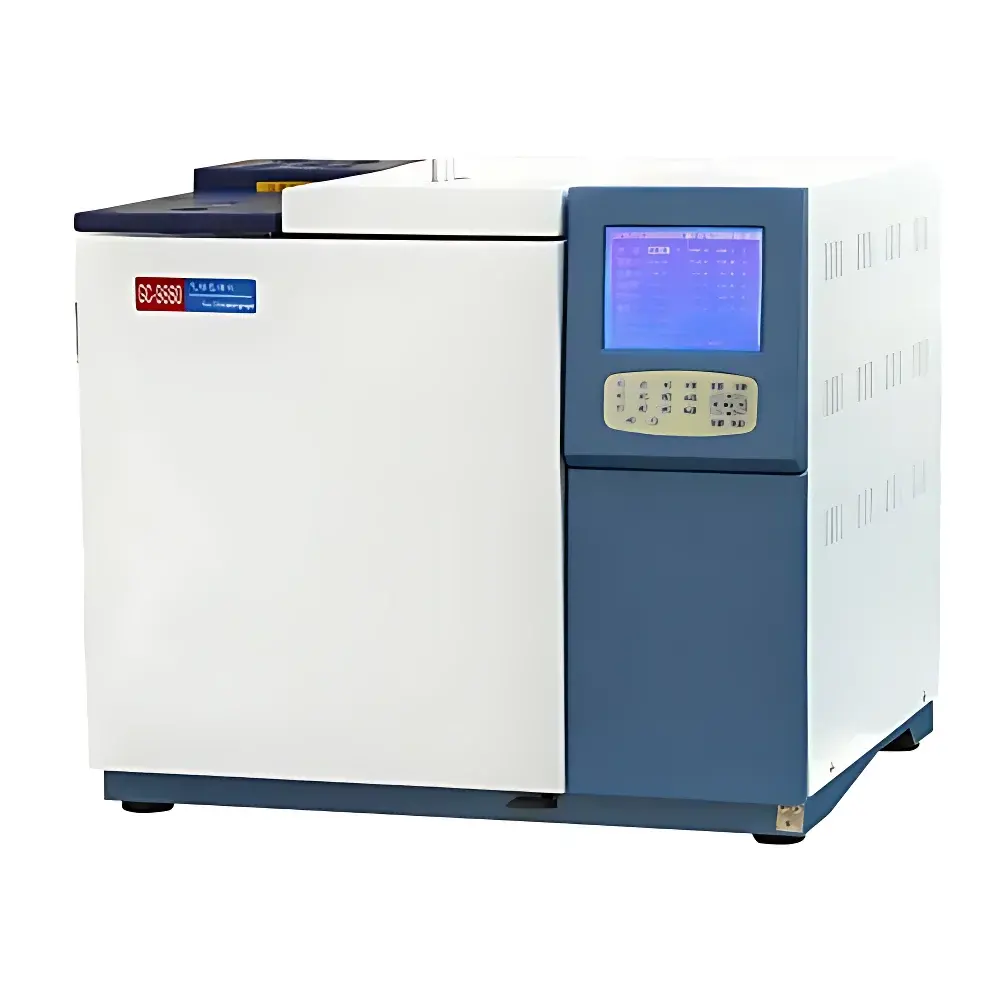
Beifen Sanpu GC-9860 Dedicated Gas Chromatograph for Fatty Acid Profile and Residual Solvent Analysis in Edible Oils
| Brand | Beifen Sanpu |
|---|---|
| Origin | Beijing, China |
| Manufacturer Type | Direct Manufacturer |
| Instrument Type | Laboratory Gas Chromatograph |
| Model | GC-9860 |
| Temperature Control Range | 100–350 °C |
| Oven Ramp Rate | 0.1–40 °C/min |
| Cool-down Time (350 → 100 °C) | ~6 min |
| Carrier Gas Flow Range & Control | 0–1200 mL/min |
| Carrier Gas Pressure Range & Control | 0–970 kPa |
| Injector Maximum Operating Temperature | 100–350 °C |
| Injector Pressure Setting Range | 0–970 kPa |
| Injector Total Flow Setting Range | 0–1000 mL/min |
| Application Field | Food Industry-Specific Analysis |
Overview
The Beifen Sanpu GC-9860 is a dedicated laboratory gas chromatograph engineered for precise, reproducible quantification of fatty acid methyl esters (FAMEs) and residual solvents—including hexane (n-hexane, commonly referred to as “No. 6 solvent”)—in edible oils. It operates on the principle of capillary gas chromatography with flame ionization detection (FID), optimized for high-resolution separation of C8–C24 saturated and unsaturated fatty acid derivatives under controlled thermal programming. The system is specifically configured to meet Chinese national standards GB 50325-2020 (for indoor environmental pollutant control, where residual solvent limits apply to food-grade packaging materials) and GB/T 5009.37–2019 (for determination of residual solvents in vegetable oils). For fatty acid profiling, the instrument requires prior derivatization of free fatty acids or triglycerides into FAMEs via alkaline-catalyzed transesterification—a mandatory step to reduce boiling points, suppress thermal degradation, and ensure chromatographic stability and peak symmetry.
Key Features
- Robust temperature-controlled oven with programmable ramp rates (0.1–40 °C/min) and rapid cool-down capability (~6 minutes from 350 °C to 100 °C), enabling high-throughput analysis of thermally labile FAMEs.
- Dual independent inlet systems: split/splitless injector with pressure and flow digital control (0–970 kPa; 0–1000 mL/min), supporting both headspace injection for residual solvent analysis and direct liquid injection for FAME quantification.
- Carrier gas control module with real-time monitoring of flow (0–1200 mL/min) and pressure (0–970 kPa), compatible with nitrogen, helium, or hydrogen as carrier gases per method requirements.
- Integrated FID detector with auto-ignition, linear dynamic range ≥10⁷, and low-noise signal processing for trace-level solvent detection down to ≤10 ppm (as specified in GB/T 5009.37).
- Modular hardware architecture supporting GLP-compliant operation: audit-trail-enabled method storage, electronic logbook, and user-access-level permissions aligned with FDA 21 CFR Part 11 readiness.
Sample Compatibility & Compliance
The GC-9860 is validated for routine analysis of six major edible oils—beef tallow, soybean oil, sunflower seed oil, olive oil, walnut oil, and almond oil—with primary fatty acid targets including palmitic acid (C16:0), stearic acid (C18:0), oleic acid (C18:1), linoleic acid (C18:2), and α-linolenic acid (C18:3). Residual solvent testing follows headspace equilibrium methodology: oil samples are sealed in 20-mL vials, equilibrated at 80 °C for 30 min, and 1.0 mL of headspace gas is injected via gas-tight syringe. All analytical procedures conform to ISO 5508 (animal and vegetable fats and oils — gas chromatographic analysis of fatty acid methyl esters) and AOAC Official Method 996.06 (fatty acids in oils and fats). Instrument qualification includes IQ/OQ documentation packages compliant with GMP/GLP laboratory environments.
Software & Data Management
The system ships with N2000 Chromatography Data System (CDS) software, supporting dual-channel acquisition, automated peak integration using tangent skim baseline correction, and calibration curve generation (linear, quadratic, or polynomial) with forced zero-intercept options. Raw data files (.CDF) are stored with embedded metadata (operator ID, method name, injection time, instrument parameters), ensuring full traceability. Audit trail functionality records all method modifications, reprocessing events, and report exports—critical for regulatory submissions under CNAS-CL01:2018 or ISO/IEC 17025 accreditation. Export formats include CSV, PDF, and XML for LIMS integration.
Applications
- Quantitative profiling of total saturated, monounsaturated (MUFA), and polyunsaturated (PUFA) fatty acids in refined and cold-pressed oils.
- Residual n-hexane verification in solvent-extracted oils, with reporting against GB/T 5009.37–2019 limit of ≤100 ppm (detection threshold ≤10 ppm).
- Quality control of oil authenticity and adulteration screening via FAME pattern recognition (e.g., elevated C18:2/C18:3 ratio indicating soybean oil dilution).
- Support for research applications in lipidomics, nutritional labeling compliance (EU Regulation No. 1169/2011), and oxidative stability index correlation studies.
FAQ
What derivatization protocol is recommended for solid fat samples such as beef tallow?
For solid fats, BF-300E-certified methanolysis is performed using anhydrous methanol, catalytic sulfuric acid (5–8 drops), and dichloromethane extraction—followed by centrifugation and upper-phase collection for 0.5 µL injection.
Is the GC-9860 compliant with USP for residual solvent testing?
While primarily configured for GB/T 5009.37, the system meets USP Class 2 solvent detection requirements when paired with a certified headspace autosampler and appropriate column (e.g., DB-624) — method validation required per laboratory SOP.
Can the instrument be upgraded for EPA Method 8260D compliance?
Yes — optional installation of a purge-and-trap concentrator and PTV inlet enables volatile organic compound (VOC) analysis per EPA 8260D, subject to additional qualification and column selection.
What maintenance intervals are recommended for the FID detector?
FID jet cleaning and collector electrode inspection are advised every 200 injections or biweekly under continuous use; hydrogen/air flow calibration should be verified monthly using certified flow meters.
Does the N2000 software support 21 CFR Part 11 electronic signatures?
N2000 supports role-based electronic signatures and audit trail export; full Part 11 compliance requires supplementary IT infrastructure controls (e.g., network authentication, backup policy) implemented at the site level.




