
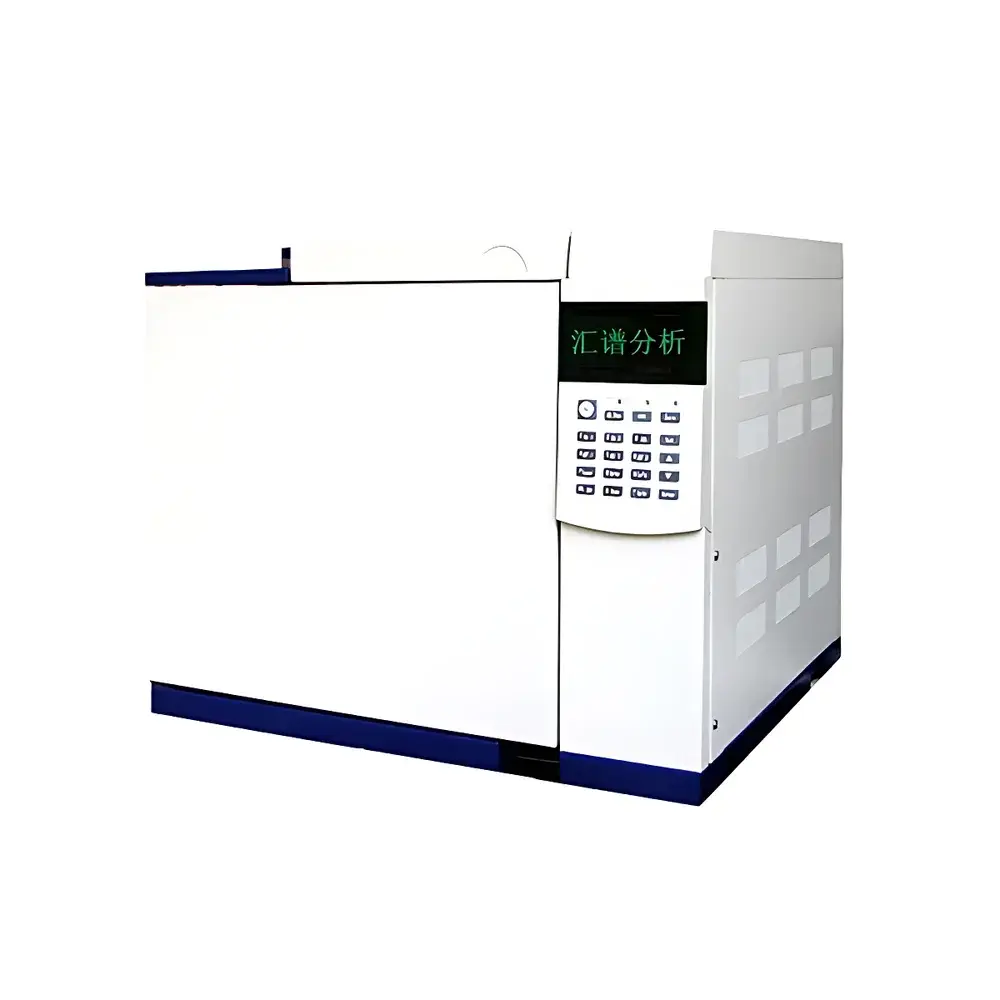
Beifen Sanpu GC-9860 Laboratory Gas Chromatograph System for Indoor Air TVOC and VOCs Analysis
| [Brand | Beifen Sanpu |
|---|---|
| Origin | Hebei, China |
| Manufacturer Type | Direct Manufacturer |
| Instrument Type | Laboratory Gas Chromatograph |
| Application Field | Environmental Air Quality Monitoring |
| Oven Temperature Range | 4 °C above ambient to 450 °C |
| Oven Ramp Rate | 0.1–40 °C/min |
| Oven Cool-down Rate | 450 °C to 50 °C in ≤8 min |
| Carrier Gas Flow Control Range | 0–1000 mL/min |
| Carrier Gas Pressure Control Range | 0–450 psi |
| Injector Maximum Temperature | 450 °C |
| Injector Pressure Setting Range | 0–500 psi |
| Injector Total Flow Setting Range | 0–1000 mL/min |
| Detection | Dual FID (Flame Ionization Detectors) |
| Column Compatibility | Packed & Capillary (including 50 m × 0.32 mm × 1 µm TVOC-specific column and 2 m × 3 mm benzene-packed column) |
| Included Accessories | ATDS-3420 Thermal Desorber, BF-300E H₂ Generator (99.999%, 0–300 mL/min), BF-2L Zero-Air Generator (oil-free, 0–2000 mL/min), HL-10 Tube Aging Unit, ZM-102B Electronic Soap Film Flowmeter, Tenax-TA & Activated Carbon Sampling Tubes (6 mm), Certified TVOC & Benzene Standard Solutions (10/100/1000 µg/mL)] |
Overview
The Beifen Sanpu GC-9860 is a fully integrated laboratory gas chromatography system engineered for precise, reproducible quantification of total volatile organic compounds (TVOC) and individual aromatic hydrocarbons—including benzene, toluene, ethylbenzene, and xylene isomers (BTEX)—in indoor air matrices. Designed in strict alignment with Chinese national standards GB/T 18883–2002 (Indoor Air Quality Standard) and GB 50325–2013 (Control Standard for Indoor Environmental Pollution of Civil Building Engineering), the system implements validated gas chromatographic separation using flame ionization detection (FID), following methodologies specified in GB/T 50325 (TVOC determination) and GB/T 11737 (benzene and BTEX analysis). The instrument’s dual-FID configuration enables simultaneous or sequential analysis of multiple analyte classes without hardware reconfiguration, while its robust oven architecture—capable of programmable temperature ramps from 0.1 to 40 °C/min and rapid cool-down (<8 min from 450 °C to 50 °C)—supports high-throughput compliance testing across diverse sample loads.
Key Features
- Temperature-programmable column oven with ±0.1 °C isothermal stability and linear ramp precision of ±1% over full range (4 °C above ambient to 450 °C)
- Dual independent FID detectors with auto-ignition, flame-out detection, and real-time baseline compensation
- Electronic pressure and flow control (EPC/EFC) for carrier gas (N₂, He, or H₂), make-up gas, and detector gases—ensuring retention time reproducibility <0.02 min RSD
- Split/splitless injector with pressure-programmable operation, maximum operating temperature of 450 °C, and compatibility with both packed (2 m × 3 mm benzene column) and capillary columns (e.g., 50 m × 0.32 mm × 1 µm TVOC column)
- Integrated thermal desorption unit (ATDS-3420) with 20-sample capacity, programmable desorption/cooling cycles, and cold trap focusing for trace-level VOC preconcentration
- Onboard hydrogen generator (BF-300E; 99.999% purity, 0–300 mL/min) and zero-air generator (BF-2L; oil-free, 0–2000 mL/min) eliminate external gas cylinder dependency and ensure consistent detector performance
- Calibration-ready accessories: certified TVOC multi-component standard (9 analytes, three concentration levels), electronic soap-film flowmeter (ZM-102B), and tube aging unit (HL-10) for Tenax-TA and activated carbon sorbent tube regeneration
Sample Compatibility & Compliance
The GC-9860 system is validated for use with standardized sampling media per GB 50325–2013 and GB/T 18883–2002, including 6-mm stainless steel or glass Tenax-TA tubes for TVOC collection and charcoal tubes for benzene. Sample introduction is performed via thermal desorption (ATDS-3420) or direct liquid injection, depending on analyte volatility and required sensitivity. All analytical protocols adhere to ISO/IEC 17025–2017 general requirements for competence of testing and calibration laboratories. Data acquisition and reporting support audit trails compliant with GLP principles, and raw chromatogram files are timestamped and digitally signed to satisfy internal QA/QC documentation requirements. While not FDA 21 CFR Part 11–certified out-of-the-box, the system architecture permits integration with validated LIMS environments where electronic signature and data integrity controls are implemented at the enterprise level.
Software & Data Management
The GC-9860 operates with dedicated GC-9860 Chromatography Workstation software (v3.2+), supporting method development, sequence definition, peak integration using tangent skim or valley-to-valley algorithms, and automated calibration curve generation (linear, quadratic, or weighted least-squares). Raw data (.DAT) and processed reports (.PDF/.XLSX) are stored in a structured local database with user-access logging. Software includes built-in validation tools for system suitability testing (SST): resolution (Rs ≥ 2.0 between m/p-xylene), tailing factor (Tf ≤ 2.0), and %RSD of retention time (<0.5%) and peak area (<3.0%) across replicate injections. Export formats comply with ASTM E2655–22 (Standard Guide for Reporting Results of Analysis of Water) metadata conventions, facilitating cross-platform data exchange in environmental testing laboratories.
Applications
- Regulatory compliance testing for residential, commercial, and institutional buildings under GB 50325–2013 (mandatory for竣工验收 acceptance) and GB/T 18883–2002 (health-based benchmarking)
- Post-renovation indoor air quality assessment, particularly following installation of adhesives, paints, composite wood products, and synthetic textiles
- Occupational exposure evaluation in office environments, schools, and healthcare facilities
- Method verification and proficiency testing in CNAS-accredited environmental laboratories
- Research applications in indoor chemistry, source apportionment of VOC emissions, and ventilation efficacy studies
FAQ
What sampling standards does this system support?
It fully supports GB/T 50325–2013 (Tenax-TA tubes, 10 L air volume, thermal desorption) and GB/T 11737–2007 (charcoal tubes, CS₂ desorption, direct injection).
Can the system quantify formaldehyde or ammonia?
No—formaldehyde and ammonia require spectrophotometric analysis per GB/T 18204.26 and GB/T 18204.25; the included 723PC spectrophotometer handles those determinations separately.
Is the thermal desorber compatible with US EPA TO-17 methodology?
Yes—the ATDS-3420 meets all hardware requirements for TO-17, including cold trap temperature control (–30 °C to 400 °C), desorption ramp rates (1–40 °C/sec), and inert flow path design.
What maintenance intervals are recommended for routine operation?
FID jet cleaning every 200 injections; column trimming every 500 runs; GC inlet liner replacement every 100 injections; carrier gas filter replacement every 6 months or 1000 h runtime.
Does the system include validation documentation for laboratory accreditation?
Yes—factory-installed IQ/OQ documentation, system suitability test templates, and raw data audit trail logs are provided in English and Chinese for CNAS or equivalent accreditation submissions.




