
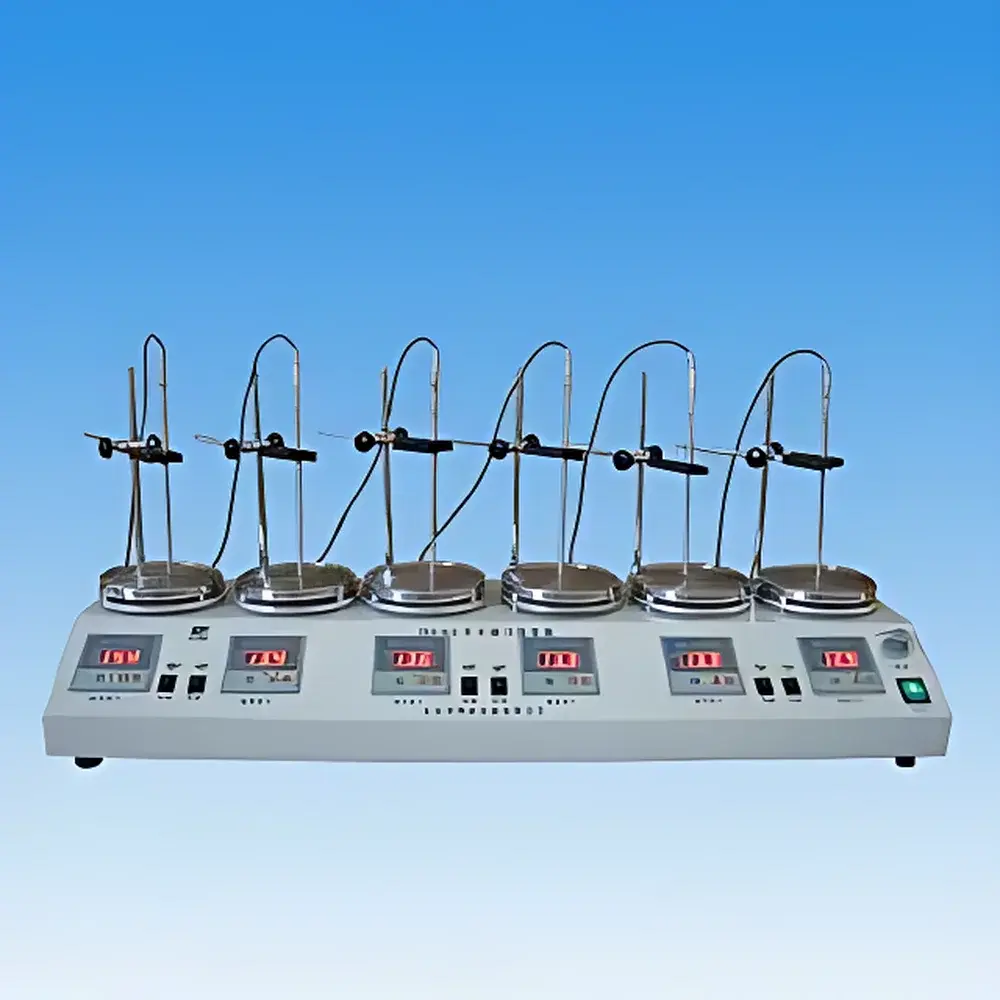
Beifen Sanpu HJ-6A Digital Display Constant-Temperature Multi-Position Magnetic Stirrer
| Brand | Beifen Sanpu |
|---|---|
| Origin | Beijing, China |
| Manufacturer Type | Direct Manufacturer |
| Product Category | Domestic |
| Model | HJ-6A |
| Pricing | Available Upon Request |
| Power Supply | 220 V AC, 50 Hz |
| Motor Speed Range | 0–2400 rpm (Continuously Adjustable) |
| Total Motor Power | 6 × 25 W |
| Total Heating Power | 6 × 200 W |
| Temperature Control Range | Ambient to 100 °C (Digital PID Display & Regulation) |
| Construction | Cold-Rolled Steel Housing with High-Temperature Baked Enamel Finish |
| Safety Compliance | Grounded Design, Over-Temperature Protection, Dual-Function Interlock (Heating Disabled Without Stirring) |
Overview
The Beifen Sanpu HJ-6A Digital Display Constant-Temperature Multi-Position Magnetic Stirrer is an engineered solution for parallel sample preparation in analytical, quality control, and research laboratories. Designed around the principle of magnetic coupling—where a rotating permanent magnet array beneath the heated platform induces synchronous rotation of PTFE-coated stir bars immersed in vessels—the instrument delivers precise, contactless agitation across six independent positions. Its integrated digital PID temperature control system ensures stable thermal environments during extended mixing protocols, making it suitable for applications requiring simultaneous heating and stirring under reproducible conditions. The device adheres to fundamental electrical safety standards for laboratory equipment, including mandatory grounding, over-temperature cutoff, and mechanical interlock logic that prevents heater activation unless motor rotation is confirmed—a design feature aligned with IEC 61010-1 requirements for laboratory electrical apparatus.
Key Features
- Six independently operable stirring stations, each equipped with dedicated speed and temperature controls for true parallel processing
- Brushless permanent-magnet DC motors rated for >10,000 hours of continuous no-load operation, delivering low-vibration, near-silent performance across the full 0–2400 rpm range
- Digital LED display with real-time feedback for both setpoint and actual temperature (±1 °C accuracy typical), enabling traceable thermal management per vessel
- Robust cold-rolled steel chassis fabricated via precision spot welding and finished with high-temperature baked enamel coating for long-term resistance to chemical splashes and mechanical abrasion
- Integrated safety architecture: automatic thermal cutoff at 110 °C, motor-heater interlock preventing heating without agitation, and grounded chassis design compliant with Class I protection requirements
- Modular accessory kit includes six stainless-steel support pillars, six PTFE-coated stir bars (optimized for viscosity ranges up to 500 mPa·s), and certified power cord with molded earth pin
Sample Compatibility & Compliance
The HJ-6A accommodates standard laboratory glassware—including 50 mL to 1000 mL beakers and Erlenmeyer flasks—on its chemically inert ceramic-coated aluminum plate. Each station accepts stir bars up to 40 mm in length and supports liquids with viscosities up to 500 mPa·s at 25 °C. While not certified to ISO/IEC 17025 or GLP as a standalone measurement device, the unit’s digital temperature logging capability (via optional RS232 interface) supports data integrity practices required under FDA 21 CFR Part 11 when paired with validated third-party software. Its construction meets RoHS Directive 2011/65/EU material restrictions, and all electrical components conform to CE marking prerequisites under the Low Voltage Directive (2014/35/EU).
Software & Data Management
The HJ-6A operates as a standalone analog-digital hybrid instrument with no embedded firmware or network connectivity. Temperature setpoints and motor speeds are configured manually via front-panel rotary encoders and push-button interfaces. For laboratories requiring audit-ready records, the optional RS232 serial port enables integration with LabVIEW, MATLAB, or custom SCADA systems for time-stamped acquisition of setpoint, actual temperature, and operational status per channel. This interface supports ASCII-based command-response protocol, allowing remote initiation, parameter adjustment, and fault reporting—facilitating alignment with GxP-aligned electronic record workflows when deployed within validated environments.
Applications
- Simultaneous digestion and extraction of environmental samples (e.g., soil leachates, wastewater sludge) prior to ICP-MS or AAS analysis
- Buffer equilibration and reagent dissolution in pharmaceutical QC labs, particularly during USP dissolution method development
- Catalyst suspension and homogeneous mixing in synthetic chemistry workflows involving heterogeneous reactions
- Standardization of calibration standards across multiple concentration levels in metrology laboratories
- Pre-analytical sample homogenization for microbiological culture media preparation in clinical and food safety testing facilities
FAQ
What is the maximum recommended operating duration at full speed?
Continuous operation at 2400 rpm is limited to 4 hours per cycle; for extended use, maintain speeds ≤1200 rpm to ensure thermal stability and motor longevity.
Can the HJ-6A be used with corrosive solvents such as concentrated acids or halogenated organics?
The PTFE-coated stir bars and ceramic-coated hotplate surface provide broad chemical resistance, but direct contact with fuming nitric acid, molten alkali metals, or anhydrous HF is strictly prohibited.
Is temperature calibration traceable to NIST or other national standards?
The unit ships with factory calibration documentation; end-users may perform in-house verification using a calibrated PT100 probe—though formal recalibration requires service by authorized Beifen Sanpu technicians.
Does the instrument support programmable ramp-and-soak temperature profiles?
No—temperature control is static setpoint-only; dynamic profiling requires external controller integration via the RS232 interface.
What maintenance intervals are recommended for optimal performance?
Inspect stir bar integrity and clean the hotplate surface after each use; verify grounding continuity and inspect power cord insulation annually per institutional EHS guidelines.



