
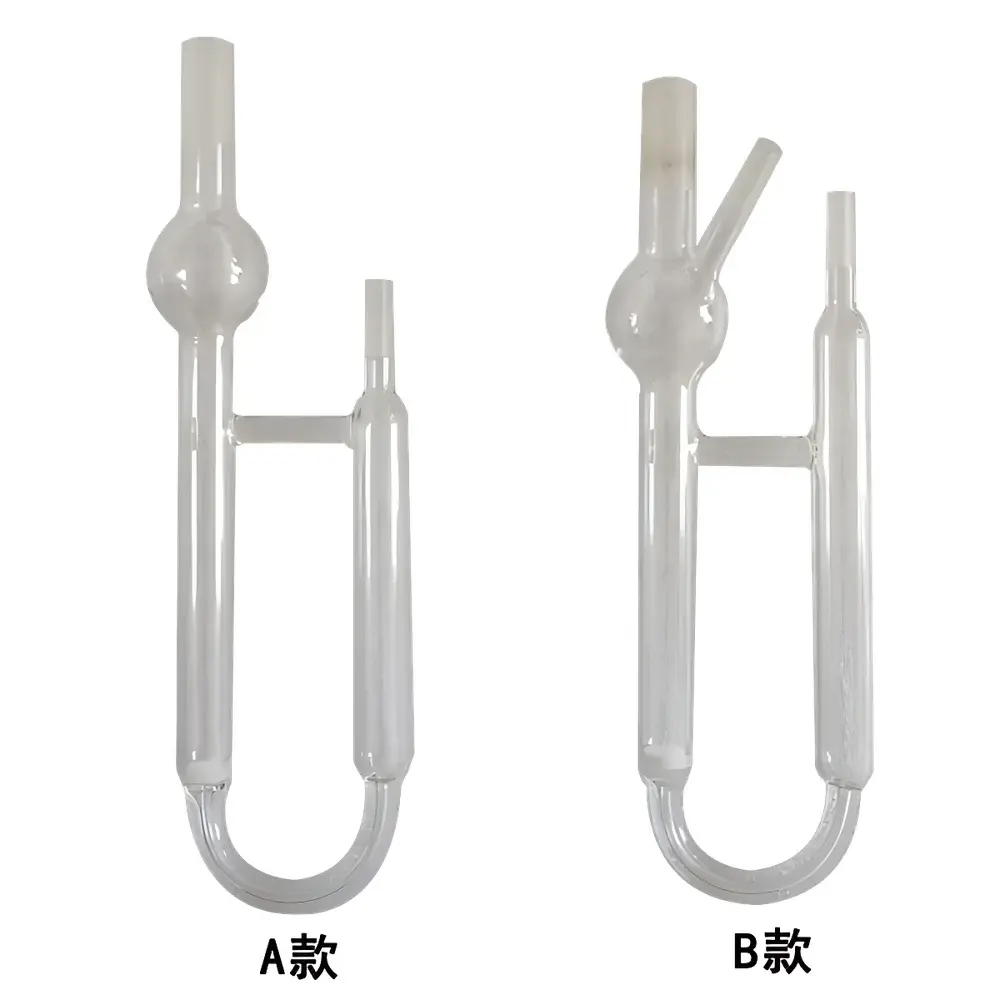
Beifen Sanpu U-shaped Glass Tube Automated Purge and Trap Concentrator
| Brand | Beifen Sanpu |
|---|---|
| Model | 5 mL U-Tube |
| Origin | Beijing, China |
| Manufacturer Type | Direct Manufacturer |
| Instrument Category | Domestic (China-Made) |
| Capacity | 5 mL |
| Pricing | Available Upon Request |
Overview
The Beifen Sanpu U-shaped Glass Tube Automated Purge and Trap Concentrator is a dedicated sample preparation system engineered for the quantitative extraction, concentration, and transfer of volatile organic compounds (VOCs) from aqueous, solid, or semi-solid matrices prior to gas chromatographic analysis. It operates on the principle of dynamic headspace purging: an inert carrier gas (typically helium or nitrogen) is continuously bubbled through the sample, volatilizing target analytes; the evolved vapors are then swept into a sorbent trap where VOCs are selectively adsorbed at ambient or chilled conditions. Following purge completion, the trap undergoes rapid thermal desorption—typically in a programmable furnace—releasing concentrated analytes as a narrow band into the GC inlet via a heated transfer line. This instrument integrates precise temperature control, mass-flow regulated purge gas delivery, and fully automated sequential operation—including vial handling, spiking, purging, trapping, dry-purging, and desorption—ensuring high reproducibility and minimal analyst intervention.
Key Features
- U-shaped fused-silica glass trap configuration: Provides uniform flow dynamics, minimizes channeling, and eliminates metal-catalyzed degradation of reactive VOCs (e.g., chlorinated ethenes, aldehydes).
- Integrated 5 mL sample vial capacity: Compatible with standard 40 mL EPA-compliant vials; accommodates aqueous samples up to 25 mL and soil/sediment slurries with appropriate matrix modifiers.
- Programmable purge parameters: Adjustable purge time (1–30 min), purge temperature (room temp to 90 °C), and gas flow rate (10–60 mL/min) with real-time mass flow monitoring.
- Two-stage trap cooling: Peltier-cooled trap (-10 °C to +5 °C) ensures efficient adsorption of low-boiling compounds (e.g., vinyl chloride, methylene chloride); optional liquid nitrogen assist available for sub-ambient trapping.
- High-fidelity thermal desorption: Rapid heating ramp (up to 1000 °C/min) and precise trap temperature control (±0.5 °C) yield sharp, focused analyte bands for optimal GC peak shape and sensitivity.
- Full automation with robotic arm: Supports unattended batch processing of up to 40 samples; includes auto-spiking capability for internal/external standards and surrogate recovery assessment.
Sample Compatibility & Compliance
The system is validated for use with EPA Methods 502.2, 524.2, 524.4, 8260D, and 8270E, as well as ISO 15681-2 and ASTM D3690 for VOC analysis in drinking water, wastewater, groundwater, soils, and leachates. Its all-glass fluidic path (including U-tube trap, transfer lines, and purge chamber) eliminates adsorptive losses and carryover—critical for trace-level quantitation of polar and reactive species. The instrument architecture supports GLP/GMP-aligned workflows: audit trail logging, user access levels, electronic signatures (via optional LIMS integration), and full compliance with FDA 21 CFR Part 11 requirements when paired with validated software.
Software & Data Management
Controlled via Beifen Sanpu’s proprietary Windows-based PurgeTrak™ software, the system provides intuitive method setup, real-time status monitoring (gas flow, temperatures, valve positions), and automated calibration verification (e.g., retention time locking, spike recovery tracking). All method parameters, run logs, and diagnostic data are timestamped and stored in encrypted SQLite databases. Raw data export supports .csv and .txt formats for third-party chromatography data systems (CDS); optional API enables bidirectional communication with Thermo Chromeleon, Agilent OpenLab, and Waters Empower platforms.
Applications
- Regulatory environmental testing: Quantification of BTEX, trihalomethanes, haloacetic acids, and pesticides in potable water per US EPA and EU Drinking Water Directive requirements.
- Soil vapor intrusion studies: Analysis of chlorinated solvents (PCE, TCE) and petroleum hydrocarbons in vadose zone gas extracts.
- Pharmaceutical residual solvent testing: Determination of Class 2 and 3 solvents (e.g., acetone, dichloromethane, toluene) in drug substances and products per ICH Q3C guidelines.
- Food and beverage safety: Screening for off-flavor compounds (e.g., geosmin, 2-methylisoborneol) and packaging migrants (e.g., styrene, acetaldehyde) in bottled water and dairy products.
- Forensic toxicology: Detection of volatile intoxicants (e.g., ethanol, isopropanol, acetone) in blood and urine specimens using headspace-GC/MS confirmation.
FAQ
What sample matrices can be processed directly without derivatization or filtration?
Aqueous samples (drinking water, wastewater), homogenized soils (≤10 g with 10 mL reagent water), and solid tissues (e.g., fish liver) suspended in saline buffer are supported. High-particulate or viscous samples require centrifugation or filtration prior to loading.
Is the U-shaped trap replaceable, and what sorbent configurations are available?
Yes—the U-tube is a field-replaceable consumable. Standard configurations include Tenax TA/Carboxen 1000/Carbopack B (for C2–C12 VOCs) and graphitized carbon black (GCB)/Tenax TA (for polar compounds and sulfur species). Custom sorbent packing is available upon request.
Does the system support internal standard addition during the purge cycle?
Yes—integrated liquid autosampler allows programmable spiking of deuterated or ¹³C-labeled internal standards either pre-purge or post-purge but pre-desorption, enabling accurate response factor correction and quantitation robustness.
How is carryover mitigated between runs?
A multi-step bake-out protocol is executed after each desorption: high-temperature trap bake (320 °C for 5 min), extended dry-purge (60 sec at 60 mL/min), and cold trap re-equilibration—all automatically sequenced and logged.
Can the instrument be integrated into a laboratory’s existing LIMS environment?
Yes—via HL7 or ASTM E1384-compliant interface modules; audit trail data, sample IDs, and QC results can be pushed to LIMS in real time with configurable metadata mapping.






