
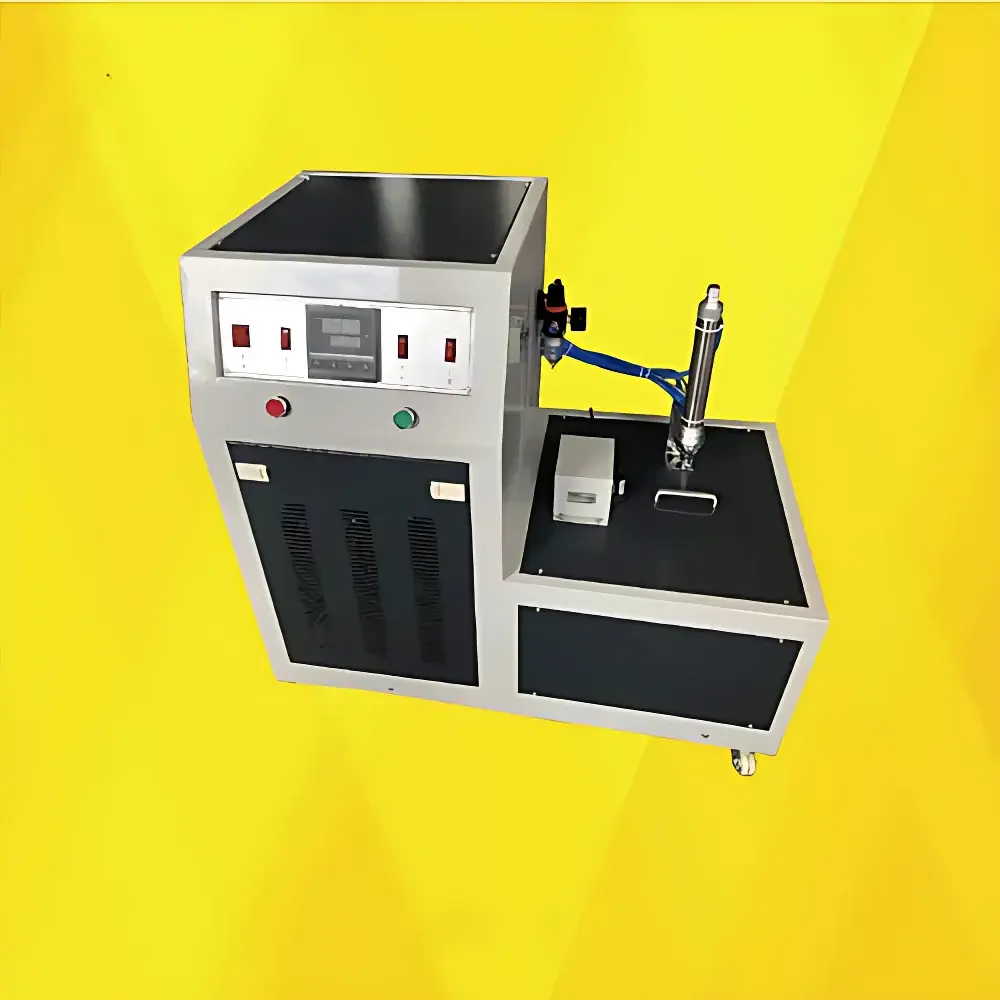
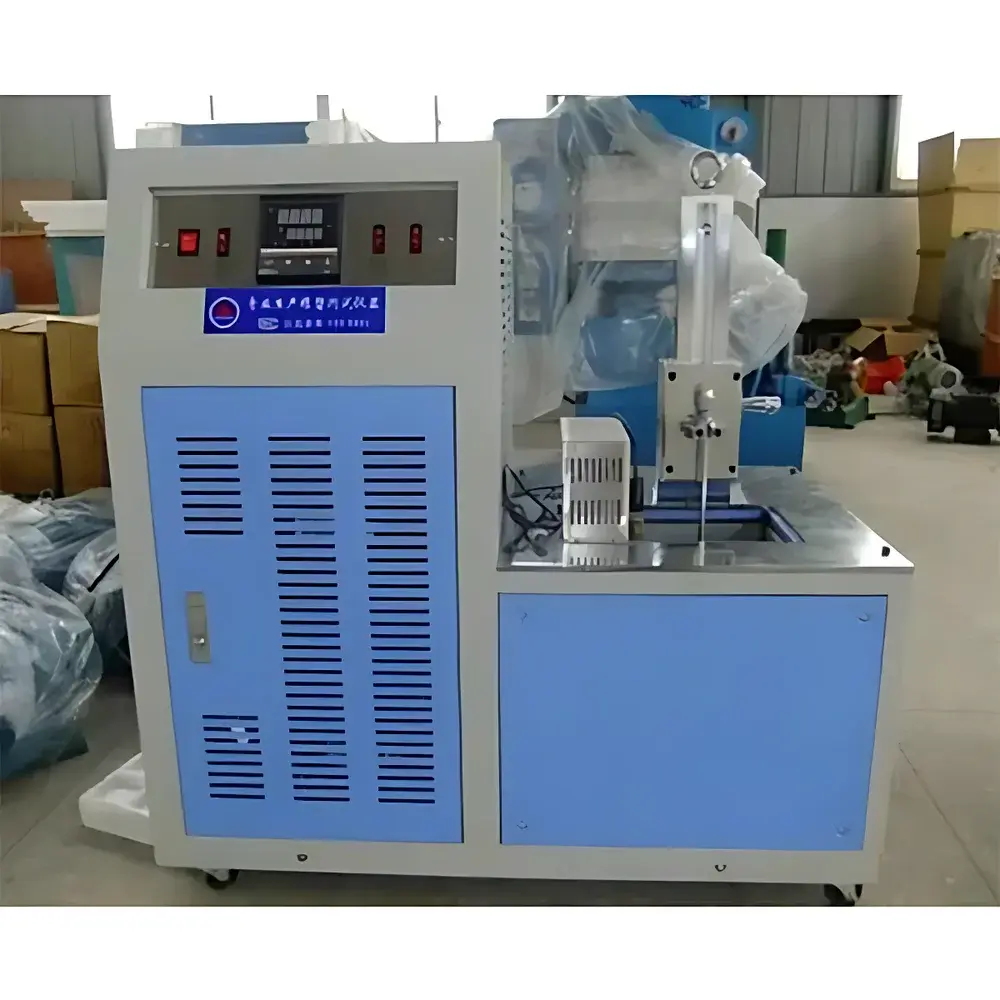
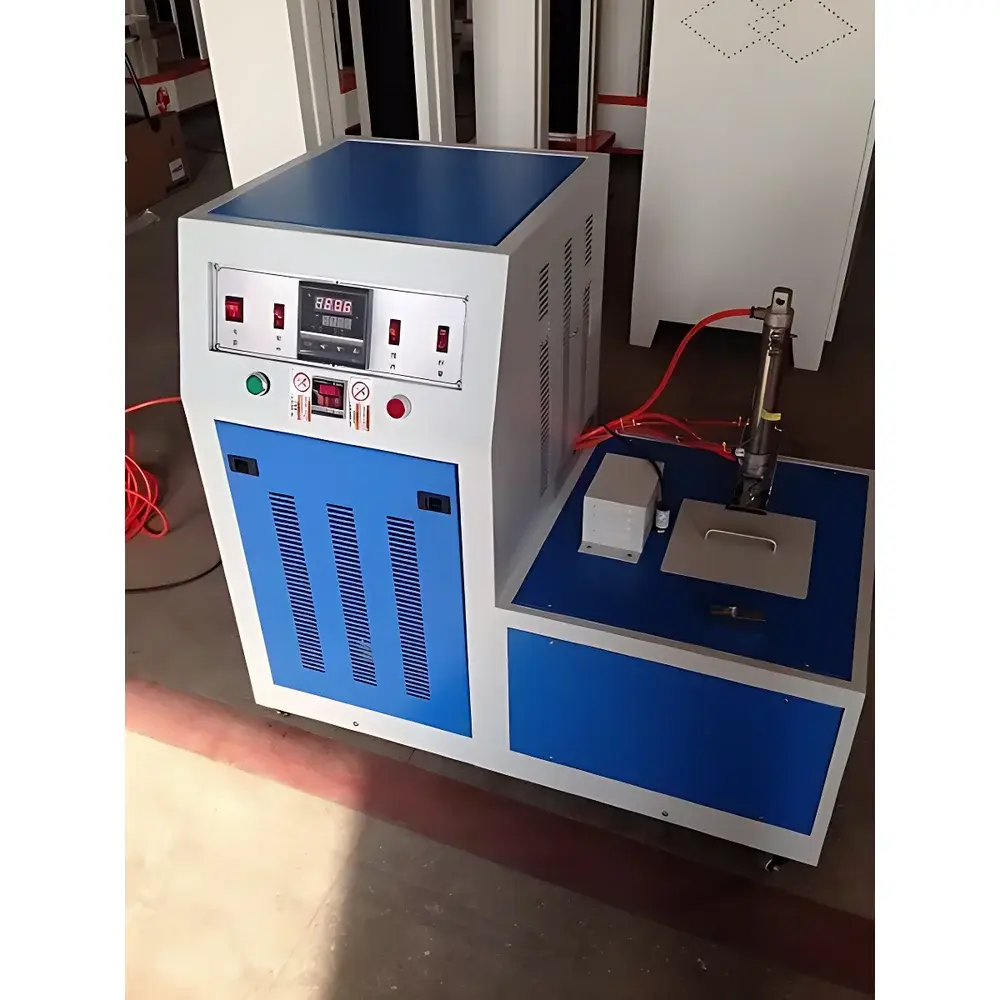
Beiguang BWD9 Low-Temperature Brittleness Impact Tester
| Brand | Beiguang Precision Instrument |
|---|---|
| Origin | Beijing, China |
| Manufacturer Type | Direct Manufacturer |
| Product Category | Domestic |
| Model | BWD9 |
| Impact Energy | 1 J |
| Impact Velocity | 2 m/s ±0.2 m/s |
| Pendulum Torque (Impact Constant) | 1 N·m |
| Temperature Control Stability | <±0.5 ℃ over 3 min after thermal equilibrium |
| Specimen Holder to Impactor Center Distance | 11 ±0.5 mm |
| Cold Bath Volume | 700 mL |
| Operating Temperature Range | −70 ℃ to 0 ℃ (selectable: −60 ℃, −65 ℃, or −70 ℃ lower limit) |
| Power Consumption | 1100 W |
| Dimensions (W×D×H) | 720 × 700 × 1380 mm |
Overview
The Beiguang BWD9 Low-Temperature Brittleness Impact Tester is a precision-engineered instrument designed for determining the brittle transition temperature (Tb) of vulcanized rubber, thermoplastic elastomers, and other polymeric materials under controlled cryogenic conditions. It operates on the principle of single-specimen impact testing in accordance with standardized thermal–mechanical protocols: specimens are conditioned at defined sub-ambient temperatures in a circulating ethanol bath, then subjected to a calibrated pendulum impact within a tightly constrained time window. The brittle temperature is defined as the highest temperature at which a specimen exhibits visible fracture—typically macroscopic cracking or complete separation—upon impact. This measurement directly correlates with the material’s resistance to low-temperature service-induced failure and serves as a critical parameter in material qualification for aerospace seals, automotive gaskets, cryogenic piping linings, and medical device components exposed to refrigerated storage or transport. The instrument implements a robust mechanical architecture featuring a gravity-driven impactor, fixed-height drop geometry, and thermally isolated cold bath to ensure high reproducibility across sequential trials.
Key Features
- Programmable temperature range from −70 ℃ to 0 ℃, selectable in three configurations (−60 ℃, −65 ℃, or −70 ℃ lower limits), with stability maintained at <±0.5 ℃ over 3-minute equilibration periods
- Precision-machined impact assembly delivering consistent impact velocity of 2 m/s ±0.2 m/s, traceable to national metrological standards
- 700 mL stainless-steel cold bath with optimized geometry to maintain uniform thermal gradient and minimize convection-induced fluctuations
- Digital PID temperature controller with real-time display, adjustable ramp rate, and audible/visual alarm for out-of-tolerance excursions
- Adjustable specimen holder accommodating standard dumbbell- or rectangular-section specimens per GB/T 1682–1994 and GB/T 15256–1994
- Integrated timing circuitry synchronized with thermal stabilization to enforce strict conditioning durations: 5.0 ±0.5 min for rubber, 3.0 ±0.5 min for plastics
- Compact footprint (720 × 700 × 1380 mm) suitable for ISO 17025-accredited laboratory environments with limited floor space
Sample Compatibility & Compliance
The BWD9 accommodates specimens conforming to ISO 2818 (cryogenic machining), ASTM D746 (standard test method for brittleness temperature of plastics), and GB/T 1682–1994 (vulcanized rubber – determination of brittle temperature – single test piece method). It supports both single-specimen and multi-specimen comparative evaluation workflows. All operational parameters—including thermal soak duration, impact timing, and post-test visual assessment criteria—are aligned with GLP-compliant documentation practices. The instrument’s design meets mechanical safety requirements per IEC 61000-6-2 (immunity) and IEC 61000-6-4 (emissions), and its temperature control subsystem is validated against NIST-traceable reference thermometers. For regulated industries, raw test logs—including timestamped temperature readings, impact actuation events, and operator annotations—can be exported in CSV format to support FDA 21 CFR Part 11 audit trails when paired with validated third-party LIMS integration.
Software & Data Management
While the BWD9 operates via hardware-integrated digital controls (no embedded OS), it supports external data capture through RS-232 or USB-to-serial interface. Optional PC-based acquisition software enables automated logging of bath temperature vs. time, impact event timestamps, and pass/fail classification per specimen. Exported datasets include metadata fields such as operator ID, ambient lab temperature, batch number, and calibration certificate expiry date—facilitating traceability in quality management systems compliant with ISO 9001 and IATF 16949. All firmware updates are delivered via signed binary packages with SHA-256 checksum verification to prevent unauthorized modification.
Applications
- Qualification of EPDM, NBR, and FKM elastomers for low-temperature sealing applications in automotive HVAC systems and fuel lines
- Comparative evaluation of plasticizer efficiency in PVC formulations intended for winter-grade cable insulation
- Batch release testing of silicone elastomer medical tubing per USP extractables profiling prerequisites
- Failure analysis of polymer composites exhibiting unexpected fracture during cold-chain logistics validation
- Research into structure–property relationships between crystallinity, glass transition (Tg), and brittle point in biodegradable polyesters (e.g., PLA, PHA)
- Supporting ASTM D746–22 Annex A1 interlaboratory study protocols for inter-site reproducibility assessment
FAQ
What cryogenic medium is recommended for operation?
Industrial-grade anhydrous ethanol is specified per GB/T 1682–1994; methanol or acetone may be used only after full revalidation of thermal homogeneity and chemical compatibility.
Is the instrument compatible with multi-specimen testing per GB/T 15256–1994?
Yes—the clamping fixture allows sequential positioning of up to five specimens, though each must undergo individual thermal conditioning and impact per standard protocol.
How is temperature calibration verified?
Calibration requires immersion of a NIST-traceable platinum resistance thermometer (Class A, ±0.1 ℃) at the specimen plane location; deviation exceeding ±0.3 ℃ triggers recalibration of the PID loop parameters.
Does the system meet requirements for ISO/IEC 17025 accreditation?
Yes—provided users maintain documented procedures for periodic verification using certified reference materials (e.g., SRM 1965a), and retain records of all maintenance, calibration, and environmental monitoring.
Can the impact energy be adjusted beyond 1 J?
No—the BWD9 is configured exclusively for 1 J nominal impact energy to ensure strict compliance with GB/T 1682–1994 and ASTM D746 resolution requirements; higher-energy variants require separate model certification.



