
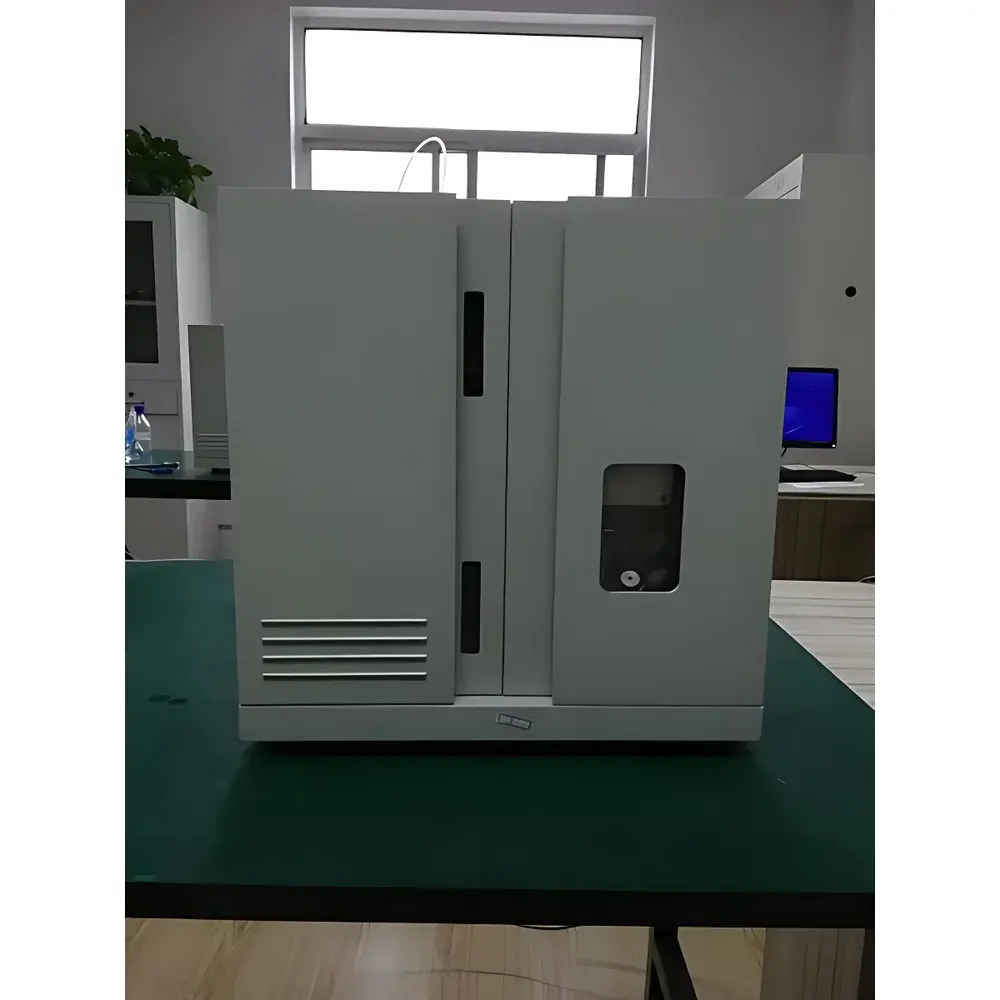
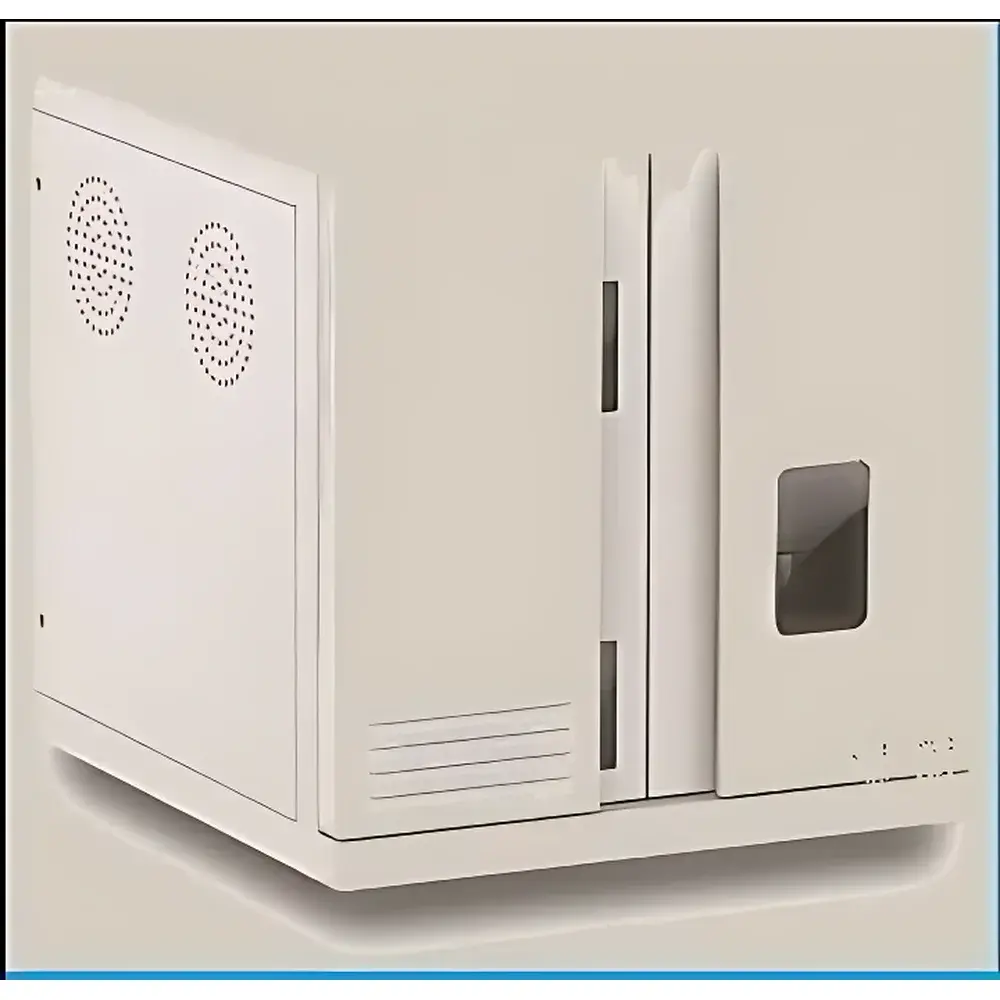
Beiguang Jingyi BC-1000A Laboratory Total Organic Carbon (TOC) Analyzer
| Brand | Beiguang Jingyi / All Precision Instrument |
|---|---|
| Origin | Beijing, China |
| Manufacturer Type | Direct Manufacturer |
| Instrument Type | Laboratory TOC Analyzer |
| Model | BC-1000A |
| Detection Principle | Non-Dispersive Infrared Absorption (NDIR) |
| Oxidation Method | UV/Persulfate Oxidation |
| Measurement Range | 0–3000 mg/L as C |
| Salinity Tolerance | ≤85 g/L |
| Detection Limit | 50 µg/L as C |
| Repeatability | ≤±2% RSD (for TOC at 100 mg/L) |
| Oxygen Purity Requirement | ≥99.995% |
| Compliance | FDA 21 CFR Part 11, GMP Computerized System Validation Requirements |
Overview
The Beiguang Jingyi BC-1000A is a laboratory-grade Total Organic Carbon (TOC) analyzer engineered for precise, trace-level quantification of organic carbon in aqueous environmental and process water matrices. It employs the widely accepted NDIR (Non-Dispersive Infrared) detection principle following high-efficiency oxidation—specifically UV/persulfate oxidation under acidic conditions—to convert dissolved organic carbon into CO2, which is then quantified via infrared absorption at 4.26 µm. This method conforms to international standard protocols including ASTM D5903, ISO 8245, and USP , and supports both direct NPOC (Non-Purgeable Organic Carbon) and differential TC–TIC (Total Carbon minus Total Inorganic Carbon) measurement modes. The instrument integrates a fully automated fluidic path with acid reagent injection, gas-liquid separation, catalytic CO2 drying, and temperature-stabilized NDIR detection—ensuring high reproducibility, low carryover (<1%), and robust performance across complex wastewater and industrial effluent samples.
Key Features
- UV/persulfate oxidation system operating at ambient pressure and controlled pH, optimized for rapid, complete oxidation of recalcitrant organics without requiring high-temperature combustion or catalyst replacement
- High-sensitivity NDIR detector featuring 24-bit A/D conversion, 32-bin signal processing, and active thermal stabilization (±0.01 °C), delivering stable baseline response and extended linear dynamic range
- Dual-mode operation: configurable for NPOC (acidification + sparging prior to oxidation) or TC/TIC differential analysis (parallel acidification and oxidation paths)
- Integrated halogen and moisture removal module with selective membrane and desiccant traps, minimizing spectral interference and extending optical cell lifetime
- Real-time process monitoring: live display of liquid level, reaction temperature, flow rate, oxidation status, and CO2 signal amplitude with automatic drift compensation
- Modular hardware architecture enabling field-upgradable firmware, audit-trail-enabled calibration logging, and user-accessible diagnostic interfaces
Sample Compatibility & Compliance
The BC-1000A accommodates a broad spectrum of water matrices—including municipal wastewater, industrial discharge, groundwater, surface water, and purified process water—with demonstrated tolerance to chloride concentrations up to 85 g/L. Its oxidation chemistry avoids chloride interference through optimized persulfate activation kinetics and post-oxidation gas-phase purification. The system meets regulatory requirements for data integrity and system validation under FDA 21 CFR Part 11, including electronic signatures, role-based user authentication, immutable audit trails for all analytical events (method changes, calibrations, sample injections), and full ALCOA+ (Attributable, Legible, Contemporaneous, Original, Accurate, Complete, Consistent, Enduring, Available) compliance. It supports GLP/GMP environments through IQ/OQ documentation packages and is compatible with LIMS integration via ASTM E1384-compliant ASCII output or OPC UA protocol.
Software & Data Management
The BC-1000A operates under a dedicated Windows-based control platform supporting multi-user workflows, method library management, and customizable report templates (PDF/CSV/XLSX). Software features include real-time statistical calculation of mean, SD, %RSD, and recovery rates per batch; automated calibration curve generation with quadratic or linear regression options; and built-in system suitability checks (e.g., blank drift, sensitivity verification, carryover test). All raw detector signals, method parameters, operator IDs, timestamps, and environmental logs are stored in encrypted SQLite databases with SHA-256 hashing. Electronic signatures adhere to PKI standards, and audit trail export includes hash-verified chronological records compliant with Annex 11 and EU GMP Chapter 4 requirements.
Applications
This analyzer serves critical quality control and regulatory reporting functions across multiple sectors:
- Environmental laboratories performing EPA Method 415.3, ISO 8245, and China HJ 501-2009 compliance testing for wastewater discharge permits
- Pharmaceutical manufacturing sites monitoring purified water (PW) and water-for-injection (WFI) systems per USP and Ph. Eur. 2.2.44
- Power generation facilities tracking organic fouling potential in boiler feedwater and condensate return streams
- Research institutions studying carbon cycling in bioremediation trials or evaluating advanced oxidation process (AOP) efficiency
- Municipal utilities validating membrane filtration performance and disinfection by-product (DBP) precursor removal
FAQ
What oxidation method does the BC-1000A use, and why is it suitable for high-salinity wastewater?
The BC-1000A uses UV/persulfate oxidation under acidic conditions—a low-temperature, non-combustion approach that minimizes chloride interference and eliminates need for ceramic combustion tubes or platinum catalysts. Its halogen scrubbing module and optimized reagent stoichiometry enable reliable operation in saline matrices up to 85 g/L Cl⁻.
Can the instrument differentiate between TOC and NPOC?
Yes. It supports both differential (TC − TIC) and direct (NPOC) measurement modes. NPOC mode includes automated acidification, sparging, and oxidation steps within a single fluidic sequence, with programmable sparge duration and flow rate.
Does the system comply with FDA 21 CFR Part 11 requirements?
Yes. It implements full electronic signature enforcement, time-stamped audit trails with immutable event logging, role-based access control, and cryptographic hash verification of all archived data sets.
What is the detection limit, and how is it verified?
The stated detection limit is 50 µg/L as carbon, determined per ICH Q2(R2) guidelines using serial dilutions of potassium hydrogen phthalate (KHP) standard and confirmed by signal-to-noise ratio ≥3 in triplicate measurements.
Is remote diagnostics or LIMS connectivity supported?
Yes. The instrument provides OPC UA server functionality and ASCII-based data export for seamless integration with major LIMS platforms. Remote firmware updates and diagnostic session initiation require authenticated TLS-secured connections.







