
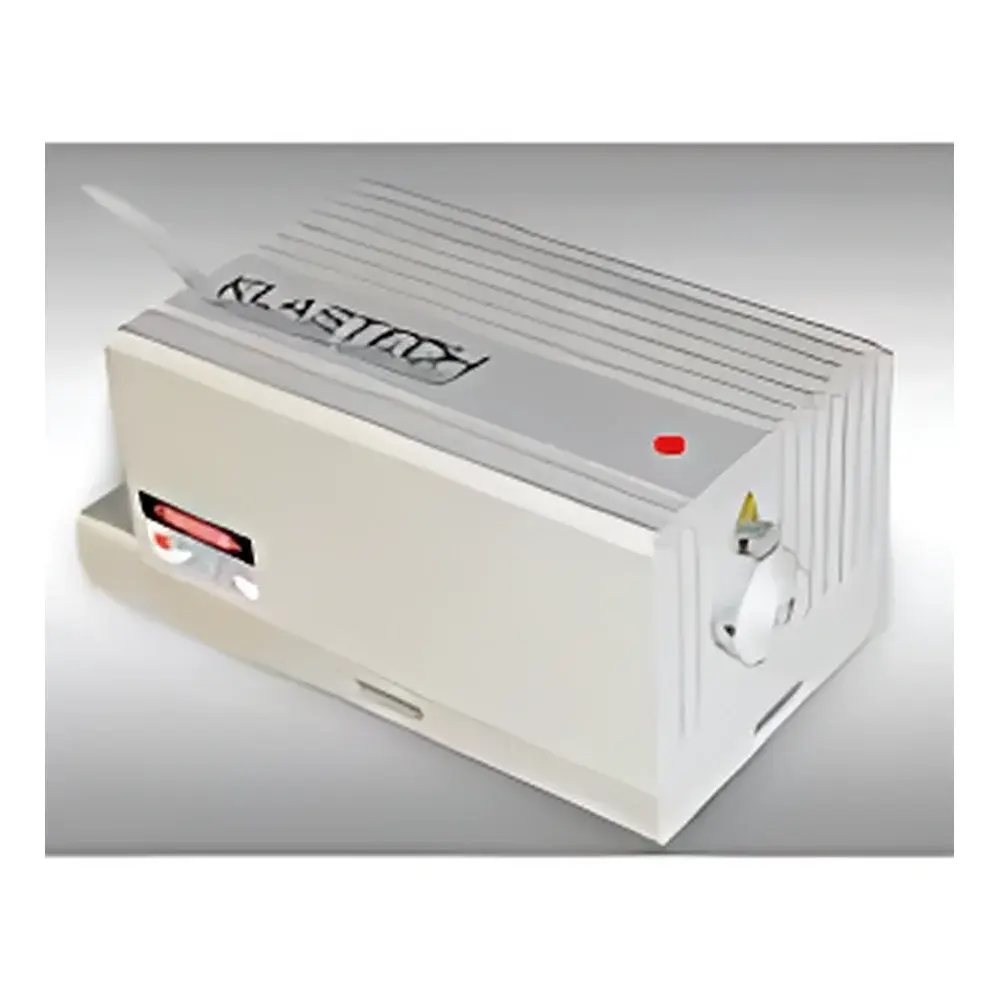
Senza®HP 1064nm High-Power Diode-Pumped Solid-State Laser
| Wavelength | 1064 nm |
|---|---|
| Output Power (CW) | 2000 mW (standard), custom options >2000 mW |
| Beam Diameter | 0.7 mm ±0.2 mm @ 10 mm (1/e²) |
| Beam Mode | TEM₀₀, M² < 1.05 |
| Beam Divergence | <1 mrad (half-angle) |
| Beam Pointing Stability | ≤10 μrad / °C |
| Longitudinal Mode | Single Longitudinal Mode (SLM), Linewidth <2 MHz |
| Polarization | Vertical, Extinction Ratio ≥100:1 |
| Intensity Noise (p-p) | ≤2% (10 Hz–2 MHz) |
| Intensity Noise (rms) | ≤0.3% (10 Hz–2 MHz) |
| Power Stability | ≤2% over 4 hours |
| Operating Temperature | 15–35 °C |
| Storage Temperature | 10–50 °C |
| Laser Head Dimensions | 186 × 139 × 96 mm |
| Laser Head Weight | 2540 g |
| Power Supply Dimensions | 225 × 246 × 110 mm |
| Power Supply Weight | 2960 g |
Overview
The Senza®HP 1064nm High-Power Diode-Pumped Solid-State (DPSS) Laser is an engineered source of continuous-wave (CW), single-frequency 1064 nm radiation designed for applications demanding high spatial coherence, narrow spectral linewidth, and exceptional amplitude stability. Based on intracavity frequency-doubled Nd:YVO₄ or Nd:YAG architecture with active thermal management and rigid monolithic cavity design, the laser delivers diffraction-limited output (M² < 1.05) with guaranteed TEM₀₀ mode structure. Its SLM operation—verified via scanning Fabry–Pérot interferometry—ensures a linewidth under 2 MHz, enabling high-resolution spectroscopic interrogation and long-coherence-length interferometric measurements. The system is optimized for integration into precision optical platforms where beam pointing stability (<10 μrad/°C), low relative intensity noise (RIN ≤0.3% rms, 10 Hz–2 MHz), and polarization purity (≥100:1 extinction ratio) are critical to measurement fidelity.
Key Features
- Stable CW output at 1064 nm with standard power of 2000 mW; scalable to higher powers upon request for demanding photonics integration tasks
- Diffraction-limited beam quality (M² < 1.05) and near-perfect Gaussian profile (TEM₀₀), verified per ISO 11146-1
- Single longitudinal mode (SLM) operation with linewidth <2 MHz—suitable for heterodyne detection, coherent LIDAR, and cavity ring-down spectroscopy
- Beam pointing stability ≤10 μrad/°C ensures minimal drift during extended thermal cycles in metrology-grade setups
- Vertical linear polarization with extinction ratio ≥100:1 supports polarization-sensitive experiments including ellipsometry and nonlinear frequency conversion
- Low-intensity noise performance: ≤2% peak-to-peak and ≤0.3% rms (10 Hz–2 MHz bandwidth), meeting requirements for quantum optics and low-light spectroscopy
- Integrated thermal regulation and vibration-damped mechanical housing minimize mode-hopping and power fluctuations
Sample Compatibility & Compliance
The Senza®HP 1064nm laser is compatible with standard optomechanical mounting interfaces (e.g., SM1-threaded barrels, kinematic baseplates) and supports OEM integration via TTL modulation input and analog power control (0–5 V). It complies with IEC 60825-1:2014 Class 4 laser safety requirements when operated within specified enclosure configurations. All electrical subsystems meet CE marking directives for EMC (EN 55011) and low-voltage safety (EN 61000-6-3/6-4). While not certified to FDA 21 CFR Part 11, its analog/digital interface architecture permits traceable parameter logging when integrated with validated data acquisition systems adhering to GLP/GMP documentation workflows. The laser’s thermal design enables stable operation across ambient temperatures from 15 °C to 35 °C without active water cooling—ideal for benchtop Raman spectrometers and portable interferometers.
Software & Data Management
The Senza®HP operates as a standalone instrument with front-panel digital display and intuitive push-button controls for power adjustment, standby toggle, and status diagnostics. Optional USB-C or RS-232 interface enables remote monitoring of real-time output power, head temperature, and fault codes via ASCII command protocol. Third-party software integration (LabVIEW, Python pySerial, MATLAB) is supported through documented SCPI-like command sets. No proprietary runtime or driver installation is required. For regulated environments, users may implement external audit-trail logging by timestamping serial commands and power-readback responses—consistent with ALCOA+ principles for data integrity in analytical instrumentation.
Applications
- Raman spectroscopy: High-power 1064 nm excitation minimizes fluorescence interference in biological tissues, polymers, and pharmaceutical APIs while maintaining sufficient Stokes signal yield
- Interferometric metrology: Sub-microradian pointing stability and SLM coherence length >150 m support phase-shifting interferometry and gravitational wave detector alignment verification
- Infrared imaging: Enables active illumination in SWIR camera calibration and non-destructive inspection of silicon wafers, composite materials, and packaged electronics
- Optical trapping & atom cooling: Low RIN and polarization purity facilitate stable dipole trap formation and magneto-optical trap (MOT) loading in cold-atom laboratories
- Coherent LIDAR & vibrometry: Narrow linewidth and high power enable velocity-resolved Doppler measurements in industrial machinery health monitoring and aerospace component testing
FAQ
Is this laser suitable for use in a Class 1 enclosed system?
Yes—when fully integrated into an interlocked enclosure meeting IEC 60825-1 requirements, the system can be classified as Class 1. Full safety documentation and enclosure design guidance are provided upon request.
Can the output power be modulated externally?
Yes—TTL-compatible analog modulation input (0–5 V) supports direct current control with bandwidth up to 10 kHz; modulation depth and linearity are characterized per unit and supplied in factory test reports.
What maintenance is required for long-term stability?
No user-serviceable parts exist inside the laser head. Recommended preventive maintenance includes annual verification of beam collimation and power calibration using NIST-traceable photodiodes, aligned per ISO 11554 procedures.
Does the laser include a warm-up stabilization period specification?
Yes—full power and pointing stability are achieved within 30 minutes after cold start at 25 °C ambient; stabilization time increases by ~5 minutes per 5 °C deviation below 20 °C.
Are OEM volume pricing and custom mechanical interfaces available?
Yes—custom flange designs, fiber-coupled variants (FC/APC, SMA905), and embedded controller options are available under NDA for qualified OEM partners with annual volume commitments.





