
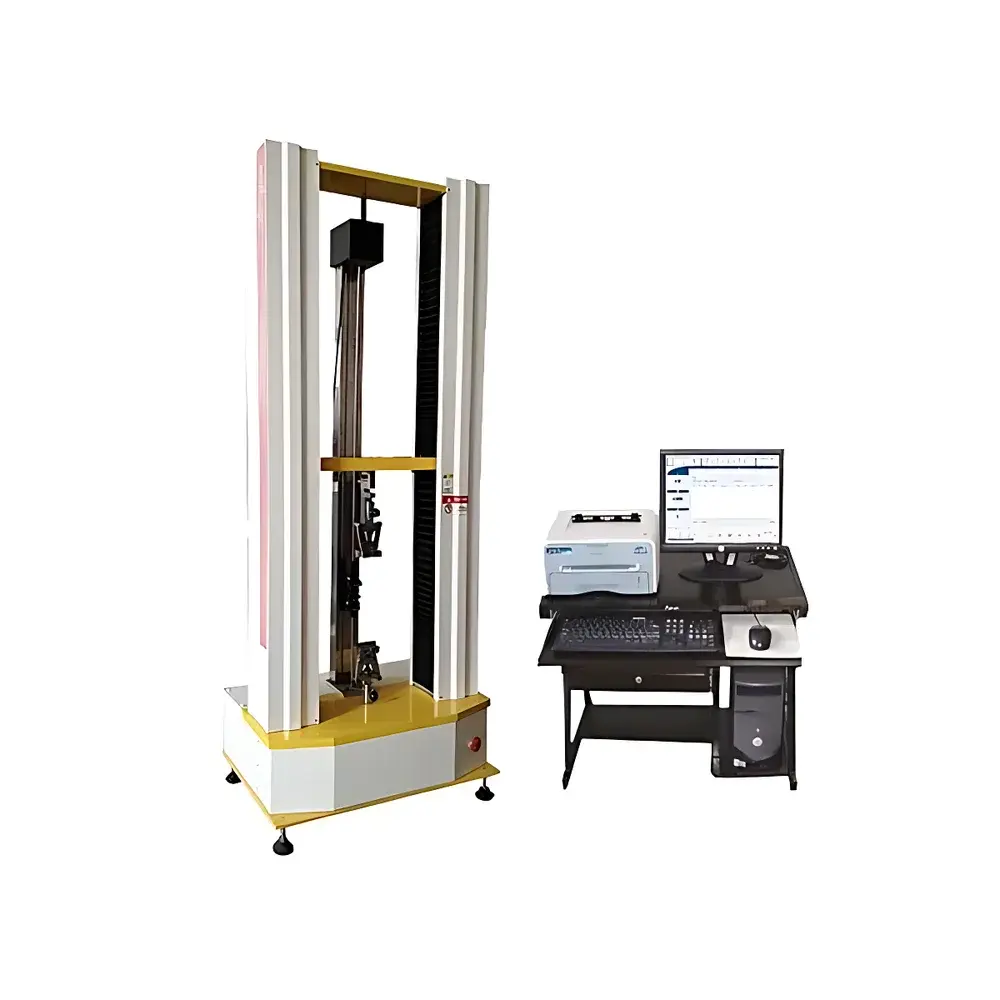
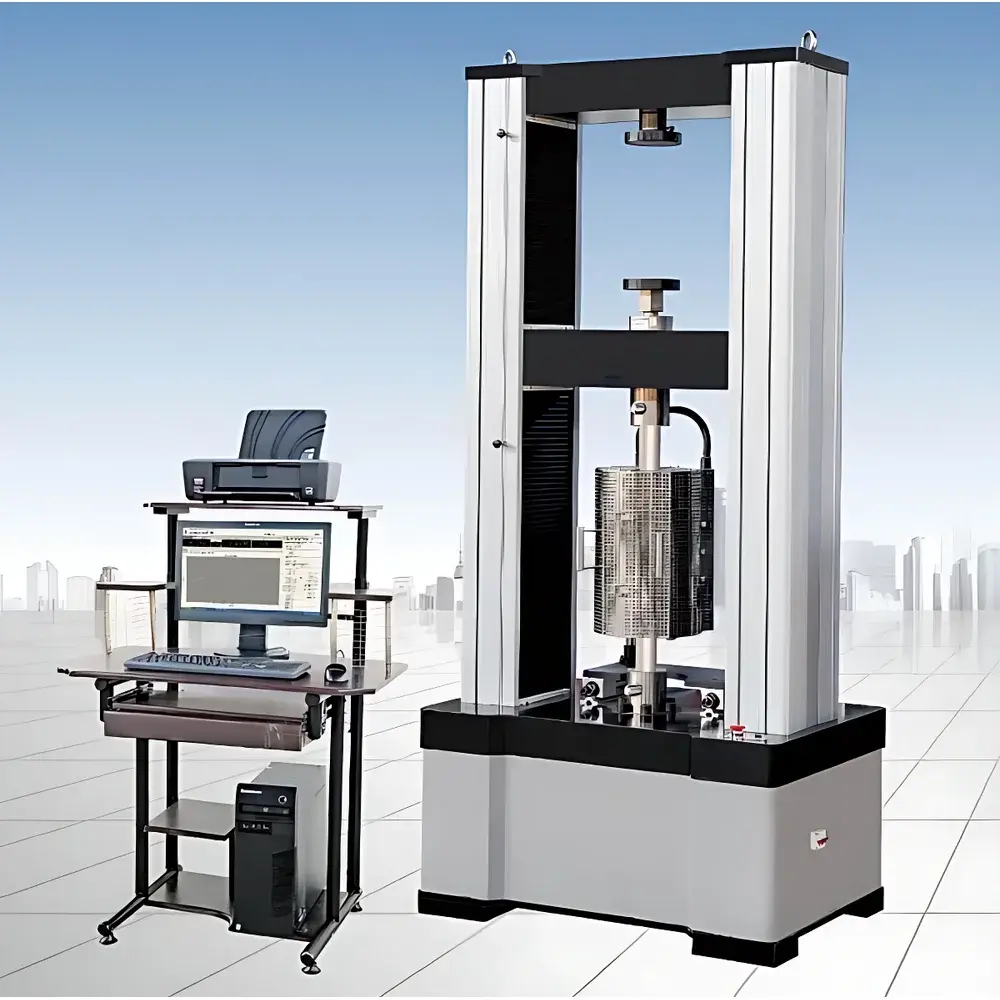
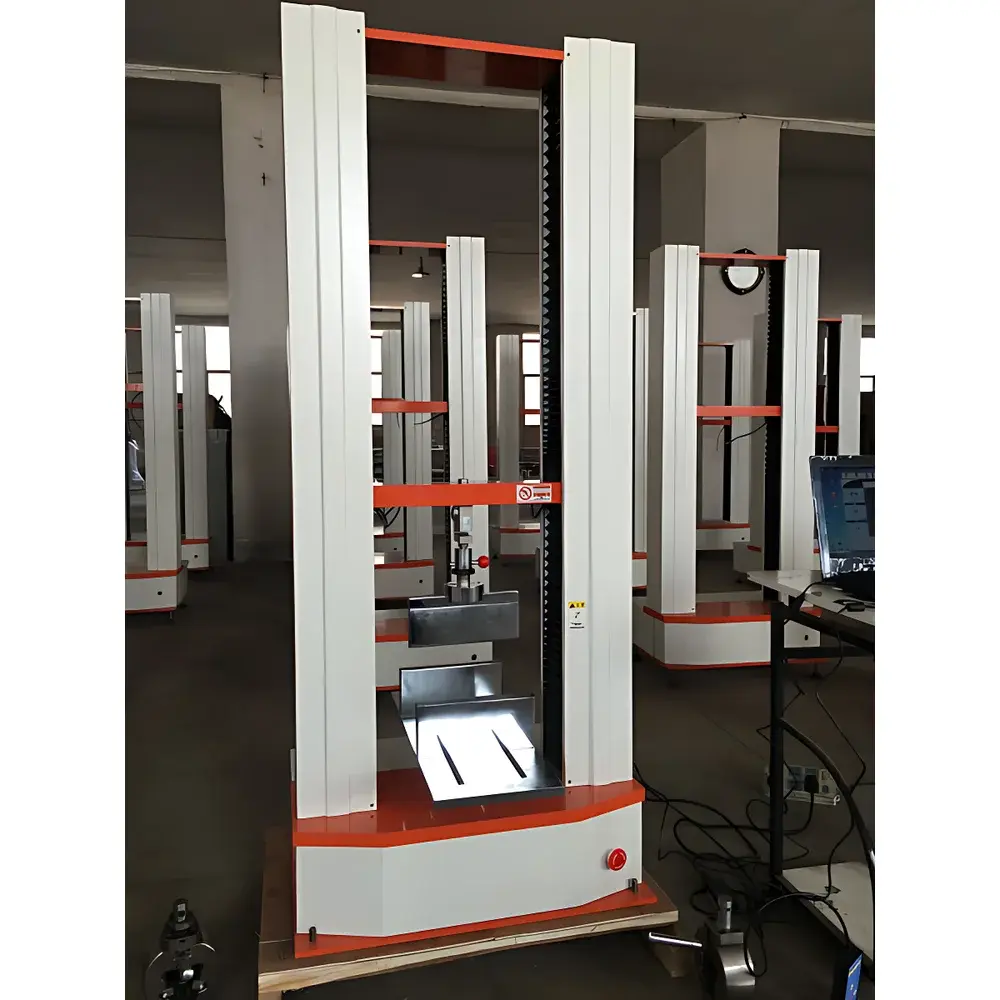
Beiguang Jingyi BWN-Series Electronic Tensile Testing Machine for Paper and Packaging Materials
| Brand | Beiguang Jingyi / All Precision Instrument |
|---|---|
| Origin | Beijing, China |
| Manufacturer Type | Direct Manufacturer |
| Product Category | Domestic |
| Model | BWN- |
| Max Test Force | 600 kN |
| Force Measurement Range | 2–100% of Full Scale (FS) |
| Force Accuracy | ≤ ±1% of reading |
| Test Stroke | 700 mm |
| Displacement Resolution | 0.01 mm |
| Speed Range | 0.05–500 mm/min |
| Speed Accuracy | ≤ ±1% |
| Force Sensor Options | 100 N to 5000 N (modular) |
| Compliance | ASTM D828, D689, D3720 |
Overview
The Beiguang Jingyi BWN-Series Electronic Tensile Testing Machine is a precision-engineered universal testing system designed specifically for mechanical characterization of paper, board, corrugated packaging, films, foils, adhesives, and related flexible materials. It operates on the principle of controlled uniaxial force application via a servo-controlled electromechanical drive system, enabling high-fidelity measurement of tensile strength, elongation at break, Young’s modulus, peel resistance (90° and 180°), tear propagation (Elmendorf, trouser, or pendulum methods), compression (flat crush, edge crush), bending stiffness (Taber, MIT fold), and shear adhesion under standardized loading conditions. The machine complies with internationally recognized test methodologies including ASTM, ISO, and TAPPI standards—ensuring data integrity for quality control (QC), R&D validation, and regulatory submission workflows in pulp & paper, packaging, and converting industries.
Key Features
- Modular load cell architecture supporting interchangeable sensors from 100 N to 5000 N—enabling precise resolution across low-force (e.g., tissue tensile, seal strength) and high-force (e.g., corrugated box compression) applications.
- Servo-motor-driven crosshead with precision ball-screw transmission, delivering stable speed control from 0.05 to 500 mm/min and displacement resolution of 0.01 mm.
- Dual-limit adjustable mechanical stops and programmable software-based over-travel protection to prevent sensor overload and structural damage—critical when using low-capacity transducers.
- Real-time force–displacement curve acquisition with automatic peak detection, yield point identification, and post-test parameter calculation (e.g., tensile index, burst factor, puncture energy).
- RS232 serial communication interface (COM port) ensures deterministic, low-latency data transfer between the controller and host PC—compatible with Windows-based legacy and modern industrial computing environments.
- Full-parameter configurability: user-defined test profiles, floating zero-point calibration, real-time speed switching, auto-stop at break or preset displacement, and limit-position safety interlocks.
Sample Compatibility & Compliance
The BWN-Series accommodates standard specimen geometries per ISO 1924-2 (strip width: 15 mm; gauge length: 180 mm), ASTM D828 (1″ × 11″), and TAPPI T494 (1″ × 6″). Clamping systems include pneumatic, manual wedge, and roller-type grips optimized for low-slippage gripping of fibrous, coated, or laminated substrates. Built-in compliance with ASTM D689 (tear resistance), ISO 2758 (bursting strength), ISO 6383-2 (peel adhesion), and TAPPI T813 (edgewise compression) ensures traceable, audit-ready results. System design supports GLP-compliant operation: electronic signatures, audit trails, and user-access-level controls are implemented via optional software modules aligned with FDA 21 CFR Part 11 requirements.
Software & Data Management
The included proprietary Windows-native testing software provides full I/O control, real-time graphical visualization, and automated report generation in PDF/Excel formats. Each test record stores raw time-stamped data (force, displacement, speed), metadata (operator ID, sample ID, environmental notes), and calibration history. Data export conforms to ASTM E1447 and ISO/IEC 17025 documentation standards. Software supports multi-user role management, password-protected method libraries, and version-controlled test protocols. Lifetime free software updates ensure long-term compatibility with evolving OS platforms and security patches—without requiring hardware modification.
Applications
This instrument serves as a core QC tool in paper mills, packaging converters, and third-party testing laboratories. Typical use cases include: determining tensile strength and stretch of linerboard and kraft paper; evaluating delamination resistance in multilayer laminates; quantifying hot-melt adhesive bond integrity in carton sealing; measuring burst resistance of medical packaging films; validating fold endurance of pharmaceutical blister lidding; and assessing compressive performance of honeycomb cores and flute structures. Its versatility extends to non-paper applications such as textile yarns, polymer tapes, rubber bands, and thin metal foils—provided specimens fall within mechanical and dimensional constraints.
FAQ
What is the recommended warm-up time before initiating tests?
A minimum 5-minute system stabilization period after power-on is required to ensure thermal equilibrium of load cells and signal conditioning circuits—critical for achieving ≤±1% force accuracy.
Can the machine operate without a connected computer?
No—the BWN-Series relies on host PC software for test execution, real-time control, and data processing; the embedded controller functions solely as an RS232 endpoint.
Is sensor overload protection hardware-based or software-limited?
Dual-layer protection: mechanical upper/lower limit switches plus programmable software thresholds that halt motion upon exceeding 105% of selected sensor’s rated capacity.
How often should mechanical maintenance be performed?
Lubrication of lead screws and guide rails every 200 operational hours; periodic inspection of grip jaw surfaces and alignment; annual verification of force calibration against NIST-traceable reference standards.
Does the system support networked data sharing or LIMS integration?
Yes—via optional TCP/IP add-on module and CSV/XML data export templates compatible with major Laboratory Information Management Systems (LIMS) and MES platforms.



