
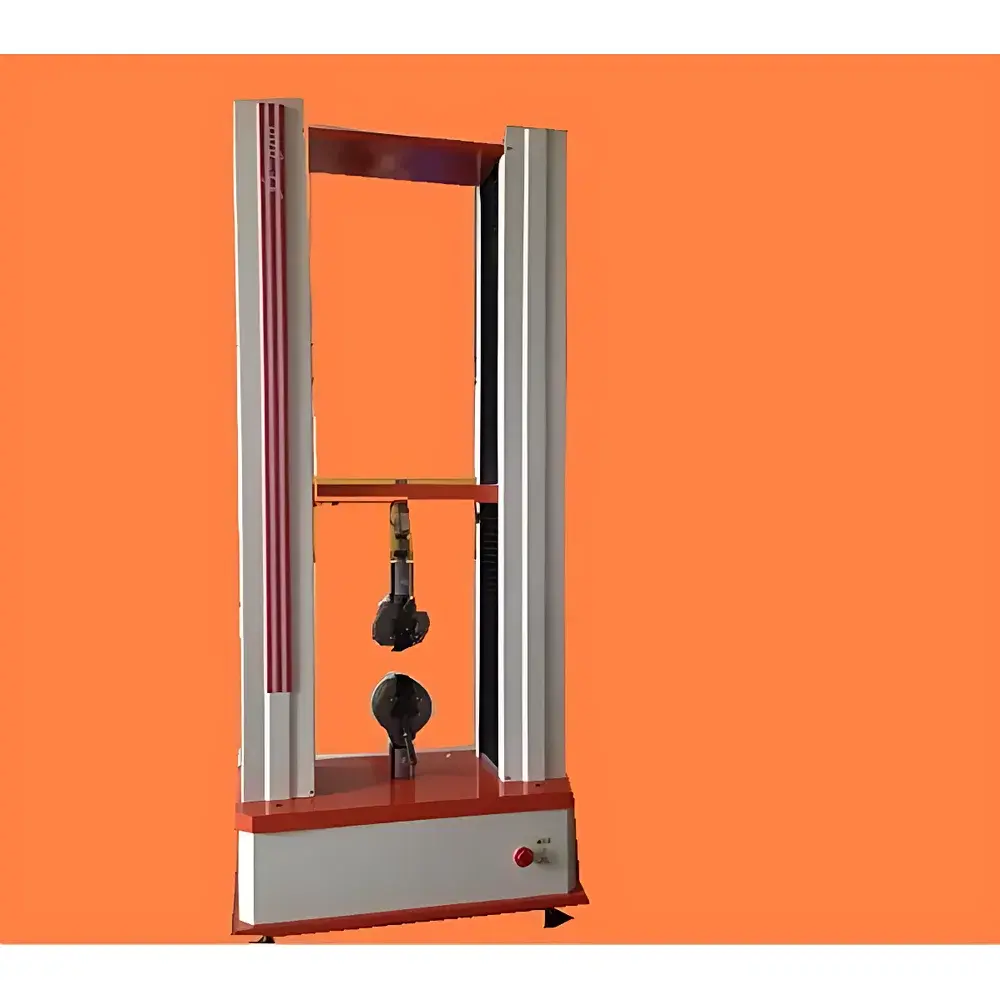
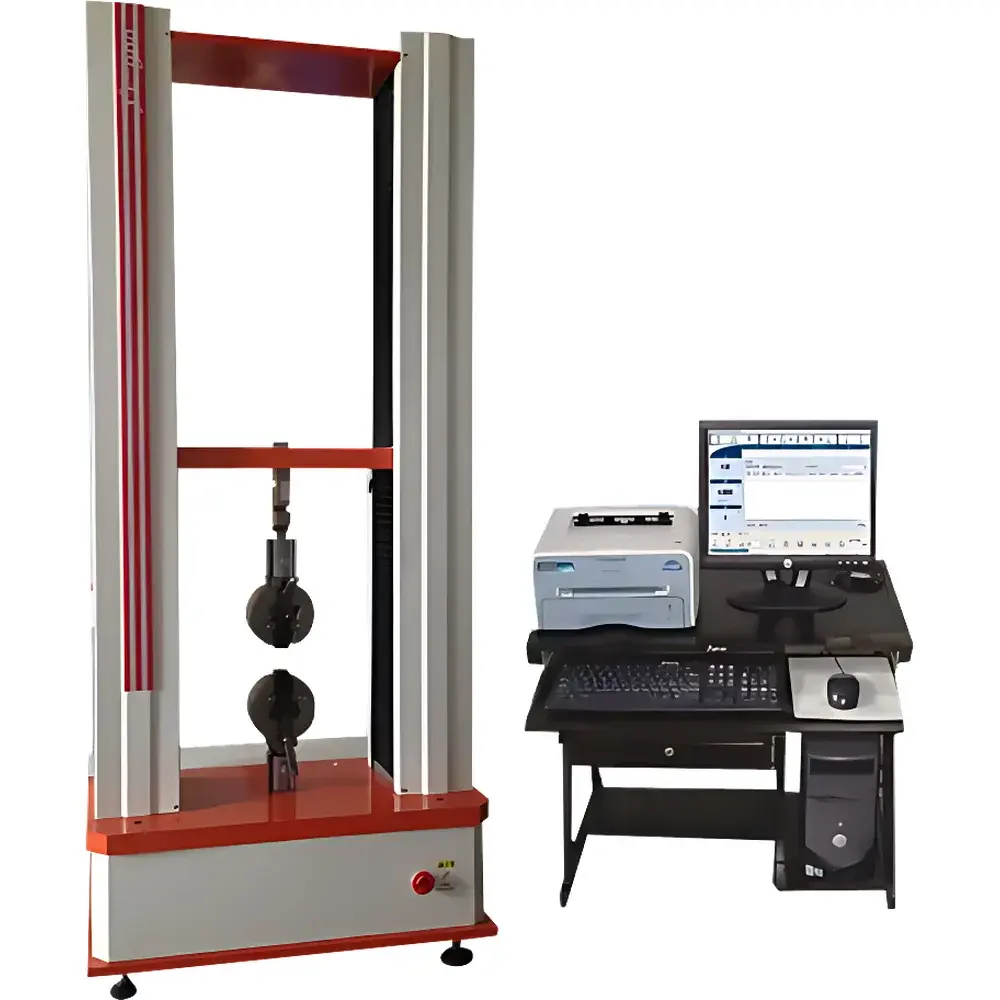
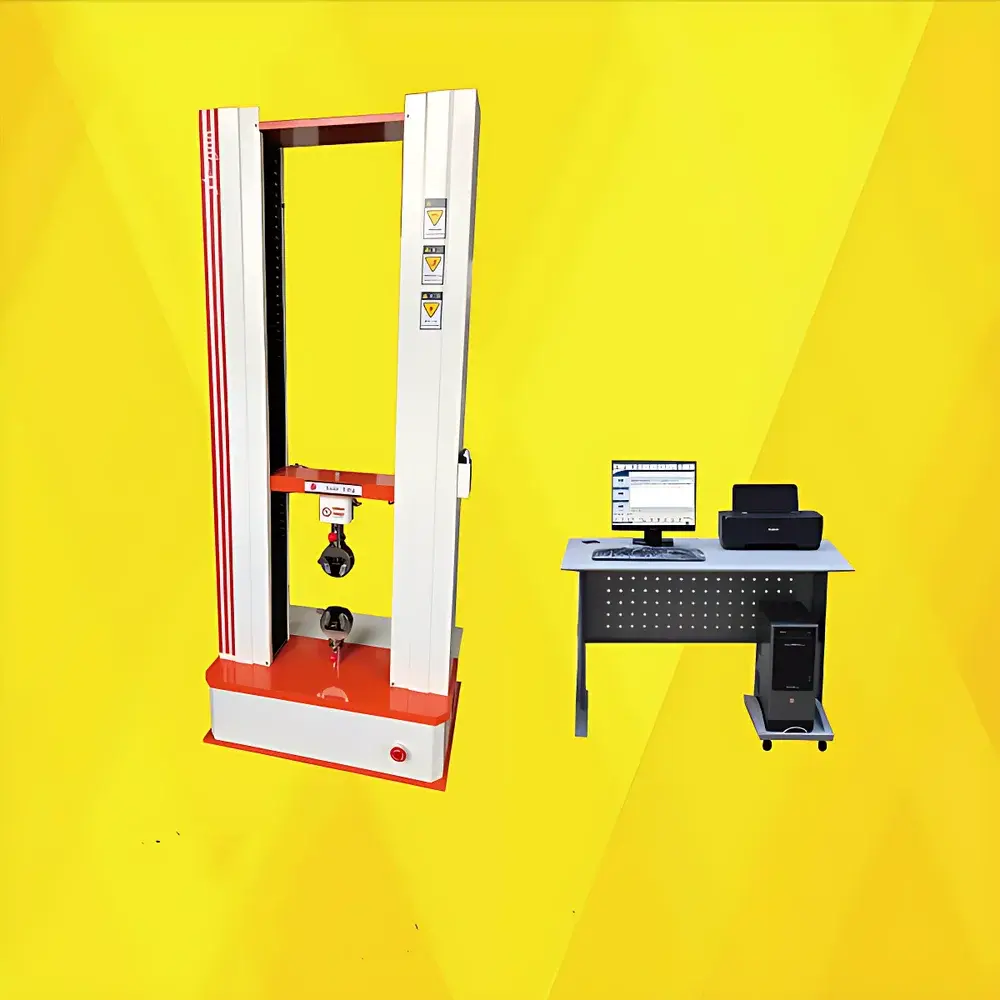
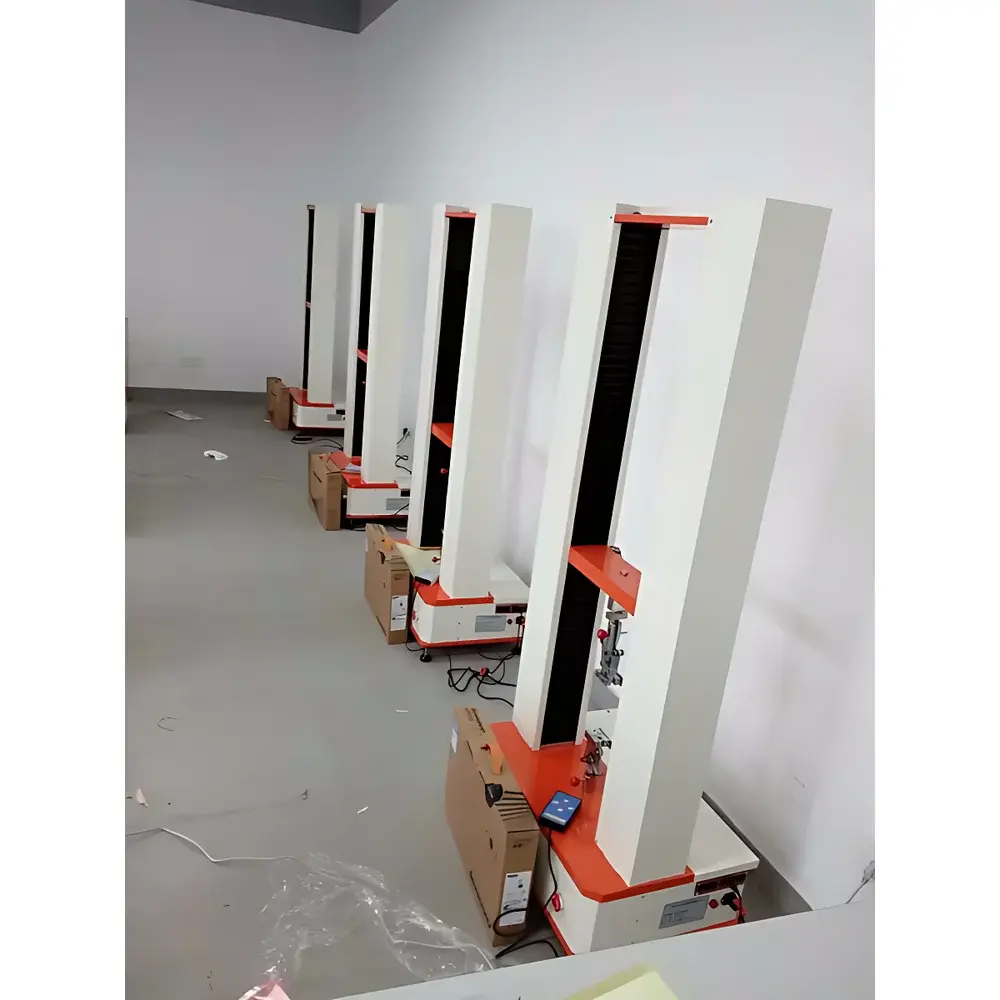
Beiguang Jingyi B-W-N Foam Tensile Testing Machine
| Brand | Beiguang Jingyi / All Precision Instrument |
|---|---|
| Origin | Beijing, China |
| Manufacturer Type | Direct Manufacturer |
| Instrument Type | Electronic Tensile Testing Machine |
| Maximum Test Force | 0–50 N |
| Force Measurement Range | 2–100% of full scale |
| Force Accuracy | Better than ±1% of indicated value |
| Displacement Resolution | 0.01 mm |
| Displacement Accuracy | Better than ±0.5% |
| Speed Range | 0.05–500 mm/min (infinitely variable) |
| Effective Stroke | 0–1000 mm (excluding fixtures) |
| Compliance Standards | GB/T 1040, GB/T 1041, ISO 527, ASTM D638, ISO 7500-1, GB/T 16491, ISO 5893 |
Overview
The Beiguang Jingyi B-W-N Foam Tensile Testing Machine is a precision-engineered electromechanical system designed for the mechanical characterization of low-stiffness polymeric and cellular materials—particularly flexible and semi-rigid foams, elastomeric sheets, soft gels, and lightweight composites. It operates on the fundamental principle of uniaxial tensile deformation under controlled displacement or load rate, measuring force response, elongation, and stress–strain behavior in accordance with standardized quasi-static testing protocols. The machine integrates a high-resolution load cell (50 N capacity, ±0.8% accuracy), a dual-screw precision lead-screw actuation system, and a fully digital servo motor controller to ensure repeatable, traceable, and metrologically sound data acquisition. Its architecture supports both open-loop speed control and closed-loop modes—including constant strain rate, constant stress ramp, and displacement-controlled creep—enabling compliance with method-defined test sequences required for R&D validation, QC release, and regulatory submissions.
Key Features
- Full-range, single-load-cell design (0–50 N) with 16-bit A/D conversion and four internal force ranges (0.25/0.5/0.75/1×FS) for optimal signal-to-noise ratio across low-force regimes typical of foam testing.
- Infinitely variable crosshead speed from 0.05 to 500 mm/min, with speed accuracy better than ±0.5% and real-time feedback via high-resolution optical encoder (0.01 mm displacement resolution).
- Automatic range switching and auto-zero calibration reduce operator dependency and improve inter-test reproducibility.
- Dual-stage mechanical and programmable software-based limit protection prevent overtravel; overload cutoff triggers at 3–5% above full-scale load.
- Integrated return-to-start and automatic data save functions eliminate manual intervention post-fracture, supporting unattended batch testing.
- Modular test condition templates allow storage of specimen geometry, gauge length, pre-load settings, and pass/fail criteria—reducing setup time for recurring foam density or formulation studies.
Sample Compatibility & Compliance
The B-W-N system accommodates standard foam specimens per ISO 1798 (flexible cellular polymeric materials), ASTM D3574 (flexible urethane foam), and GB/T 6344 (soft cellular plastics). Its 350 mm test width and 950 mm usable travel enable evaluation of molded blocks, laminated composites, and compression-molded elastomer sheets up to 100 mm thick. Optional fixtures—including pneumatic clamps, foam-specific serrated jaws, and large-diameter compression platens—extend capability to flatwise compression, thickness recovery, and indentation hardness (e.g., IFD/ILD analogs). The instrument meets mechanical verification requirements per ISO 7500-1 Class 1 and is compatible with GLP-compliant audit trails when paired with validated software configurations. All force and displacement channels are calibrated traceable to national standards (e.g., CNAS-accredited labs in China), and raw data export supports third-party analysis per FDA 21 CFR Part 11 requirements when configured with electronic signature and audit-log modules.
Software & Data Management
Control and analysis are executed via a Windows XP–based native application featuring a bilingual (English/Chinese) GUI optimized for laboratory technicians. Real-time dynamic plotting displays force–displacement, stress–strain, and modulus-versus-strain curves synchronized with numerical readouts. Post-test, users may perform point interrogation, tangent modulus calculation, yield point detection (0.2% offset method), and area-under-curve integration. Data exports as CSV, TXT, or XML formats; report templates conform to ISO 10012 and ASTM E29 guidelines, including metadata such as operator ID, environmental conditions (optional sensor input), calibration certificate numbers, and uncertainty statements. Batch processing mode permits sequential execution of identical test protocols across 50+ specimens with automated naming, folder structuring, and summary statistics generation (mean, SD, CV%, min/max).
Applications
This system is routinely deployed in foam formulation labs to quantify tensile strength, elongation at break, tear resistance (with trouser or crescent notches), and compression set recovery kinetics. In quality assurance environments, it validates consistency across production lots of memory foam mattresses, automotive seating inserts, packaging cushioning, and medical wound-contact foams. Researchers utilize its creep and stress-relaxation modules to model viscoelastic behavior using Prony series or Maxwell–Wiechert formulations. When combined with environmental chambers (–40°C to +80°C), it supports temperature-dependent modulus mapping critical for thermal stability assessment. The machine also serves as a platform for ASTM D695 (compressive properties) and ISO 844 (rigidity index) when equipped with appropriate platens and alignment fixtures.
FAQ
What foam standards does the B-W-N machine support out-of-the-box?
It natively implements test sequences for ISO 1798, ASTM D3574 Types A–F, GB/T 6344, and JIS K6400, with parameter presets for preload, crosshead speed, and failure detection thresholds.
Can the system be validated for ISO/IEC 17025 accredited testing?
Yes—when used with documented calibration certificates (force, displacement, speed), verified environmental monitoring, and version-controlled software, it satisfies technical requirements for accredited mechanical testing laboratories.
Is third-party software integration possible?
The AD800 data acquisition card supports DLL-based API access, enabling integration with LabVIEW, MATLAB, or custom LIMS platforms via TCP/IP or serial protocols.
How is maintenance performed to preserve measurement integrity?
Monthly lubrication of ball screws with lithium-based grease (mixed with light mineral oil), biannual load cell zero-check, and annual full recalibration by an accredited service provider are recommended.
Does the machine support multi-axis or biaxial testing?
No—it is a uniaxial tensile-compression system. Biaxial extension requires separate planar biaxial testers; however, auxiliary fixtures enable transverse property sampling via off-axis loading protocols.



