
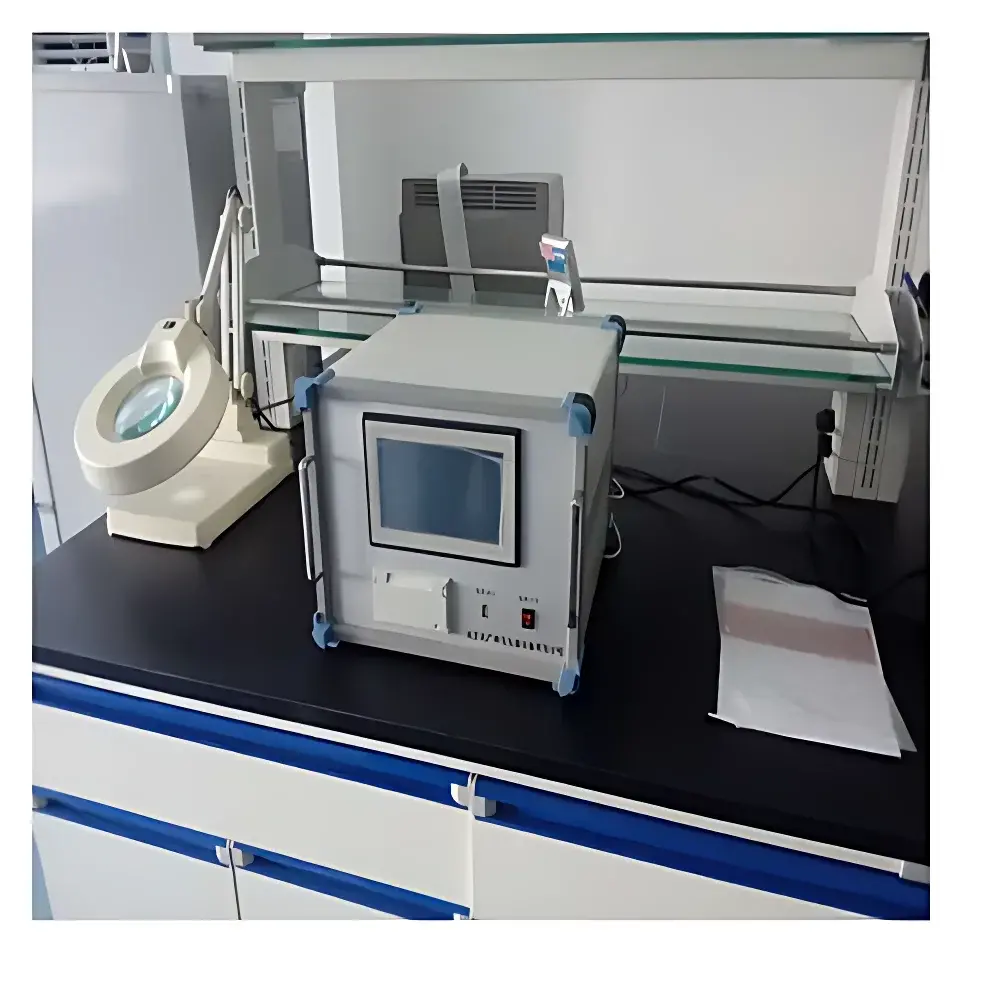
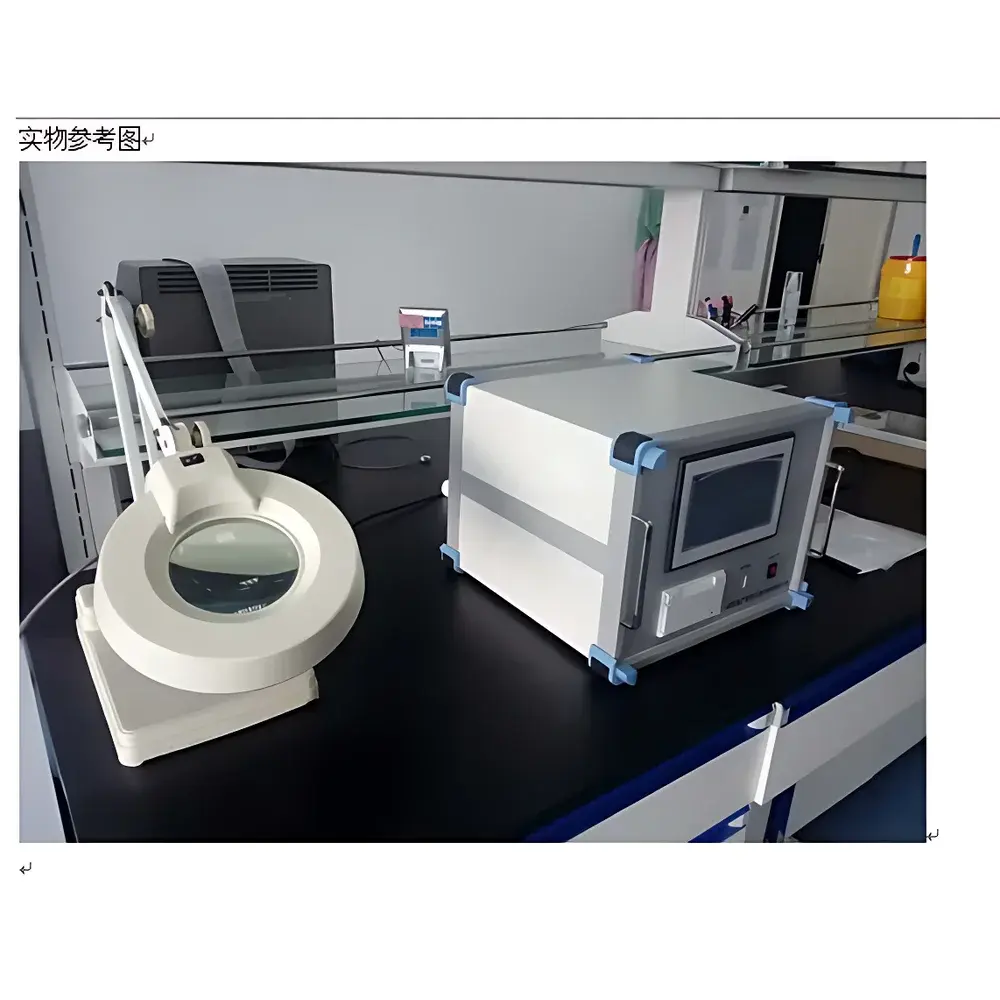
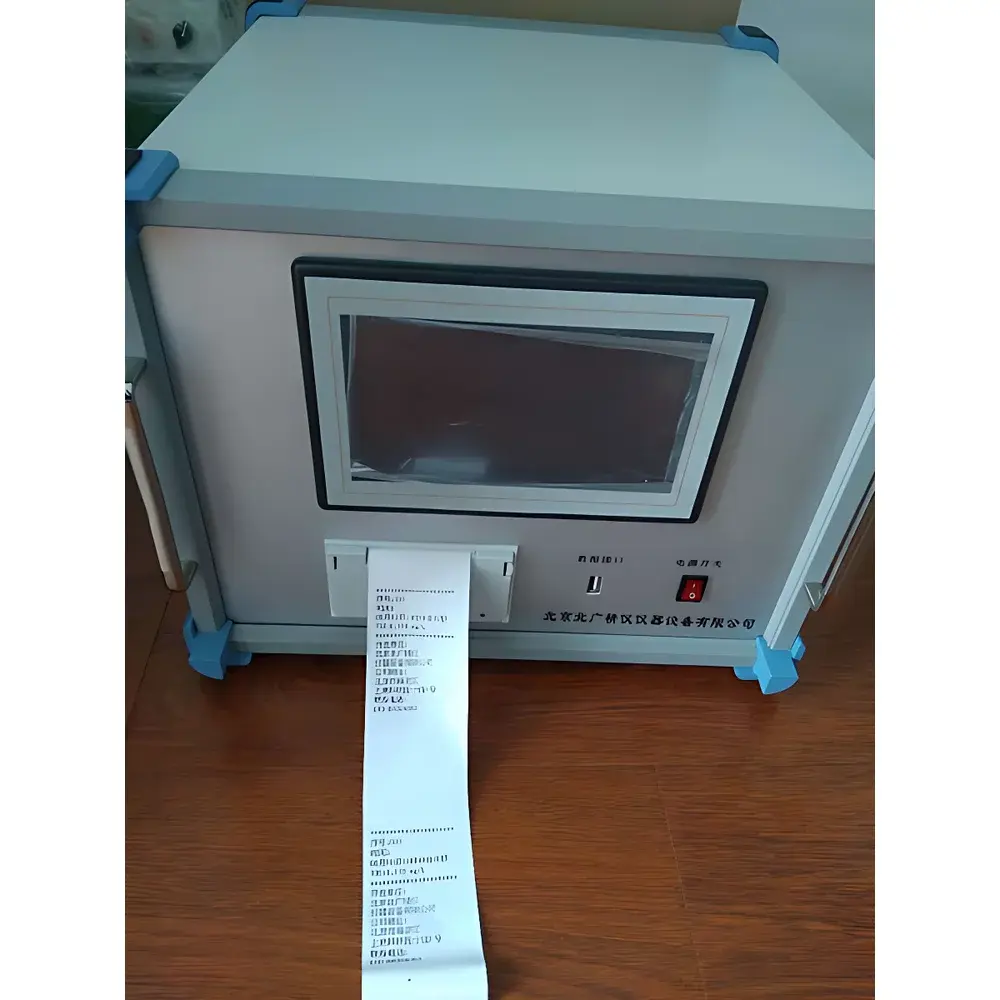
Beijing Guangjing BC-40 Total Organic Carbon (TOC) Analyzer
| Brand | Beijing Guangjing / All Precision Instrument |
|---|---|
| Origin | Beijing, China |
| Manufacturer Type | Direct Manufacturer |
| Instrument Type | Laboratory TOC Analyzer |
| Detection Principle | Direct Conductivity Method |
| Oxidation Method | UV/Persulfate Oxidation |
| Measurement Range | 0.001–1.000 mg/L |
| Accuracy | ±5% |
| Resolution | ±5% |
| Detection Limit | 0.001 mg/L |
| Sample Flow Rate | 0.5 mL/min |
| Temperature Operating Range | 10–40°C with ≤±5°C/day drift |
| Repeatability | ≤3% RSD |
| Zero Drift | ±5% |
| Span Drift | ±5% |
| Analysis Cycle Time | 4 minutes per measurement (TC and TIC measured independently) |
| UV Lamp Wavelengths | 185 nm & 254 nm |
| UV Lamp Lifetime | 12 months (not 6 months — corrected per maintenance table in source text) |
| Power Supply | 220 V ±22 V, 50 Hz ±1 Hz, 100 W |
| Dimensions | 44 × 18 × 26 cm |
| Sample Temperature Range | 1–95°C |
| Relative Humidity | ≤85% RH |
| Response Time | ≤15 minutes |
Overview
The Beijing Guangjing BC-40 Total Organic Carbon (TOC) Analyzer is a laboratory-grade instrument engineered for precise, regulatory-compliant quantification of organic carbon in ultrapure water systems. It operates on the direct conductivity detection principle following complete oxidation of organic compounds to carbon dioxide. The analyzer employs dual-wavelength UV irradiation (185 nm and 254 nm) in conjunction with titanium dioxide (TiO₂) photocatalysis to generate hydroxyl radicals (•OH), enabling near-quantitative oxidation of non-volatile and volatile organic species—including refractory compounds—into CO₂. This photolytic oxidation occurs within a helical quartz reaction chamber surrounding the UV lamp, ensuring high photon utilization and consistent radical generation. The resulting CO₂ is dissolved in the aqueous stream and measured via high-stability conductivity detection—eliminating the need for carrier gases, infrared detectors, or external calibration standards. Each full analytical cycle completes in 4 minutes, with total carbon (TC) and inorganic carbon (TIC) measured sequentially under identical flow and temperature conditions to compute TOC as TOC = TC − TIC. The system is designed for operation in controlled laboratory environments (10–40°C, ≤±5°C/day ambient variation) and supports both offline batch analysis and optional online integration into pharmaceutical water distribution loops or semiconductor UPW recirculation systems.
Key Features
- Regulatory-aligned architecture: Fully compliant with Chinese Pharmacopoeia 2010 Edition Appendix VIII R requirements for pharmaceutical water testing—including mandatory system suitability testing, sensitivity verification (≤0.001 mg/L), and TOC calculation methodology (TOC = TC − TIC).
- Dual-wavelength UV oxidation: 185 nm photons initiate water photolysis (H₂O + hν → •OH + H•), while 254 nm enhances organic bond cleavage; TiO₂ catalyst extends oxidative efficiency across diverse molecular structures.
- Direct conductivity detection: Eliminates IR detector drift, gas supply dependencies, and cross-sensitivity to chloride or sulfate—an inherent advantage for low-conductivity UPW matrices.
- Touchscreen-integrated embedded control system: Intuitive Chinese-language UI with real-time status monitoring, alarm logging, and configurable data export protocols.
- Service-friendly mechanical design: Front-access UV lamp and peristaltic pump tubing replacement—no chassis disassembly required—reducing downtime and technician dependency.
- Robust environmental tolerance: Stable performance across 1–95°C sample temperature range and ≤85% relative humidity; zero and span drift maintained within ±5% over 24-hour intervals under specified thermal conditions.
Sample Compatibility & Compliance
The BC-40 is validated for use with purified water (PW), water for injection (WFI), and ultrapure water (UPW) per USP , EP 2.2.44, and JP 17 guidelines. Its low detection limit (0.001 mg/L) and minimal carryover (1 µm).
Software & Data Management
Data acquisition and reporting are managed via an onboard ARM-based embedded OS with 128 MB flash storage—capable of retaining ≥10,000 test records with full metadata (date/time, operator ID, sample ID, TC/TIC/TOC values, conductivity, system pressure, UV lamp operational hours). Raw conductivity waveforms and oxidation kinetics curves are archived per analysis cycle. Export options include USB-host file transfer (CSV, PDF reports), RS-232 serial output to LIMS, and optional Ethernet connectivity for centralized lab data aggregation. All reports include instrument identification, calibration history, system suitability results, and pass/fail annotations against user-defined acceptance criteria. Internal clock synchronization supports ISO/IEC 17025 traceability requirements when paired with NIST-traceable conductivity standards.
Applications
- Pharmaceutical water quality assurance: Routine TOC monitoring of PW, WFI, and purified steam condensate in compliance with FDA, EMA, and PMDA guidance.
- Cleaning validation: Quantitative assessment of organic residue removal from stainless-steel process equipment and single-use systems.
- Semiconductor UPW monitoring: Real-time TOC surveillance at point-of-use in 300 mm fab tool feed lines, where sub-ppb organic excursions risk gate oxide defects.
- Biochemistry research: Tracking organic leachables from chromatography columns, filters, and bioreactor components.
- Environmental reference labs: Certified reference material (CRM) verification and method validation per ISO 8245.
FAQ
What oxidation method does the BC-40 employ, and why is it suitable for pharmaceutical water?
The BC-40 uses UV/persulfate photocatalytic oxidation with dual-wavelength (185/254 nm) irradiation and TiO₂ enhancement. This method achieves >95% oxidation efficiency for low-molecular-weight organics (e.g., acetic acid, ethanol) and robust performance on humic-like compounds—critical for detecting cleaning agent residuals in PW/WFI.
Does the analyzer require carrier gas or chemical reagents during operation?
No. It operates reagent-free and gas-free, relying solely on UV-generated hydroxyl radicals. This eliminates consumable costs, safety hazards associated with persulfate handling, and potential interference from nitrogen or oxygen impurities.
How often must the UV lamp be replaced, and how is lamp degradation monitored?
UV lamps are rated for 12 months of continuous operation (per manufacturer maintenance table). The system logs cumulative UV exposure time and triggers a service alert prior to end-of-life, ensuring consistent oxidation efficiency and minimizing unscheduled downtime.
Can the BC-40 be integrated into a continuous online monitoring loop?
Yes—via optional ¼” PFA sample inlet/outlet ports and analog 4–20 mA output. Online deployment requires pre-installation of a 0.45 µm inline filter and daily high-purity water flush cycles to prevent biofilm accumulation in the quartz reactor.
Is the instrument compliant with international pharmacopeial standards beyond the Chinese Pharmacopoeia?
Its measurement principle, detection limit, and system suitability protocol align with USP , EP 2.2.44, and JP 17. Full compliance documentation (IQ/OQ/PQ templates, calibration SOPs) is available upon request for global regulatory submissions.







