
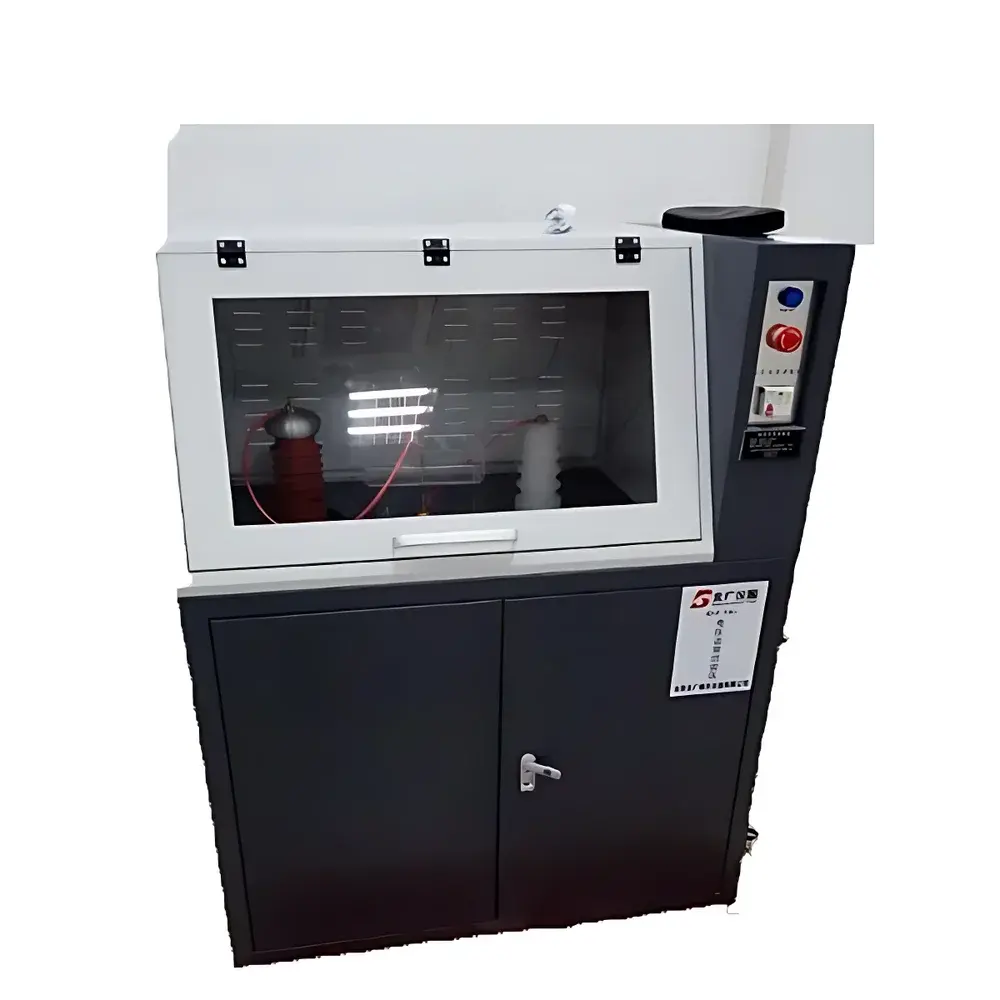
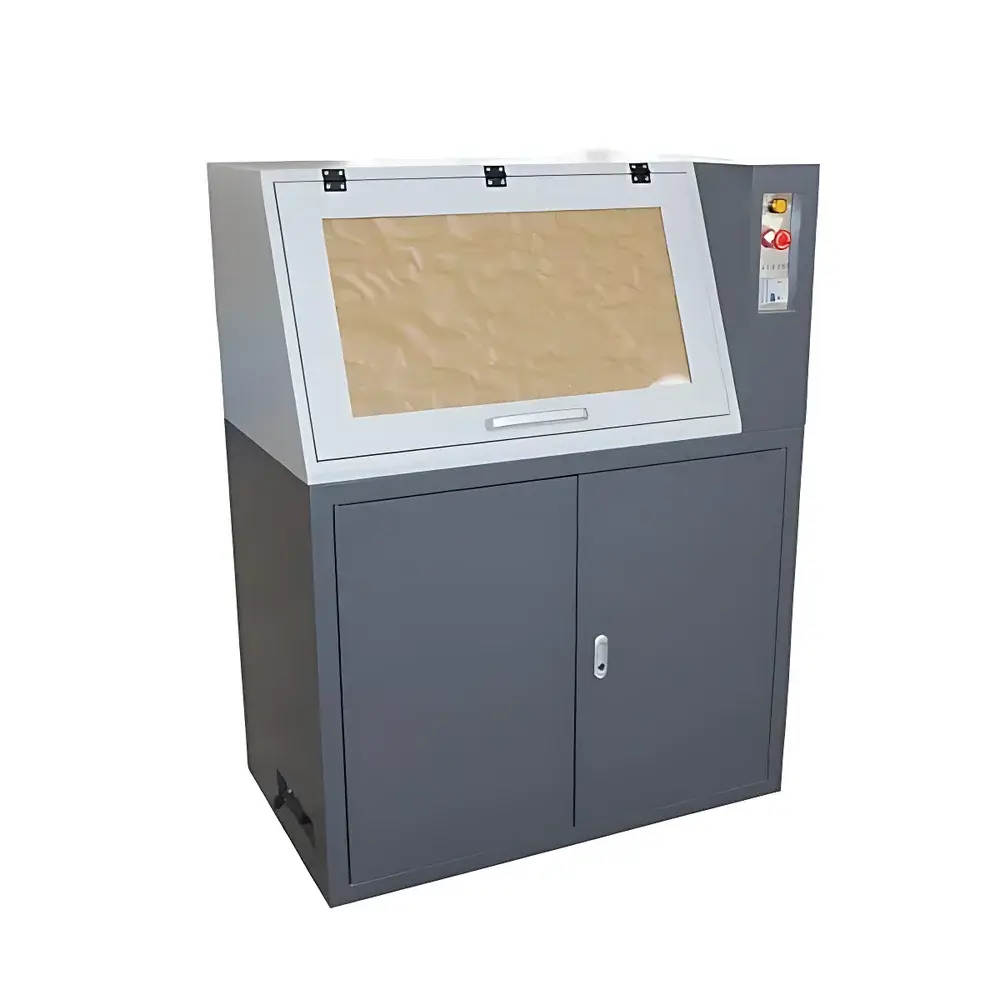
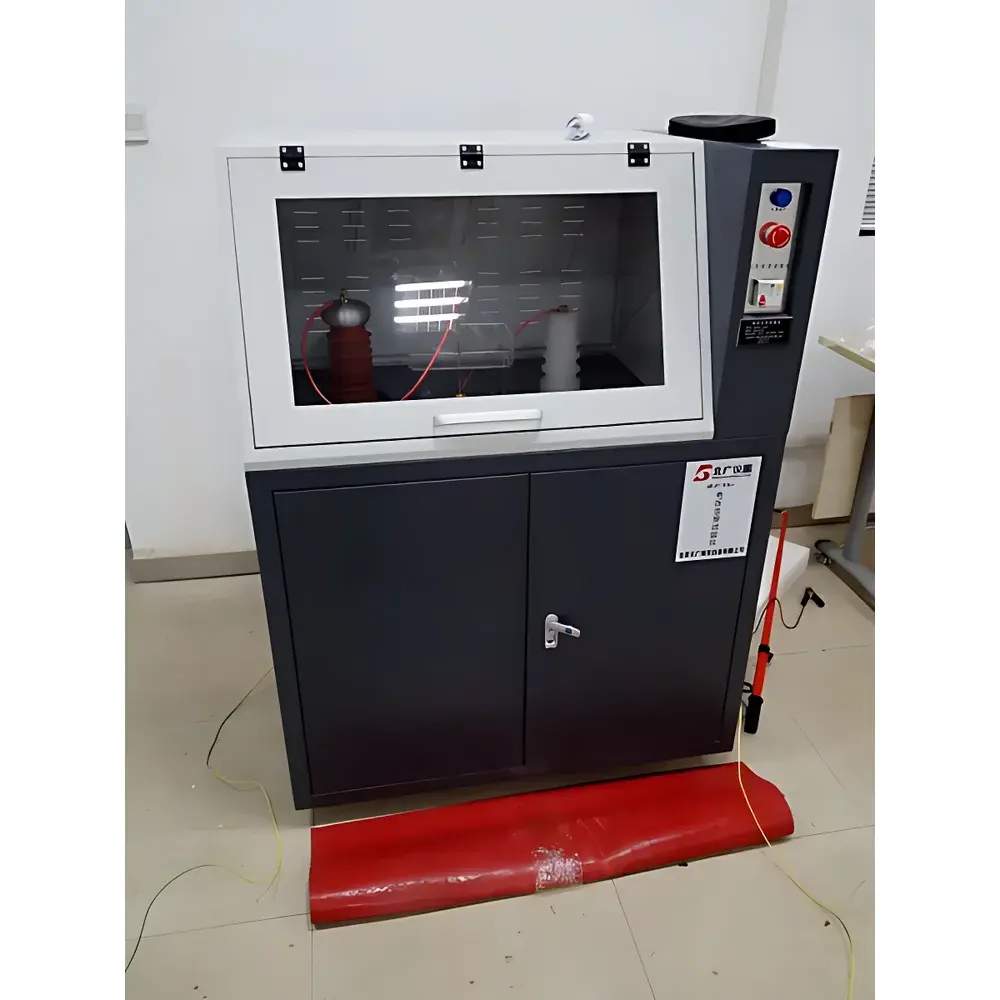
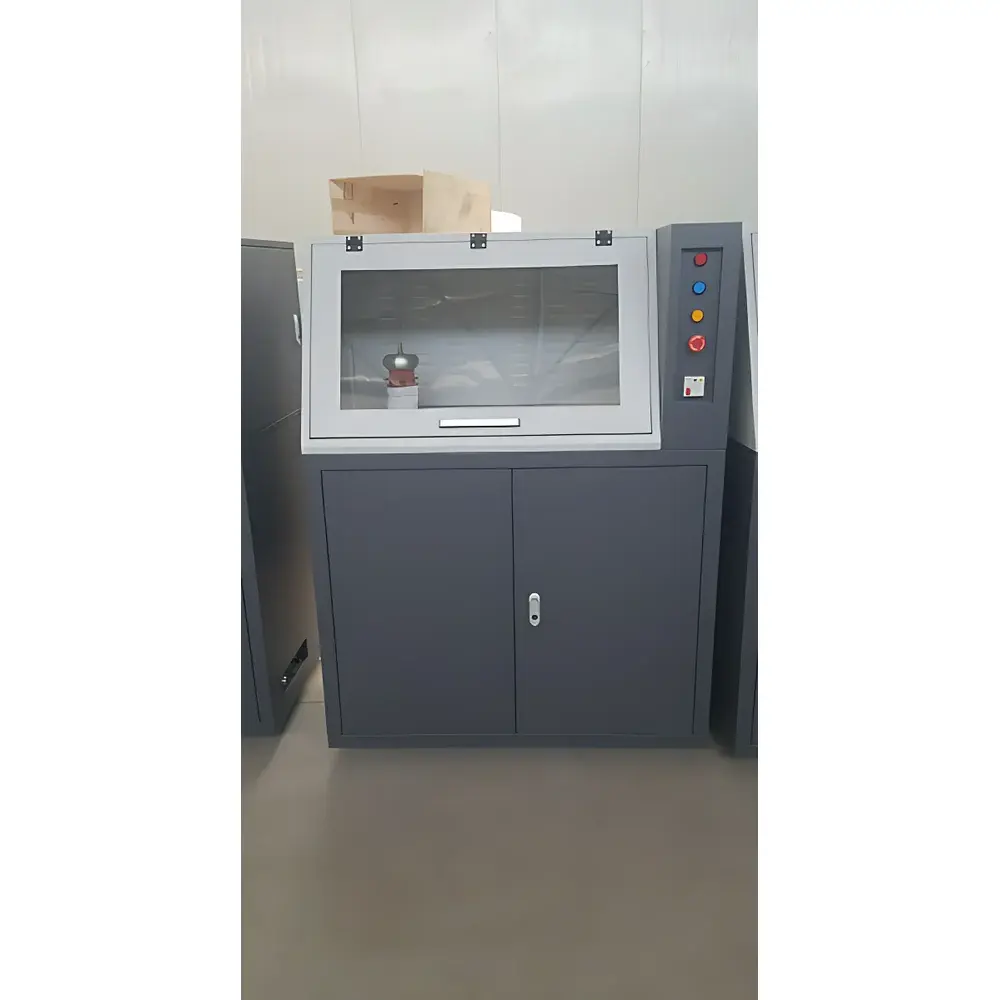
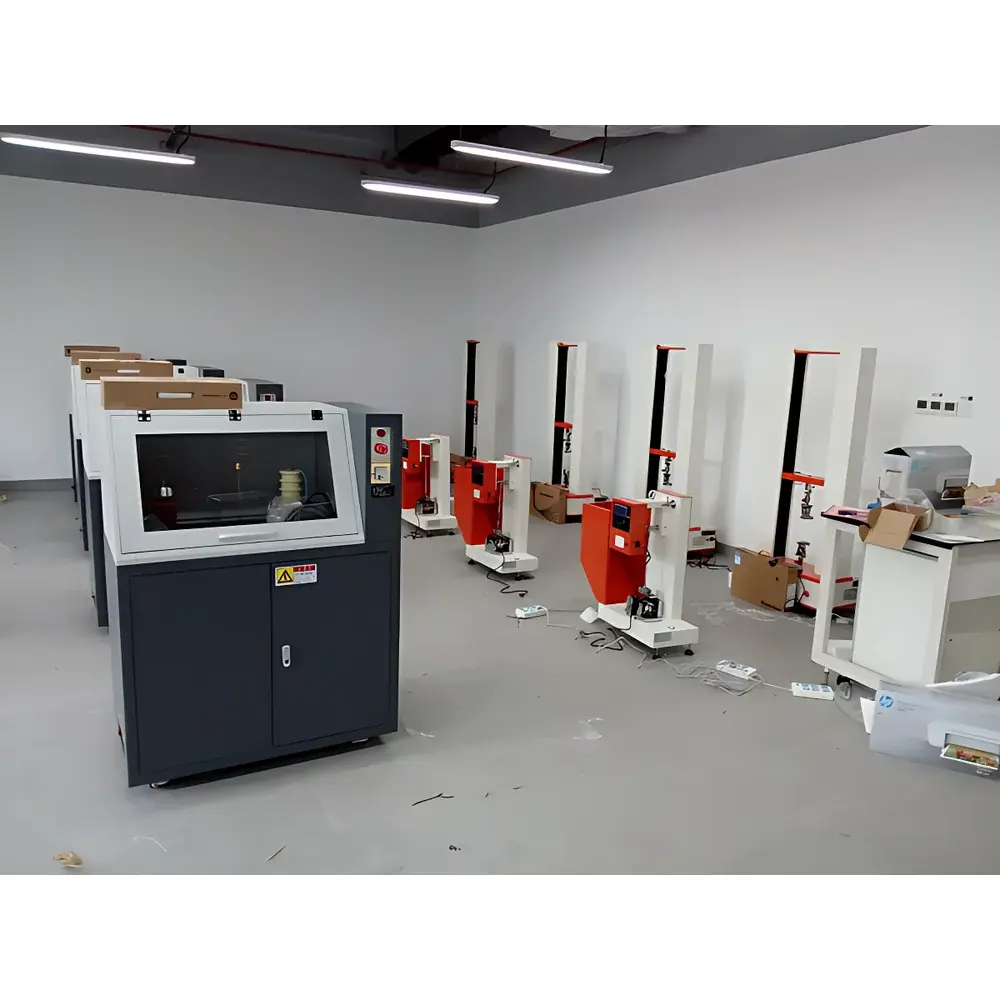
Beijing Guangjing BDJC Series Electrical Strength Tester for Plastics and Insulating Materials
| Key | Brand: Beijing Guangjing / All Precision Instrument |
|---|---|
| Origin | Beijing, China |
| Manufacturer Type | Manufacturer |
| Product Origin | Domestic |
| Model | BDJC Series |
| Breakdown Voltage | 50 kV |
| Input Voltage | AC 220 V ±10%, 50 Hz ±1% |
| Output Voltage Range | AC/DC 0–50 kV (continuously adjustable) |
| Power Rating | 3 kVA |
| Voltage Accuracy | ≤1% |
| Rise Rate Range | 0.01–5 kV/s (user-selectable) |
| Current Resolution | mA-level real-time acquisition |
| Dielectric Medium | Air or transformer oil (for liquid/thermal tests) |
| Compliance Standards | IEC 60243-1, IEC 60296:2003, ASTM D149, GB/T 1408.1–2016 |
| Safety Features | Dual overcurrent protection (0.05 s cutoff), interlocked test chamber, zero-voltage alarm, Bluetooth remote control (IEEE 802.15.1), GLP-compliant audit trail via software |
Overview
The Beijing Guangjing BDJC Series Electrical Strength Tester is a precision high-voltage dielectric testing system engineered for quantitative determination of the dielectric strength (kV/mm) of solid and liquid insulating materials—including thermoplastics, thermosets, elastomers, laminates, ceramics, and transformer oils—under standardized short-time, stepwise, and slow-rate voltage stress conditions. Operating on the principle of controlled electric field-induced breakdown, the instrument applies a precisely ramped AC or DC voltage across standardized electrodes until catastrophic failure (i.e., conductive channel formation) occurs in the specimen. The resulting breakdown voltage (U, in kV), combined with the specimen thickness (d, in mm), yields the electrical strength E = U/d per IEC 60243-1 and GB/T 1408.1–2016. Designed for compliance-driven laboratories, it supports all major test protocols: 10–20 s short-time test, 20 s/60 s stepwise voltage escalation, 120–240 s and 300–600 s slow-ramp methods, and fixed-duration withstand testing—all fully programmable and reproducible within ≤1% voltage accuracy.
Key Features
- Full-range AC/DC output up to 50 kV with continuous digital adjustment and <1% voltage accuracy traceable to national metrology institutes (optional calibration certificate available from China Academy of Space Technology)
- Programmable rise rates from 0.01 kV/s to 5 kV/s—covering ASTM D149-specified increments (e.g., 200 V/s for molded plastics; 500 V/s for general polymers) and enabling direct correlation with IEC 60296:2003 transformer oil data
- Dual-breakdown detection logic: simultaneous high-voltage threshold and leakage current (mA-level resolution) monitoring ensures unambiguous failure identification per IEC 60243-1 Clause 8.2
- Integrated safety architecture: interlocked acrylic test chamber (20 kV clearance maintained at all times), automatic 0.05 s power cutoff upon breakdown, grounding verification protocol, and redundant zero-voltage alarms
- Wireless Bluetooth 4.0 remote operation (up to 10 m range) with optional USB/RS-232/Ethernet connectivity—enabling operator separation during high-voltage testing in accordance with IEC 61000-4-3 immunity requirements
- Modular electrode system compliant with GB/T 1408.1–2016: includes two sets of standard brass electrodes (diameter 25 mm, edge radius 3 mm) and a removable oil bath assembly for elevated-temperature (≤300 °C) liquid-medium testing
Sample Compatibility & Compliance
The BDJC Series accommodates flat-sheet specimens (thickness 0.1–10 mm) and cylindrical liquid samples (in supplied oil tank), supporting both ambient (23 ± 2 °C, 50 ± 5 % RH) and conditioned environments per IEC 60216 pre-treatment schedules. It meets the mechanical, electrical, and procedural requirements of IEC 60243-1 (Methods of Test for Electric Strength of Solid Insulating Materials), ASTM D149 (Dielectric Breakdown Voltage of Solid Electrical Insulating Materials), and GB/T 1408.1–2016 (Electric Strength of Insulating Materials—Test Methods—Part 1: Tests at Power Frequencies). For regulated quality assurance workflows, the system logs timestamped voltage/current/time traces with user ID, test sequence number, and environmental metadata—supporting 21 CFR Part 11-compliant electronic records when paired with validated software configuration.
Software & Data Management
The embedded Windows-based control software provides full test automation, real-time waveform visualization (voltage vs. time, current vs. time), and post-test analysis tools. Each test session generates a GLP-compliant report containing raw data, calculated electrical strength (kV/mm), statistical summary (median of ≥5 specimens), pass/fail status against specification limits, and operator-annotated remarks. Up to five test sequences can be stored locally; results are exportable to Excel (.xlsx) with one click. Curve overlay functionality enables comparative analysis across batches or material grades. Audit trail functionality records all parameter changes, test starts/stops, and data exports—satisfying ISO/IEC 17025 documentation requirements for accredited testing laboratories.
Applications
This tester is routinely deployed in R&D labs evaluating polymer formulation stability under electrical stress; QC departments verifying batch-to-batch consistency of cable jacketing compounds, PCB substrates, and encapsulation resins; and certification bodies conducting third-party validation per UL 746, IEC 60674, and EN 60851. Typical use cases include: screening flame-retardant additives’ impact on dielectric performance; qualifying new biobased insulators for automotive wiring harnesses; validating thermal aging effects on epoxy molding compounds; and assessing moisture absorption-induced degradation in fiber-reinforced composites. Its dual AC/DC capability also supports specialized investigations into space charge accumulation and partial discharge inception in high-voltage insulation systems.
FAQ
What standards does this instrument comply with?
It conforms to IEC 60243-1, ASTM D149, GB/T 1408.1–2016, and IEC 60296:2003 for test methodology, electrode geometry, and data reporting.
Can it perform both AC and DC breakdown tests?
Yes—output is switchable between AC (50 Hz) and DC modes, each with independent voltage ramp and hold programming.
Is oil immersion testing supported?
Yes, the included transformer oil bath enables tests up to 90 °C; optional high-temperature oil (e.g., overheated cylinder oil) extends range to 300 °C per IEC 60243-2.
How is operator safety ensured during testing?
Mechanical interlocks disable HV output when the chamber door is open; grounding verification must be completed before test initiation; and all HV components maintain ≥20 kV creepage distance from enclosure surfaces.
Does the system support automated statistical analysis?
Yes—the software computes median electrical strength, identifies outliers (>15% deviation), triggers retest protocols per ASTM D149 Section 11.2, and outputs summary statistics in tabular and graphical formats.



