
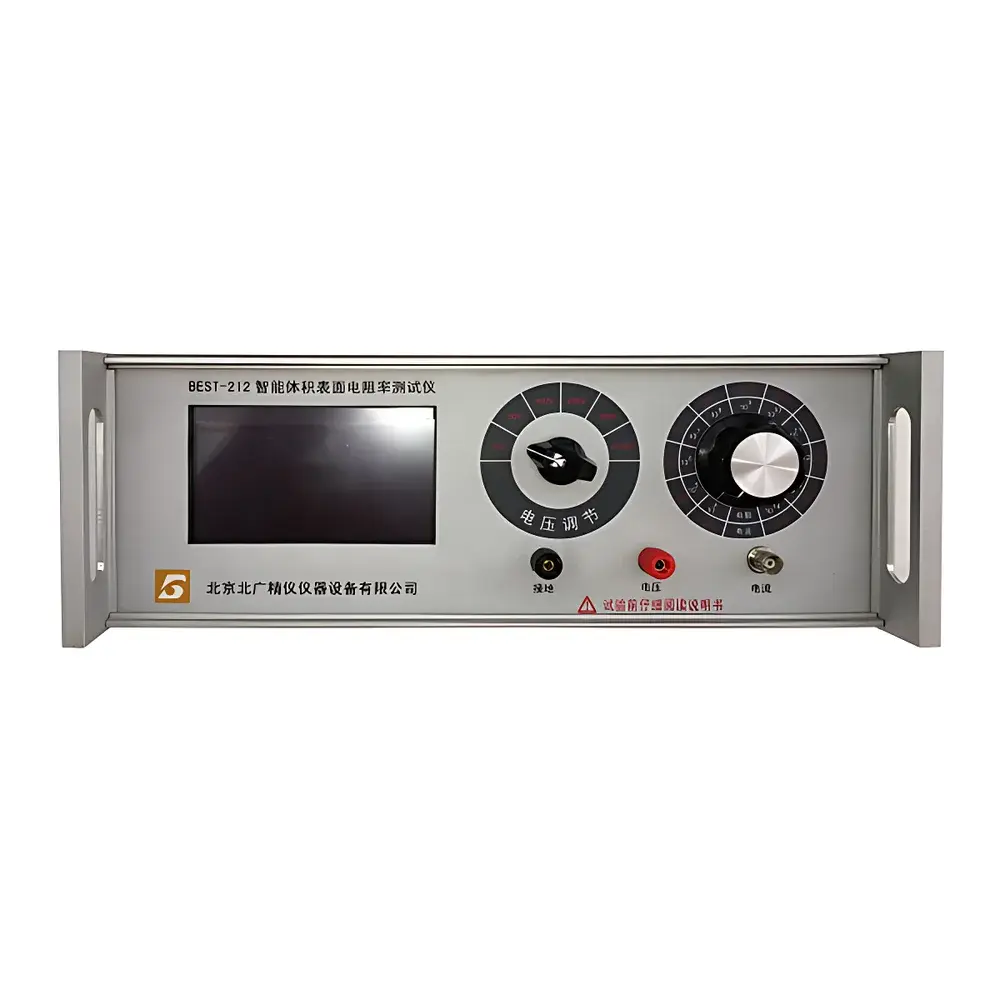
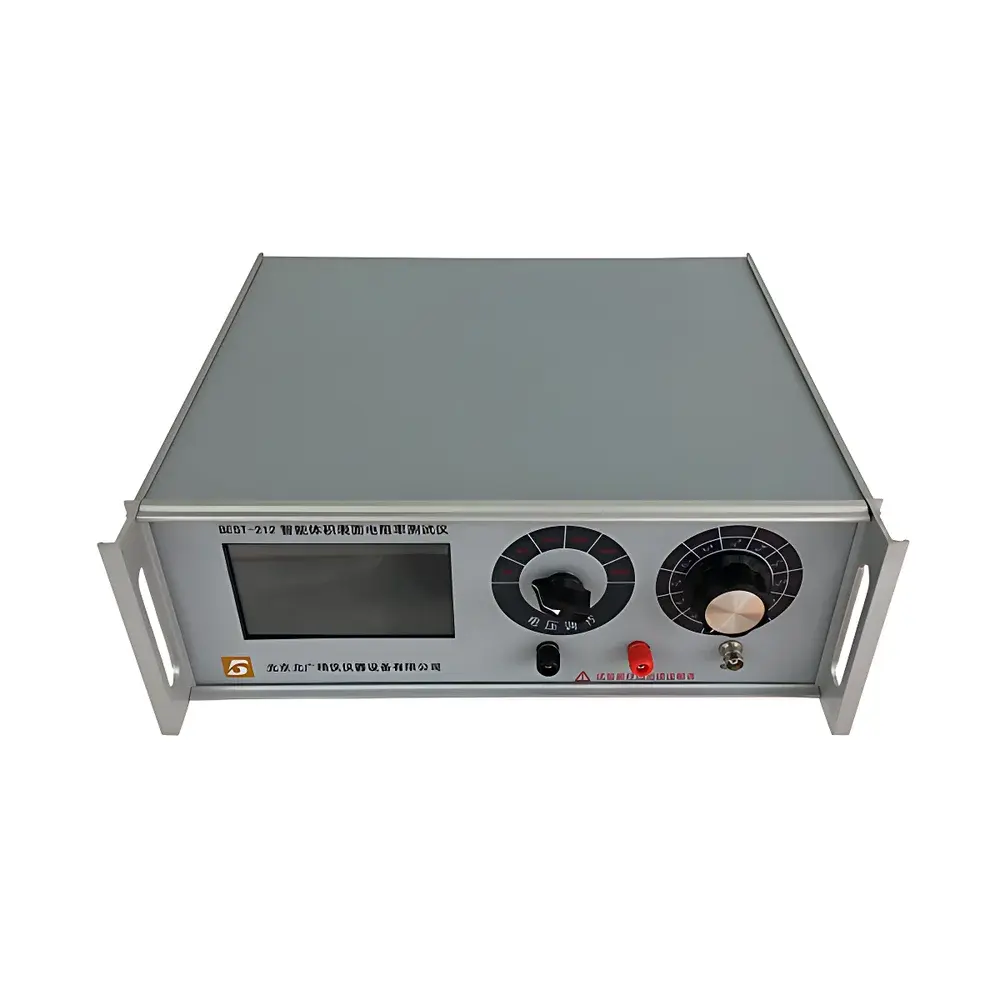
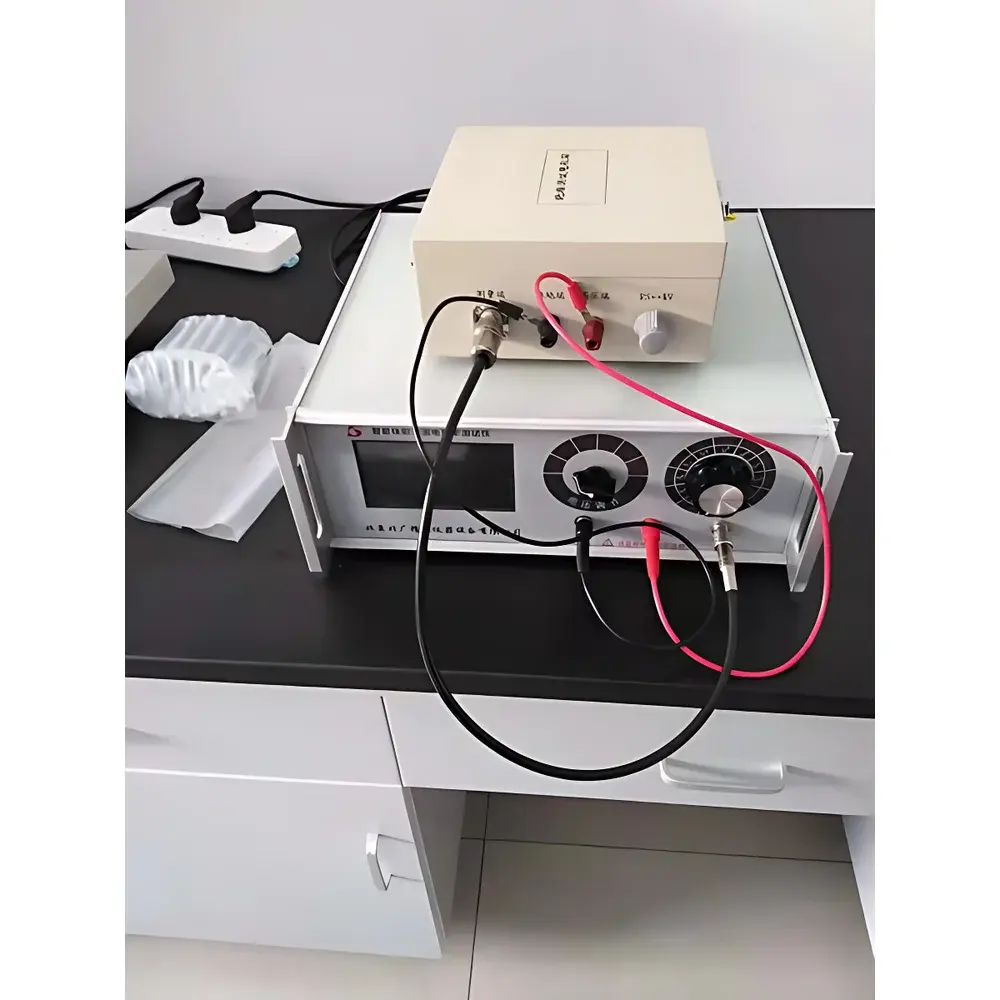
Beijing Guangjing GEST-212 High-Resistance Meter for Vulcanized Rubber Insulation Resistance Testing
| Brand | Beijing Guangjing / All Precision Instrument |
|---|---|
| Origin | Beijing, China |
| Manufacturer Type | Direct Manufacturer |
| Model | GEST-212 |
| Test Voltage Range | 100 V / 250 V / 500 V / 1000 V (adjustable) |
| Resistance Measurement Range | 1×10⁴ Ω to 1×10¹⁸ Ω |
| Current Measurement Range | 2×10⁻⁴ A to 1×10⁻¹⁶ A |
| Basic Accuracy | ±1% |
| Display | Digital LCD |
| Power Supply | AC 220 V, 50 Hz, ~5 W |
| Dimensions | 285 mm × 245 mm × 120 mm |
| Weight | ~5 kg |
| Compliance | GB/T 1410–2006, GB/T 18864–2002, GB/T 22042–2008, GB/T 22043–2008, GB/T 12703.4–2010, GB/T 12703.6–2010, GJB 3007A–2009, and other national standards for electrical resistivity and antistatic performance evaluation |
Overview
The Beijing Guangjing GEST-212 High-Resistance Meter is a precision instrument engineered for the direct measurement of volume and surface resistivity of vulcanized rubber, elastomers, plastics, films, textiles, flooring materials, and other insulating or antistatic compounds. Based on Ohm’s Law (R = V/I), it employs a stabilized high-voltage DC source and ultra-low-current sensing circuitry to deliver stable, real-time digital resistance readings without manual scaling—eliminating coefficient multiplication required by legacy electrometers. Its core architecture integrates a high-impedance input stage with guarded measurement paths, enabling accurate quantification of leakage currents as low as 1×10⁻¹⁶ A under controlled test voltages (100 V, 250 V, 500 V, or 1000 V). Designed for compliance-driven environments—including QC labs in rubber manufacturing, ESD-safe electronics assembly facilities, and textile R&D centers—the GEST-212 supports standardized resistivity determination per ASTM D257-equivalent methodologies implemented in Chinese national standards (e.g., GB/T 1410–2006 for volume/surface resistivity; GB/T 18864–2002 for industrial antistatic rubber products).
Key Features
- Direct digital readout of resistance values across the full 1×10⁴ Ω to 1×10¹⁸ Ω range—no manual range-factor correction required
- Four selectable test voltages (100 V, 250 V, 500 V, 1000 V) with stable output regulation and low ripple (<0.5%)
- Ultra-sensitive current measurement down to 1×10⁻¹⁶ A, supporting high-accuracy volume resistivity (ρᵥ) and surface resistivity (ρₛ) calculations
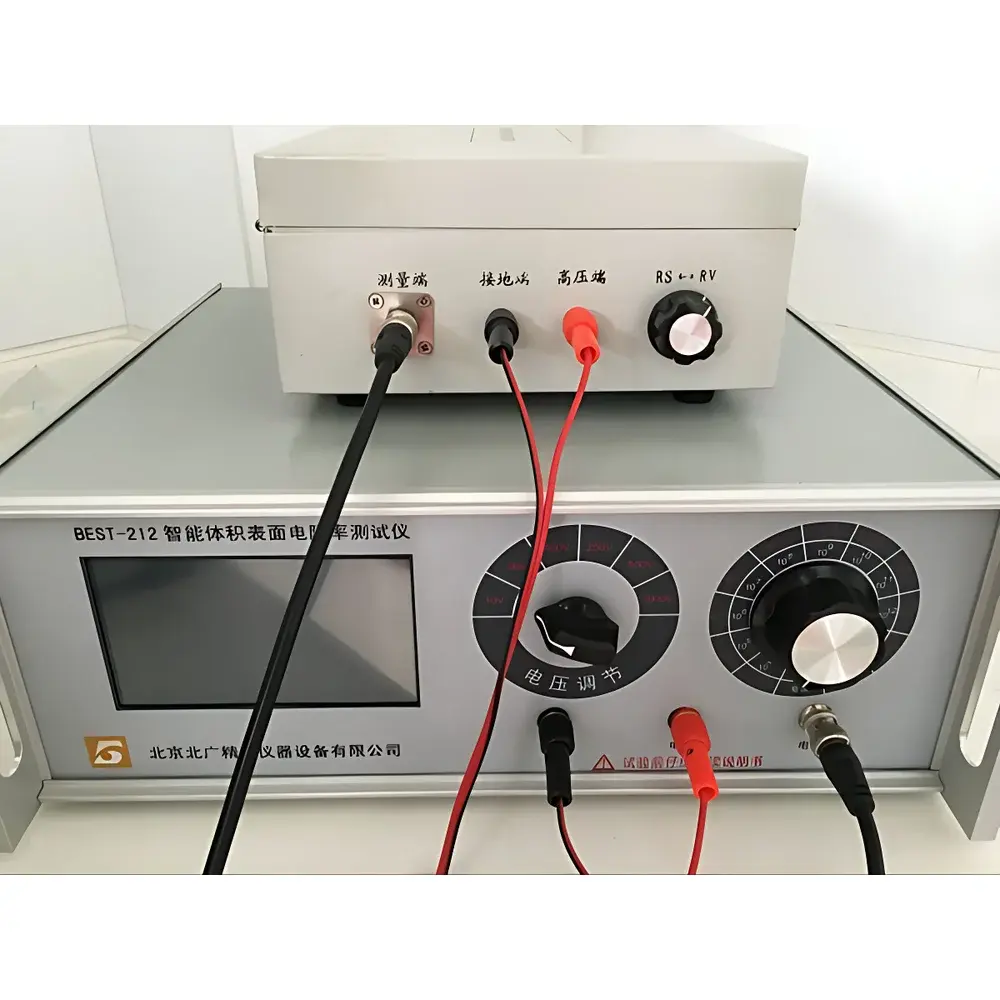
- Guarded tri-terminal measurement topology to suppress surface leakage and environmental noise during high-resistance testing
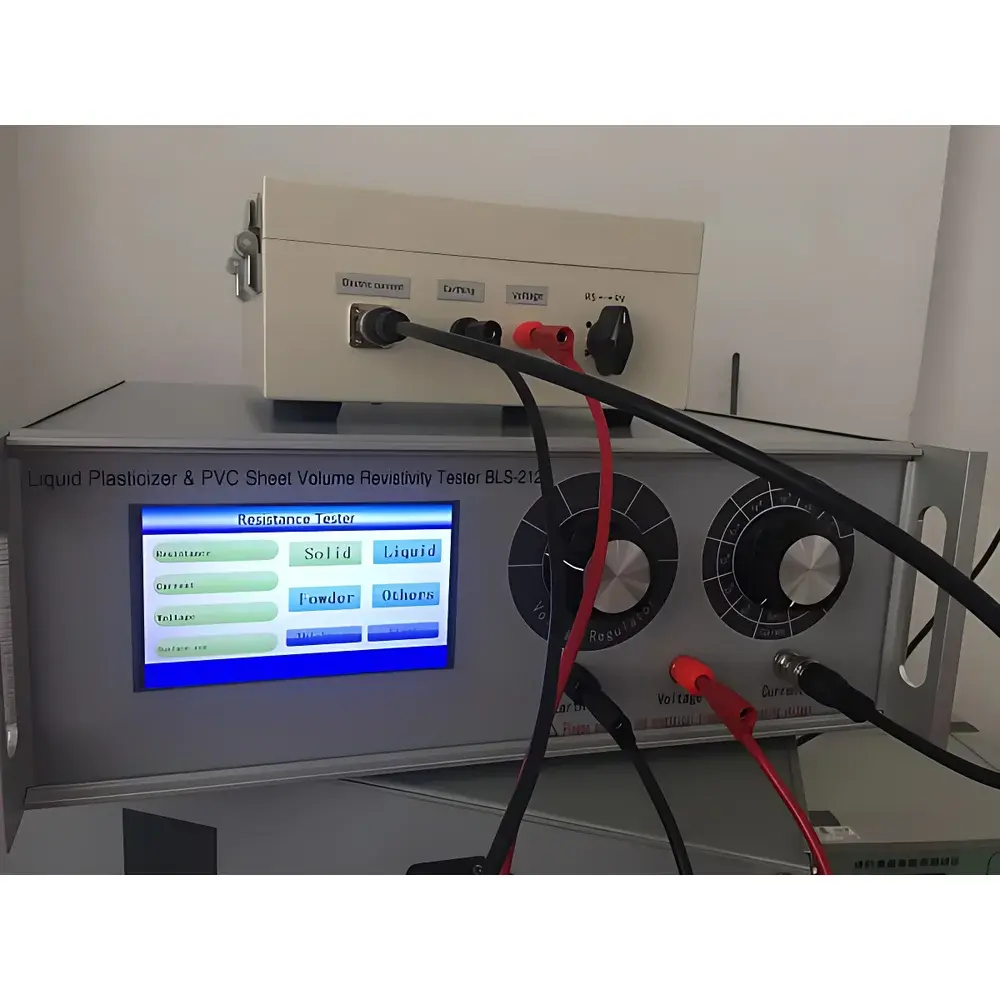
- LCD display with auto-ranging and overload indication (“1” display when exceeding upper limit)
- Integrated zero-adjust function for open-circuit current baseline calibration prior to measurement
- Compact benchtop form factor (285 × 245 × 120 mm) with <5 W power consumption and CE-compliant safety isolation
Sample Compatibility & Compliance
The GEST-212 accommodates solid, semi-solid, powdered, and liquid specimens via interchangeable electrode fixtures—including concentric ring electrodes for surface resistivity, parallel plate electrodes for volume resistivity, and coaxial probes for irregular or soft materials such as vulcanized rubber sheets, silicone gaskets, conductive polymer blends, and antistatic floor tiles. It fully supports test protocols defined in GB/T 1410–2006 (equivalent to IEC 62631-3-1), GB/T 18864–2002 (vulcanized rubber antistatic specifications), GB/T 22042–2008 (garment surface resistivity), and GJB 3007A–2009 (ESD control in defense electronics). All measurements adhere to standardized preconditioning (23°C ±2°C, 50% RH ±5%), 60-second voltage application, and post-electrification stabilization timing per normative clauses. The instrument’s design meets functional safety requirements for Class II insulation and complies with electromagnetic compatibility (EMC) limits per GB/T 18268.1–2010 (IEC 61326-1).
Software & Data Management
While the GEST-212 operates as a standalone analog-digital hybrid instrument without embedded firmware-based data logging, its measurement architecture is compatible with external PC-based acquisition via analog output (0–2 V proportional to log₁₀(R)) or optional RS-232 interface (available upon request). For regulated environments—including ISO/IEC 17025-accredited laboratories and GMP-aligned production QA—the instrument supports traceable calibration using NIST-traceable high-resistance standards (e.g., 10¹² Ω, 10¹⁴ Ω reference resistors). Full audit trails—including operator ID, test voltage, electrode configuration, ambient temperature/humidity logs, and pass/fail flags against specification limits—can be maintained manually or integrated into LIMS via CSV export from connected DAQ systems. Calibration certificates are issued with uncertainty budgets conforming to ISO/IEC 17025 Annex A.3.
Applications
- Volume resistivity verification of vulcanized rubber compounds used in HV cable jackets, insulating mats, and automotive sealing profiles
- Surface resistivity screening of ESD-safe footwear (per GB 4385–1995), cleanroom garments (GB/T 24249–2009), and conductive flooring (GB 50515–2010)
- Quality control of antistatic additives in polymeric formulations—tracking dispersion homogeneity and percolation thresholds
- Material qualification for aerospace elastomeric seals requiring ρᵥ > 10¹⁵ Ω·cm per GJB 105–1998-Z
- Research-grade characterization of nanocomposite dielectrics, graphene-loaded rubbers, and ionomeric membranes
- Failure analysis of insulation degradation in aged rubber components via time-resolved resistivity decay profiling
FAQ
What standards does the GEST-212 support for vulcanized rubber testing?
It conforms to GB/T 18864–2002 (Industrial Antistatic and Conductive Vulcanized Rubber Products), GB/T 1410–2006 (Volume/Surface Resistivity), and harmonized methods referenced in ASTM D991 and IEC 62631-3-1.
Can the instrument measure both volume and surface resistivity?
Yes—using appropriate electrode fixtures (e.g., guarded three-electrode system for volume resistivity; two-electrode concentric ring for surface resistivity), per GB/T 1410–2006 Annexes A and B.
Is the GEST-212 suitable for GLP or GMP-regulated environments?
It supports GLP/GMP workflows through documented calibration, operator training records, and manual audit trail maintenance; however, full 21 CFR Part 11 compliance requires integration with validated third-party data acquisition software.
How is measurement accuracy ensured at ultra-high resistance levels (>10¹⁶ Ω)?
Via guarded input architecture, low-leakage Teflon-insulated cabling, shielded enclosure, and strict adherence to electrostatic discharge (ESD) mitigation practices during operation—including use of grounded shielding boxes for samples.
Does the instrument require periodic recalibration?
Yes—annual calibration against certified reference resistors is recommended; Beijing Guangjing provides factory recalibration services with ISO/IEC 17025-certified uncertainty reporting.



