
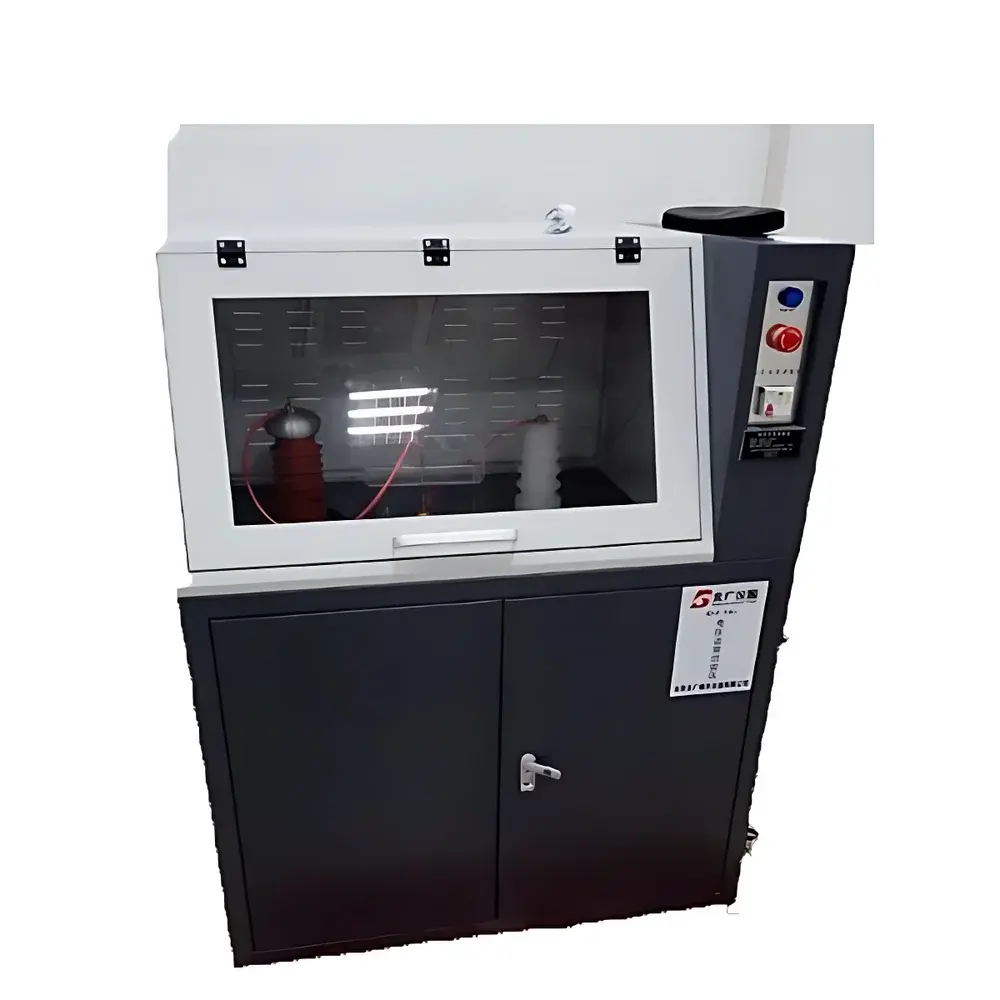
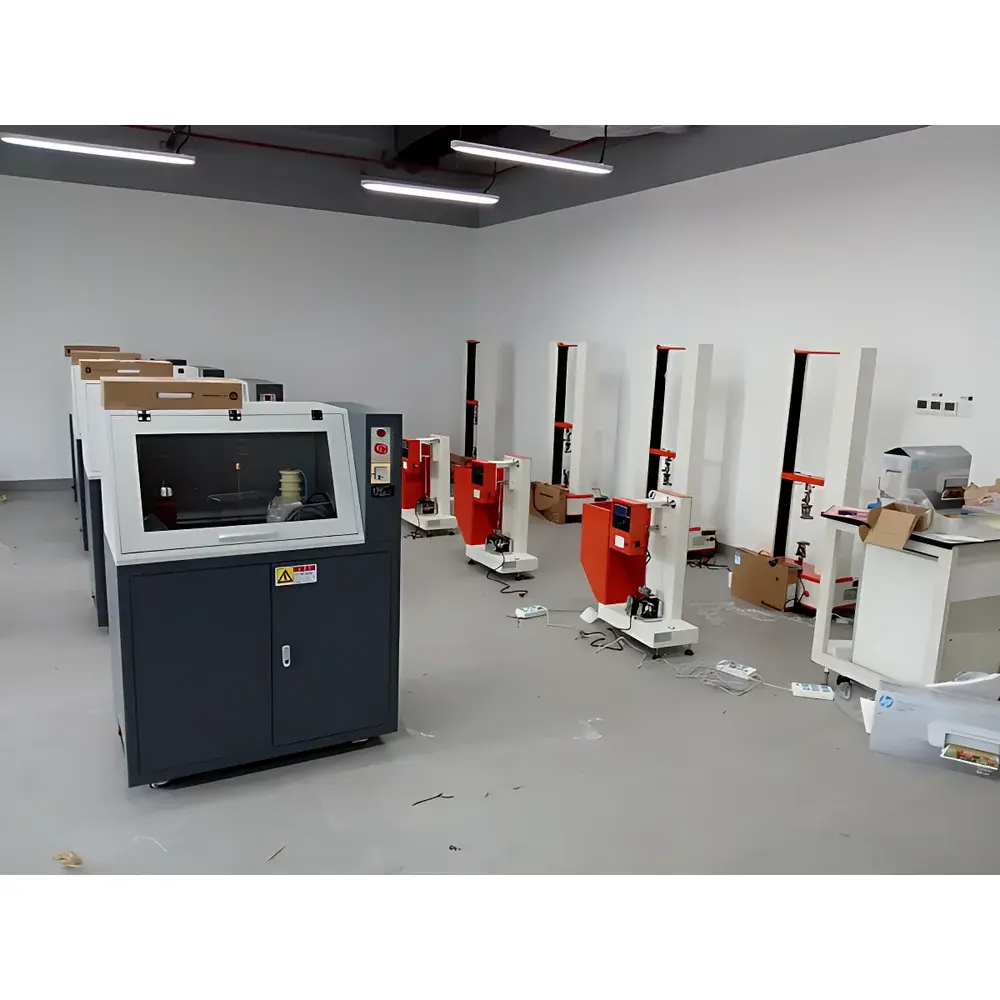
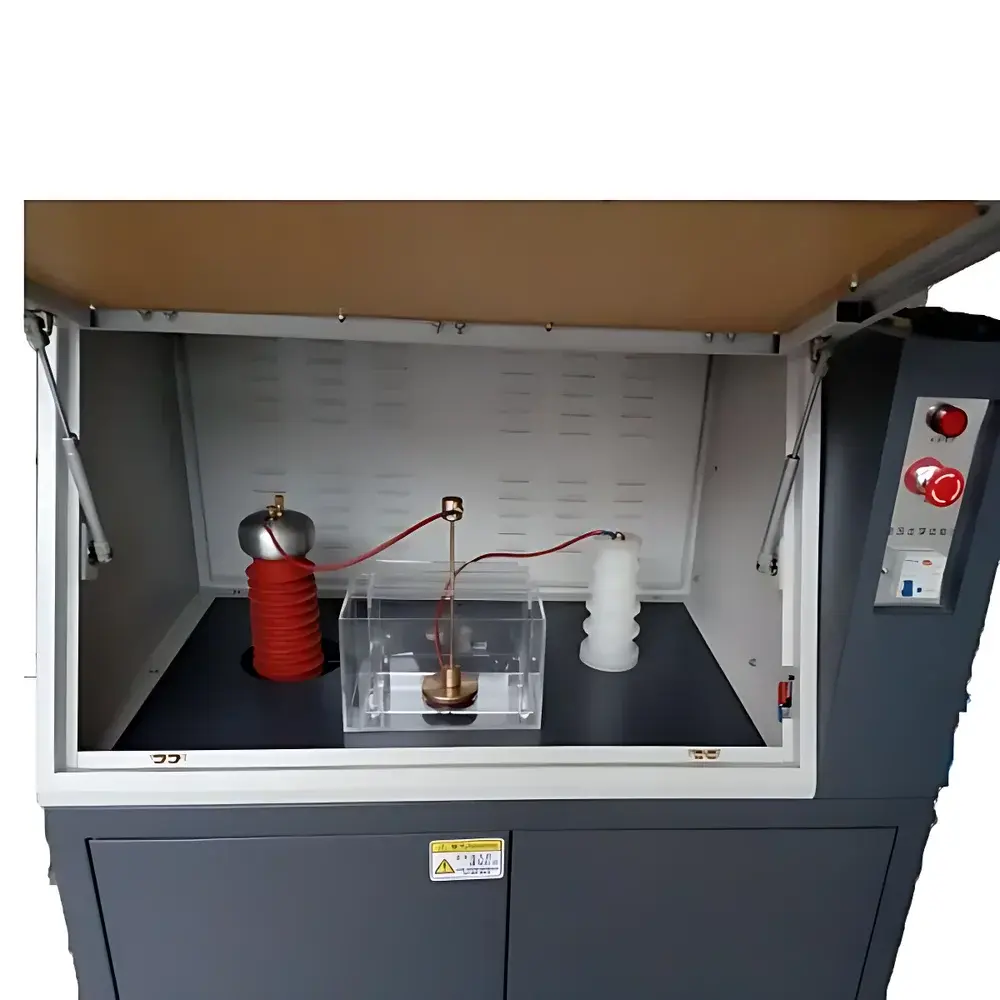
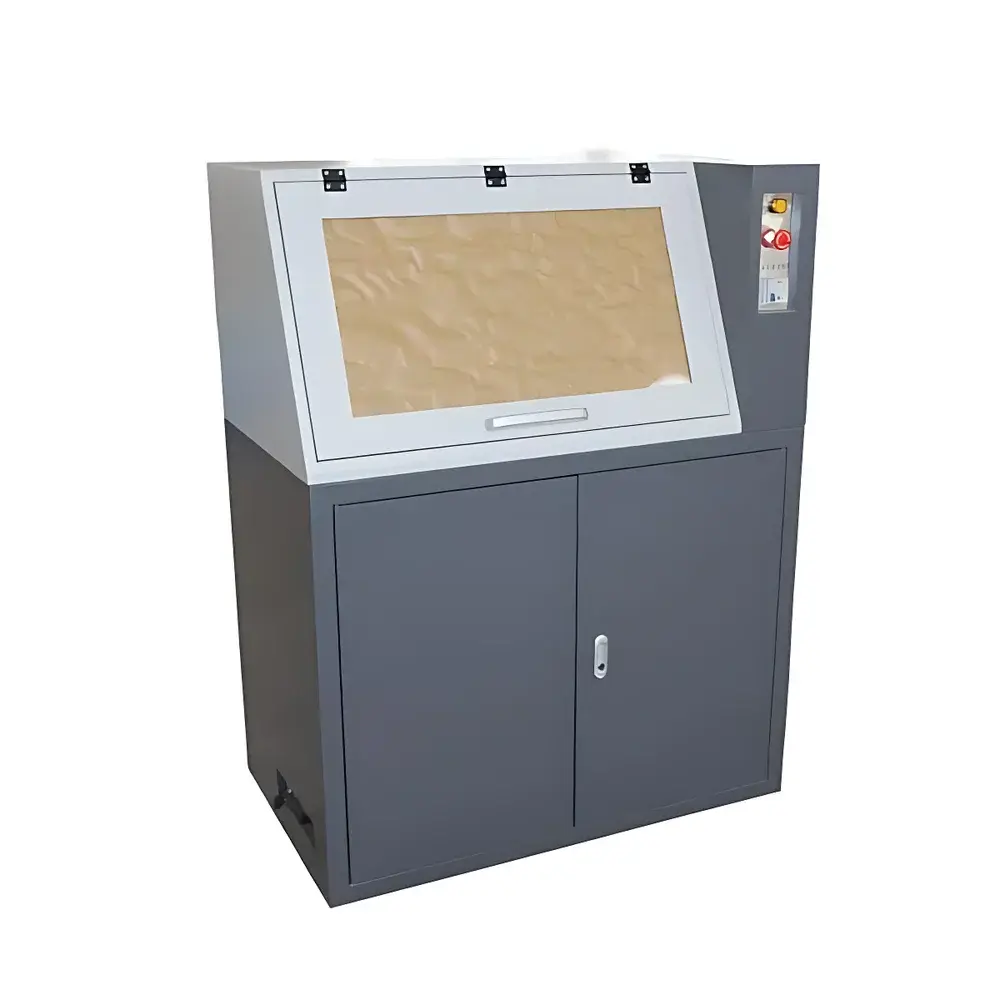
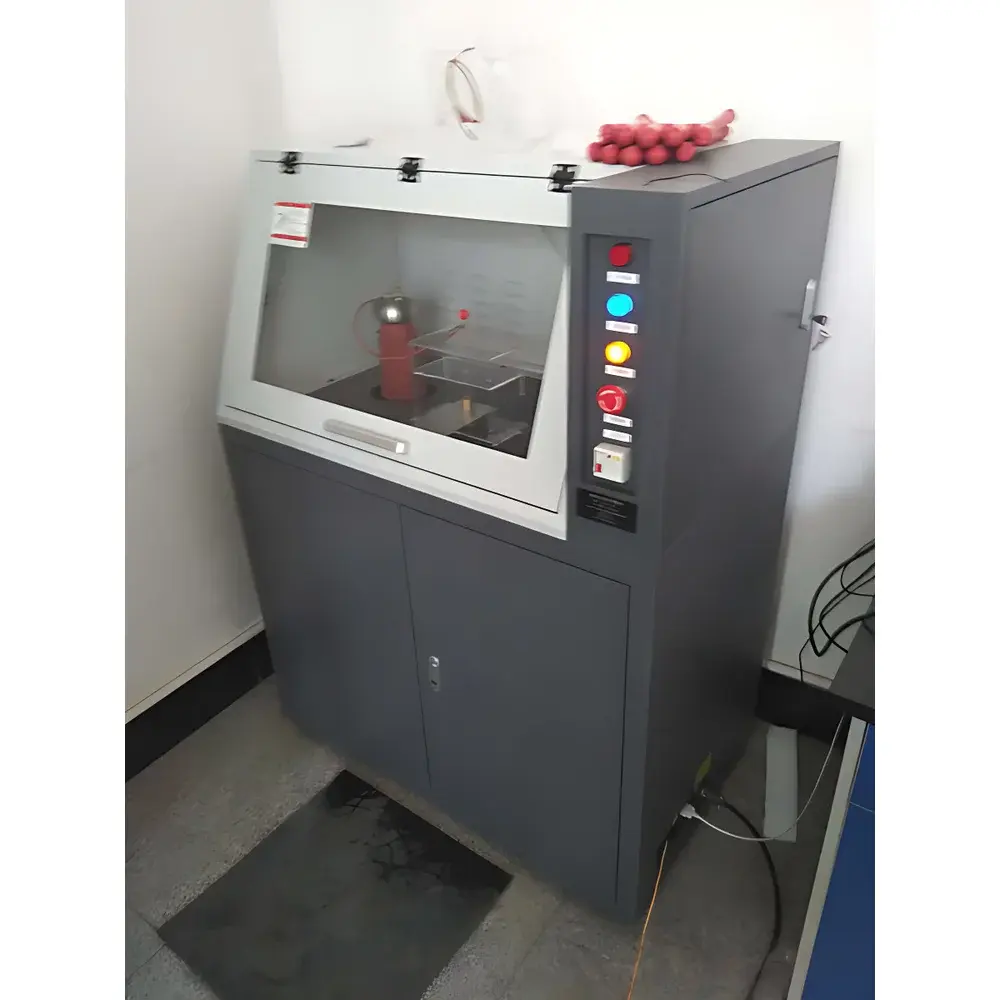
Beijing Guangjing Precision Instruments BDJC Series 50 kV Dielectric Strength Tester for Leather and Solid Insulating Materials
| Brand | Beijing Guangjing Precision Instruments |
|---|---|
| Origin | Beijing, China |
| Manufacturer Type | Direct Manufacturer |
| Product Category | Domestic |
| Model | BDJC Series |
| Maximum Breakdown Voltage | 50 kV |
| Input Voltage | 220 V AC |
| Output Voltage Range | 0–50 kV AC / DC |
| Power Rating | 5 kVA |
| Voltage Ramp Rates | 0.1, 0.2, 0.5, 1.5, 2.0, 2.5, 3.0 kV/s |
| Test Modes | Stepwise ramp, constant-rate ramp, withstand test (AC/DC) |
| Voltage Measurement Accuracy | ≤ ±1% |
| Withstand Time Range | 0–6 hours |
| Safety Protection | 9-level integrated protection system |
| Compliance | Designed per IEC 60243-1, ASTM D149, GB/T 1408.1, ISO 60243-1 |
Overview
The Beijing Guangjing Precision Instruments BDJC Series 50 kV Dielectric Strength Tester is an engineered solution for determining the electrical breakdown behavior of solid insulating materials—including leather, plastics, rubber, composite laminates, ceramics, glass, and impregnated fiber products—under standardized AC or DC voltage stress. Based on the principle of dielectric breakdown measurement per IEC 60243-1 and ASTM D149, the instrument applies a controlled, continuously adjustable high voltage across a defined electrode configuration until electrical failure occurs. The resulting breakdown voltage (kV) and derived dielectric strength (kV/mm) serve as critical quality control metrics in R&D, production QA/QC, and regulatory compliance testing for materials used in footwear, automotive interiors, protective gear, and industrial insulation applications. Its design emphasizes reproducibility, traceable voltage calibration, and operational safety in laboratory and factory environments.
Key Features
- Full-range programmable output: 0–50 kV AC and DC, with independent voltage regulation via non-contact solid-state stepless transformer control.
- Precise voltage ramp control: Seven selectable linear ramp rates (0.1–3.0 kV/s), supporting both ASTM D149 Method A (short-time test) and Method B (step-by-step test).
- Integrated 9-level safety architecture: Includes overvoltage cutoff, overcurrent interruption (<0.1 s response), interlocked safety door monitoring, zero-voltage reset, post-test automatic discharge, dedicated grounding terminal, electromagnetic shielding, software-based misoperation lockout, and fail-safe discharge circuitry.
- High-fidelity signal acquisition: Imported Japanese松叶 (Matsuyama) voltage and current sensing modules ensure ≤±1% measurement accuracy across the full 50 kV range.
- Dual-mode test execution: Supports AC and DC breakdown testing, withstand voltage hold (0–6 h), and short-circuit tolerance verification under transient fault conditions.
- Modular electrode system: Supplied with standard 25 mm and 75 mm disk electrodes, plus optional spherical and cylindrical electrodes for material-specific contact geometry per GB/T 1408.1 Annex A.
Sample Compatibility & Compliance
The BDJC Series accommodates flat, rigid, or semi-flexible solid specimens up to 10 mm thickness, including tanned leather substrates, synthetic leather composites, polyurethane-coated textiles, and vulcanized rubber sheets. Specimens are conditioned per standardized pre-treatment protocols—e.g., 24 h at 20±5°C / 65±5% RH (GB/T 2941, ISO 2231)—prior to testing. All test configurations comply with the electrode spacing, oil immersion (transformer oil, ASTM D877), and environmental requirements specified in IEC 60243-1, ASTM D149, and GB/T 1408.1. The instrument’s mechanical construction meets IP2X enclosure rating, and its grounding topology satisfies IEC 61000-4-5 surge immunity and EN 61010-1 safety directives for laboratory electrical equipment.
Software & Data Management
The proprietary Windows-based control software provides real-time visualization of voltage, current, and time-domain curves during test execution. It supports automated data logging at ≥10 Hz sampling rate, configurable pass/fail thresholds, and audit-trail-enabled operation history (user ID, timestamp, parameter set, result status). Up to five test records can be stored per session; results export directly to Excel-compatible .csv files. Curve overlay functionality enables comparative analysis of multiple breakdown profiles—critical for batch consistency assessment and aging studies. Software architecture adheres to GLP-aligned principles: electronic signatures, immutable result archiving, and configurable report templates meeting internal QA documentation standards. No FDA 21 CFR Part 11 compliance out-of-box; optional validation package available upon request.
Applications
This tester is routinely deployed in leather goods manufacturing for evaluating the dielectric integrity of finished upholstery leathers, glove materials, and safety boot linings exposed to humid or contaminated environments. It supports qualification of electrically insulated components in automotive interiors (e.g., dashboard trim, seat covers), aerospace cabin materials, and medical device enclosures requiring Class II insulation certification. In academic and industrial polymer labs, it facilitates comparative studies of surface-modified leathers, conductive filler dispersion effects, and hydrophobic coating efficacy under accelerated voltage stress. Routine use includes incoming raw material screening, process validation (e.g., tanning chemistry impact on resistivity), and failure root-cause analysis following field incidents involving electrostatic discharge or moisture ingress.
FAQ
What standards does this instrument comply with?
It is configured to meet the core test methodologies of IEC 60243-1, ASTM D149, and GB/T 1408.1. Full conformance requires proper electrode selection, oil conditioning, and environmental control per each standard’s annexes.
Can the system perform both AC and DC breakdown tests?
Yes—dual-mode high-voltage generation allows independent AC (50 Hz) and DC output, each with dedicated ramp profiles and hold functions.
Is the software compatible with Windows 10/11 and networked lab systems?
The native application runs on Windows 10/11 (64-bit) and supports LAN-connected deployment; however, it does not include OPC UA or LabVIEW driver support without custom integration.
What maintenance is required for long-term accuracy?
Annual calibration of voltage and current sensors against NIST-traceable references is recommended. Oil dielectric strength must be verified before each test series using ASTM D877 procedures.
Does the system support automated electrode positioning or thickness compensation?
No—electrode alignment and specimen thickness entry are manual inputs. Thickness is used solely for post-test dielectric strength calculation (kV/mm); no real-time compensation is applied during voltage ramping.



