
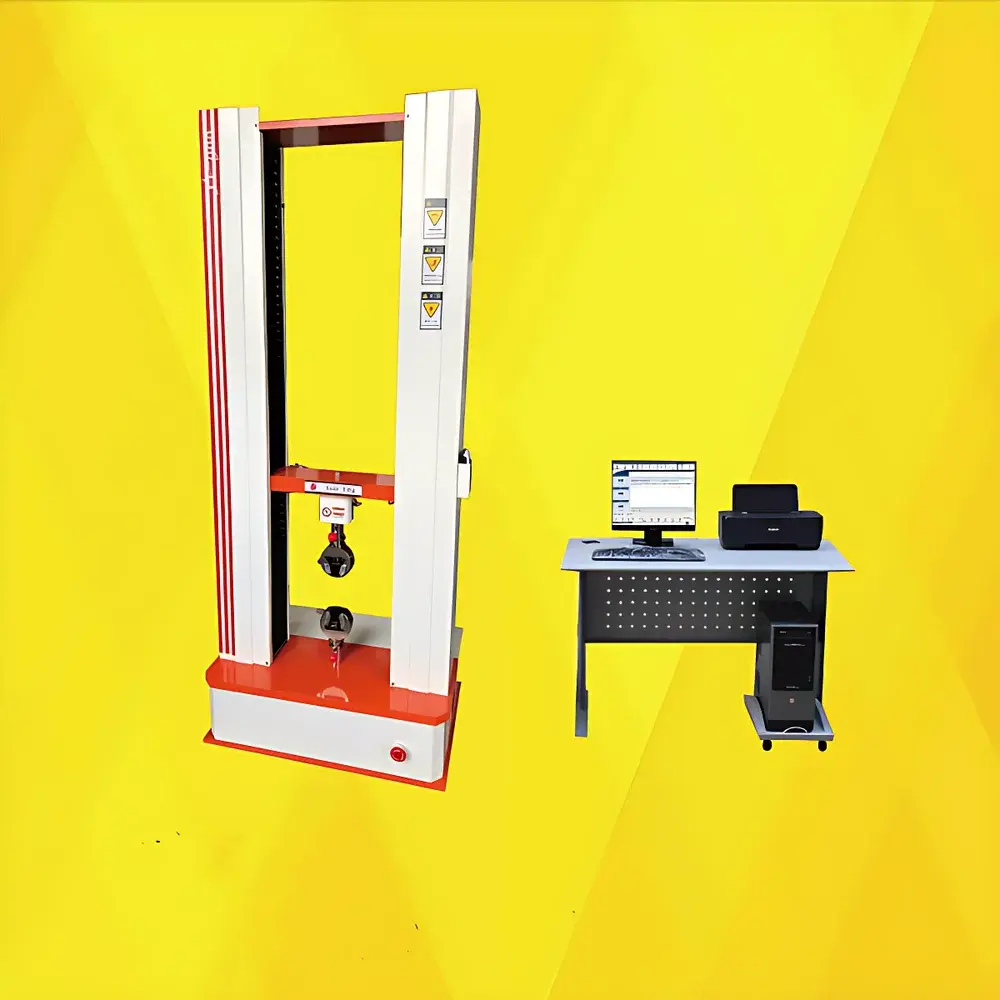
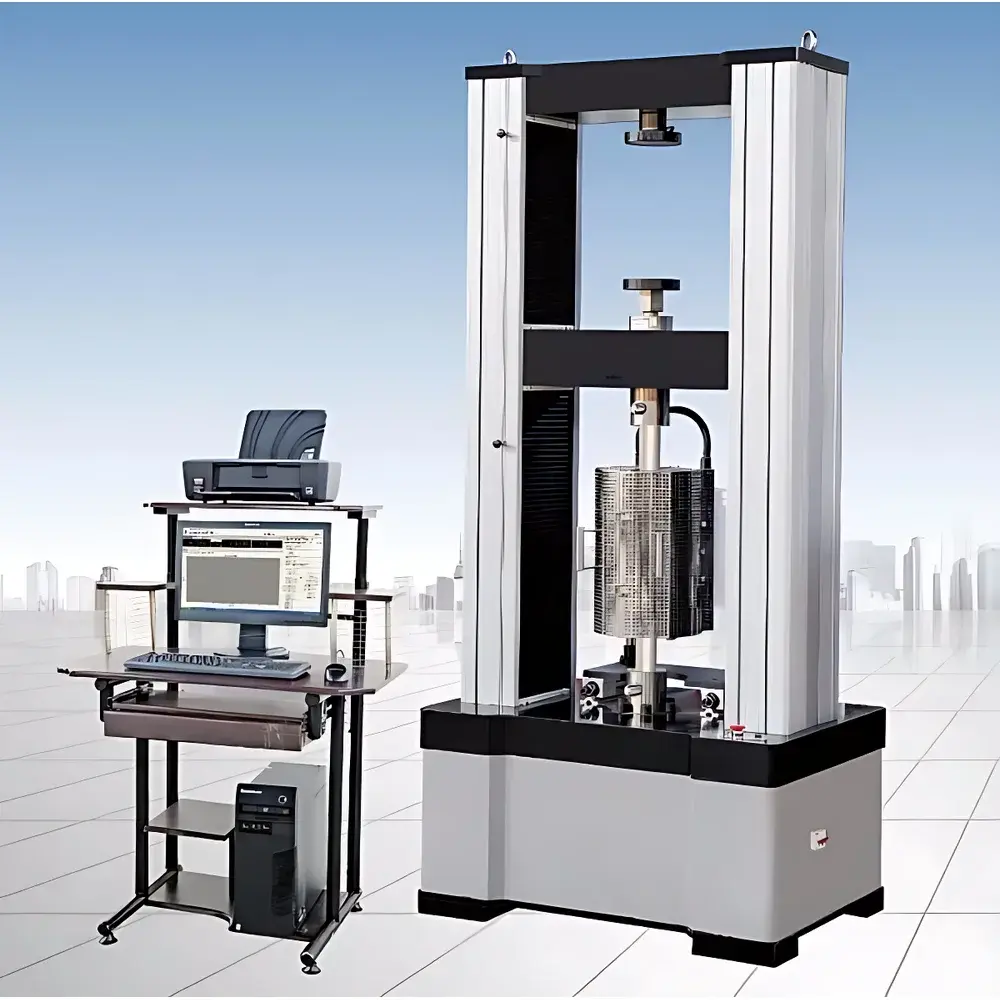
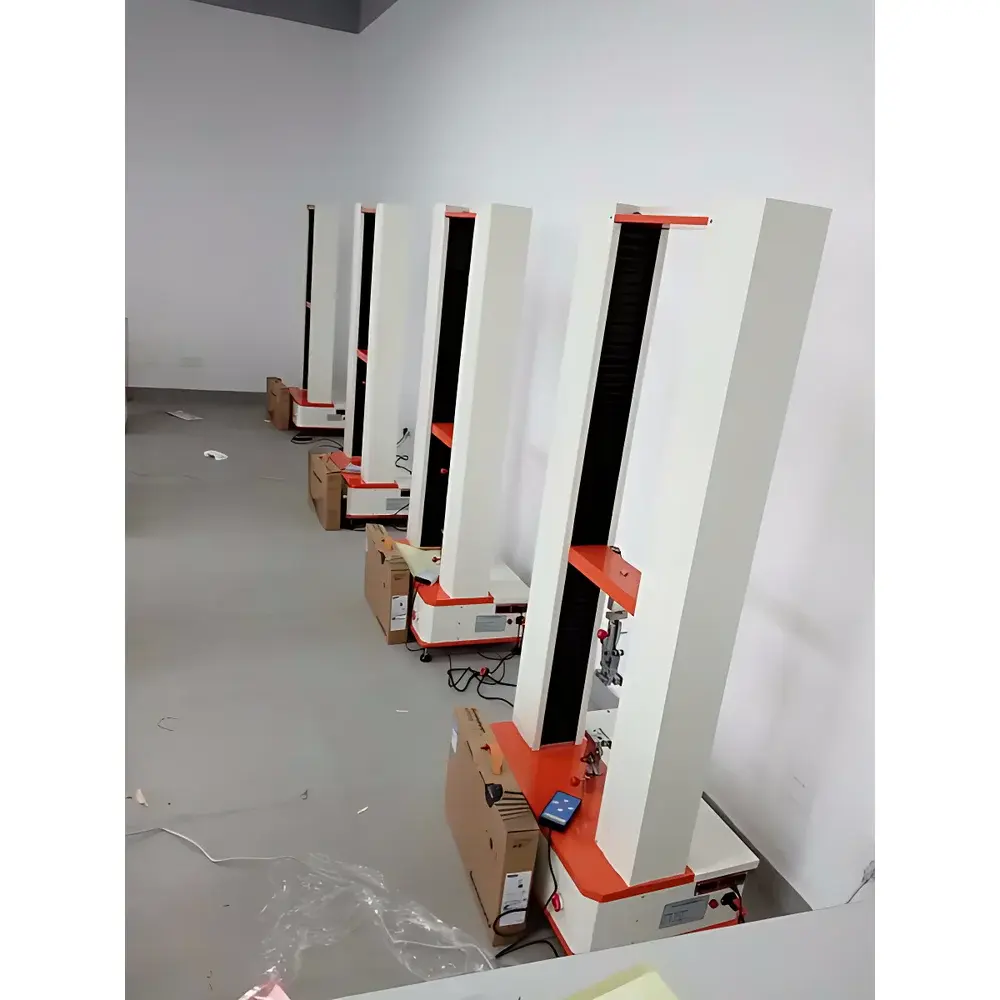
Beijing North Guang Precision Instrument BWN-5 Universal Testing Machine for Non-Metallic and Elastomeric Materials
| Brand | Beijing North Guang Precision Instrument |
|---|---|
| Origin | Beijing, China |
| Manufacturer Type | Direct Manufacturer |
| Equipment Type | Electromechanical Universal Testing Machine |
| Model | BWN-5 |
| Max. Test Force | 5 kN |
| Accuracy Class | ISO 7500-1 / ASTM E4 Class 1 |
| Force Resolution | 1/300,000 full scale |
| Force Measurement Error | ±1% of reading |
| Displacement Range | 0–999 mm |
| Displacement Resolution | 0.001 mm |
| Displacement Accuracy | ±1% of reading |
| Speed Range | 0.05–500 mm/min (infinitely variable) |
| Power Supply | 220 V ±10%, 50 Hz, 0.5 kW |
| Weight | 120 kg |
| Operating Environment | 10–35 °C, 30–85% RH |
| Compliance | GB/T 228.1, ISO 6892-1, ASTM D412, ASTM D638, ASTM D790, ASTM D1708, ISO 37, ISO 527, JIS K6251, EN 13924 |
Overview
The Beijing North Guang Precision Instrument BWN-5 Universal Testing Machine is an electromechanical, microprocessor-controlled system engineered for high-fidelity mechanical characterization of non-metallic, polymeric, and elastomeric materials—including natural and synthetic rubbers, thermoplastics, elastomer composites, textiles, films, foams, and fiber-reinforced laminates. It operates on the principle of controlled uniaxial force application via a precision ball-screw actuator driven by a digitally regulated servo motor. Load is measured directly using a high-stability, temperature-compensated load cell calibrated to ISO 7500-1 Class 1 standards; displacement is acquired via optical encoder feedback with sub-micron resolution. The system delivers closed-loop control across three modes—load, displacement, and strain—enabling precise execution of standardized tensile, compression, flexural, peel, tear, shear, and puncture protocols per GB, ISO, ASTM, JIS, and EN methodologies.
Key Features
- Electromechanical architecture eliminates hydraulic oil, ensuring zero fluid contamination, minimal maintenance, and operation in cleanroom-adjacent or academic lab environments.
- Wide dynamic speed range (0.05–500 mm/min), offering >10⁶ speed ratio—critical for capturing both quasi-static viscoelastic response and rapid failure events in elastomers.
- High-force-resolution load cell (1/300,000 FS) combined with real-time digital filtering ensures robust signal integrity during low-force, high-elongation tests typical of rubber and TPE specimens.
- Modular fixture interface supports standardized grips (pneumatic, wedge, roller, peel, bend), including optional self-aligning universal joints to minimize bending moments and preserve test validity under off-axis loading.
- Windows-based control software provides full compliance-ready functionality: audit trail logging, user-level access control, electronic signature support, and 21 CFR Part 11–compatible data archiving.
- Integrated safety architecture includes hardware-based overload cutoff, emergency stop circuitry, overtravel limit switches, and automatic return-to-start positioning post-test.
Sample Compatibility & Compliance
The BWN-5 accommodates specimens ranging from thin elastomeric films (≥0.1 mm thickness) to reinforced rubber cords, vulcanized sheet stock, extruded profiles, and molded elastomeric components. Its design satisfies mechanical testing requirements for ISO 37 (vulcanized rubber tensile properties), ASTM D412 (rubber tensile testing), ASTM D638 (plastics tensile properties), ASTM D790 (flexural properties), and ISO 527 (tensile behavior of plastics). All force and displacement measurements are traceable to national metrological standards; annual calibration per ISO/IEC 17025 is recommended. The system meets GLP and GMP documentation requirements when configured with enabled audit trails, electronic signatures, and immutable raw data export (CSV, XML, PDF).
Software & Data Management
The embedded Windows-native software suite supports multi-language UI (English/Chinese), real-time dual-axis plotting (e.g., stress–strain, load–displacement, load–time), and synchronized parameter overlays. Test sequences can be pre-programmed with conditional branching (e.g., hold at 100% strain for 60 s, then ramp to failure). Raw data files retain metadata including operator ID, environmental conditions (manually entered), calibration certificate IDs, and instrument firmware version. Export formats include Excel (.xlsx), Word (.docx), and standardized XML for LIMS integration. All curve annotations, peak detection points (e.g., yield, break, modulus at 100%/300% elongation), and statistical summaries (mean, SD, CV%) are automatically generated and editable within report templates compliant with internal QA templates or external regulatory submissions.
Applications
This system serves as a primary mechanical validation tool in R&D labs developing elastomeric seals, automotive NVH components, medical tubing, conveyor belting, footwear soles, and wire insulation compounds. It enables quantification of critical parameters including tensile strength, elongation at break, modulus at defined strain levels (M100, M300), tear resistance (trouser tear, die C), peel adhesion (90°/180°), compressive set, and cyclic fatigue performance under controlled strain amplitude. In quality control settings, it supports incoming material verification against supplier specifications and batch release testing per ISO 9001 and IATF 16949 requirements. Educational institutions utilize its intuitive interface and comprehensive method library for teaching polymer physics, viscoelastic theory, and standardization principles.
FAQ
What is the maximum specimen length this machine can accommodate?
The effective test stroke is 999 mm; however, usable length depends on grip type and extensometer configuration. For standard tensile bars per ASTM D412, maximum gauge length is 50 mm with 100 mm total clamping length.
Does the system support ASTM D412 Type A and Type C dumbbell specimens?
Yes—standard pneumatic or manual wedge grips accept both geometries; optional specimen alignment fixtures ensure consistent centering and reduce edge-induced failure.
Can the software generate modulus values at multiple strain points (e.g., M100, M200, M300)?
Yes—the analysis module calculates tangent and secant moduli at user-defined strain intervals and exports them directly into summary tables.
Is third-party calibration certification included with purchase?
A factory calibration certificate traceable to CNAS-accredited standards is supplied; full ISO/IEC 17025 calibration with uncertainty budget requires separate service engagement.
What maintenance intervals are recommended for long-term accuracy retention?
Lubrication of lead screws every 6 months; annual verification of load cell linearity and encoder resolution; biennial replacement of timing belt if used in high-cycle applications.



