
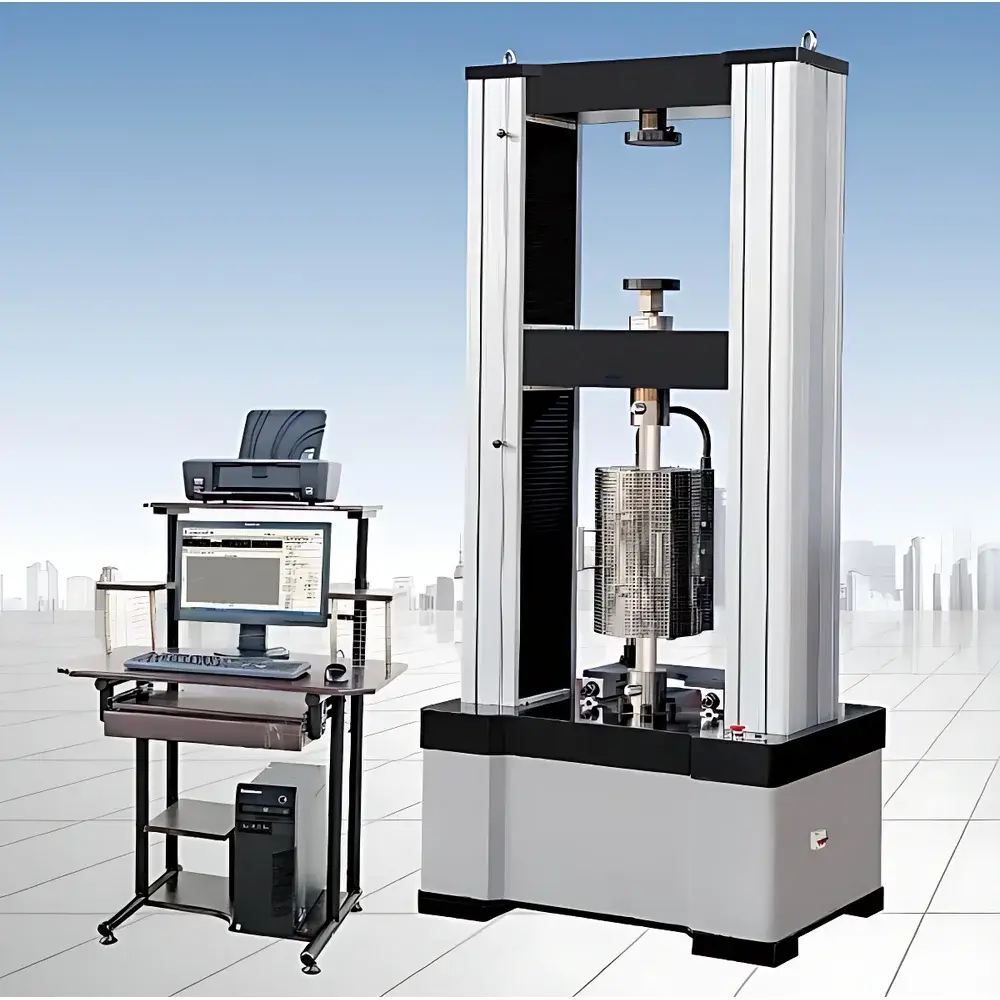
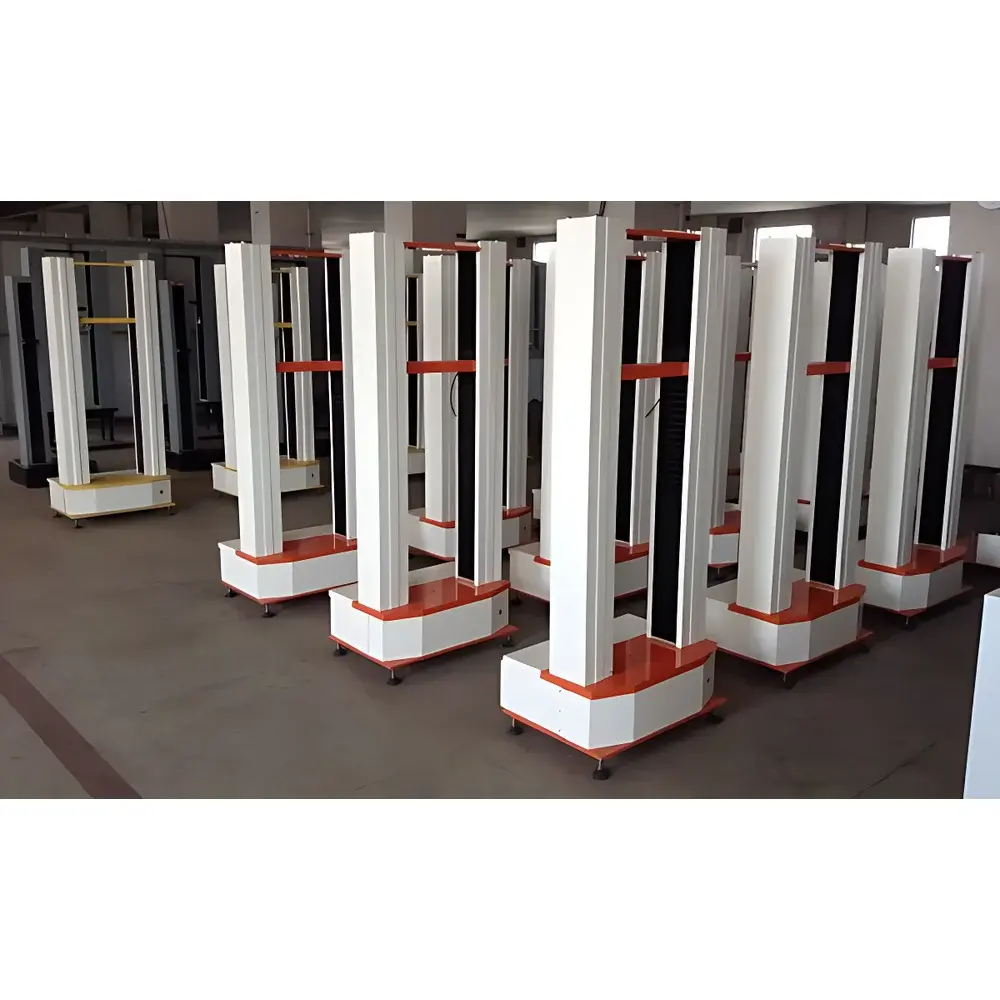
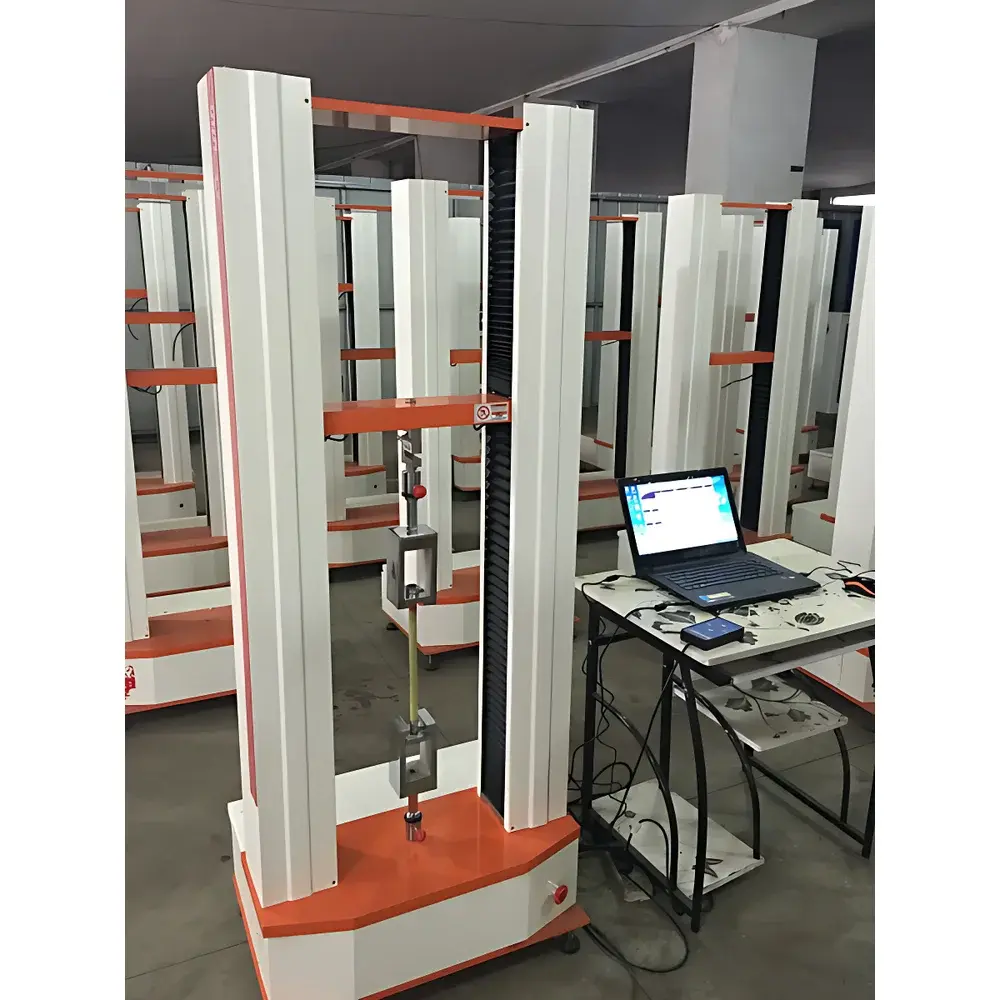
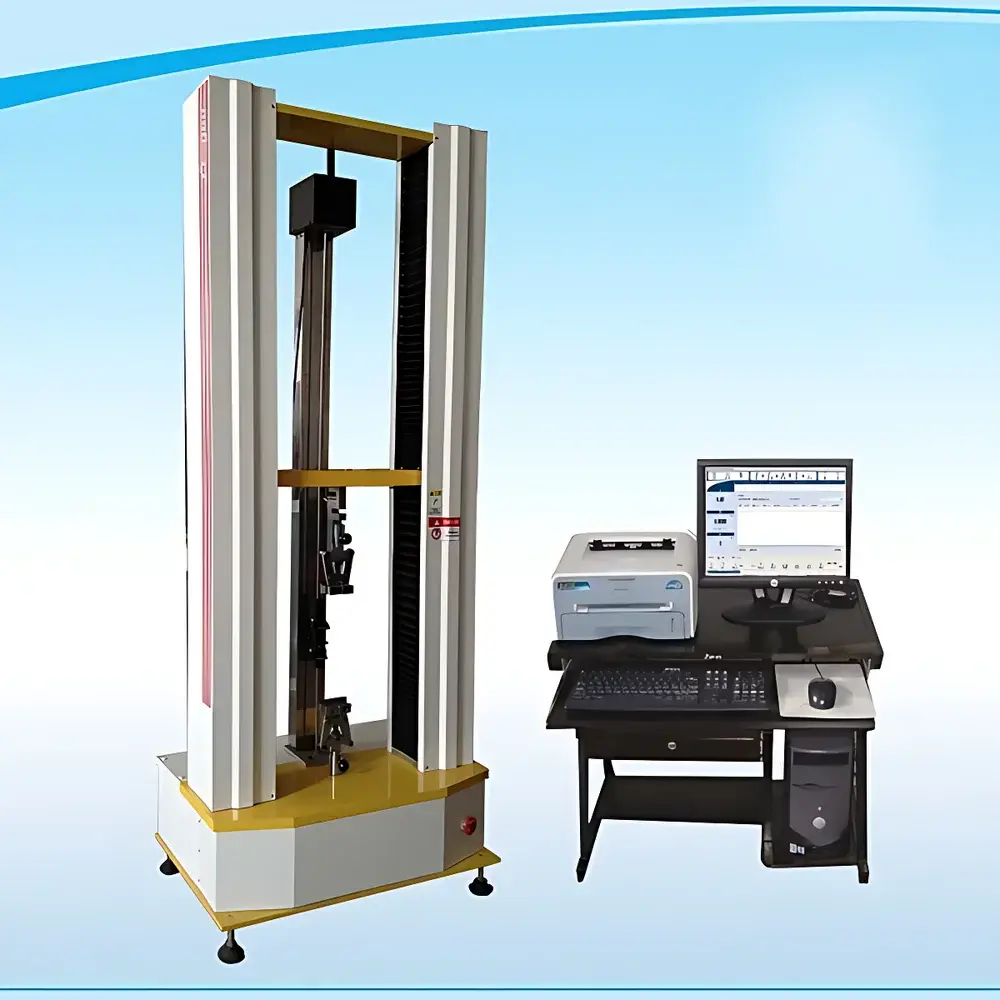
Beijing North Guang Precision Instruments BWN-5KN Electronic Universal Testing Machine for Copper Products and Metallic/Non-Metallic Materials
| Brand | Beijing North Guang Precision Instruments |
|---|---|
| Origin | Beijing, China |
| Manufacturer Type | Direct Manufacturer |
| Product Category | Domestic (China-made) |
| Model | BWN-5KN |
| Instrument Type | Electronic Universal Testing Machine |
| Maximum Test Load | 0–5 kN |
| Force Measurement Accuracy | ±1% of reading |
| Displacement Resolution | 0.01 mm |
| Speed Range | 0.05–500 mm/min (infinitely variable) |
| Effective Force Range | 2–100% of full scale |
| Tensile Stroke | 0–100 mm (excluding fixtures) |
| Power Supply | 220 V, 50 Hz |
Overview
The BWN-5KN Electronic Universal Testing Machine is a precision-engineered mechanical testing system designed for static tensile, compression, bending, peel, shear, and elongation characterization of copper products, metallic alloys, polymers, composites, and other engineering materials. Based on servo-controlled electromechanical actuation and high-fidelity load-cell transduction, the system operates on fundamental principles of uniaxial stress–strain mechanics in accordance with ASTM E8/E8M, ISO 6892-1, GB/T 228.1, and related national and international standards for metallic material testing. Its rigid frame architecture—featuring high-strength precision-ground columns, preloaded ball-screw transmission, and Taiwan-sourced servo motor with digital PWM speed regulation—ensures minimal deflection, high positional repeatability, and long-term metrological stability. The machine delivers consistent force application across its full 5 kN capacity, enabling reliable determination of yield strength, ultimate tensile strength, Young’s modulus, elongation at break, and other critical mechanical parameters under controlled displacement or load-rate conditions.
Key Features
- Full-digital closed-loop control system with real-time acquisition of load, displacement, and strain signals via high-resolution A/D conversion and embedded pulse-width modulation (PWM) drive logic.
- Automatic range switching: dynamically selects optimal force measurement range based on applied load to maintain resolution and accuracy across the entire 2–100% full-scale operating window.
- Two-stage safety protection: programmable software-based displacement limits combined with mechanical hard stops prevent overtravel and frame damage.
- Overload cutoff: halts operation automatically when load exceeds 103–105% of rated capacity, protecting both sensor integrity and specimen integrity.
- Intelligent test sequencing: supports batch execution of identical test protocols with pre-defined specimen geometry, gauge length, and rate profiles—reducing operator intervention and inter-test variability.
- Real-time dynamic visualization: simultaneous display of load–displacement curves, numerical readouts, and statistical summaries during test execution.
- Zero-drift compensation: hardware-level digital zeroing and auto-calibration eliminate thermal drift and offset accumulation without manual adjustment.
- Modular condition templates: users can save and recall standardized test configurations—including fixture type, speed profile, hold duration, and analysis criteria—for rapid setup and cross-laboratory method harmonization.
Sample Compatibility & Compliance
The BWN-5KN accommodates a broad spectrum of specimen geometries and material classes—including drawn copper rods, extruded tubing, stamped connectors, braided conductors, and clad laminates—via interchangeable jaw systems (flat, wedge, pneumatic, or custom-designed). It meets essential regulatory and quality assurance requirements for mechanical property verification in production environments governed by ISO/IEC 17025, GLP, and GMP frameworks. Data acquisition and reporting workflows comply with traceability mandates under FDA 21 CFR Part 11 when configured with audit-trail-enabled software modules. All mechanical test outputs—including stress–strain curves, proof strength values, and modulus calculations—are fully traceable to NIST-traceable force calibration standards and certified displacement verification procedures.
Software & Data Management
The system operates under a Windows XP–based native application with bilingual (English/Chinese) GUI support and intuitive drag-and-drop workflow configuration. Test data are stored in structured binary format with embedded metadata (operator ID, timestamp, environmental conditions, calibration status). Export options include editable Microsoft Word and Excel reports with customizable headers, logos, and statistical annotations. Post-test curve analysis includes point interrogation, region zooming, tangent modulus derivation, and automatic identification of upper/lower yield points per ISO 6892-1 Annex C. Raw data files support third-party import into MATLAB, Python (NumPy/Pandas), or Minitab for advanced statistical modeling and SPC charting.
Applications
This testing machine serves as a core qualification tool across multiple industrial sectors: incoming inspection of copper wire and busbar stock in electrical component manufacturing; mechanical validation of heat-treated copper alloys in aerospace fastener supply chains; R&D evaluation of copper-clad laminates for printed circuit board development; QC release testing of copper-based brazing foils and solder preforms; and failure analysis of copper interconnects subjected to thermal cycling or vibration fatigue. It is routinely deployed in university metallurgy labs for teaching fundamental concepts of plastic deformation, dislocation dynamics, and ductile-to-brittle transition behavior in face-centered cubic (FCC) metals.
FAQ
What standards does the BWN-5KN conform to for copper material testing?
It supports ASTM B193 (electrical resistivity), ASTM B42 (copper rod), ASTM B152 (copper sheet/plate), and ISO 4885 (copper and copper alloys), with built-in calculation routines aligned to GB/T 228.1–2021 for metallic tensile testing.
Can the system perform constant-strain-rate tests required for creep compliance studies?
No—it is optimized for quasi-static mechanical testing up to 500 mm/min; for time-dependent deformation analysis, dedicated creep-testing instrumentation is recommended.
Is the load cell calibrated and certified prior to shipment?
Yes—each unit ships with a factory calibration certificate traceable to CNAS-accredited standards, valid for 12 months under normal operating conditions.
Does the software support multi-language report generation for global laboratories?
The interface is bilingual (English/Chinese); report templates may be localized using standard .docx/.xlsx editing tools, though automated translation is not embedded.
What maintenance is required to sustain measurement accuracy over extended use?
Annual recalibration of the load cell and displacement encoder is recommended; routine cleaning of the ball screw and lubrication of guide columns every 6 months ensures mechanical longevity and repeatability.



