
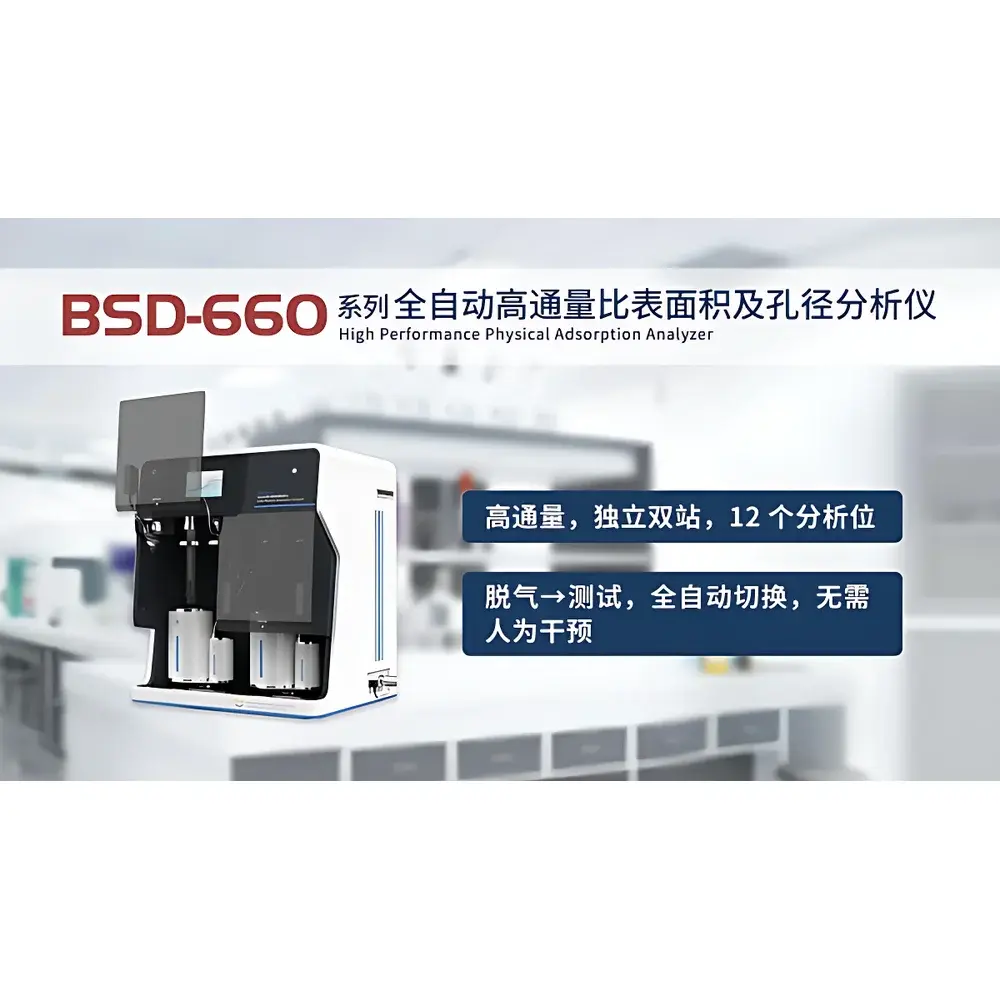
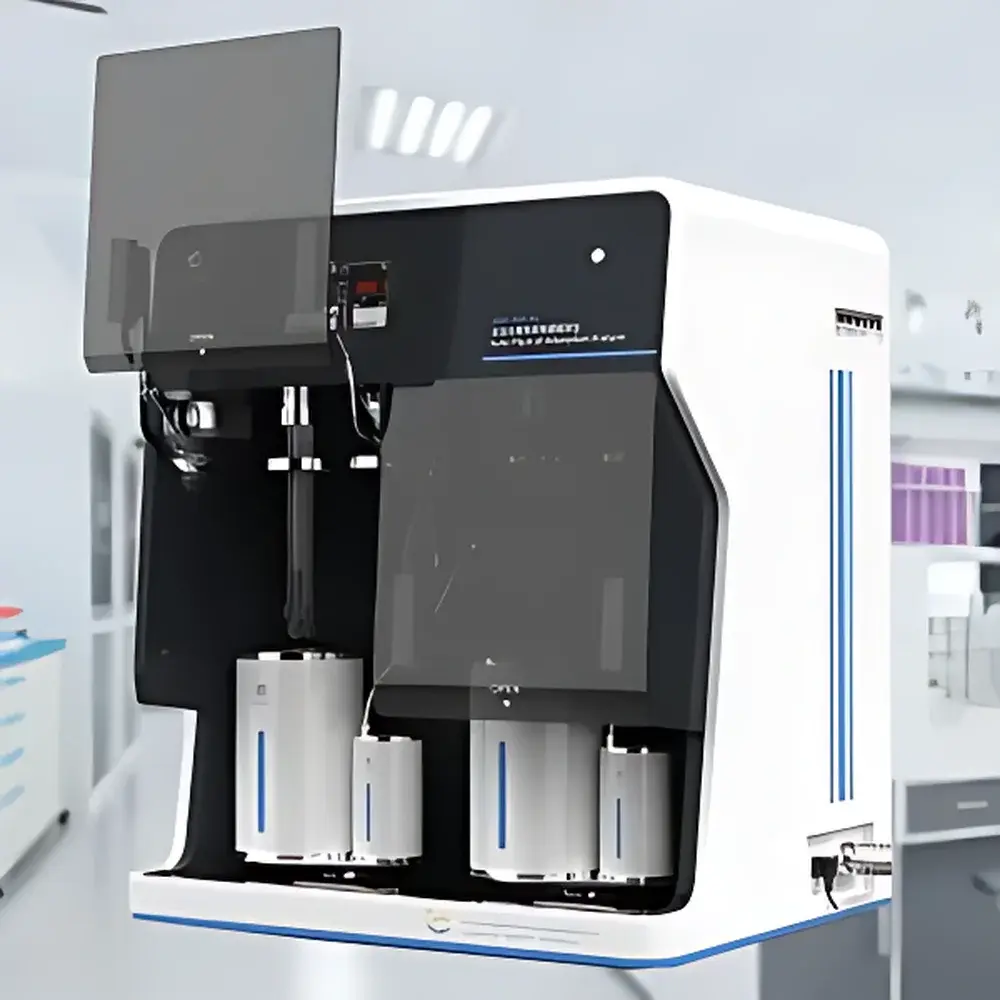
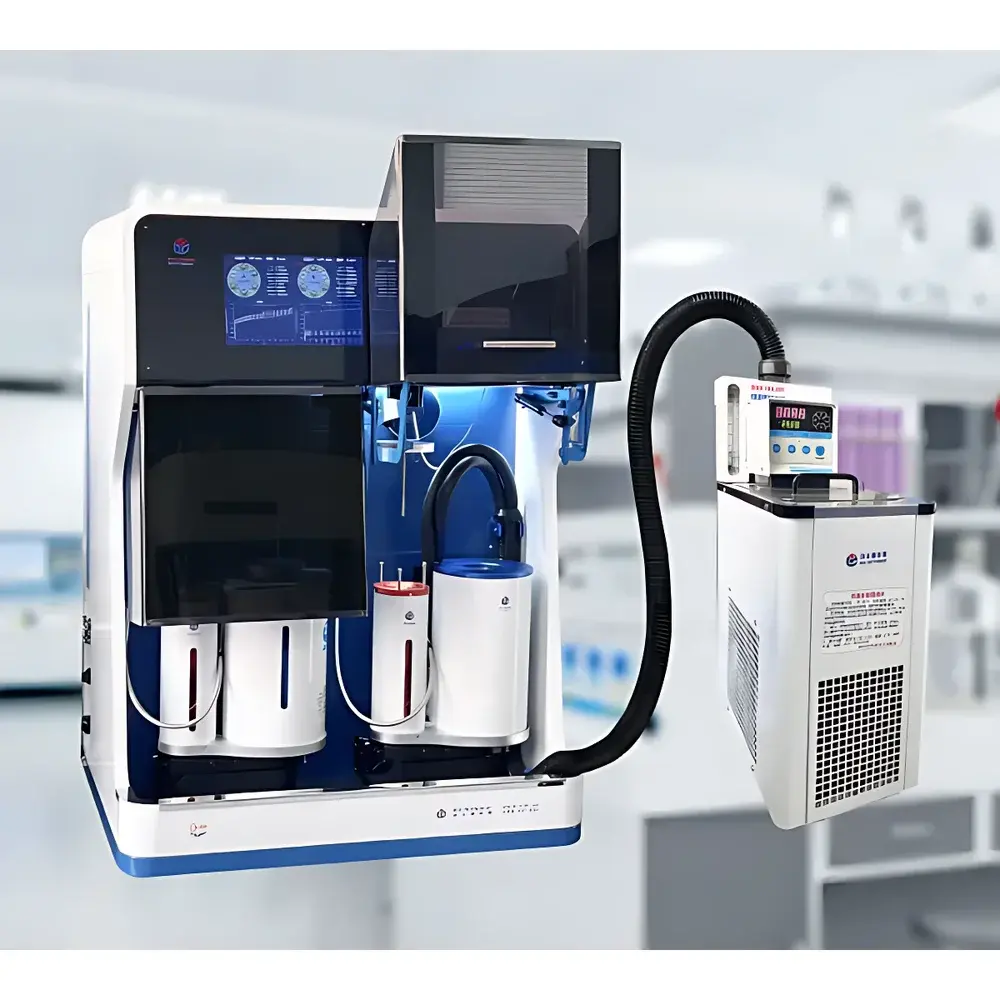
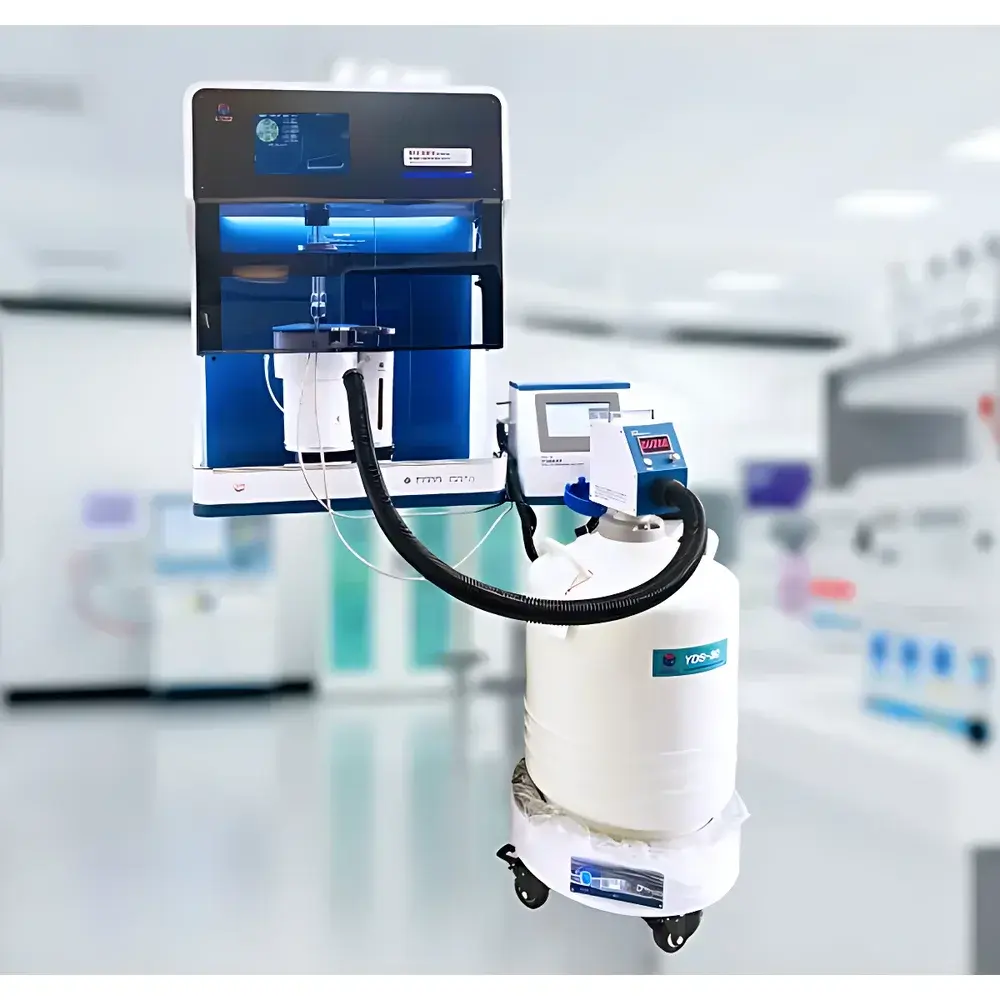
Beishide BSD-660A6MB6M High-Performance Specific Surface Area and Micropore Analyzer
| Brand | Beishide Instrument |
|---|---|
| Origin | Beijing, China |
| Manufacturer Type | Manufacturer |
| Product Category | Domestic |
| Model | BSD-660A6MB6M |
| Instrument Type | Specific Surface Area and Pore Size Analyzer |
| Measurement Principle | Static Volumetric Method |
| Number of Analysis Stations | 3 / 6 / 9 / 12 |
| Specific Surface Area Range | ≥0.0005 m²/g |
| Pore Diameter Range | 0.35–500 nm |
| Ultimate Vacuum | ≤1×10⁻⁹ Pa |
| Theoretical Basis | Static Gravimetric/Volumetric Gas Adsorption |
| Repeatability | <0.5% RSD |
Overview
The Beishide BSD-660A6MB6M is a high-performance, fully automated specific surface area and micropore analyzer engineered for precision characterization of porous and non-porous solid materials via static volumetric gas adsorption. Based on the Brunauer–Emmett–Teller (BET) theory and density functional theory (DFT)/non-local DFT (NLDFT) models, it delivers quantitative analysis across three hierarchical pore regimes: micropores (<2 nm), mesopores (2–50 nm), and macropores (50–500 nm). Its core architecture implements a true static capacity method—measuring equilibrium gas uptake at precisely controlled pressures and temperatures—enabling trace-level adsorption quantification with metrological rigor. Designed for research laboratories and QC/QA environments requiring ISO/IEC 17025-compliant data generation, the instrument supports nitrogen, argon, carbon dioxide, hydrogen, methane, and other non-corrosive or corrosive gases (with optional configuration), making it suitable for advanced materials including MOFs, COFs, HOFs, activated carbons, zeolites, battery cathode/anode powders, metal oxides, and pharmaceutical excipients.
Key Features
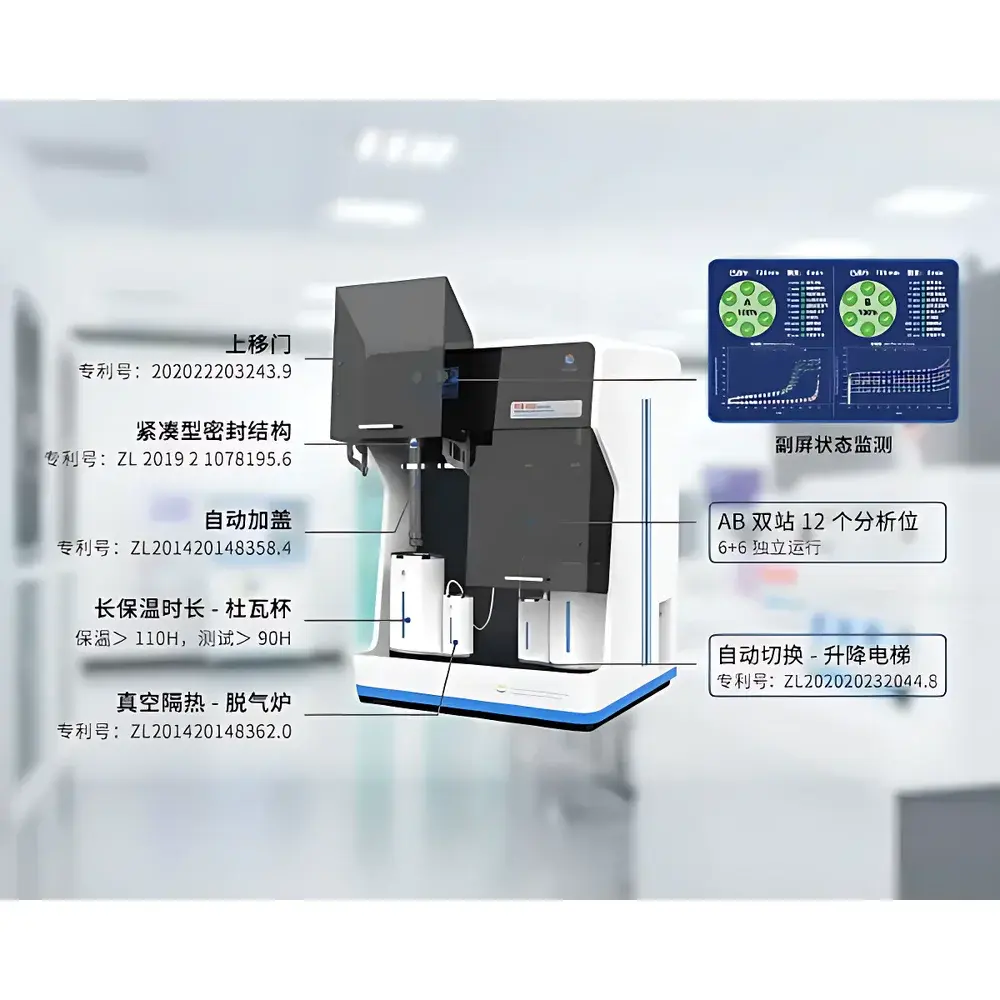
- Modular high-throughput design: Configurable analysis stations (3, 6, 9, or 12) enable parallel sample processing without cross-contamination or manual intervention.
- True full automation: Patented automatic switching between degassing furnace and cryostat (ZL202020232044.8) eliminates manual tube transfer; users load samples pre-shift and retrieve validated results post-shift.
- Helium-free dead-volume calibration: Integrated helium pycnometry precedes vacuum degassing—eliminating residual helium interference in micropore analysis and ensuring accurate t-plot, HK, DA, and NLDFT-derived pore parameters.
- Pressure-controlled ramped degassing (ZL202020230457.2): Real-time pressure feedback modulates furnace temperature and vertical position to suppress sample fluidization and particle loss during thermal treatment.
- Active temperature stabilization: Entire gas manifold maintained at 40.00 ± 0.01 °C; adsorption chamber features servo-controlled isothermal zone regulation (ZL201820401132.9), limiting equivalent volume drift to ≤0.10% over 24 h.
- Electric turbo liquid nitrogen pump (ZL201720864873.6): Contactless, variable-speed LN₂ delivery ensures contamination-free cryogen supply and safe operation in confined lab spaces.
- Multi-gas compatibility: Standard support for N₂, Ar, CO₂, O₂, CO; optional upgrades for H₂, CH₄, C₂H₆, NH₃, SO₂, and vapor-phase organics (e.g., H₂O, ethanol, acetone) with corrosion-resistant valves and sensors.
Sample Compatibility & Compliance
The BSD-660A6MB6M accommodates diverse material classes—from dense ceramics and metallic powders to highly fragile MOFs and aerogels—across standardized sample masses (10–500 mg) and tube geometries (6 mm OD quartz or stainless-steel). It complies with international standards governing surface area and porosimetry, including ISO 9277:2010 (BET surface area), ISO 15901-1:2005 / -2:2006 / -3:2007 (pore size distribution by gas adsorption), GB/T 19587–2017, GB/T 21650.1–2008, and ASTM D3663. For regulated industries, its software architecture supports 21 CFR Part 11 compliance through electronic signatures, audit trails, role-based access control, and immutable raw data archiving—fully compatible with LIMS integration via open API protocols.
Software & Data Management
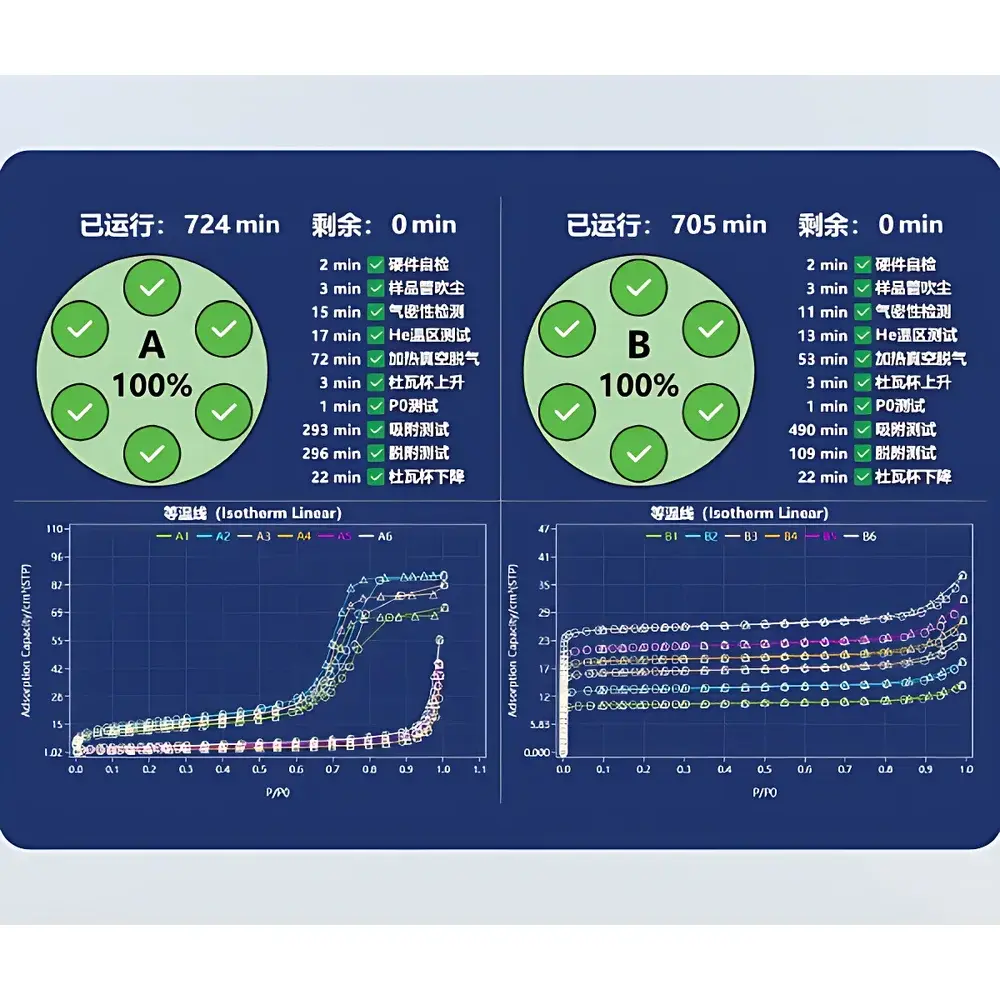
The proprietary BDSorb™ software provides an intuitive, workflow-driven interface for method definition, real-time monitoring, and multi-model data interpretation. It includes automated degassing endpoint detection based on pressure derivative thresholds, batch-mode BET linear regression with outlier rejection, and DFT/NLDFT kernel selection matched to adsorbate–adsorbent chemistry (e.g., N₂ on carbon vs. CO₂ on zeolite). All raw isotherms, parameter tables, and QA/QC reports are exported in CSV, PDF, and XML formats. Audit logs record user actions, instrument status, environmental conditions, and calibration events—meeting GLP and GMP documentation requirements. Raw data files are cryptographically hashed to ensure integrity and traceability.
Applications
This analyzer serves critical functions in catalyst development (active site density, pore accessibility), battery R&D (electrode coating porosity, SEI layer evolution), pharmaceutical formulation (excipient surface energetics, dissolution kinetics), environmental science (adsorbent capacity for VOCs or heavy metals), and nanomaterial synthesis (MOF stability under cycling, COF crystallinity assessment). Its micro-pore resolution down to 0.35 nm enables rigorous evaluation of ultramicroporous frameworks for gas separation membranes, while its high repeatability (<0.5% RSD) supports statistical process control in production environments.
FAQ
What gases can be used for analysis?
Standard configurations support N₂, Ar, and CO₂. Optional modules extend capability to H₂, CH₄, C₂H₆, NH₃, SO₂, and organic vapors—including water, ethanol, and acetone—with chemically resistant components.
How does the system prevent helium contamination during micropore analysis?
It performs helium pycnometry first, then evacuates and thermally degasses the sample under ultra-high vacuum before initiating adsorption—isolating dead-volume calibration from subsequent adsorption steps.
Is the instrument compliant with regulatory data integrity requirements?
Yes. BDSorb™ software includes electronic signatures, time-stamped audit trails, user permission tiers, and exportable raw data with cryptographic hashing—fully aligned with FDA 21 CFR Part 11 and EU Annex 11 expectations.
Can the system perform cyclic adsorption–desorption testing?
Yes. Automated multi-cycle protocols evaluate long-term adsorption stability, regeneration efficiency, and fatigue resistance—critical for evaluating sorbent lifetime in industrial applications.
What vacuum level is achieved during degassing and analysis?
The system achieves ≤1×10⁻⁹ Pa using dual-stage molecular pumping (optional dual-pump configuration), ensuring complete removal of physisorbed contaminants prior to measurement.



