
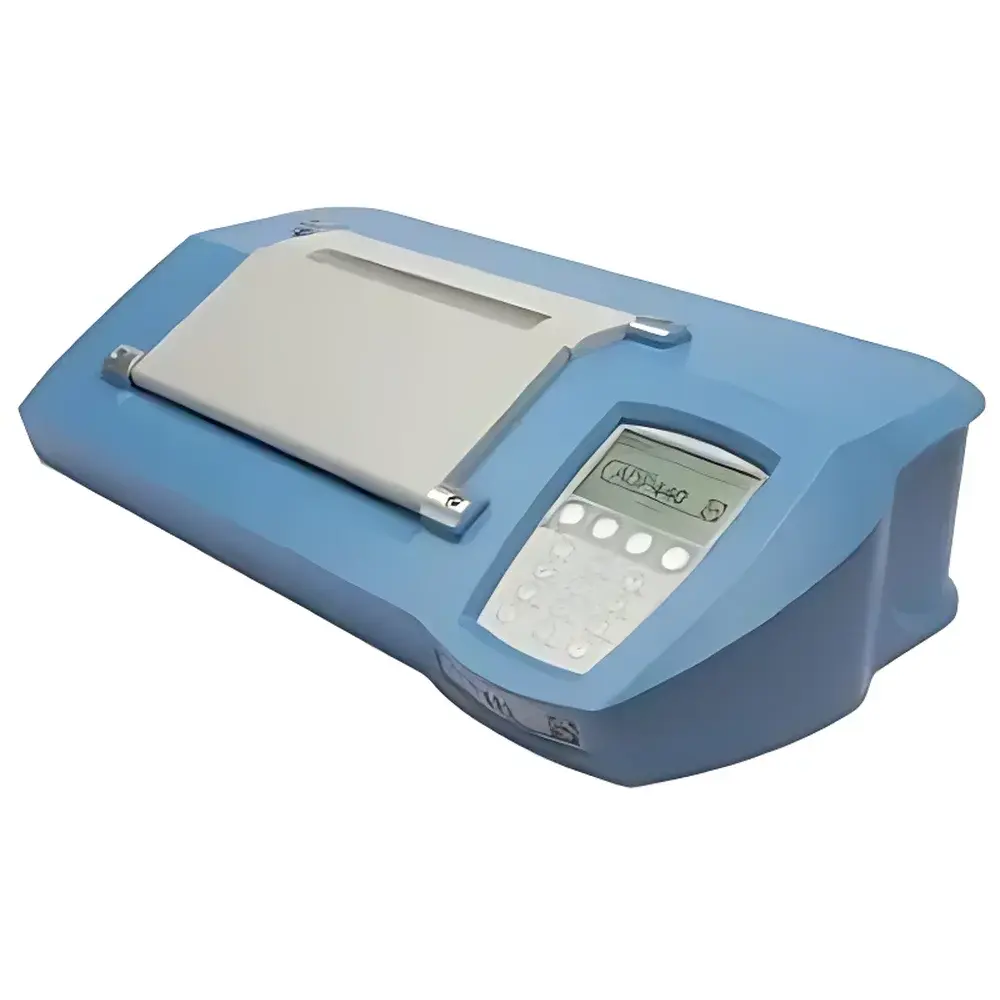
Bellingham + Stanley ADP220, ADP440 & ADS420 Digital Polarimeters
| Brand | Bellingham + Stanley |
|---|---|
| Origin | United Kingdom |
| Model Series | ADP220, ADP440, ADS420 |
| Angular Resolution | 0.01° (ADP220), 0.001° (ADP440) |
| Accuracy | ±0.02° (ADP220), ±0.01° (ADP440), ±0.03°Z (ADS420) |
| Angular Range | −85° to +85° (ADP220), −355° to +355° (ADP440) |
| Compliance | GLP, FDA 21 CFR Part 11 (ADP440), ICUMSA (ADS420) |
| Measurement Principle | Sodium D-line (589.3 nm) polarimetry with thermally stabilized LED light source and precision half-shade field detection |
Overview
The Bellingham + Stanley ADP220, ADP440, and ADS420 Digital Polarimeters represent over nine decades of dedicated optical metrology engineering from the UK’s oldest specialist manufacturer of polarimeters and refractometers. These instruments operate on the fundamental principle of optical rotation—measuring the angular deviation of plane-polarized light as it passes through optically active substances—using a stabilized sodium D-line (589.3 nm) LED source, high-precision half-shade field optics, and digital angular encoding. Each model is purpose-engineered for distinct operational tiers: the ADP220 delivers robust, GLP-compliant routine analysis for QC laboratories; the ADP440 provides ultra-high angular resolution (0.001°) and full audit-trail capability required for regulated pharmaceutical development and release testing; and the ADS420 is a dedicated saccharimetric system calibrated to ICUMSA standards for continuous or batch sugar analysis in industrial processing environments. All units are manufactured in the UK and certified by UKAS, NIST-traceable calibration services, and PTB-accredited reference laboratories.
Key Features
- Thermally stabilized 589.3 nm LED light source ensuring wavelength consistency and long-term photometric stability without lamp replacement
- Dual-mode measurement: manual zeroing and auto-zero function with real-time drift compensation
- High-resolution rotary encoder systems with backlash-free mechanical coupling for repeatable angular positioning
- Integrated temperature sensor (±0.1 °C) with Peltier-controlled sample chamber option (ADP440) for ISO 8576-compliant thermal regulation
- GLP-compliant data logging (ADP220/ADP440): timestamped results, user ID authentication, and electronic signature support
- FDA 21 CFR Part 11–enabled software architecture (ADP440): role-based access control, audit trail generation, and secure electronic records retention
- Modular flow cell interface (ADS420): compatible with peristaltic or pressurized liquid handling systems for inline or at-line sucrose monitoring
- Direct readout analog scale option (D-series legacy variant): mechanical vernier for educational and low-throughput validation workflows
Sample Compatibility & Compliance
The ADP and ADS series accommodate standard 100 mm and 200 mm path-length cells (quartz or glass), including jacketed variants for temperature-controlled measurements per ASTM E1252 and ISO 5725. Sample compatibility extends across aqueous solutions, syrups, essential oils, pharmaceutical intermediates, and chiral APIs—including viscous or particulate-containing matrices when filtered or centrifuged. Regulatory alignment includes full adherence to USP , Ph. Eur. 2.2.7, and JP 2.05 for polarimetric assay validation. The ADP440 meets the technical and procedural requirements of FDA 21 CFR Part 11 for electronic records and signatures, supporting GMP-compliant manufacturing operations. The ADS420 conforms to ICUMSA Method GS4/3-12 for cane and beet sugar determination, with traceability to NPL (UK) and BAM (Germany) certified sucrose reference materials.
Software & Data Management
B+S PolarSoft™ v5.2 (included) provides instrument control, method storage, and report generation in PDF/XLSX formats compliant with ISO/IEC 17025 documentation requirements. The ADP440 integrates with LIMS via ASTM E1384-compliant HL7 messaging and supports CSV export with embedded metadata (operator, timestamp, cell ID, temperature, calibration status). Audit trails record all parameter changes, result modifications, and user logins with immutable timestamps. Raw angular data is retained in native .bpl binary format with checksum verification. Optional 21 CFR Part 11 validation package includes IQ/OQ documentation, electronic signature templates, and periodic performance verification protocols aligned with Annex 11 and ALCOA+ principles.
Applications
- Pharmaceutical quality control: enantiomeric excess (ee) determination of chiral drugs (e.g., ibuprofen, levodopa), purity assessment of natural extracts, and stability-indicating assays
- Food & beverage analysis: sucrose concentration in soft drinks and fruit juices (°Z scale), lactose quantification in dairy products, and authenticity screening of honey and maple syrup
- Chemical manufacturing: monitoring asymmetric synthesis reactions, batch release of optically active intermediates, and catalyst performance evaluation
- Academic research: teaching optical activity fundamentals, calibrating circular dichroism spectrometers, and validating computational chirality models
- Industrial process control: real-time sucrose monitoring in sugar refineries using ADS420 with 1/4″ NPT flow cell integration and 4–20 mA analog output
FAQ
What is the difference between ADP220 and ADP440 in terms of regulatory compliance?
The ADP220 supports GLP-compliant operation with basic audit logging; the ADP440 adds full 21 CFR Part 11 functionality—including electronic signatures, role-based permissions, and tamper-evident audit trails—required for FDA-regulated submissions.
Can the ADS420 be used outside sugar production?
While optimized for ICUMSA-compliant sucrose measurement, its angular accuracy (±0.03°Z) and flow-cell design allow adaptation for other dextrorotatory/levorotatory solutes where Z-scale correlation has been empirically validated.
Is temperature control mandatory for accurate polarimetric results?
Yes—optical rotation is temperature-dependent. All ADP models include integrated Pt100 sensors; optional Peltier modules (ADP440) maintain sample temperature within ±0.1 °C per ISO 8576, eliminating manual correction factors.
Do these instruments require annual recalibration by an accredited lab?
UKAS-accredited recalibration is recommended every 12 months or after 500 operational hours; B+S provides NIST-traceable quartz control plates (±0.005°) for daily verification.
Are quartz cells included with purchase?
Standard 100 mm path-length quartz cells are supplied with ADP220/ADP440; ADS420 ships with stainless-steel flow cell and calibrated reference sucrose solution for initial setup.





